
A household earning $75,000 can feel stretched in Grove City while another at the same income level manages comfortably—not because one budgets better, but because their daily lives demand different things. Income pressure here isn’t about hitting a magic number; it’s about whether your earnings can absorb the specific frictions this place creates: housing location tradeoffs, seasonal utility swings, and the reality that some conveniences require either extra time or extra money.
Grove City’s median household income sits at $84,765 per year, but that figure obscures more than it reveals. What matters isn’t how you compare to the median—it’s whether your income can handle the structural costs that define life here without forcing you into constant tradeoff mode.
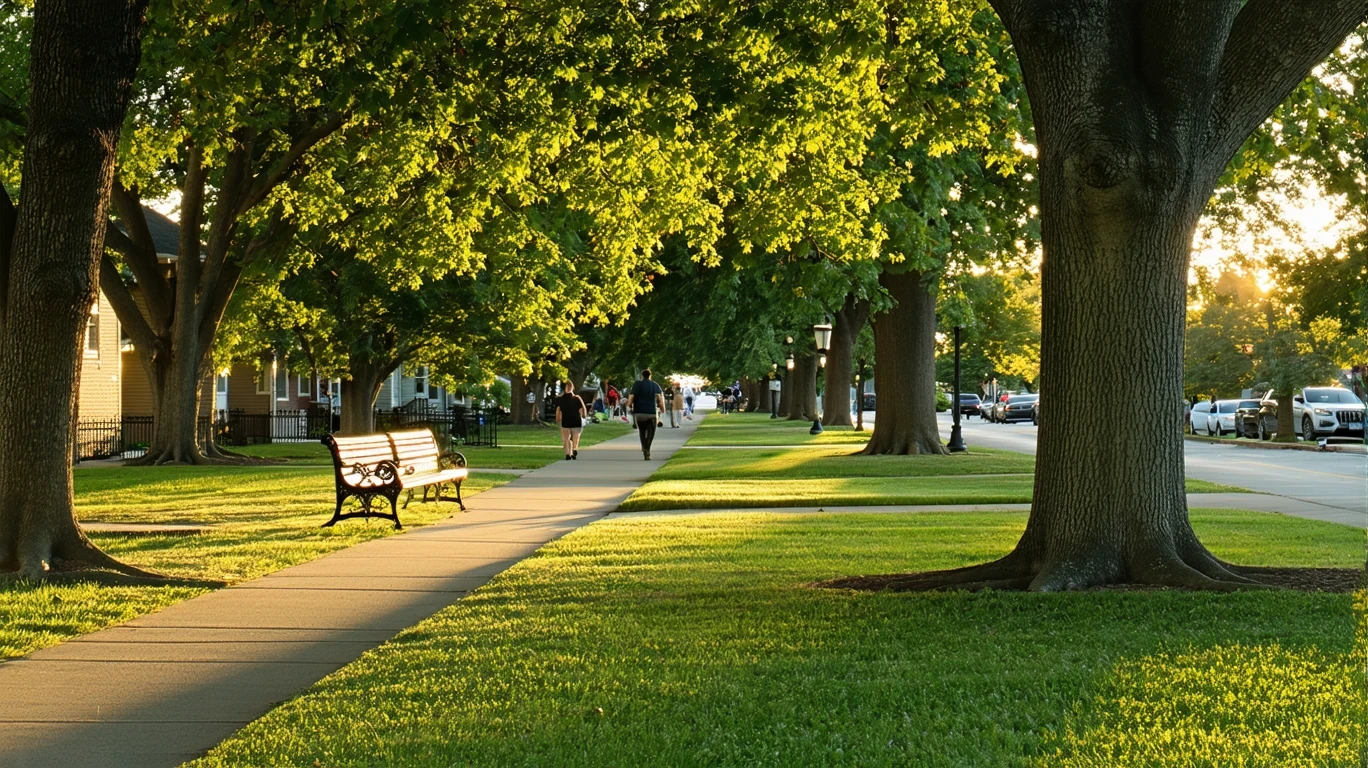
What “Living Comfortably” Means in Grove City
Comfort in Grove City means your housing choice isn’t dictated entirely by budget, your utility bills don’t reshape your behavior every summer and winter, and running errands doesn’t require military-grade planning. It means you can choose a neighborhood based on preference rather than necessity, and that an unexpected car repair or medical appointment doesn’t trigger a financial cascade.
This isn’t about luxury—it’s about margin. Comfortable households can absorb the friction that comes from living in a place where some infrastructure is strong (schools, playgrounds, parks) and some is limited (healthcare access, spontaneous errands). They can afford to live near the walkable pockets or accept the car dependency that comes with other parts of town. They have enough slack that seasonal utility volatility is annoying, not destabilizing.
Uncomfortable households, by contrast, experience Grove City as a series of forced optimizations. They live farther from work to afford housing, or closer to work in tighter quarters. They plan every shopping trip to avoid backtracking. They defer maintenance, skip preventive healthcare, and treat every bill as a negotiation with their budget.
Where Income Pressure Shows Up First
Housing dominates the pressure landscape. The median home value is $262,800, and median rent is $1,205 per month, but those figures don’t capture the real tradeoff: location versus cost. Grove City has walkable pockets with higher pedestrian-to-road ratios and notable cycling infrastructure, but accessing those areas often means paying more or accepting smaller spaces. Families gravitating toward strong school and playground infrastructure face the same calculus—proximity costs.
Renters feel this differently than owners. A monthly rent payment is fixed and visible, but it also means less control over where you live as lease renewals shift the affordability map. Owners gain stability but inherit exposure to maintenance, insurance, and property tax changes that don’t show up in the purchase price.
Utilities create the second pressure point, and it’s seasonal. Summers in this part of Ohio bring extended heat that drives cooling costs, while winters demand consistent heating. Electricity here runs 17.66¢ per kWh, and natural gas costs $13.33 per MCF—not extreme, but enough that a household running air conditioning heavily or heating a larger home will see bills swing significantly month to month. Comfortable households absorb this. Stretched households adjust thermostats, limit usage, and feel the weather as a financial event.
Transportation pressure is more subtle but persistent. The average commute is 23 minutes, and only 2.9% of workers operate from home, meaning most people drive daily. Gas sits at $2.78 per gallon—manageable individually, but it compounds. A household with two commuters, each driving 25 miles round trip in a vehicle getting 25 MPG, burns through roughly $140 per month in fuel alone, before maintenance, insurance, or parking. That’s not catastrophic, but it’s non-negotiable, and it stacks with everything else.
For families, healthcare access creates a distinct friction. Grove City has pharmacies but no hospital and limited clinic presence. Routine care requires planning, and anything urgent means travel. This doesn’t show up as a monthly bill, but it imposes a tax on time and energy that households with tighter schedules or single parents feel acutely.
How the Same Income Feels Different by Household
A single adult earning $50,000 can live comfortably in Grove City if they’re willing to rent a smaller place and leverage the bus service and walkable areas that do exist. Their housing cost stays manageable, they can bike or walk for some errands in certain neighborhoods, and their utility exposure is lower in a smaller space. But healthcare limitations mean they need to plan for anything beyond pharmacy-level care, and if they want to live in one of the less car-dependent pockets, housing options narrow.
A couple at $75,000 combined faces different math. They can afford more housing, but they likely need it in a location that accommodates two commutes, and that often means car dependency increases. They have more income, but they also have more fixed costs—two vehicles, higher utility bills in a larger space, and the expectation of more amenities. If both work standard schedules, Grove City’s corridor-clustered errands model works fine. If one has irregular hours, the lack of spontaneous access to groceries or services becomes a planning burden.
Families at $85,000—near the city’s median—experience Grove City at its most contradictory. The strong school and playground infrastructure is exactly what they need, and the moderate park density and presence of water features offer outdoor options. But housing costs consume a much larger share of income, especially if they want space for kids and proximity to those family amenities. Utility bills are higher in family-sized homes. Monthly expenses are less flexible because children create non-negotiable costs—school supplies, activities, healthcare. And the healthcare access gap is most painful here: a sick child means travel, time off work, and logistical complexity that single adults and couples can often defer or absorb more easily.
The Comfort Threshold (Qualitative)
Comfort in Grove City begins when income exceeds the point where every cost category requires active management. It’s the point where you can choose housing based on preference rather than elimination, where a high utility month is irritating but not destabilizing, and where running an errand doesn’t require route optimization.
For single adults, this threshold is lower because their fixed costs are smaller and they can adapt to the city’s infrastructure more easily. For couples, it rises because they need more space and flexibility, and because two commutes often mean two cars. For families, the threshold is highest—not just because they need more of everything, but because children reduce flexibility and increase the cost of mistakes.
The threshold also shifts based on how much friction you’re willing to accept. A household that doesn’t mind living in a less walkable area, planning all errands in advance, and driving 20 minutes for healthcare can live comfortably on less. A household that values spontaneity, walkability, and proximity to services needs more income to access the parts of Grove City where those things exist.
Why Online Cost Calculators Get Grove City Wrong
Most cost-of-living calculators treat Grove City as a data point: plug in the rent, add average utilities, multiply commuting costs, and sum to a total. But totals don’t explain pressure. A calculator might tell you Grove City is “affordable” because the regional price parity index is 95—slightly below the national baseline—but that number doesn’t capture the healthcare access gap, the corridor-clustered errands model, or the fact that walkability varies dramatically by neighborhood.
Calculators assume average behavior, but Grove City rewards specific choices. Living near the walkable pockets costs more but reduces transportation dependency. Living farther out lowers housing costs but increases driving and time. A family that prioritizes school access will experience different costs than a couple optimizing for commute length. None of this appears in a generic formula.
People feel surprised after moving because they assumed “affordable” meant “comfortable,” when in reality it meant “possible if you accept these specific tradeoffs.” The surprise isn’t the total—it’s discovering which costs are fixed, which are volatile, and which require lifestyle changes they didn’t anticipate.
How to Judge Whether Your Income Fits Grove City
Instead of asking “Is my income enough?”, ask these:
- Can you absorb seasonal utility swings without changing behavior? If a $100-$150 increase in summer cooling or winter heating costs forces you to adjust your thermostat significantly, your income is tight relative to Grove City’s climate exposure.
- Does your housing budget allow you to choose location, or only to accept what’s available? If you’re limited to the cheapest options regardless of commute, walkability, or school access, you’re below the comfort threshold.
- How sensitive are you to healthcare access? If you have young children, chronic conditions, or unpredictable health needs, Grove City’s limited local healthcare infrastructure will impose a time and logistics cost that higher-income households can absorb more easily.
- Is your schedule flexible enough to handle corridor-clustered errands? Groceries and services here aren’t always spontaneous. If your work or family life requires grab-and-go convenience, you’ll either pay more to live near the denser corridors or spend more time driving.
- Do you have financial margin for the non-monthly costs? Car maintenance, medical co-pays, home repairs—these don’t appear in budgets, but they’re not optional. Comfortable households have slack for these. Stretched households experience them as crises.
Your answers to these questions matter more than any income threshold. Grove City works well for households whose income and expectations align with its infrastructure. It’s harder for those who need what the city doesn’t provide or who can’t afford to live in the parts where it does.
FAQs About Living Comfortably in Grove City
Is $60,000 enough for a single person to live comfortably in Grove City?
It can be, but it depends on your housing choice and transportation needs. If you’re willing to rent a smaller place and can take advantage of the bus service or walkable areas in certain neighborhoods, $60,000 provides margin. If you need a larger space, a car, and frequent travel for healthcare, it’s tighter.
How much does it cost to live in Grove City as a family?
Families face the highest pressure because housing, utilities, and healthcare logistics all scale with household size. The city’s strong school and playground infrastructure is a major asset, but what drives expenses is housing location (proximity to those amenities costs more), utility volatility in larger homes, and the need to travel for anything beyond routine care. Comfortable family living here requires enough income to absorb those costs without constant tradeoff mode.
Does Grove City’s lower cost of living mean I can live on less?
The regional price parity index of 95 suggests costs here run slightly below the national baseline, but that’s an average. It doesn’t account for healthcare access gaps, transportation dependency, or the fact that walkability and convenience are geographically uneven. “Lower cost” often means “fewer built-in conveniences,” and replacing those conveniences costs time or money.
What’s the biggest financial surprise people face after moving to Grove City?
Most people underestimate how much location matters within the city. The difference between living in a walkable pocket with good bus access and living in a car-dependent area isn’t just preference—it’s a structural cost difference in transportation, time, and flexibility. The other surprise is healthcare: the lack of a local hospital means every non-routine medical need becomes a logistics event.
Can you live in Grove City without a car?
In specific areas, yes—there are walkable pockets with notable bike infrastructure and bus service. But those areas are limited, and errands are corridor-clustered, meaning you’ll need to plan trips rather than make spontaneous stops. For most households, especially families or those working outside the city, a car is functionally required.
The Real Question Isn’t “How Much”—It’s “What For”
Grove City doesn’t demand a specific income to survive. It demands that your income match the life you’re trying to live here. If you value strong family infrastructure, can tolerate healthcare travel, and don’t mind planning errands, it offers a lot. If you need spontaneous access to services, want to avoid car dependency entirely, or require nearby medical care, it will feel more expensive than the numbers suggest—not because costs are high, but because the infrastructure gaps force you to spend time or money solving problems that other places solve with density.
Comfortable living here isn’t about earning a certain amount. It’s about earning enough to avoid being forced into tradeoffs you didn’t expect. Grove City can work well for some households—but only if expectations match reality.
How this article was built: In addition to public economic data, this article incorporates location-based experiential signals derived from anonymized geographic patterns—such as access density, walkability, and land-use mix—to reflect how day-to-day living actually feels in Grove City, OH.