
Grove City is considered moderately priced in 2026, with a median home value of $262,800 and median rent of $1,205 per month. The value proposition depends on housing entry cost versus car dependence, even in areas with walkable pockets.
When Sarah moved to Grove City last spring, she expected typical suburban expenses—mortgage or rent, a car payment, groceries. What surprised her wasn’t any single line item, but how the structure of costs shifted depending on where she lived within the city and how often she drove. In some neighborhoods, she could walk to errands; in others, every trip required planning and fuel. The difference wasn’t dramatic, but it was persistent.
Grove City sits southwest of Columbus, functioning as a commuter suburb with a median household income of $84,765 per year. Its cost structure reflects that role: housing dominates upfront decisions, while transportation and utilities create ongoing exposure. The regional price parity index of 95 suggests costs run slightly below the national baseline, but that advantage concentrates in specific categories rather than across the board.
Overall Cost of Living Snapshot
Grove City’s cost profile is shaped by three forces: accessible homeownership relative to the Columbus metro, car dependency despite pockets of walkable infrastructure, and moderate utility and grocery costs. Housing absorbs the largest share of household budgets, but transportation—both commute time and vehicle reliance—determines how much flexibility remains.
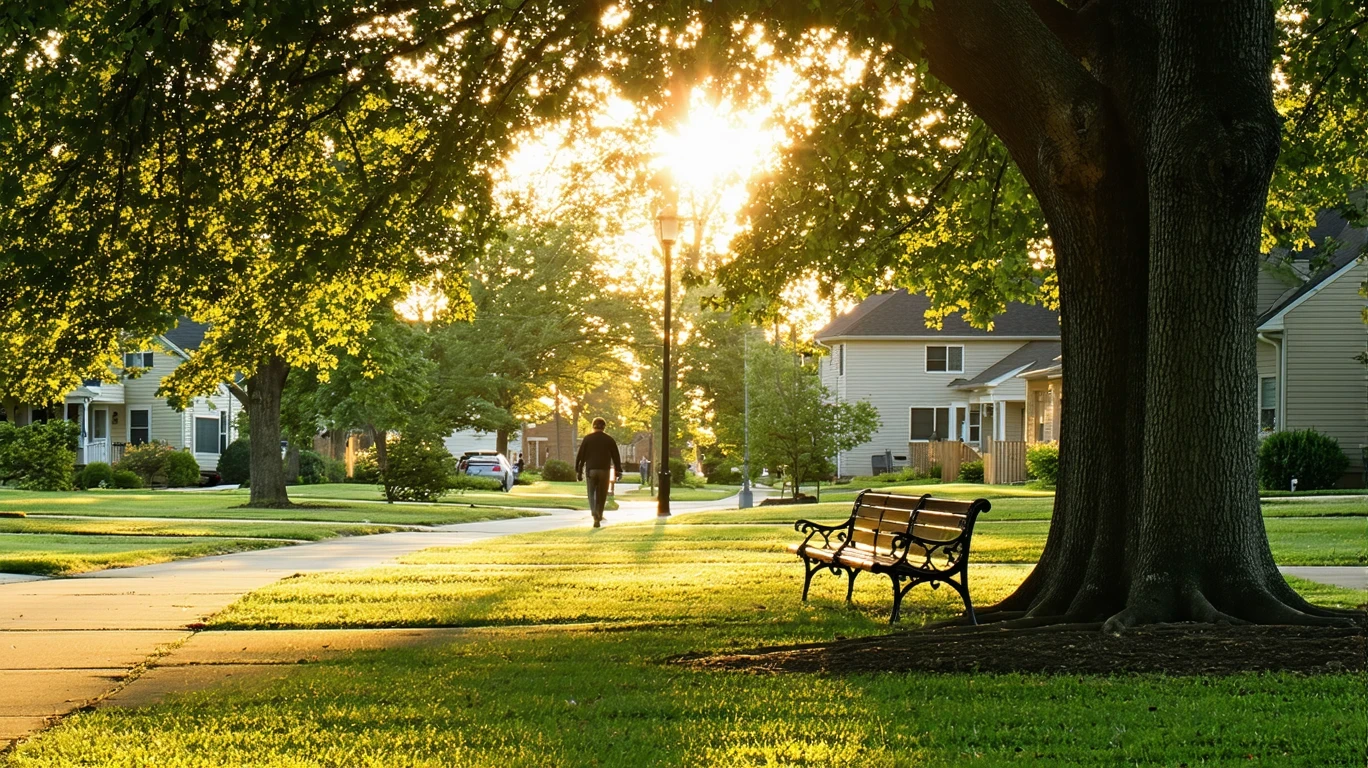
The city’s experiential texture complicates simple affordability labels. Pedestrian infrastructure exists in concentrated areas, with a high pedestrian-to-road ratio in certain neighborhoods and notable cycling infrastructure throughout parts of the city. Bus service is present, but rail transit is not. This creates a split reality: some residents can handle daily errands on foot or by bike within corridor-clustered commercial zones, while others face car dependency for nearly every trip.
Food and grocery density falls in the medium band, meaning options exist but require intentional routing. Park access is present, with water features adding to outdoor amenity availability. Family infrastructure is strong, with both school and playground density meeting thresholds. Healthcare access, however, is limited—pharmacies are present, but no hospital or clinics were detected within city boundaries.
Driver verdict: Housing entry cost and vehicle dependency dominate. Surprises come from the variability in walkability and the need to plan around healthcare access.
Housing Costs (Primary Driver)
At $262,800, the median home value in Grove City positions the city as accessible within the Columbus metro, though not inexpensive in absolute terms. For buyers, this represents a moderate entry threshold—manageable for dual-income households or those with savings, but a stretch for single earners or first-time buyers without assistance.
Renters face a median gross rent of $1,205 per month, which includes some utilities in many cases but not universally. This figure reflects a middle ground: not as volatile as month-to-month arrangements in higher-cost metros, but not insulated from lease renewal increases tied to regional demand.
The renting-versus-owning decision hinges on timeline and mobility. Renters gain flexibility and avoid maintenance exposure, but build no equity and remain subject to lease-term changes. Buyers lock in principal and interest but assume property tax, insurance, and repair volatility. Grove City functions as a transitional city for many—renters who plan to buy within a few years, or buyers who expect to stay long enough to justify closing costs and transaction friction.
| Housing Type | Cost Anchor | What That Buys You |
|---|---|---|
| Median Home | $262,800 | Ownership equity, fixed principal/interest, property tax and maintenance exposure |
| Median Rent | $1,205/month | Flexibility, no maintenance burden, lease renewal risk |
Utilities & Energy Risk
Electricity in Grove City is priced at 17.66¢ per kWh, a moderate rate that reflects Ohio’s energy mix and regional distribution costs. For households with typical cooling and heating loads, this rate translates to steady but not extreme monthly exposure. Summer air conditioning and winter heating drive the largest swings, with usage patterns mattering more than the rate itself.
Natural gas is priced at $13.33 per MCF (approximately 100 therms). Gas heating dominates winter costs for most homes, and volatility in this category—driven by weather severity and supply conditions—can create unpredictable bills during cold snaps. Homes with older furnaces or poor insulation face steeper exposure.
Risk classification: moderate. Utility costs are not the primary driver of financial pressure in Grove City, but they introduce seasonal variability that affects cash flow predictability, especially for renters who pay utilities separately and owners with older HVAC systems.
Groceries & Daily Costs
Grocery costs in Grove City reflect the regional price parity index of 95, running slightly below national averages. The city’s food establishment density falls in the medium band, with options concentrated along commercial corridors rather than distributed evenly across neighborhoods. This means some households can walk to a grocery store, while others must drive several miles.
For households that cook most meals at home, grocery expenses remain manageable but require planning. The corridor-clustered accessibility pattern favors those who live near commercial zones or have flexible schedules to batch errands. Households in more residential pockets face higher transportation friction, which can push them toward less frequent, larger shopping trips or increased reliance on convenience stores with higher per-unit costs.
Daily costs beyond groceries—personal care, household supplies, occasional dining—follow similar patterns. Proximity to commercial corridors reduces trip frequency and time costs, while distance increases reliance on vehicles and planning overhead.
Transportation Reality
The average commute in Grove City is 23 minutes, with 31.9% of workers experiencing long commutes and just 2.9% working from home. These figures point to a car-dependent reality for most residents, even in neighborhoods with walkable infrastructure. Bus service exists, but without rail transit, most commuters rely on personal vehicles for work trips.
Gasoline is priced at $2.78 per gallon, a moderate rate that becomes significant when multiplied across frequent trips. For households with two vehicles and long commutes, fuel costs compound quickly. The city’s notable bike infrastructure offers an alternative for some errands and recreational trips, but cycling to work remains uncommon given commute distances and road conditions.
Transportation functions as a recurring exposure rather than a one-time cost. Vehicle ownership, insurance, maintenance, and fuel create a baseline monthly burden that scales with household size and commute length. For single-vehicle households with short commutes, this burden is manageable. For multi-vehicle households with long commutes, it rivals or exceeds housing costs in impact.
Cost Exposure Profiles
Grove City’s cost structure creates distinct exposure profiles depending on housing tenure, commute length, and household composition.
Low-exposure situations: A single renter living near a commercial corridor, with a short commute or remote work arrangement, faces minimal cost volatility. Rent is the primary fixed expense, utilities are moderate, and transportation needs are limited. Walkable errands and bus access reduce vehicle dependency, and the lack of homeownership eliminates maintenance and tax exposure.
High-exposure situations: A homebuying household with a long commute and multiple vehicles faces compounding pressures. The upfront cost of homeownership—down payment, closing costs, moving expenses—is followed by ongoing property tax, insurance, and maintenance volatility. Long commutes multiply fuel and vehicle wear costs, and multi-vehicle households double insurance and registration expenses. Limited healthcare access within city boundaries may require trips to Columbus for medical needs, adding another transportation layer.
The difference between these profiles is structural, not income-based. Exposure is determined by how many cost categories a household is vulnerable to simultaneously, and how much control they have over timing and intensity.
Frequently Asked Questions
Is Grove City more affordable than Columbus in 2026? Grove City’s median home value of $262,800 tends to be lower than Columbus proper, and its regional price parity index of 95 suggests slightly below-average costs overall. However, transportation costs may offset housing savings for commuters.
What does a typical cost profile look like in Grove City? Housing dominates upfront and ongoing costs, followed by transportation for car-dependent households. Utilities introduce moderate seasonal variability, and groceries remain manageable with planning.
Do utilities cost more in Grove City than nearby areas? Electricity at 17.66¢ per kWh and natural gas at $13.33 per MCF are moderate within Ohio. Costs are driven more by usage patterns and home efficiency than by rate differences.
What costs tend to surprise newcomers in Grove City? The variability in walkability surprises many—some neighborhoods support car-free errands, while others require driving for nearly everything. Healthcare access also catches people off guard, as no hospital is located within city limits.
Are property taxes higher in Grove City than nearby suburbs? Property tax rates vary by school district and local levies. Grove City’s tax structure is typical for the region, but effective rates depend on assessed home value and voter-approved measures.
Can you live in Grove City without a car? It’s difficult for most households. Bus service exists, and some neighborhoods have walkable errands access, but the 23-minute average commute and low work-from-home rate suggest most residents rely on personal vehicles.
How much does commuting add to monthly costs in Grove City? Commute costs scale with distance and vehicle efficiency. Longer commutes increase fuel, maintenance, and time costs, and multi-vehicle households face compounded exposure.
Is Grove City a good place for families on a budget? Family infrastructure is strong, with good school and playground density. Housing entry costs are moderate, but transportation and healthcare access require planning and may add friction for budget-conscious households.
How this article was built: In addition to public economic data, this article incorporates location-based experiential signals derived from anonymized geographic patterns—such as access density, walkability, and land-use mix—to reflect how day-to-day living actually feels in Grove City, OH.
—