
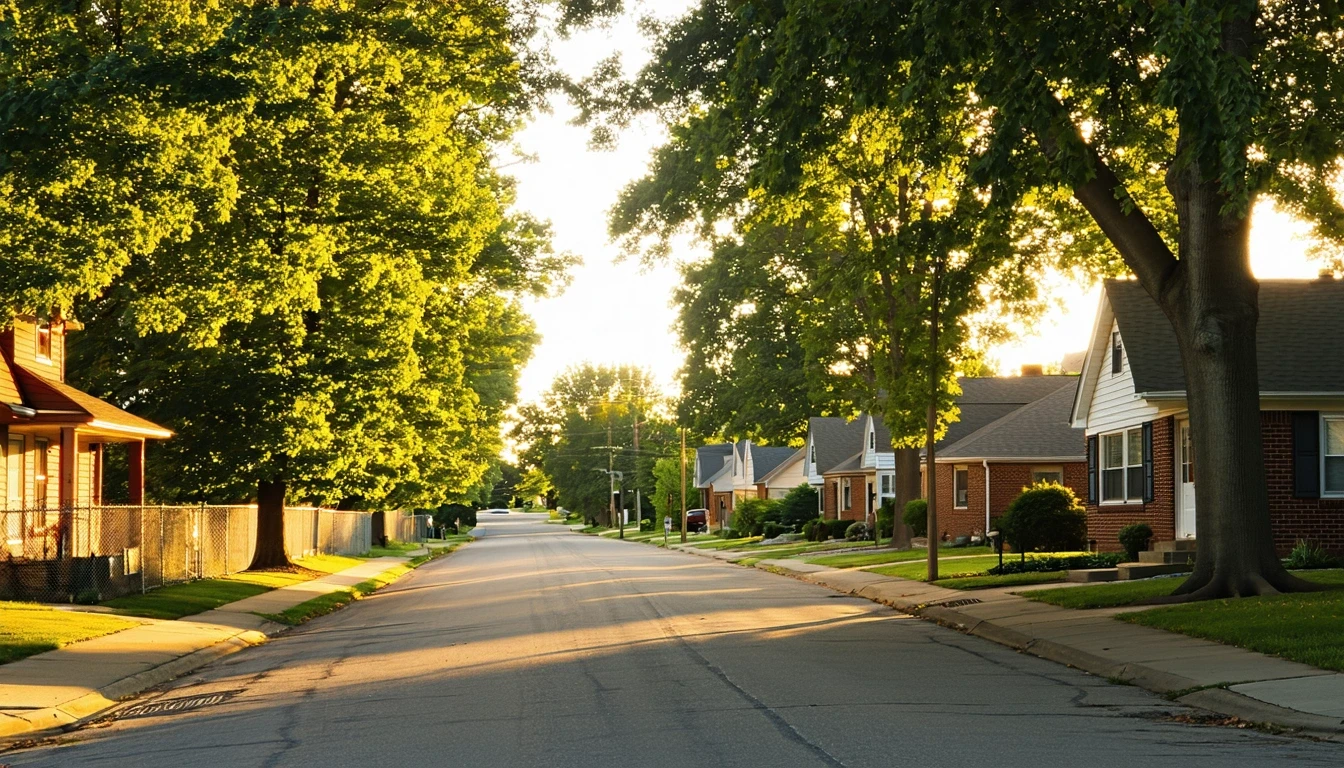
Granite City, IL vs. Saint Louis, MO: Cost of Living Comparison (2025)
Granite City, Illinois and Saint Louis, Missouri sit just across the Mississippi River from one another, forming part of the larger St. Louis metropolitan area. Despite their proximity—separated by less than 10 miles—these two cities offer distinctly different living experiences and price points. Granite City appeals to families and budget-conscious buyers seeking affordable housing in a smaller community setting, while Saint Louis draws those wanting urban amenities, cultural attractions, and diverse neighborhood options. For anyone relocating to the region in 2025, understanding the financial differences between these neighboring cities is essential.
The decision between Granite City and Saint Louis often comes down to lifestyle priorities and budget constraints. Granite City typically offers lower housing costs and a quieter suburban atmosphere, making it attractive for first-time homebuyers and families prioritizing space and value. Saint Louis, meanwhile, provides greater access to employment centers, entertainment districts, and public transportation infrastructure, though often at a premium. Both cities share the same regional economy and climate, but their tax structures, housing markets, and daily expenses differ in ways that can significantly impact your monthly budget.
This comprehensive comparison examines housing costs, utilities, groceries, taxes, and lifestyle factors to help you determine which city aligns better with your financial situation and personal preferences in 2025. Whether you’re a young professional weighing urban convenience against suburban savings, or a family seeking the best value for your housing dollar, this analysis provides the detailed cost breakdown you need to make an informed decision.
Housing Costs
Housing represents the most significant cost difference between Granite City and Saint Louis, and it’s where budget-conscious buyers and renters can realize substantial savings. Granite City’s housing market remains notably more affordable across nearly all property types. Median home prices in Granite City typically range from $95,000 to $135,000 for a three-bedroom single-family home in 2025, while comparable properties in Saint Louis neighborhoods average between $180,000 and $250,000, depending on the specific area. South City and North City neighborhoods in Saint Louis offer some lower-priced options closer to Granite City’s range, but the city’s more desirable areas—particularly the Central West End, Tower Grove, and Soulard—command significantly higher prices.
Rental markets show a similar pattern. Two-bedroom apartments in Granite City generally rent for $750 to $950 monthly, with newer complexes near major thoroughfares reaching the upper end of that range. In Saint Louis, comparable two-bedroom units typically start around $1,100 and can exceed $1,600 in popular neighborhoods with walkable amenities. The rental inventory differs notably between the two cities: Granite City’s rental market consists primarily of smaller apartment complexes and single-family homes converted to rentals, while Saint Louis offers a much broader selection including high-rise buildings, loft conversions in historic districts, and modern mixed-use developments. This variety in Saint Louis comes with higher price tags but also more options for specific lifestyle preferences.
Homeownership rates tell an important story about these markets. Granite City has a higher percentage of owner-occupied homes, reflecting its appeal to buyers seeking affordable entry points into homeownership. The city’s housing stock consists largely of mid-century single-family homes on modest lots, with limited new construction. Saint Louis presents a more diverse housing landscape, from historic brick homes in established neighborhoods to new condominiums in redeveloped areas. Market trends in 2025 show Granite City’s prices remaining relatively stable with modest appreciation, while Saint Louis experiences more neighborhood-specific variation—some areas seeing strong appreciation while others remain flat or decline slightly.
| Housing Type | Granite City, IL | Saint Louis, MO |
|---|---|---|
| Median Home Price (3BR) | $95,000 – $135,000 | $180,000 – $250,000 |
| 2BR Apartment Rent | $750 – $950/month | $1,100 – $1,600/month |
| 3BR House Rent | $950 – $1,250/month | $1,400 – $2,000/month |
| Studio/1BR Apartment | $550 – $750/month | $850 – $1,200/month |
For families prioritizing space and affordability, Granite City’s housing market offers clear advantages. A family can purchase a three-bedroom home with a yard for less than what they’d pay for a smaller condo or townhouse in many Saint Louis neighborhoods. Young professionals and singles, however, may find Saint Louis more appealing despite higher costs—the city’s rental options include amenity-rich buildings in walkable neighborhoods near employment centers, restaurants, and entertainment venues. The trade-off becomes whether you value lower housing costs and more square footage (Granite City) or proximity to urban amenities and diverse housing options (Saint Louis).
Winner: Granite City — Housing costs in Granite City run 30-45% lower than Saint Louis across both rental and purchase markets, making it the clear choice for buyers and renters prioritizing affordability and space.
Utilities and Energy Costs
Utility costs between Granite City and Saint Louis show more similarity than housing prices, though important differences exist based on housing age, size, and local providers. Both cities experience the same regional climate with hot, humid summers and cold winters, driving substantial heating and cooling demands. Granite City residents typically receive electricity from Ameren Illinois, while Saint Louis residents are served by Ameren Missouri—two separate divisions of the same parent company with slightly different rate structures. In practice, monthly electricity bills for a typical three-bedroom home range from $110 to $180 during moderate months, with summer peaks (July-August) reaching $180 to $250 when air conditioning runs continuously.
Natural gas heating costs represent a significant winter expense for both cities. Granite City and Saint Louis residents can expect heating bills between $90 and $160 monthly during the coldest months (December through February), with shoulder seasons (November, March) running $50 to $90. Housing age plays a critical role in these costs: Granite City’s predominantly older housing stock—much of it built between 1950 and 1980—often features less efficient insulation and older HVAC systems, potentially driving utility costs higher than in comparable-sized newer homes. Saint Louis’s more diverse housing stock includes both older homes with similar efficiency challenges and newer construction with improved insulation and energy-efficient systems, creating wider variation in utility expenses across different neighborhoods.
Water and sewer costs differ more noticeably between the two cities. Granite City’s municipal water and sewer services typically cost residents $60 to $85 monthly for average household usage, while Saint Louis residents often pay $70 to $100 monthly, with rates varying by neighborhood and specific water district. Trash collection is generally included in municipal services for Granite City residents, while Saint Louis residents may pay separately depending on their neighborhood—typically $15 to $25 monthly when not included in city services. Internet and cable services cost roughly the same in both cities, with major providers like Spectrum and AT&T offering similar pricing structures, generally $60 to $120 monthly depending on speed and service bundles.
Winner: Granite City (slight edge) — While utility costs are comparable between the cities, Granite City’s slightly lower water/sewer rates and included trash collection give it a modest advantage of $20 to $40 monthly for typical households, though this can be offset by higher heating/cooling costs in older homes.
Groceries and Daily Expenses
Grocery and daily living expenses show minimal difference between Granite City and Saint Louis, as both cities have access to similar regional grocery chains and retailers. Residents in both locations shop at Schnucks, Dierbergs, Walmart, Aldi, and Save-A-Lot, with pricing that reflects regional rather than city-specific factors. A typical weekly grocery bill for a family of four runs $150 to $220 in either city, depending on dietary preferences and whether shoppers favor budget chains (Aldi, Save-A-Lot) or full-service grocers (Schnucks, Dierbergs). Granite City residents may need to drive slightly farther to reach some specialty stores or ethnic markets, which are more concentrated in Saint Louis neighborhoods, but everyday staples cost essentially the same.
Dining out presents a more noticeable difference. Granite City offers primarily casual dining options—family restaurants, pizza places, and fast-food chains—where a meal for two typically costs $25 to $45. Saint Louis provides significantly more dining variety, from food trucks and ethnic restaurants to upscale establishments, with corresponding price ranges from $30 to $80 for a comparable meal for two at mid-range restaurants. Coffee culture differs similarly: Granite City has limited independent coffee shops, with most residents relying on chain options where a specialty coffee runs $4 to $6. Saint Louis’s numerous independent cafes and roasters charge similar prices but offer more variety and neighborhood coffee shop culture that some residents value beyond pure cost considerations.
Household goods, personal care items, and general merchandise cost virtually the same in both cities thanks to big-box retailers with consistent regional pricing. Target, Walmart, and other national chains maintain standard pricing across the metro area. Where Saint Louis gains an edge is in shopping variety and convenience—the city offers more options for specialty purchases, from farmers markets to boutique retailers, though these often come with premium pricing. For families focused purely on cost efficiency, both cities provide equal access to budget-friendly shopping options. Singles and couples who value dining variety and specialty shopping may find Saint Louis’s options worth the modest premium, even though basic groceries cost the same.
Winner: Tie — Grocery staples cost the same in both cities, while dining and specialty shopping offer more variety in Saint Louis at higher prices. Budget-conscious shoppers will spend similar amounts in either location; those valuing dining diversity may prefer Saint Louis despite slightly higher restaurant costs.
Taxes and Fees
Tax structures represent one of the most significant ongoing cost differences between Granite City and Saint Louis, and these differences compound over time for homeowners. Property taxes in Granite City typically run higher as a percentage of home value compared to many Saint Louis neighborhoods, though the lower home prices in Granite City can partially offset this. Granite City homeowners generally pay effective property tax rates around 2.5% to 3.2% of assessed value annually, translating to roughly $2,400 to $3,800 yearly on a $120,000 home. Saint Louis property taxes vary considerably by neighborhood, with effective rates typically ranging from 1.8% to 2.8%, meaning a $200,000 home might carry annual property taxes of $3,600 to $5,600—higher in absolute dollars but sometimes lower as a percentage of value.
Sales tax differences favor Granite City slightly. Illinois sales tax in Granite City totals approximately 8.5% (combining state, county, and local rates), while Saint Louis sales tax reaches about 9.4% to 10.4% depending on the specific neighborhood, as the city imposes additional local sales taxes beyond state and county rates. For households spending $3,000 monthly on taxable goods, this difference amounts to roughly $30 to $60 in additional sales tax annually in Saint Louis—not enormous, but meaningful over time. Missouri residents benefit from lower state income tax rates compared to Illinois (Missouri’s top rate is 4.95% versus Illinois’s flat 4.95%), making income tax essentially equivalent for most households in 2025.
Municipal fees and assessments add another layer of cost consideration. Granite City residents generally pay lower fees for basic city services, with trash collection included in municipal services and water/sewer rates that are competitive. Saint Louis residents in some neighborhoods face special taxing districts, business improvement district fees, or neighborhood association dues that can add $100 to $400 annually depending on location. Homeowners associations are relatively rare in Granite City, while some Saint Louis neighborhoods—particularly newer developments and condo buildings—carry HOA fees ranging from $50 to $300 monthly. Vehicle registration and licensing costs are comparable between Illinois and Missouri, though Illinois residents pay slightly higher registration fees overall. For renters, these tax differences matter less directly, though they’re often reflected in rental prices as landlords pass through property tax costs.
Winner: Granite City — Despite higher property tax rates, Granite City’s lower home values and slightly lower sales tax rates generally result in lower total tax burden for most households, particularly for homeowners with properties under $150,000 and families making regular taxable purchases.
Cost Summary: Monthly Expenses in Granite City vs Saint Louis
| Expense Category | Granite City, IL | Saint Louis, MO |
|---|---|---|
| Housing (rent/mortgage) | $950 – $1,250 | $1,400 – $2,000 |
| Utilities (electric, gas, water) | $180 – $280 | $200 – $300 |
| Groceries (family of 4) | $600 – $880 | $600 – $880 |
| Transportation/Gas | $200 – $320 | $180 – $280 |
| Dining Out | $200 – $350 | $250 – $450 |
| Property Tax (monthly avg) | $200 – $315 | $300 – $465 |
| Miscellaneous | $150 – $250 | $180 – $300 |
| Estimated Monthly Total | $2,480 – $3,645 | $3,110 – $4,675 |
The cost difference between Granite City and Saint Louis becomes clear when examining total monthly expenses. A typical household can expect to spend $630 to $1,030 less per month living in Granite City compared to Saint Louis—a savings of roughly $7,500 to $12,400 annually. The largest contributor to this difference is housing, where Granite City’s lower rent and home prices create immediate and substantial savings. Even accounting for Granite City’s slightly higher transportation costs (due to longer commutes for some workers) and comparable grocery expenses, the overall cost advantage remains significant.
These savings compound differently depending on household type and lifestyle choices. Families prioritizing homeownership and space will find Granite City’s lower housing costs transformative, potentially allowing them to purchase a home years earlier than they could in Saint Louis. Young professionals who value urban amenities, walkability, and dining variety may find Saint Louis’s premium worthwhile despite higher costs, particularly if they can reduce transportation expenses by living near work. The monthly difference of $600 to $1,000 represents meaningful money that Granite City residents can redirect toward savings, debt reduction, or discretionary spending.
Estimates reflect 2025 costs for a mid-size household (2-bedroom apartment or 3-bedroom home) using published national data, regional benchmarks, and local market research. Actual expenses will vary with household size, lifestyle choices, specific neighborhood selection, and individual consumption patterns. Property tax figures assume typical assessed values for each city’s median home prices.
Lifestyle Fit
Beyond pure cost considerations, lifestyle factors significantly influence which city better suits different residents—and these lifestyle differences can indirectly affect your budget in ways that aren’t immediately obvious. Granite City offers a quieter, more suburban lifestyle with a strong sense of community and lower population density. The city’s layout requires a car for nearly all activities, with limited walkability outside of small commercial districts. Commute times to major employment centers vary: residents working in Granite City or nearby industrial areas enjoy short commutes of 10-15 minutes, while those commuting to downtown Saint Louis or other Missouri employment centers face 25-40 minute drives depending on traffic and specific destination. This car dependency means Granite City residents typically spend more on vehicle maintenance, fuel, and insurance—costs that can add $100 to $200 monthly compared to Saint Louis residents who can rely more heavily on public transit or walking.
Saint Louis provides substantially greater walkability and transit access in many neighborhoods, particularly in the Central West End, Soulard, Tower Grove, and the Delmar Loop. The MetroLink light rail system and MetroBus network serve much of the city, offering viable alternatives to car ownership for some residents—a potential savings of $400 to $600 monthly when factoring in car payments, insurance, fuel, and maintenance. The city’s cultural amenities include the Saint Louis Art Museum, Missouri History Museum, Forest Park, professional sports teams, and numerous entertainment districts, many offering free or low-cost access. Granite City’s recreational options center more on community parks, local sports leagues, and family-oriented activities, with residents typically driving to Saint Louis or other regional destinations for major entertainment and cultural experiences.
The lifestyle cost trade-off becomes clear when examining specific scenarios. A young professional working downtown who lives in a walkable Saint Louis neighborhood might pay $500 more monthly in rent but save $300 on transportation and gain back hours of commute time weekly—making the net cost difference smaller than it appears. Conversely, a family with school-age children might find Granite City’s combination of lower housing costs, larger yards, and tight-knit community worth the trade-off of driving for most activities and entertainment. Climate and outdoor recreation are essentially identical between the cities given their proximity, so these factors don’t differentiate the lifestyle equation. Granite City offers approximately 6.2 square miles of total area with a population around 27,000, creating a small-town feel. Saint Louis spans roughly 66 square miles with a population near 300,000, providing urban density and diversity.
Healthcare access favors Saint Louis significantly, with major hospital systems including BJC HealthCare, Mercy, and SSM Health maintaining facilities throughout the city, while Granite City residents often travel to Saint Louis for specialized medical care. Education options also differ: Saint Louis offers more private school choices, specialized programs, and proximity to universities, while Granite City provides smaller public school districts with lower student-to-teacher ratios. These lifestyle factors don’t always show up in monthly budget calculations but substantially affect quality of life and long-term satisfaction with your choice.
Frequently Asked Questions
Is Granite City more affordable than Saint Louis in 2025?
Yes, Granite City is notably more affordable than Saint Louis across most cost categories, particularly housing where prices run 30-45% lower. A typical household can save $600 to $1,000 monthly by choosing Granite City, though this comes with trade-offs in urban amenities and walkability.
How much could renters save by choosing Granite City over Saint Louis in 2025?
Renters typically save $350 to $650 monthly on a two-bedroom apartment in Granite City compared to Saint Louis, with the exact savings depending on specific neighborhoods and apartment amenities. Over a year, this translates to $4,200 to $7,800 in housing cost savings, though renters should factor in potentially higher transportation costs if commuting to Saint Louis for work.
Are property taxes higher in Saint Louis than in Granite City?
Property tax rates are actually higher in Granite City (2.5-3.2% effective rate) compared to many Saint Louis neighborhoods (1.8-2.8%), but because Granite City home values are so much lower, the absolute dollar amount paid annually is often comparable or lower. A $120,000 Granite City home might carry $2,400-$3,800 in annual property taxes, while a $200,000 Saint Louis home could cost $3,600-$5,600 annually.
What is the average monthly cost of living for a family of four in Granite City vs Saint Louis?
A family of four can expect to spend approximately $2,480 to $3,645 monthly in Granite City compared to $3,110 to $4,675 in Saint Louis, representing a difference of $630 to $1,030 monthly. The largest cost difference comes from housing, with groceries and utilities remaining relatively similar between the cities.
Is Granite City considered a better value for homebuyers compared to Saint Louis?
For buyers prioritizing affordability and space, Granite City offers exceptional value with median home prices $50,000 to $115,000 lower than comparable Saint Louis properties. However, Saint Louis provides better long-term appreciation potential in many neighborhoods, more diverse housing options, and greater walkability, making “better value” dependent on individual priorities beyond pure purchase price.
Making Your Decision
The cost comparison between Granite City and Saint Louis reveals a clear financial advantage for Granite City, particularly for households prioritizing affordable housing and lower overall expenses. With monthly savings of $600 to $1,000 compared to Saint Louis, Granite City enables families to build equity faster, save more aggressively, or simply enjoy a more comfortable financial cushion. The city’s lower home prices create accessible entry points for first-time buyers, while renters benefit from significantly reduced housing costs. For budget-conscious individuals, families seeking space and value, and anyone looking to maximize their purchasing power, Granite City presents compelling financial advantages that compound substantially over time.
However, Saint Louis offers lifestyle benefits that some residents find worth the premium: greater walkability, extensive public transit, diverse dining and entertainment options, and proximity to major employment centers and cultural institutions. Young professionals, urban enthusiasts, and households that value reduced car dependency may find the higher costs offset by transportation savings and lifestyle satisfaction. The decision ultimately depends on your priorities—if minimizing expenses and maximizing space top your list, Granite City wins decisively. If urban amenities, walkability, and cultural access matter more, Saint Louis justifies its higher price tag. Consider your commute, lifestyle preferences, and long-term financial goals when making this choice, as both cities offer distinct advantages within the broader St. Louis metropolitan area.
Ready to explore housing options and plan your move? Visit IndexYard’s comprehensive guides for detailed neighborhood insights, budget planning tools, and local market analysis. Whether you choose Granite City’s affordability or Saint Louis’s urban energy, understanding the complete cost picture ensures you’ll make a decision that aligns with both your budget and lifestyle. For professional moving assistance, check out our best moving companies guide to find reliable, cost-effective movers for your relocation.