
Can you live in Grandview without a car? For most people, the answer is no—and understanding why tells you more about how this city works than any commute-time statistic ever could. Grandview’s layout, infrastructure, and daily rhythms are built around driving, and that reality shapes where people live, how they plan their days, and what kind of flexibility they can expect from their routines.
This article explains transportation options in Grandview, how people actually get around, and what that means for households weighing a move here. You won’t find fare tables or route maps—this is about access, structure, and the tradeoffs that come with car-first living in a suburban Missouri city.
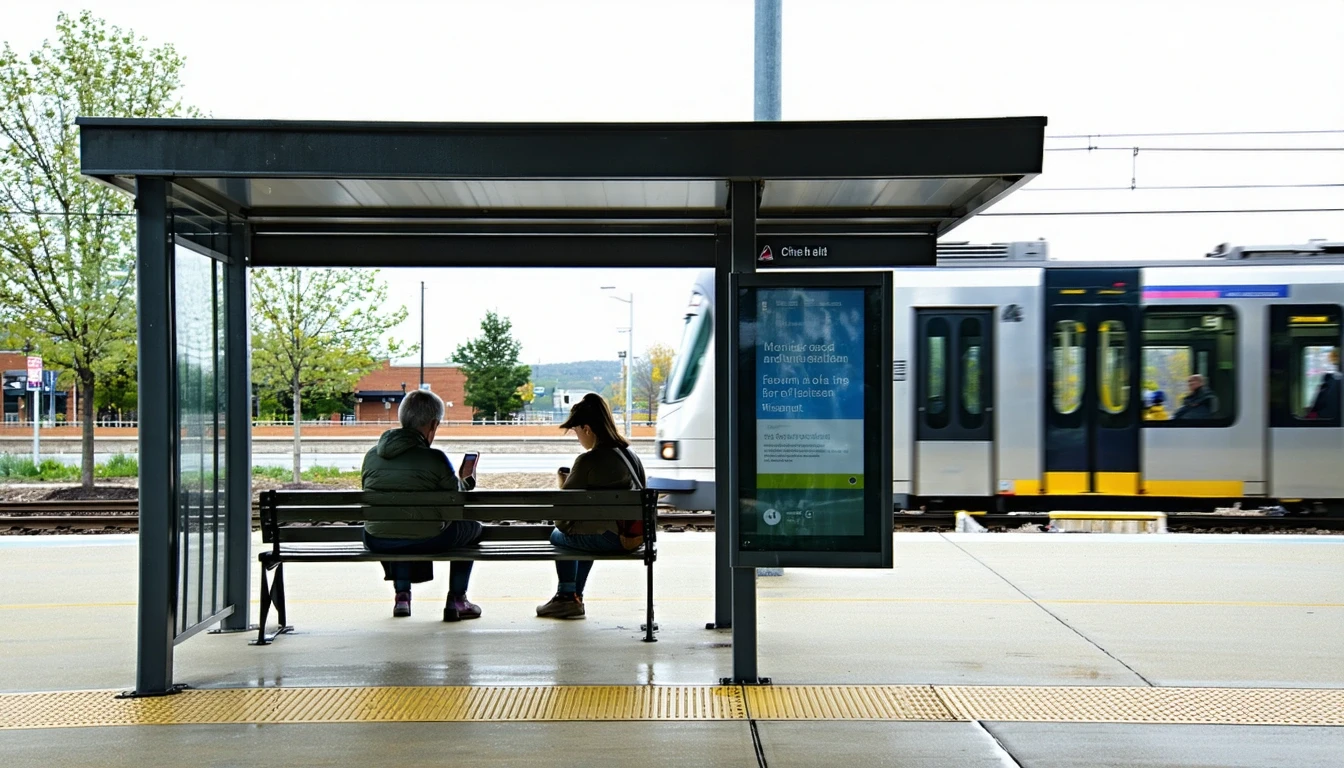
How People Get Around Grandview
Grandview operates as a car-oriented suburb. Pedestrian infrastructure is minimal relative to the road network, and the city’s development pattern reflects decades of automobile-first planning. Sidewalks exist in some neighborhoods, but they don’t form a continuous network that supports walking as a primary mode of transportation. Bike infrastructure appears in pockets—enough to notice, but not enough to replace a car for most trips.
What newcomers often misunderstand is that Grandview isn’t designed for spontaneous mobility. Running errands, getting to work, picking up groceries, or meeting friends almost always requires a vehicle. Food and grocery establishments are spread thin, and the density of daily-needs destinations falls below the threshold where walking or biking becomes practical for routine tasks. This isn’t a walkable downtown with corner stores and transit stops—it’s a low-rise, suburban landscape where distance and infrastructure combine to make driving the default.
The city’s layout reinforces this pattern. Residential areas and commercial corridors are separated, and mixed-use development is present but limited. That separation means most households can’t consolidate trips on foot. Even short errands often involve getting in the car, and multi-stop days require planning around parking, traffic, and drive time rather than walking routes or bus schedules.
Public Transit Availability in Grandview
Public transit plays a limited role in Grandview. No transit signal was detected in the city’s infrastructure analysis, and there’s no evidence of bus or rail service dense enough to serve as a primary commuting option for most residents. For households accustomed to cities where transit shapes daily life, this absence is a fundamental shift.
In practice, that means transit-dependent households face significant friction. There’s no fallback system for days when a car isn’t available, no late-night service to rely on, and no network that connects residential neighborhoods to job centers, grocery stores, or healthcare facilities with meaningful frequency. Transit may exist in the broader Kansas City metro area, but Grandview itself doesn’t benefit from the kind of coverage that allows people to live without a car.
This isn’t a gap that can be worked around with careful planning. It’s a structural reality. Households that rely on transit in other cities—students, older adults, single-car families—often find that Grandview simply doesn’t offer the infrastructure to support that lifestyle. The city’s transportation network assumes car ownership, and daily life is organized accordingly.
Driving & Car Dependence Reality
Driving isn’t optional in Grandview—it’s the foundation of how people move through their days. Nearly every household owns at least one vehicle, and many own two or more to accommodate work schedules, school drop-offs, and errands that can’t be consolidated into a single trip.
Parking is abundant and rarely a source of stress. Driveways, garages, and surface lots are the norm, and street parking conflicts are uncommon. That ease of parking reinforces car use, but it also reflects the city’s low-density, spread-out character. Destinations aren’t clustered tightly enough to make walking between them practical, even when parking is convenient.
Sprawl is a defining feature of Grandview’s geography. Residential subdivisions, commercial strips, and employment centers are separated by design, and the distances involved make driving the only realistic option for most trips. That sprawl also means commute flexibility is limited—if your job is across town or in a neighboring suburb, you’re navigating traffic, timing lights, and planning around peak hours, not choosing between a bus and a bike.
For households weighing a move here, the question isn’t whether you’ll need a car—it’s whether you’re prepared for a lifestyle where nearly every trip begins with getting behind the wheel. That dependence shapes everything from your monthly budget in Grandview to how much time you spend managing logistics instead of living spontaneously.
Commuting Patterns & Daily Mobility
Commuting in Grandview is overwhelmingly car-based. The average commute is 22 minutes, and nearly 30% of workers face longer trips—a sign that many residents are traveling to jobs in Kansas City proper, neighboring suburbs, or regional employment hubs rather than working locally. Only 1.7% of workers report working from home, which means the vast majority are on the road five days a week, often during peak hours.
That pattern creates a rhythm of predictable congestion. Morning and evening rush hours shape when people leave the house, when they pick up kids, and when they run errands. Flexibility exists, but it’s constrained by drive time and traffic patterns, not by the ability to hop on a bus or walk to a nearby job.
For single-job commuters, the routine is straightforward: drive to work, drive home, repeat. But for households managing multiple stops—daycare drop-offs, after-school pickups, grocery runs—the lack of transit or walkable density means every trip requires a car, and every day involves careful sequencing of who’s driving where and when.
Who benefits from proximity? Households that work locally or have flexible schedules can reduce their time on the road, but they’re still driving—just less of it. Who absorbs the friction? Families with two working adults, single parents managing school and work schedules, and anyone whose job requires crossing the metro area. In Grandview, commute friction isn’t about crowded trains or unreliable buses—it’s about distance, traffic, and the time cost of car dependence.
Who Transit Works For — and Who It Doesn’t
Transit doesn’t work for most people in Grandview because it doesn’t exist in a form that supports daily life. Households that rely on public transportation in other cities—students without cars, older adults who no longer drive, single-car families trying to stretch one vehicle across two jobs—face real barriers here.
Renters in Grandview’s core neighborhoods might assume proximity to commercial corridors or main roads will offer some transit access, but the infrastructure isn’t there. Even areas with mixed land use and moderate school density don’t have the bus stops, shelters, or service frequency that would make transit a viable alternative to driving.
Homeowners, especially those in outer subdivisions, aren’t expecting transit—they’ve already built their lives around car ownership. But for renters exploring affordability tradeoffs, or households considering a move from a transit-rich city, the absence of public transportation is a deal-breaker. It’s not a matter of convenience—it’s a matter of whether daily life is logistically possible without a car.
The fit question is stark: if you can’t drive, or if your household can’t afford multiple vehicles, Grandview will be a hard place to live. The city’s infrastructure doesn’t accommodate transit dependence, and no amount of planning or route optimization changes that.
Transportation Tradeoffs in Grandview
Choosing to live in Grandview means accepting car dependence in exchange for suburban space, lower housing costs, and proximity to the Kansas City metro. That tradeoff plays out differently depending on household type and priorities.
Driving offers control and predictability. You leave when you’re ready, take the route you prefer, and aren’t subject to service delays or schedule gaps. But that control comes with exposure—to fuel prices, maintenance costs, insurance premiums, and the time cost of being behind the wheel for nearly every trip. There’s no fallback when a car breaks down, no option to skip driving on a high-traffic day.
Transit, where it exists in other cities, offers flexibility and reduces per-trip costs. But in Grandview, that option simply isn’t on the table. The tradeoff isn’t between driving and taking the bus—it’s between living in Grandview with a car, or choosing a different city where transit is viable.
For households that value suburban living and already own reliable vehicles, Grandview’s car-first structure isn’t a drawback—it’s just the baseline. For households trying to reduce transportation costs, avoid car ownership, or maintain flexibility without driving, Grandview’s infrastructure creates friction that’s hard to overcome.
FAQs About Transportation in Grandview (2026)
Is public transit usable for daily commuting in Grandview?
No. Public transit infrastructure in Grandview is minimal to nonexistent, and there’s no bus or rail service dense enough to support daily commuting for most residents. Households that rely on transit in other cities will find that Grandview’s transportation network assumes car ownership.
Do most people in Grandview rely on a car?
Yes. Nearly all households in Grandview own at least one vehicle, and many own two or more. The city’s layout, low pedestrian infrastructure, and sparse daily-needs destinations make driving the default for work, errands, and most other trips.
Which areas of Grandview are easiest to live in without a car?
None, realistically. Even neighborhoods with moderate school density or mixed land use lack the transit coverage, walkable infrastructure, or destination density needed to support car-free living. Grandview is structurally car-dependent across the board.
How does commuting in Grandview compare to nearby cities?
Grandview’s average commute time is 22 minutes, and nearly 30% of workers face longer trips—often to jobs in Kansas City or neighboring suburbs. The commute experience is car-based and shaped by regional traffic patterns, not by transit options or walkable job centers.
Can you bike for transportation in Grandview?
Bike infrastructure exists in pockets, but it’s not extensive enough to replace a car for most trips. Cycling may work for recreational use or occasional short trips, but the city’s layout and low destination density make biking impractical as a primary mode of transportation.
How Transportation Fits Into the Cost of Living in Grandview
Transportation in Grandview isn’t just a budget line—it’s a structural factor that shapes where you live, how you spend your time, and what kind of flexibility you can expect from daily life. Car dependence means households must account for vehicle ownership, fuel, maintenance, and insurance as non-negotiable costs, and those expenses interact with housing choices, commute length, and household logistics in ways that aren’t always obvious upfront.
For a fuller picture of where money goes and how transportation fits into the broader cost structure, the Monthly Budget article offers numeric context and category breakdowns. But the takeaway here is simpler: in Grandview, transportation isn’t optional, and the infrastructure doesn’t offer alternatives. Understanding that reality—and planning accordingly—is the first step toward making a confident, grounded decision about whether this city fits your life.
How this article was built: In addition to public economic data, this article incorporates location-based experiential signals derived from anonymized geographic patterns—such as access density, walkability, and land-use mix—to reflect how day-to-day living actually feels in Grandview, MO.