
How much is enough to feel at ease? In Gladstone, the answer depends less on hitting a specific number and more on understanding how your household type, lifestyle expectations, and tolerance for tradeoffs align with the city’s cost structure. Comfort isn’t universal—it’s the point where bills stop dictating behavior, choices expand beyond necessity, and saving becomes plausible rather than aspirational.
This article explains who tends to feel financially comfortable in Gladstone and who doesn’t, based on how income pressure actually shows up in daily life.
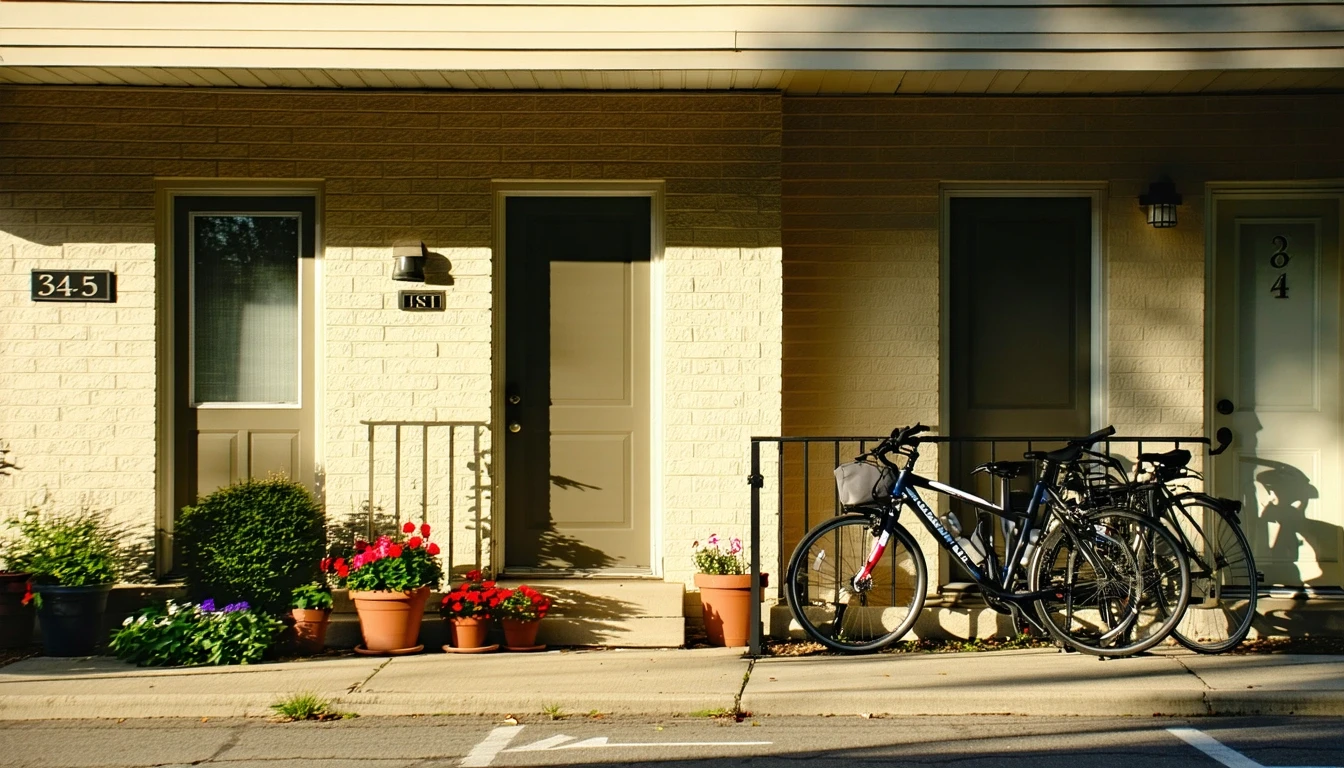
What “Living Comfortably” Means in Gladstone
Comfort in Gladstone reflects suburban Midwest expectations: a safe, well-kept single-family home with a yard, reliable climate control through hot summers and cold winters, the ability to drive without constant fuel anxiety, and enough margin to occasionally dine out or manage an unexpected repair without panic.
It does not mean luxury. It means predictability, breathing room, and the capacity to make decisions based on preference rather than necessity. Households living comfortably here can absorb a $200 surprise bill, replace a worn appliance without financing, and take a weekend trip a few times a year. They aren’t wealthy—they simply have enough cushion that month-to-month volatility doesn’t destabilize their plans.
Gladstone’s median household income sits at $68,633 per year (roughly $5,719 gross monthly). That figure represents the midpoint: half of households earn more, half earn less. It does not define comfort—it simply anchors the local income distribution.
Where Income Pressure Shows Up First
In Gladstone, monthly expenses create pressure in predictable ways, shaped by the city’s suburban structure and climate exposure.
Housing Tradeoffs
With a median home value of $194,900 and median gross rent of $1,048 per month, housing is the largest single cost for most households. Renters face fewer maintenance surprises but no equity accumulation. Owners gain stability and asset-building potential but absorb property taxes, insurance (which has risen notably in recent years due to regional storm risk), and the full cost of repairs.
Households stretching to afford housing—whether paying more than 30% of gross income on rent or carrying a mortgage with minimal emergency reserves—experience the sharpest pressure. A furnace failure in January or a roof leak after a spring storm becomes a financial crisis rather than an inconvenience.
Utility Volatility
Gladstone’s climate demands both heating and cooling. Summers bring extended heat that drives air conditioning costs; winters require consistent heating through freezing stretches. Electricity rates run 13.12¢/kWh, and natural gas costs $28.51/MCF. While these rates are moderate, total utility bills swing significantly by season.
Households living comfortably can absorb a $180 summer cooling bill or a $140 winter heating bill without adjusting other spending. Households under pressure must choose: reduce comfort (set the thermostat higher in summer, lower in winter) or cut discretionary spending elsewhere.
Transportation: Time vs. Money
Gladstone’s car-oriented layout means most errands and commutes require driving. Gas prices currently sit at $2.49/gallon—relatively low—but the cumulative cost of fuel, insurance, maintenance, and vehicle depreciation still represents a major monthly outflow.
Bus service is present, offering some relief for households willing to trade time for savings, but the system’s limited reach means most residents depend on personal vehicles. Comfortable households own reliable, paid-off cars and can afford routine maintenance. Households under pressure drive older vehicles, defer oil changes, and face the constant risk that a breakdown will cascade into missed work or emergency debt.
Family-Specific Pressure
Gladstone offers strong family infrastructure: schools and playgrounds are well-distributed, parks are plentiful, and grocery density is high. But families face compounding costs that single adults and couples do not: childcare (if applicable), larger housing needs, higher utility bills, more frequent grocery trips, and the unpredictable expenses of raising children (sports fees, school supplies, medical co-pays).
Comfortable families have enough income to cover these costs without constant recalibration. Families under pressure must make frequent tradeoffs: skipping extracurriculars, delaying dental visits, or relying on informal childcare networks.
How the Same Income Feels Different by Household
Income pressure is not purely a function of earnings—it’s shaped by household composition, fixed costs, and lifestyle expectations.
Single Adults
A single adult earning around the median household income ($68,633 annually, or roughly $5,719 gross monthly) typically experiences the least pressure. With modest housing needs—often a one-bedroom apartment or small rental—and no dependents, discretionary income remains after covering rent, utilities, transportation, and food.
Comfort arrives when rent stays below $1,200, the car is reliable, and there’s enough margin to dine out occasionally, maintain an emergency fund, and save modestly. Single adults earning significantly below the median (say, $40,000 annually or $3,333 gross monthly) face tighter constraints but can still achieve stability if housing costs remain low and lifestyle expectations stay grounded.
Couples (No Children)
Dual-income couples without children often experience the most financial ease in Gladstone. Two incomes allow for better housing (a two-bedroom apartment or small house), more reliable vehicles, and greater discretionary spending. Even if one partner earns below the median, the combined income typically provides substantial breathing room.
Single-income couples face more pressure, particularly if housing costs approach 30% of gross income. Comfort depends on whether the earning partner’s income significantly exceeds the median and whether the couple’s lifestyle expectations align with a single paycheck.
Families with Children
Families experience the most variable outcomes. A household earning $80,000–$90,000 annually (roughly $6,667–$7,500 gross monthly) with one or two children can live comfortably if housing costs are controlled, vehicles are paid off, and both partners work. But the same income feels tight if the family rents a larger home, carries car payments, or faces high childcare costs.
Families earning near or below the median often experience persistent pressure. Childcare alone can consume $800–$1,200 per month per child (if applicable), and larger homes drive up both rent/mortgage and utility costs. Comfort for families typically requires income well above the median—often $90,000+ annually—to maintain stability without constant financial recalibration.
The Comfort Threshold (Qualitative)
The comfort threshold in Gladstone is not a single income figure—it’s the point where financial behavior shifts from reactive to proactive.
Households below this threshold make decisions in response to immediate pressure: “Can we afford this repair?” “Do we skip this purchase to cover that bill?” “Should we lower the thermostat to reduce this month’s utility cost?” Life is manageable, but margin is thin.
Households above the threshold make decisions based on preference and long-term goals: “Do we want to renovate the kitchen?” “Should we save more aggressively or take a vacation?” “Is now the right time to replace the car?” Bills are predictable, surprises are absorbable, and saving happens consistently rather than sporadically.
For single adults, this threshold often arrives around $50,000–$55,000 annually (roughly $4,167–$4,583 gross monthly). For couples, it typically occurs around $70,000–$80,000 combined (roughly $5,833–$6,667 gross monthly). For families, it usually requires $90,000+ annually (roughly $7,500+ gross monthly), depending on the number of children and housing choices.
These are not guarantees—they are patterns observed across household types with similar cost structures and lifestyle expectations.
Why Online Cost Calculators Get Gladstone Wrong
Most cost-of-living calculators produce a single “required income” figure by summing average costs across categories: housing, food, transportation, healthcare, taxes. The result is a number that feels precise but misleads in three critical ways.
They Ignore Household-Specific Tradeoffs
A single adult renting a one-bedroom apartment and a family of four renting a three-bedroom house face entirely different cost structures, yet many calculators treat “housing” as a single average. The same problem applies to transportation (one car vs. two), food (cooking for one vs. feeding children), and utilities (small apartment vs. large house).
They Assume Static, Average Behavior
Calculators assume you’ll spend the “average” amount on dining out, entertainment, and discretionary purchases. But comfort is not about matching averages—it’s about having enough income that you can choose to spend more or less based on your priorities, without destabilizing your budget.
They Don’t Account for Volatility
Gladstone’s utility costs swing by season. Transportation costs spike when a car needs repair. Insurance premiums rise unpredictably. Calculators present smooth monthly averages, but real life is lumpy. Comfortable households absorb this lumpiness; pressured households scramble to manage it.
People feel surprised after moving because they optimized for a total rather than understanding which specific costs would dominate their experience and whether their household type and income level could handle the resulting pressure.
How to Judge Whether Your Income Fits Gladstone
Rather than asking “Is my income high enough?”, ask these questions:
- How sensitive are you to housing tradeoffs? If you need a specific type of home (large yard, updated kitchen, particular neighborhood), can your income support that preference, or will you stretch to afford it?
- Can you absorb seasonal utility swings? Will a $180 summer cooling bill or a $140 winter heating bill force you to cut other spending, or can you pay it without recalibration?
- Is time or money your limiting factor? If you’re willing to trade time for savings (e.g., using bus service, cooking all meals at home, doing your own maintenance), you can live comfortably on less. If your time is constrained (long commute, caregiving responsibilities, demanding job), you’ll need more income to buy convenience.
- How much flexibility do you expect month to month? Do you need discretionary income for dining out, hobbies, and spontaneous purchases, or are you comfortable with a tighter, more predictable budget?
- What happens if something breaks? Can you cover a $500 car repair, a $300 medical bill, or a $200 appliance replacement without borrowing or skipping other obligations?
Your answers to these questions matter more than any income threshold. Gladstone works well for households whose income level, cost tolerance, and lifestyle expectations align. It creates persistent pressure for those whose expectations exceed their income or whose household type faces compounding costs.
FAQs About Living Comfortably in Gladstone
Is $60,000 a year enough to live comfortably in Gladstone?
For a single adult or a couple without children, $60,000 annually (roughly $5,000 gross monthly) typically provides comfort if housing costs stay moderate and lifestyle expectations remain grounded. For a family with children, $60,000 creates persistent pressure unless housing is very affordable or one partner’s income is supplemented by the other’s earnings.
Do you need to own a car to live in Gladstone?
Practically, yes. While bus service exists, Gladstone’s layout and the limited reach of transit mean most errands, commutes, and daily tasks require driving. Households without a car face significant time costs and logistical friction.
How much do utilities really cost in Gladstone?
Utility costs vary widely by home size, insulation quality, and household behavior. A well-insulated apartment might see $80–$120 monthly bills in mild months, spiking to $150–$180 in summer or winter. A larger, older house can easily exceed $200 in peak months. The key question is not the average—it’s whether you can absorb the seasonal swings without cutting other spending.
Can you live comfortably in Gladstone on one income?
It depends on the income level and household size. A single adult earning $50,000+ annually can live comfortably. A single-income couple without children can achieve comfort if the earner makes $70,000+ annually. A single-income family with children typically needs $90,000+ annually to avoid persistent pressure, and even then, financial margin remains limited.
What’s the biggest financial mistake people make when moving to Gladstone?
Underestimating how car dependency, utility volatility, and housing maintenance costs compound over time. People budget for rent or mortgage but don’t account for the cumulative cost of driving everywhere, the seasonal swings in heating and cooling bills, or the reality that homeownership includes constant small repairs. Comfort requires income beyond the sum of average costs—it requires margin to absorb volatility and unpredictability.
How this article was built: In addition to public economic data, this article incorporates location-based experiential signals derived from anonymized geographic patterns—such as access density, walkability, and land-use mix—to reflect how day-to-day living actually feels in Gladstone, MO.
Gladstone can work well for some households—but only if expectations match reality. Comfort here is not about earning a specific amount; it’s about understanding where pressure shows up, how your household type experiences that pressure, and whether your income provides enough margin to absorb volatility without constant recalibration. If your income, cost tolerance, and lifestyle expectations align with what costs people most in Gladstone, the city offers stability, safety, and a predictable suburban quality of life. If they don’t, financial pressure becomes a persistent feature of daily experience.