
A first-time renter moving to Gladstone faces a monthly baseline of roughly $1,048 for a typical apartment, plus utilities that swing with Missouri’s seasonal extremes—hot summers that push cooling costs and cold stretches that demand steady heating. A first-time buyer entering at the city’s median home value of $194,900 takes on not just a mortgage, but property taxes, maintenance reserves, and the full weight of utility exposure in a standalone structure. Both paths offer access to the same well-stocked grocery corridors and family-friendly parks, but they differ sharply in how costs behave over time and who controls them.
Gladstone’s housing market sits below the national price baseline, with a regional price parity index of 93, meaning the same dollar stretches further here than in most metro areas. That affordability advantage shows up in both rent and purchase prices, but it doesn’t eliminate the structural tradeoffs between renting and owning—it just shifts the entry point lower. The city’s median household income of $68,633 per year provides a realistic benchmark for evaluating whether these housing costs fit within a sustainable budget, though this article focuses on cost behavior rather than personal affordability thresholds.
What makes Gladstone distinct is not just the price level, but the infrastructure that surrounds it. The city supports dense grocery and food access, integrated parks, and strong family amenities—schools and playgrounds meet meaningful density thresholds across the area. Walkable pockets exist, and bus service is present, though the pedestrian-to-road ratio suggests car ownership remains the dominant mobility pattern. These conditions shape what drives expenses for renters and owners alike, particularly around transportation, errands, and household logistics.
The Housing Market in Gladstone Today
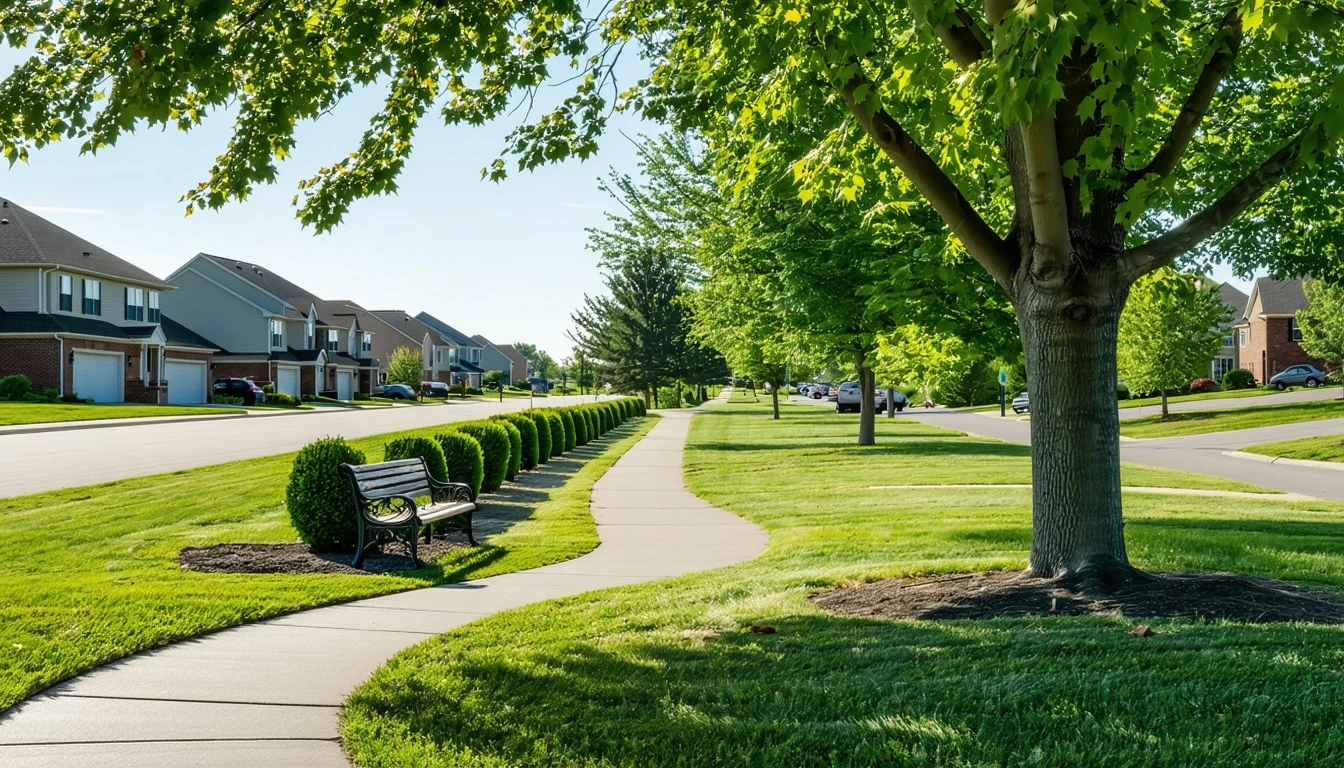
Gladstone functions as a northern suburban anchor within the Kansas City metro, offering a mix of single-family homes, townhomes, and apartment complexes that reflect decades of incremental development. The housing stock is neither brand-new nor uniformly aging—building levels fall into a mixed range, and land use combines residential and commercial zones throughout the city. This creates pockets of walkability and errand accessibility, but it also means housing condition and utility efficiency vary widely across neighborhoods.
The city’s below-national-average pricing reflects its position as a mature suburb rather than a high-growth or luxury market. Buyers and renters here are not competing with the same price pressure found in urban cores or rapidly gentrifying corridors. Instead, the market rewards patience and inspection—homes and units that appear similar on paper can differ significantly in insulation quality, HVAC age, and underlying maintenance needs. These differences don’t always show up in listing prices, but they define long-term cost exposure.
Gladstone’s economic stability—evidenced by a 3.2% unemployment rate—supports steady housing demand without the volatility seen in boom-and-bust markets. This stability benefits both renters, who face less speculative rent inflation, and owners, who can expect moderate appreciation rather than dramatic swings. However, stability also means less opportunity for rapid equity gains, which matters for buyers weighing ownership as wealth-building versus cost control.
Renting in Gladstone
At $1,048 per month, Gladstone’s median gross rent sits comfortably below the thresholds that trigger severe cost burden in most households, particularly when paired with the city’s lower overall price environment. Renters here benefit from predictable monthly obligations—rent, utilities, and renter’s insurance—without exposure to property taxes, maintenance surprises, or long-term capital commitments. This predictability matters most for households still building savings, testing job stability, or uncertain about long-term plans in the Kansas City metro.
Rental availability in Gladstone spans a range of building types, from large apartment complexes near commercial corridors to smaller multi-family units in residential pockets. Location within the city affects not just rent levels, but also access to the grocery density and park systems that reduce household friction. Renters in areas with high food establishment density—where Gladstone performs well—spend less time and fuel on errands, a hidden cost advantage that doesn’t appear in lease agreements but shapes monthly budget reality.
Renters also avoid the utility volatility that hits owners harder. While tenants still pay for electricity and gas in most arrangements, they typically occupy smaller, more thermally efficient units within multi-family buildings. Shared walls reduce heating and cooling loads, and landlords often bear responsibility for infrastructure failures like aging HVAC systems or poor insulation. This insulation from capital risk is a structural advantage, not just a temporary convenience.
However, renting in Gladstone means accepting limited control over housing stability. Lease renewals, building sales, and landlord decisions can force moves or rent adjustments on timelines that don’t align with tenant priorities. Renters also miss the opportunity to lock in long-term housing costs through fixed-rate financing, leaving them exposed to rental market trends over time, even if those trends remain moderate in stable markets like Gladstone’s.
Owning a Home in Gladstone
Buying a home in Gladstone at the median value of $194,900 represents a below-national-average entry point, but it shifts the cost structure entirely. Owners take on property taxes, homeowner’s insurance, and maintenance reserves—expenses that renters avoid but that define the true cost of ownership. In Missouri, property taxes vary by jurisdiction and assessment practices, and while specific rates for Gladstone aren’t provided here, owners should expect annual tax bills that fluctuate with assessed values and local levy changes.
Maintenance exposure is the most underestimated ownership cost. Gladstone’s mixed building stock means buyers inherit homes of varying ages, and older structures demand more frequent intervention—roof replacements, HVAC overhauls, water heater failures, and foundation repairs. These costs arrive unpredictably, and unlike rent, they can’t be deferred without compounding risk. Owners must budget not just for known expenses, but for the statistical likelihood of large, irregular outlays.
Utility costs hit owners harder than renters, particularly in standalone single-family homes. Gladstone’s climate demands both heating and cooling across the year, and older homes with poor insulation or aging HVAC systems face significantly higher bills than newer or well-maintained properties. Electricity rates of 13.12¢/kWh and natural gas prices of $28.51/MCF provide the unit costs, but total exposure depends entirely on building efficiency and household behavior—variables owners control but must actively manage.
Ownership in Gladstone also introduces governance complexity. Some neighborhoods operate under homeowner associations with dues, rules, and enforcement mechanisms that add cost and limit autonomy. Others lack formal governance, leaving infrastructure maintenance and neighborhood standards to individual initiative. Neither model is inherently better, but buyers must understand which they’re entering and how it affects both cost and control.
The upside of ownership is cost predictability over time. A fixed-rate mortgage locks in the largest component of housing expense, insulating owners from rental market trends and providing a foundation for long-term financial planning. Owners also build equity as they pay down principal, though in moderate-appreciation markets like Gladstone, this wealth-building function is slower and less dramatic than in high-growth metros.
Apartment vs House in Gladstone — Cost Behavior Comparison
| Expense Category | Apartment | House |
|---|---|---|
| Heating & Cooling | Lower exposure due to shared walls and smaller conditioned space; less sensitive to Missouri’s seasonal swings | Higher exposure in standalone structures; older homes with poor insulation face significant summer cooling and winter heating costs |
| Maintenance Responsibility | Landlord absorbs HVAC, roof, and structural failures; tenant handles only interior damage | Owner bears full cost of all systems, deferred maintenance compounds over time, irregular large outlays required |
| Outdoor & Green Space Access | Relies on Gladstone’s integrated park system, which is dense and accessible citywide | Private yard provides immediate access but requires maintenance labor and seasonal upkeep |
| Errands & Grocery Access | High food and grocery density throughout Gladstone reduces travel friction equally for both housing types | Same access as apartments; housing type does not differentiate errands burden here |
| Mobility & Transportation | Walkable pockets and bus service present but car ownership still dominant; apartment location near corridors may reduce driving slightly | Car dependency remains primary; single-family homes often located in areas with lower pedestrian infrastructure density |
Why these differences matter in Gladstone: The comparison above isolates categories where housing type changes cost behavior or household burden in this city specifically. Utility exposure differs because of Gladstone’s seasonal climate and mixed building stock age. Maintenance responsibility reflects ownership structure, not location. Outdoor access leverages Gladstone’s strong park density, which reduces the private-yard advantage seen in cities with limited public green space. Errands and mobility reflect the city’s infrastructure—grocery density is high regardless of housing type, but car orientation persists across most neighborhoods. Categories like insurance or property taxes were excluded because they apply uniformly to ownership regardless of structure type, and their magnitude isn’t determined by the apartment-versus-house distinction.
Utilities & Upkeep Differences
Utility exposure in Gladstone is shaped by Missouri’s climate, which demands both air conditioning through hot, humid summers and heating through cold winter stretches. Apartment dwellers benefit from shared-wall thermal efficiency and smaller square footage, which limits both heating and cooling loads. Single-family homeowners, particularly those in older or poorly insulated structures, face dominant seasonal utility costs that can exceed typical estimates by wide margins during extreme weather.
Natural gas heating is common in Gladstone’s housing stock, and winter months drive the highest consumption. Homes with aging furnaces, leaky ductwork, or insufficient insulation experience noticeable cost escalation during prolonged cold periods. Electricity costs peak in summer, when air conditioning runs continuously through extended heat. These seasonal swings are predictable in direction but vary in magnitude depending on building condition—a reality that apartment renters largely avoid but homeowners must manage actively.
Maintenance differences extend beyond utilities. Homeowners in Gladstone inherit responsibility for roofs, foundations, HVAC systems, water heaters, and appliances—all of which age on independent timelines and fail without regard to household cash flow. Apartment renters delegate these risks to landlords, who absorb both the cost and the logistical burden of coordinating repairs. This delegation is not free—it’s priced into rent—but it eliminates the volatility and planning complexity that homeowners face.
Outdoor maintenance is another differentiator. Single-family homes with yards require seasonal labor: mowing, trimming, leaf removal, and snow clearing. These tasks can be handled personally or contracted out, but either approach imposes time or money costs that apartment dwellers avoid. Gladstone’s integrated park system provides public green space access across the city, reducing the recreational value of private yards and making outdoor maintenance feel more like obligation than advantage for some households.
Rent vs Buy: Long-Term Exposure in Gladstone
Renting in Gladstone offers cost predictability in the short term but leaves households exposed to rental market trends over time. Lease renewals can bring rent increases, and while Gladstone’s stable economy moderates speculative inflation, renters have no mechanism to lock in housing costs permanently. Over a decade, cumulative rent payments build no equity and provide no hedge against future market shifts, even modest ones.
Owning a home in Gladstone replaces rental volatility with ownership exposure. Property taxes, insurance, and maintenance costs all shift over time, driven by assessment changes, claims history, and the inevitable aging of building systems. However, the largest component—mortgage principal and interest—remains fixed for buyers who secure fixed-rate financing. This stability allows owners to plan around predictable housing costs, even as other expenses fluctuate.
The tradeoff is control versus flexibility. Owners gain the ability to improve efficiency, manage maintenance timing, and capture equity accumulation, but they sacrifice the ability to relocate quickly or avoid capital risk. Renters retain mobility and avoid large irregular expenses, but they surrender control over housing stability and long-term cost trajectory. In Gladstone’s moderate-appreciation market, neither path offers dramatic financial advantage—the choice hinges on household priorities around risk, control, and time horizon.
Ownership also introduces tax and governance complexity that renters avoid. Property tax obligations persist regardless of income changes, and local levy increases or reassessments can raise costs without warning. Homeowner association dues, where applicable, add another layer of non-negotiable expense. These obligations don’t make ownership unworkable, but they demand financial resilience that renting does not.
How this article was built: In addition to public economic data, this article incorporates location-based experiential signals derived from anonymized geographic patterns—such as access density, walkability, and land-use mix—to reflect how day-to-day living actually feels in Gladstone, MO.
FAQs About Housing Costs in Gladstone
Is renting or buying more affordable in Gladstone, MO?
Affordability depends on time horizon and household resilience. Renting at $1,048 per month avoids property taxes, maintenance, and capital risk, making it more predictable in the short term. Buying at $194,900 requires higher upfront costs and exposes owners to irregular expenses, but it locks in the largest housing cost component and builds equity over time. Neither path is universally cheaper—the right choice depends on savings, stability, and plans to stay.
How do utility costs differ between apartments and houses in Gladstone?
Apartments benefit from shared-wall insulation and smaller conditioned space, reducing heating and cooling loads during Missouri’s seasonal extremes. Single-family homes, especially older ones, face higher utility exposure due to standalone structure, larger square footage, and variable insulation quality. Seasonal swings are more pronounced for homeowners, particularly during extended summer heat and winter cold.
What hidden costs should first-time buyers expect in Gladstone, MO?
First-time buyers often underestimate property taxes, homeowner’s insurance, and maintenance reserves. Gladstone’s mixed housing stock means older homes may require HVAC replacement, roof repairs, or water heater upgrades within the first few years. Utility costs also rise in standalone homes compared to apartments. Buyers should budget for irregular large expenses, not just monthly mortgage payments.
Does Gladstone’s walkability reduce housing costs?
Gladstone has walkable pockets and high grocery density, which reduces transportation friction for errands. However, car ownership remains the dominant mobility pattern, and bus service is present but limited. Housing location near commercial corridors can lower driving costs slightly, but the city’s overall infrastructure still favors car dependency. Walkability reduces convenience costs more than direct housing expenses.
How does Gladstone’s housing market compare to nearby Kansas City suburbs?
Gladstone’s below-national-average pricing and stable economy position it as a moderate-cost suburban option within the Kansas City metro. It offers strong family infrastructure, accessible grocery options, and integrated parks without the price premium of higher-growth or more urbanized areas. Buyers and renters trade some walkability and transit access for lower entry costs and predictable market behavior.
Making Housing Choices in Gladstone
Housing costs in Gladstone reflect a mature suburban market with below-national-average pricing, strong family infrastructure, and accessible daily errands. Renters benefit from predictable monthly costs and insulation from maintenance risk, while owners gain long-term cost stability and equity accumulation at the expense of capital exposure and irregular outlays. Both paths offer access to the same parks, schools, and grocery density, but they differ fundamentally in who controls costs and who bears risk.
The city’s mixed building stock and car-oriented mobility mean that housing choice in Gladstone is less about location differentiation and more about cost structure fit. Families with stable income and long-term plans benefit from ownership’s predictability and equity-building function. Households prioritizing flexibility, mobility, or short-term cost control fit better as renters. Neither choice eliminates exposure—it just shifts which risks and tradeoffs a household accepts.
For a clearer view of how these housing tradeoffs interact with transportation, utilities, and household logistics, exploring the full cost structure helps clarify which path aligns with your priorities. And for households planning a move, understanding moving companies, costs, and logistics ensures the transition itself doesn’t undermine the affordability advantage Gladstone offers.