
Is Gilroy the kind of place you grow roots—or just pass through?
Tucked at the southern edge of Silicon Valley, Gilroy occupies an unusual emotional space: it’s close enough to the Bay Area’s economic engine to feel the pull, but far enough to retain a slower, small-town identity. For some, that distance is a relief—a chance to afford a yard, raise kids near parks, and escape the density. For others, it’s a daily reminder of what’s missing: the commute stretches long, the nightlife stays quiet, and the walkable urban texture never quite arrives. Understanding whether Gilroy feels like home depends less on what it offers and more on what you’re willing to trade.
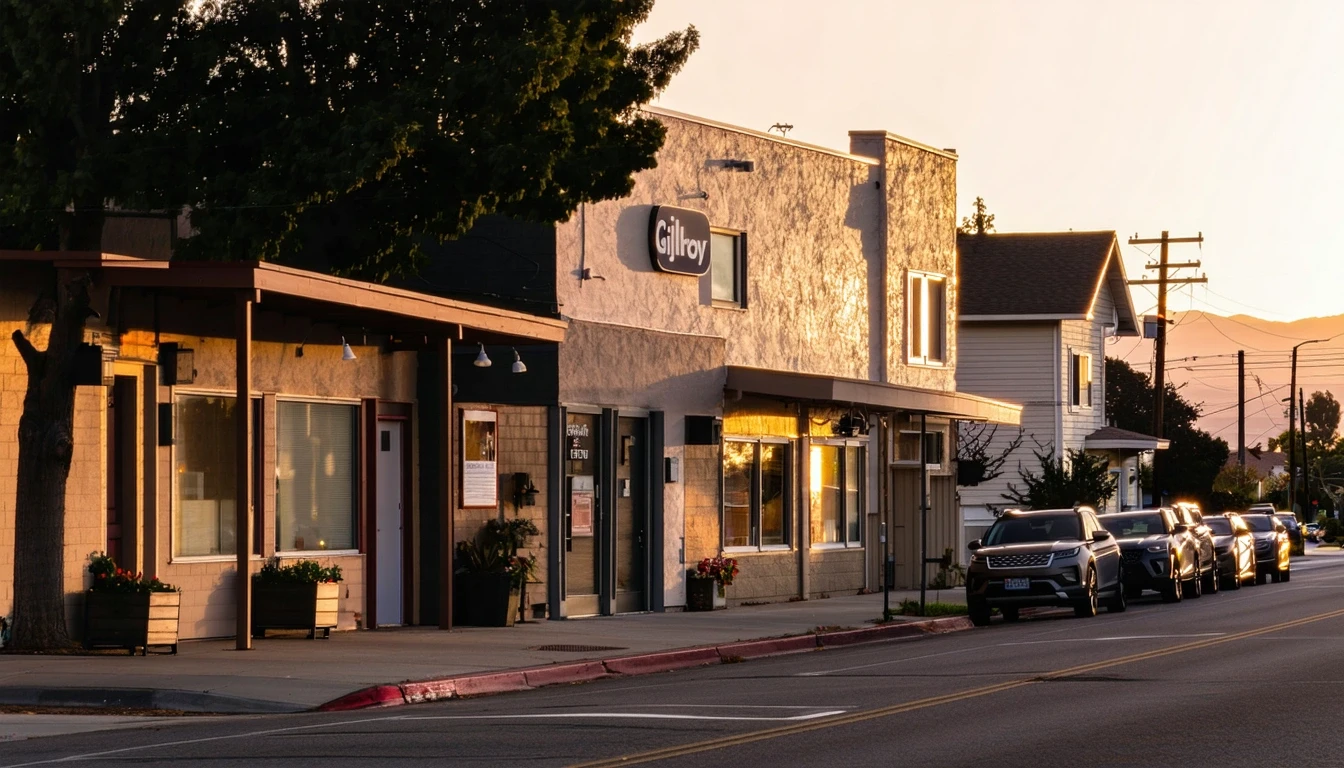
What It Feels Like to Live Here
Gilroy’s vibe is rooted in tension—not conflict, but the ongoing negotiation between its agricultural past and its role as a bedroom community for Silicon Valley. Long-time residents often describe a protective pride in the city’s heritage, while newcomers tend to focus on pragmatic tradeoffs: housing that’s more attainable than San Jose, schools that feel present if not exceptional, and errands that don’t require constant planning thanks to broadly accessible grocery and food options throughout the city.
The city’s infrastructure tells a story of uneven evolution. Walkable pockets exist—pedestrian paths and bike lanes appear in parts of town, and rail service connects residents to job centers without requiring a car for every trip. But these features don’t blanket the city uniformly. Some neighborhoods feel designed for strollers and evening walks; others remind you that the car is still king. Parks are plentiful and well-distributed, and water features add a sense of openness, but the overall urban form remains mixed: mid-rise buildings in some areas, low-slung residential blocks in others, and a land-use pattern that blends commercial and residential life without fully committing to either.
Healthcare access reflects a similar middle ground. Clinics and pharmacies handle routine needs locally, but the absence of a hospital means serious medical situations require a drive. For families, that’s a quiet but persistent concern. For younger, healthier residents, it barely registers.
What keeps coming up emotionally is the commute. Gilroy’s affordability relative to the core Bay Area comes with a geographic cost. Those working in San Jose, Cupertino, or Mountain View face long drives or rail commutes that eat into evenings and weekends. The city’s role as a pass-through point—close to Highway 101, near enough to matter, far enough to feel separate—shapes how people experience daily life. Some find the distance liberating; others feel it as friction.
Social Media Buzz in Gilroy
Online, Gilroy’s conversations tend to cluster around a few recurring themes: pride in local identity, frustration with growth and traffic, and a protective instinct when outsiders reduce the city to a punchline or a commute stop. Platforms like Facebook groups and regional Reddit threads reflect a community that’s self-aware about its tradeoffs but sensitive to dismissiveness.
“It’s not fancy, but it’s ours. People don’t get that until they’ve lived here a while.”
“I moved here for the space and the schools. The commute is brutal, but I couldn’t afford this anywhere closer.”
“Gilroy’s changing fast. I’m not sure it knows what it wants to be yet—small town or suburb.”
The tone is rarely celebratory or bitter—it’s more evaluative. People weigh what they’ve gained against what they’ve given up, and they’re quick to correct narratives that paint the city as either idyllic or irrelevant. There’s a recurring sense that Gilroy is in transition, and residents are watching closely to see whether that transition preserves what they value or erodes it.
Local News Tone
Coverage of Gilroy tends to frame the city through the lens of growth, infrastructure strain, and identity preservation. Headlines don’t announce crises—they surface ongoing debates about what the city should become as housing demand increases and commuter populations grow.
- “Community Debates What Growth Should Look Like”
- “New Retail Arrives as Town Identity Evolves”
- “Residents Weigh Convenience Against Small-Town Character”
- “Traffic and Commute Times Dominate Local Concerns”
- “Parks and Open Space Remain Key to City’s Appeal”
The framing is rarely alarmist, but it’s not complacent either. Local outlets tend to reflect the same tension residents express: Gilroy is caught between preserving a slower pace and accommodating the pressures of being within reach of one of the country’s most expensive metros. The result is a news tone that’s cautiously forward-looking, aware of tradeoffs, and attentive to the voices of both long-time locals and recent arrivals.
Review-Based Public Perception
On platforms like Google Reviews, Yelp, and Nextdoor-style forums, Gilroy’s public perception splits along expectation lines. Those who moved here seeking suburban comfort, family infrastructure, and housing tradeoffs that favor space over density tend to express satisfaction. They praise the parks, the grocery accessibility, the relative quiet, and the sense that their kids can play outside without constant supervision.
“We wanted a yard and good schools without paying San Jose prices. Gilroy delivered.”
“The parks are great, and we can actually walk to the store. It’s not fancy, but it works.”
Those who arrived expecting urban texture, walkability throughout the city, or vibrant nightlife tend to feel disappointed. They note the car dependency in many areas, the limited dining and entertainment options, and the sense that evening life shuts down early.
“If you’re looking for things to do after 8 p.m., you’re going to be driving somewhere else.”
“It’s fine if you’re settled and family-focused. If you’re young and want variety, it’s going to feel limiting.”
Neighborhood variation matters, though it’s rarely named specifically. Newer planned areas tend to feel more polished and family-oriented, with sidewalks, parks, and newer retail nearby. Older pockets can feel more car-dependent and less maintained, though they often come with larger lots and lower prices. The city’s mixed urban form means that two households a mile apart can have very different daily experiences.
Comparison to Nearby Cities
| Category | Gilroy | Morgan Hill | Hollister |
|---|---|---|---|
| Overall Vibe | Small-town identity with commuter pressure | Polished suburban, closer to Silicon Valley core | More isolated, slower pace, less commuter-oriented |
| Commute Tradeoff | Long but manageable with rail option | Shorter to South Bay job centers | Longer, fewer transit options |
| Walkability | Pockets of pedestrian infrastructure, uneven | More uniform suburban walkability | Primarily car-dependent |
| Family Infrastructure | Schools and parks present, not exceptional | Stronger school reputation, more amenities | Smaller scale, fewer options |
| Affordability | Relatively more affordable within Bay Area reach | Higher cost, closer to core pricing | More affordable, but more remote |
Gilroy sits in the middle of a geographic and emotional spectrum. Morgan Hill offers a shorter commute and more polished suburban infrastructure, but at a higher cost. Hollister offers more affordability and a slower pace, but at the expense of isolation and fewer amenities. Gilroy’s appeal lies in its position as a compromise: close enough to access Silicon Valley jobs and services, far enough to retain some breathing room, and affordable enough to make the tradeoff feel worth it—if you’re willing to spend time in the car and accept that urban texture won’t be part of the deal.
What Locals Are Saying
“We moved here from San Jose five years ago. The commute is rough, but we have a backyard now, and the kids can bike to school. That wasn’t happening where we were.”
“I grew up here, and it’s weird watching it change. It’s not the same town, but I get why people are moving in. It’s still more affordable than most of the Bay.”
“If you work remotely, Gilroy’s great. If you’re commuting every day, it’s going to wear on you.”
“The parks are honestly better than I expected. We’re out there most weekends, and it doesn’t feel crowded.”
“I wish there was more to do at night. It’s very family-focused, which is fine, but if you’re single or don’t have kids, it can feel isolating.”
“The grocery situation is solid—we don’t have to drive far for anything. That’s a big deal when you’re juggling work and kids.”
“It’s not perfect, but it’s practical. We knew what we were signing up for, and it’s working so far.”
Does Gilroy Feel Like a Good Fit?
Gilroy doesn’t ask you to fall in love with it. It asks you to decide whether its tradeoffs align with your priorities. If you’re a family seeking space, parks, and day-to-day costs that don’t crush you, and you’re willing to absorb a long commute or work remotely, Gilroy tends to deliver. If you’re looking for walkable urbanism, vibrant nightlife, or a city that feels culturally dense and spontaneous, you’re going to feel the gaps.
The city’s infrastructure—walkable in pockets, transit-connected but not transit-rich, family-friendly but not exceptional—reflects its in-between status. It’s not trying to be San Jose, and it’s not trying to be a rural retreat. It’s a place where people make deliberate choices about what ‘enough’ actually means: enough space, enough access, enough affordability, enough infrastructure to function without constant friction.
Whether Gilroy feels like a good fit depends on whether you’re comfortable with that calculus—and whether the things it offers matter more to you than the things it doesn’t.
How this article was built: In addition to public economic data, this article incorporates location-based experiential signals derived from anonymized geographic patterns—such as access density, walkability, and land-use mix—to reflect how day-to-day living actually feels in Gilroy, CA.
The perspectives shown reflect commonly expressed local sentiment and recurring themes in public discussion, rather than individual accounts.