
What “Living Comfortably” Means in Gallatin
Comfort in Gallatin isn’t about luxury—it’s about breathing room. It means your housing payment doesn’t crowd out everything else, that a surprise repair or a hot summer doesn’t force you to reshuffle your month, and that you can occasionally choose convenience over cost without guilt. It’s the difference between managing expenses and being managed by them.
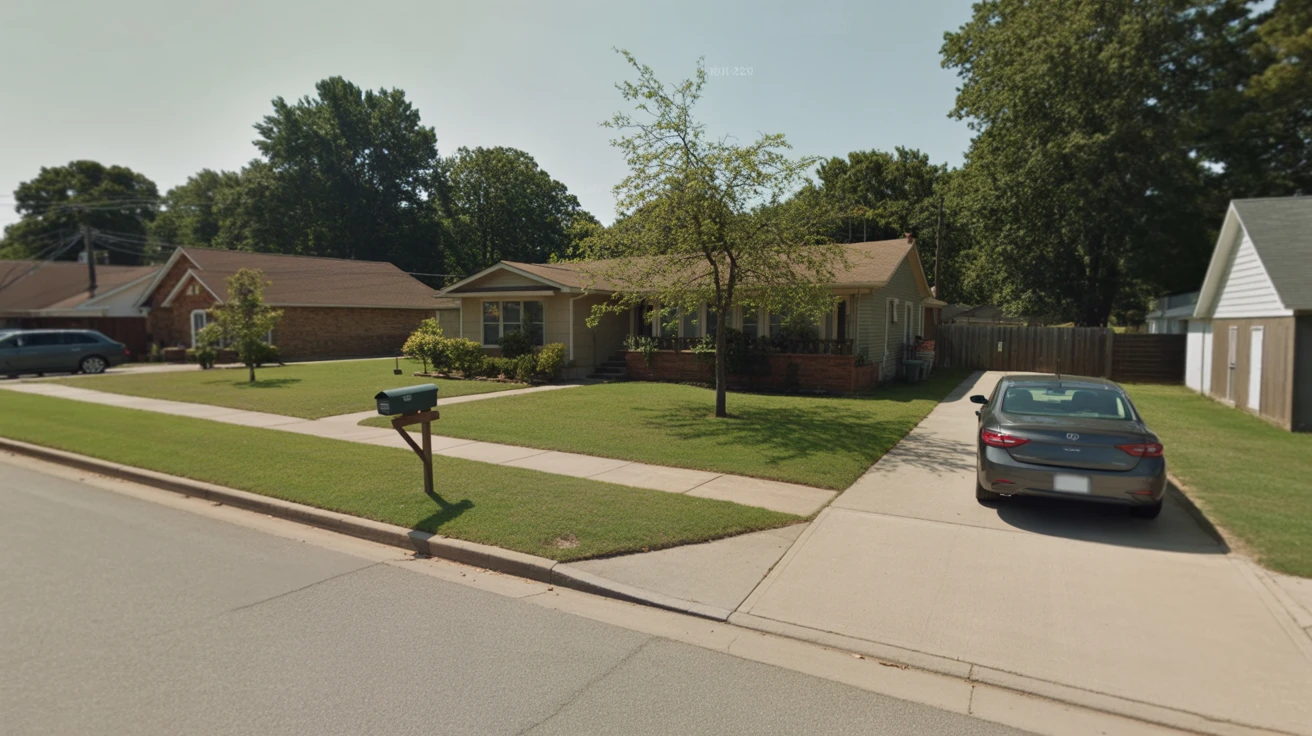
For many households, comfort also means space: a yard, a second bedroom, a garage. Gallatin delivers on that expectation more readily than Nashville proper, but the tradeoff is infrastructure. This is a place where you drive to almost everything, where errands require planning rather than spontaneity, and where time and fuel become recurring costs in ways that aren’t always obvious until you’re living it.
Comfort here is also seasonal. Summers are long and hot, and cooling costs aren’t optional—they’re survival. Winters are mild but not negligible, and heating bills fluctuate with the weather. A comfortable income absorbs those swings without stress. A tight one doesn’t.
Where Income Pressure Shows Up First
Housing is the first place most households feel the squeeze. The median gross rent in Gallatin is $1,250 per month, and the median home value sits at $306,100. For renters, that monthly figure is just the starting point—utilities, parking, and any fees add up quickly. For buyers, the home price translates into a mortgage, property taxes, insurance, and maintenance costs that don’t pause when money is tight.
But housing pressure isn’t just about the payment. It’s about what you give up to make the payment work. Gallatin’s housing stock offers space and relative affordability compared to Nashville, but it often comes with a commute. The average commute here is 26 minutes, and 41.5% of workers face longer trips. That’s time, fuel, and wear on a vehicle that must be factored into the real cost of living here.
Transportation isn’t optional in Gallatin. The infrastructure is car-oriented, with minimal pedestrian density and limited public transit. Running errands, getting to work, taking kids to school—all of it requires a vehicle. For single-car households, that creates logistical friction. For families, it often means a second vehicle, which doubles insurance, maintenance, and fuel costs.
Utilities add another layer of volatility. Electricity rates are 13.47¢/kWh, and natural gas runs $13.18/MCF. In a region where summer heat dominates and air conditioning isn’t negotiable, cooling costs can spike hard. A household that’s comfortable in April may feel stretched by July, not because income changed, but because the weather did.
For families, the pressure points multiply. Gallatin has strong school and playground infrastructure, which eases some logistical burdens, but healthcare access is limited to clinics—there’s no hospital in the immediate area. Routine care is covered, but anything more serious requires a drive. That’s manageable when everyone’s healthy, but it’s a gap that becomes stressful when it’s not.
How the Same Income Feels Different by Household
A single adult earning the median household income of $68,548 per year (roughly $5,712 gross per month) has flexibility that a family of four at the same income does not. The rent or mortgage is the same, but the single adult isn’t splitting it—and they’re also not splitting transportation costs, because they still need a car. They’re not splitting grocery bills, either. The result is that a single-income household often feels more pressure per dollar than a two-income household, even when the total income is identical.
Couples without children occupy a middle ground. They can share housing and vehicle costs, and they benefit from the efficiencies of a two-person household. Errands and commutes are easier to coordinate, and the car dependency that defines Gallatin becomes less burdensome when two people are navigating it together. A couple earning a combined income near or above the median often finds Gallatin comfortable, especially if both work locally or can stagger schedules to reduce peak-hour commuting.
Families with children face a different equation. The strong school and playground infrastructure here is a real asset—it reduces the need for expensive private alternatives and gives kids access to safe, structured spaces. But families also need more space, more vehicles, and more of everything. Groceries, utilities, and transportation costs all scale up. A family at the median income may find Gallatin workable, but comfort requires either additional income or a willingness to accept tighter margins and fewer discretionary choices.
The Comfort Threshold (Qualitative)
Comfort in Gallatin begins when housing costs stop dictating every other decision. It’s when you can afford the rent or mortgage without constantly calculating what’s left over, when a second vehicle or an unexpected repair doesn’t trigger a financial crisis, and when seasonal utility swings are annoying rather than destabilizing.
It’s also when driving everywhere stops feeling like a constraint and starts feeling like a choice. In a car-dependent place, that shift happens when fuel costs, maintenance, and time spent commuting no longer crowd out other priorities. It’s when errands don’t require military-level planning, when you can afford the gas to drive to a better grocery store or a park outside your immediate area, and when the distance between home and work feels manageable rather than punishing.
For families, comfort includes the ability to absorb the costs of childhood—sports, activities, school supplies, healthcare—without constant tradeoffs. It’s when you can take advantage of Gallatin’s family infrastructure without feeling like you’re choosing between participation and financial stability.
Comfort isn’t wealth. It’s the absence of constant financial negotiation. It’s when the structure of daily life in Gallatin—car dependency, sparse errands accessibility, seasonal utility exposure—becomes background noise rather than a source of stress.
Why Online Cost Calculators Get Gallatin Wrong
Most cost-of-living calculators treat Gallatin as a data point: median rent, median income, a few utility rates, and a regional price index of 97 (slightly below the national baseline). They spit out a number and call it done. But those tools miss the texture of how money actually moves here.
They don’t account for the fact that car dependency isn’t just a transportation cost—it’s a time cost, a maintenance cost, and a logistical cost that compounds across every errand and obligation. They don’t capture the reality that sparse errands accessibility means you can’t just walk to a corner store or grab takeout on your way home. Every trip is deliberate, and deliberate trips add up.
Calculators also assume static costs, but utilities here aren’t static. A household that looks affordable in spring can feel tight in summer when cooling costs double. A budget that works in October may not work in January when heating kicks in. The volatility isn’t extreme, but it’s real, and it creates pressure that averages and medians don’t capture.
Finally, calculators don’t know what you expect. If you’re moving from a walkable urban neighborhood where you could live without a car, Gallatin will feel more expensive than the numbers suggest. If you’re moving from a rural area where driving was already the norm, it’ll feel familiar. Comfort isn’t just about income—it’s about whether your expectations and Gallatin’s infrastructure are compatible.
How to Judge Whether Your Income Fits Gallatin
Instead of asking “How much do I need?” ask yourself these questions:
- How sensitive are you to housing tradeoffs? Can you accept a longer commute or a smaller space to keep housing costs manageable, or do you need both proximity and space?
- Can you absorb seasonal utility swings? Will a summer cooling bill that’s double your spring bill create stress, or is that within your margin?
- Is time or money your limiting factor? If driving everywhere takes time you don’t have, no amount of savings on rent will make Gallatin comfortable.
- How much flexibility do you expect month to month? If you need discretionary income for dining out, entertainment, or travel, does your budget support that after housing, transportation, and utilities?
- Do you already own a reliable vehicle, or will you need to finance one? Car dependency is non-negotiable here, and the cost of acquiring and maintaining a vehicle can be the difference between comfort and strain.
- If you have children, does the strong school and playground infrastructure offset the need for paid childcare or private programs? Gallatin’s family infrastructure is an asset, but only if you can take advantage of it.
These aren’t pass/fail questions. They’re calibration tools. The goal is to understand whether the way Gallatin works aligns with the way you live.
Living Comfortably in Gallatin: What the Day-to-Day Actually Requires
Gallatin’s infrastructure shapes daily life in ways that directly affect how far income stretches. Because pedestrian infrastructure is minimal and errands accessibility is sparse, nearly every task—groceries, pharmacy runs, school drop-offs, medical appointments—requires a car. That’s not just a transportation cost; it’s a planning burden. You can’t walk to a corner store when you run out of milk. You can’t grab takeout on your way home unless “on your way” includes a deliberate detour.
For single adults, that friction is constant. Every errand is a trip, every trip burns time and fuel, and the inability to consolidate tasks on foot or via transit means the car becomes the bottleneck for everything. For couples, the logistics ease slightly—two people can divide errands or share a vehicle—but the underlying structure remains. For families, the calculus often tips toward needing a second vehicle, which doubles insurance, maintenance, and fuel costs but eliminates the bottleneck.
The mixed-height building character and presence of both residential and commercial land use mean that some errands and services are reachable, but they’re not densely clustered or easily walkable. You’ll find what you need, but you’ll drive to it. That’s the rhythm here, and it’s a rhythm that rewards households with reliable vehicles, flexible schedules, and the income to absorb the recurring costs of car dependency without constant recalculation.
How this article was built: In addition to public economic data, this article incorporates location-based experiential signals derived from anonymized geographic patterns—such as access density, walkability, and land-use mix—to reflect how day-to-day living actually feels in Gallatin, TN.
FAQs About Living Comfortably in Gallatin
Is the median household income enough to live comfortably in Gallatin?
It depends entirely on household size and expectations. A couple sharing expenses at or above the median income of $68,548 per year will likely find Gallatin comfortable, especially if both work locally. A single adult at that income will have less margin, and a family of four will feel stretched unless they’re willing to accept tighter discretionary spending and fewer financial buffers.
How much does car dependency really cost in Gallatin?
There’s no single answer, because it depends on your vehicle, your commute, and how much you drive for errands. But the structure here—sparse errands accessibility, car-oriented infrastructure, and an average commute of 26 minutes—means you’ll drive more than you might expect. Fuel at $2.54/gal is manageable, but maintenance, insurance, and the time cost of driving everywhere add up. For families, a second vehicle often becomes necessary, which doubles those recurring costs.
Are utility costs in Gallatin a major budget factor?
They’re not extreme, but they’re volatile. Summers here are long and hot, and cooling costs aren’t optional. Electricity at 13.47¢/kWh means a household running air conditioning heavily will see bills spike in July and August. Heating costs in winter are lower but still present. A comfortable income absorbs those swings without stress. A tight budget doesn’t.
What makes Gallatin harder or easier than Nashville for affordability?
Gallatin offers more space and lower housing costs than Nashville, but it trades walkability and transit access for car dependency. If you value proximity, convenience, and the ability to live without a vehicle, Nashville’s core neighborhoods will feel more comfortable despite higher rent. If you value space, yards, and lower housing costs, and you’re already comfortable driving everywhere, Gallatin will feel like a better deal. The question isn’t which is cheaper—it’s which structure fits your life.
Can you live in Gallatin without a car?
Technically, yes. Practically, no. There’s limited public transit, minimal pedestrian infrastructure, and sparse errands accessibility. You’d be dependent on rideshares, friends, or delivery services for nearly everything, and those costs would quickly exceed the cost of owning a vehicle. Gallatin is built for drivers, and trying to live here without a car would be a constant source of friction and expense.
Final Thought
Gallatin can work well for some households—but only if expectations match reality. This is a place where space and relative affordability come with car dependency, where errands require planning, and where monthly expenses are shaped as much by infrastructure as by income. Comfort here isn’t about hitting a magic number. It’s about whether the way you live and the way Gallatin works are compatible, and whether your income gives you enough margin to absorb the frictions that come with that structure.