
“Gaithersburg is that sweet spot where you can grab Metro into DC but still have a yard and actual parking. It’s not walkable everywhere, but the parts that are? Surprisingly solid.”
Does Gaithersburg feel like a place where people are content, or does it carry the restless energy of a city still figuring out its identity? The answer depends entirely on what you came looking for—and whether you’re willing to navigate the gap between suburban comfort and urban convenience.
Gaithersburg sits in the Washington, DC metro area, which means it inherits both the opportunity and the tension of proximity to the capital. It’s a city where rail transit connects you to the region, where parks are woven into neighborhoods, and where you can run errands without driving across town. But it’s also a place where housing pressure reflects metro-area pricing, where commutes can stretch long even with transit access, and where walkability exists in pockets rather than as a citywide feature. The vibe here isn’t “small-town escape” or “urban energy”—it’s something in between, and that in-between space is exactly what creates both satisfaction and friction.
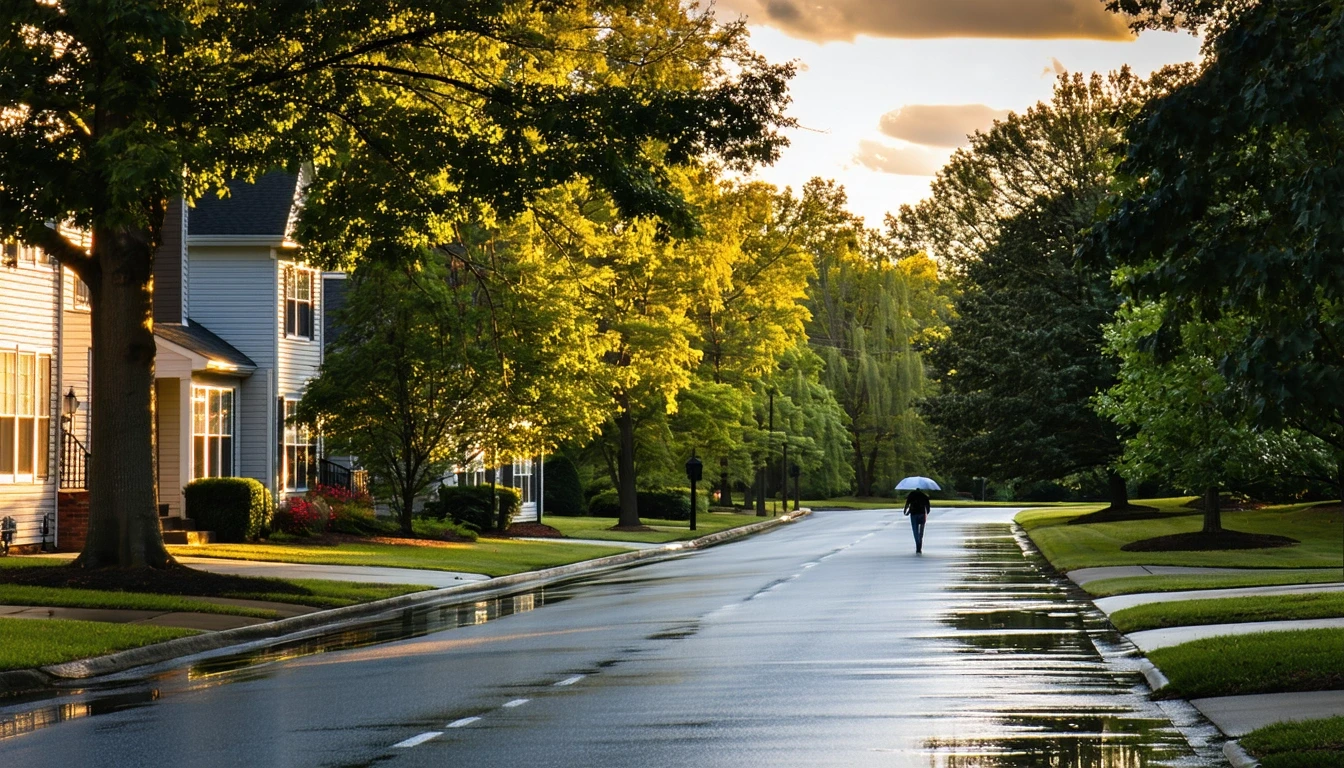
What Gaithersburg Feels Like: The Emotional Landscape
Gaithersburg tends to work well for people who want suburban structure with metro-area access. The presence of rail transit means DC commuters can live here without being entirely car-dependent for work trips, even if the commute itself takes time. The city’s park density is high, and green space feels integrated rather than isolated—something families and outdoor-oriented residents consistently appreciate. Errands are broadly accessible, with grocery and food options distributed throughout the city rather than concentrated in a single commercial strip. For households that value logistical ease and don’t need nightlife or dense urban texture, this setup feels rewarding.
But Gaithersburg also frustrates people who expected either pure suburban simplicity or urban walkability. The pedestrian infrastructure is strong in certain areas but drops off elsewhere, creating a “walkable pockets” experience rather than a cohesive pedestrian city. Building heights are more vertical than typical suburbs, and mixed land use is present, which gives parts of the city a denser, busier feel than some residents anticipated. For those who moved here imagining quiet cul-de-sacs and low-key routines, the commuter energy and evolving development can feel intrusive. For those who moved here hoping for urban convenience, the car-oriented stretches and longer travel times feel limiting.
The housing cost structure adds another layer of tension. With a median home value of $472,800 and median rent at $1,925 per month, Gaithersburg prices reflect its metro-area position, not its suburban character. People who expected affordability relative to DC often feel sticker shock. People who expected metro-level amenities in exchange for those prices sometimes feel shortchanged by the gaps in walkability and nightlife.
Social Media Buzz in Gaithersburg
On platforms like Reddit, Facebook groups, and neighborhood forums, Gaithersburg conversations tend to cluster around a few recurring themes: commute strategies, where to live for walkability, school quality, and whether the city is “worth it” compared to nearby alternatives like Rockville or Frederick. The tone is pragmatic rather than passionate—people here are problem-solving, not cheerleading.
One common thread: appreciation for rail access mixed with frustration over commute length. “I can Metro into DC, which is huge, but it’s still 30 minutes each way on a good day, and that adds up fast,” reflects a sentiment that comes up often. The transit system is valued, but it doesn’t eliminate the time burden.
Another recurring theme: surprise at how much walkability varies by neighborhood. “We’re near Rio, and we can walk to tons of stuff—groceries, restaurants, parks. But my friend across town has to drive everywhere. It’s really location-dependent.” This unevenness creates a sense that Gaithersburg isn’t one experience but several, depending on where you land.
There’s also a protective tone around parks and green space. Residents frequently mention trails, playgrounds, and accessible outdoor areas as a key quality-of-life anchor. “The parks here are legit. We use them constantly, and they’re not an afterthought—they’re actually part of the layout.” For families and outdoor-oriented households, this feels like a meaningful advantage.
Local News Tone
Local coverage of Gaithersburg tends to frame the city through the lens of growth, infrastructure change, and identity evolution. The tone is neither celebratory nor critical—it’s observational, focused on how the city is shifting and what that means for residents.
Recurring headline-style themes include:
- “Community Debates What Growth Should Look Like”
- “New Amenities Arrive as Suburban Identity Evolves”
- “Residents Weigh Convenience Against Quiet”
- “Transit Access Shapes Housing Demand”
- “Parks and Development: Finding the Balance”
The framing suggests a city in transition—one where older suburban patterns are being layered with denser development, mixed-use projects, and transit-oriented planning. For some residents, this evolution feels like progress. For others, it feels like loss of the quieter, slower-paced character they moved here to find.
Review-Based Public Perception
On Google Reviews, Yelp, and Nextdoor-style platforms, Gaithersburg earns a mix of praise and measured criticism. The praise tends to focus on accessibility, parks, and practical convenience. The criticism tends to focus on unmet expectations—either for affordability, walkability, or small-town charm.
Positive themes include:
- Strong grocery and errands access without needing to plan around scarcity
- Parks that feel integrated into neighborhoods rather than isolated
- Metro access that makes DC commuting viable without full car dependency
- Family-friendly infrastructure in newer planned areas
Critical themes include:
- Walkability that feels inconsistent—great in some pockets, absent in others
- Housing costs that feel high relative to suburban expectations
- Commute times that still feel long despite rail access
- Limited nightlife and cultural texture compared to urban alternatives
- Playground density that lags behind school availability, creating gaps for younger families
The reviews suggest that Gaithersburg works best for people who understand what they’re getting: a commuter suburb with metro-area pricing, transit access, and pockets of urban-style convenience, but not a cohesive walkable city or a low-cost escape from DC.
Comparison to Nearby Cities
| Dimension | Gaithersburg | Rockville | Frederick |
|---|---|---|---|
| Overall Vibe | Suburban with transit access and evolving density | Polished, established, more cohesively urban-suburban | Historic small-town feel with lower metro pressure |
| Walkability | Strong in pockets, car-oriented elsewhere | More consistent across neighborhoods | Concentrated downtown, sparse in outer areas |
| Transit Access | Rail present, viable for DC commuters | Rail present, closer to DC, shorter commutes | Limited transit, car-dependent for regional travel |
| Housing Cost Tone | Metro-area pricing with suburban trade-offs | Higher pricing, more urban amenities in exchange | Lower pricing, farther from DC, quieter pace |
| Parks and Outdoor Access | Integrated, high density, well-regarded | Present but more formal, less neighborhood-woven | Strong outdoor culture, more rural access nearby |
| Family Infrastructure | Schools present, playgrounds uneven | Strong across both schools and playgrounds | Smaller scale, community-oriented, less density |
Gaithersburg sits between Rockville’s polished metro-suburb identity and Frederick’s small-town character. If you want shorter DC commutes and more consistent walkability, Rockville may feel more cohesive—but you’ll pay more for it. If you want lower housing costs and a slower pace, Frederick offers that, but you’ll lose rail access and face longer regional travel times. Gaithersburg offers a middle path: metro access, parks, and pockets of convenience, but with the unevenness and commute burden that come with being farther out.
What Locals Are Saying
“We moved here from DC for space and a yard, and we got that. The Metro access was non-negotiable for my partner’s commute, and it works. But the commute still eats up time, and the housing costs weren’t the relief we expected.”
— Family with young children, renting near Rio
“I love that I can walk to the grocery store, grab coffee, and hit the park without getting in the car. But that’s because I’m in one of the walkable pockets. My coworker lives ten minutes away and drives everywhere.”
— Young professional, newer mixed-use area
“Gaithersburg is fine. It’s not exciting, but it’s not supposed to be. It’s practical, the parks are great, and I can get to work without sitting in traffic the whole way.”
— Long-time resident, homeowner
“I thought ‘suburb’ meant affordable. It’s not. The rent here is almost what I was paying closer to DC, and I’m farther from everything I actually want to do.”
— Renter in their late twenties, frustrated by cost-to-lifestyle ratio
“The playgrounds situation is weird. There are schools everywhere, but finding a good playground nearby took more effort than I expected. We drive to the better parks now.”
— Parent of toddlers, homeowner
“If you’re okay with a longer commute and you value having green space and errands nearby, this place works. If you want nightlife or a true walkable city, look elsewhere.”
— Remote worker who occasionally commutes to DC
“It’s a commuter town. That’s the vibe. People are here because it’s functional, not because it’s charming. And that’s okay if you know what you’re signing up for.”
— Retiree, long-time resident
Does Gaithersburg Feel Like a Good Fit?
Gaithersburg doesn’t inspire strong emotional loyalty or deep frustration—it inspires pragmatic assessment. It works well for people who need metro-area access, value parks and errands convenience, and are willing to accept uneven walkability and commute time in exchange for suburban space. It frustrates people who expected affordability, cohesive pedestrian infrastructure, or small-town simplicity without commuter energy.
This is a city for households who understand the trade-offs and are comfortable navigating them. If you’re a DC commuter who wants rail access but also wants a yard and integrated parks, Gaithersburg delivers. If you’re looking for urban texture, nightlife, or a true walkable city, you’ll feel the gaps. If you’re hoping for suburban pricing well below metro-area norms, the cost structure will surprise you.
The emotional tone here is neither contentment nor restlessness—it’s acceptance. People who live here tend to appreciate what it offers while remaining clear-eyed about what it doesn’t. If that kind of practical, trade-off-aware mindset matches how you approach quality of life decisions, Gaithersburg will likely feel like a reasonable fit. If you need a place to feel emotionally resonant rather than logistically functional, you may find yourself looking elsewhere.
How this article was built: In addition to public economic data, this article incorporates location-based experiential signals derived from anonymized geographic patterns—such as access density, walkability, and land-use mix—to reflect how day-to-day living actually feels in Gaithersburg, MD.
The perspectives shown reflect commonly expressed local sentiment and recurring themes in public discussion, rather than individual accounts.