
“We moved to Fuquay Varina for the schools, but stayed for the neighbors.”
That sentiment captures a lot of what makes Fuquay Varina feel like home to many—and what leaves others restless. This small town south of Raleigh has grown quickly, adding new neighborhoods and retail corridors while trying to hold onto its slower, friendlier pace. For families who want yard space, a quieter vibe, and reasonable proximity to the Triangle, it tends to deliver. For those who crave walkable errands, dining variety, or a less car-dependent rhythm, the tradeoffs start to add up.
Understanding whether Fuquay Varina feels like a good fit comes down to knowing what you’re trading and what you’re gaining—and whether that exchange aligns with how you actually want to live day-to-day.
What Fuquay Varina Feels Like Overall
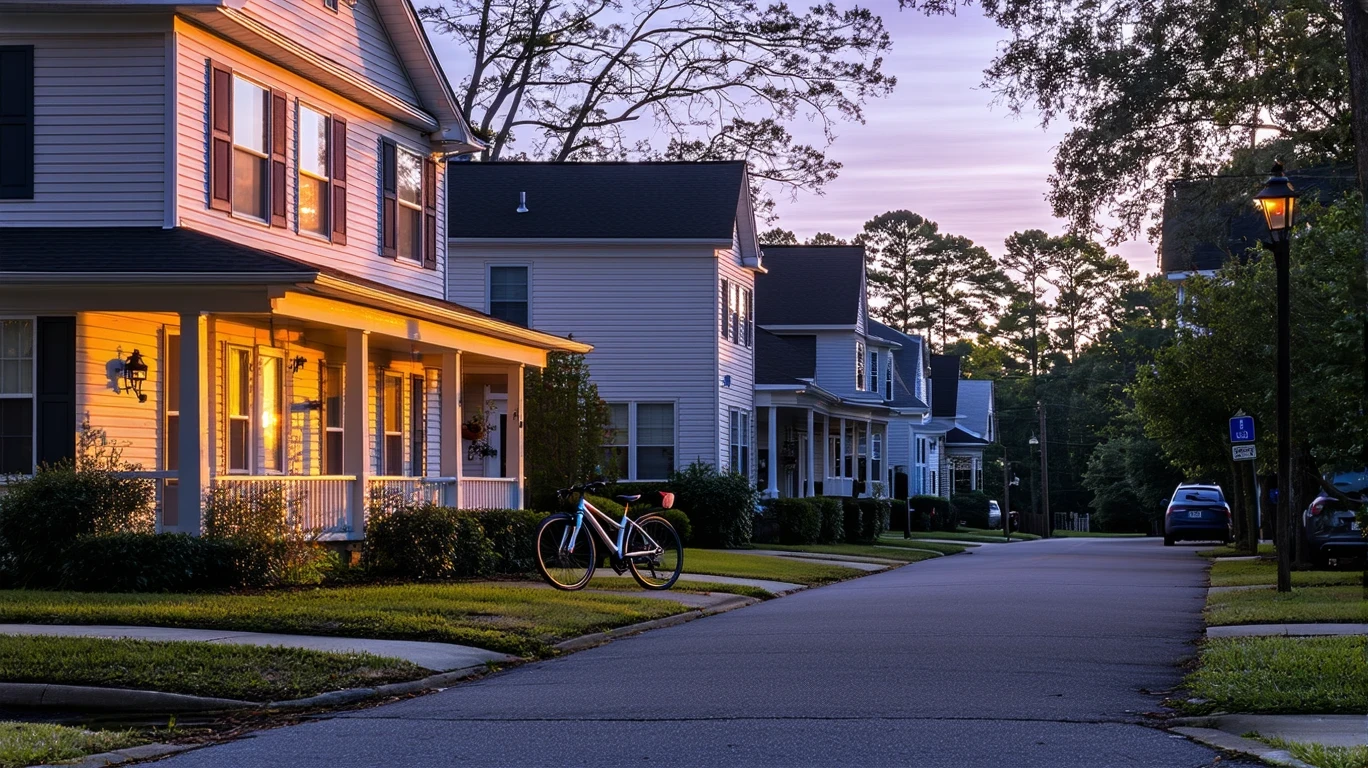
Fuquay Varina sits in that transitional space between small town and suburb. It’s not quite rural anymore, but it hasn’t become densely developed either. The result is a place where you can still find older homes with big porches and tree-lined streets, alongside newer planned communities with tidy sidewalks and HOA-managed lawns.
The town’s identity revolves around a few key themes: family-friendly, car-dependent, and growing. People who feel at home here tend to value space over density, quiet over buzz, and the ability to retreat from the Triangle’s intensity without fully leaving its orbit. The unemployment rate sits at 3.1%, reflecting the broader Raleigh metro’s economic stability, and many residents commute north for work while enjoying the breathing room Fuquay Varina provides.
What tends to feel rewarding: the sense of knowing your neighbors, the access to yard space, the relative affordability compared to closer-in suburbs, and the slower pace that lets you exhale after a long day. What tends to feel limiting: the need to drive for nearly everything, the lack of dining and entertainment variety, and the sense that the town is still figuring out what it wants to be as it grows.
For households that wanted suburban comfort and were prepared for car dependency, Fuquay Varina often exceeds expectations. For those who assumed “suburb” would still mean walkable errands or easy transit access, the friction shows up quickly.
Social Media Buzz in Fuquay Varina
Online conversations about Fuquay Varina tend to cluster around a few recurring themes: growth and change, traffic and commute realities, and the tension between small-town charm and suburban convenience. The tone is often protective—people who chose Fuquay Varina on purpose don’t want it to become “just another Raleigh suburb,” but they also recognize that growth brings amenities they’ve been asking for.
Common discussion threads include new grocery stores and retail openings, school crowding concerns, and debates about whether the town should prioritize preserving character or adding infrastructure. There’s also frequent mention of the commute to Raleigh or RTP, with residents weighing time versus housing costs.
“I love that it still feels like a small town, but I wish we had more than two decent dinner options.”
“The trade-off is real—you get space and quiet, but you’re driving everywhere, and that adds up in time and gas.”
“People complain about growth, but we finally got a Target. You can’t have it both ways.”
The emotional tone is generally optimistic but cautious. Residents appreciate what they have but are keenly aware of what’s missing and what might be lost if growth isn’t managed thoughtfully.
Local News Tone
Local coverage of Fuquay Varina tends to frame the town through the lens of growth, infrastructure, and community identity. Stories often focus on new developments, school capacity, road projects, and debates about zoning and character preservation. The tone is rarely alarmist but frequently forward-looking, with an undertone of “how do we grow without losing what makes us us?”
Typical topic buckets include:
- “New Retail and Dining Options Arrive as Town Expands”
- “Residents Weigh Convenience Against Preserving Small-Town Feel”
- “School Enrollment Climbs as Families Move In”
- “Traffic Patterns Shift Along Major Corridors”
- “Community Debates What Growth Should Look Like”
The framing reflects a town in transition, where optimism about new amenities coexists with concern about losing the qualities that attracted people in the first place. It’s not a story of crisis, but of negotiation—between old and new, between growth and preservation, between convenience and character.
Review-Based Public Perception
Public reviews of Fuquay Varina—whether on Google, Yelp, or neighborhood platforms—tend to reflect a mix of appreciation and mild frustration, depending on what people expected when they moved in.
Positive themes cluster around:
- Friendly neighbors and a welcoming community vibe
- Good value for housing compared to closer-in suburbs like Cary or Apex
- Access to yard space and quieter streets
- Proximity to Raleigh without the density or traffic
- Improving retail and grocery options along major corridors
Common complaints include:
- Limited dining variety—especially for anything beyond chain restaurants
- Car dependency for nearly all errands, even in newer neighborhoods
- Commute times to Raleigh or RTP can stretch long during peak hours
- Family infrastructure like schools and playgrounds feels stretched thin in some areas
- Lack of local entertainment or nightlife options
Neighborhood variation exists but is often framed generically: newer planned areas tend to have sidewalks and HOA-maintained aesthetics, while older pockets offer larger lots and more established trees but less walkable infrastructure. Both can feel car-dependent, though the reasons differ—newer areas spread amenities across corridors, while older areas simply lack density.
People who moved here expecting a quiet, affordable suburban base tend to feel satisfied. Those who assumed “suburb” would still mean walkable coffee shops or easy access to parks and schools often feel the gap.
Comparison to Nearby Cities
| Aspect | Fuquay Varina | Apex | Holly Springs |
|---|---|---|---|
| Overall Vibe | Small-town roots, growing suburban feel | Polished suburb, family-oriented, higher density | Newer, planned, still finding identity |
| Walkability | Pockets only, mostly car-dependent | Better downtown core, still car-reliant overall | Limited, designed around driving |
| Dining & Nightlife | Limited variety, mostly chains | More local spots, better variety | Growing but still sparse |
| Commute to Raleigh | Moderate, can stretch during peak | Shorter, more direct routes | Similar to Fuquay Varina, slightly longer |
| Housing Costs | More affordable, good value | Higher, reflects proximity and amenities | Competitive, newer inventory |
Fuquay Varina, Apex, and Holly Springs all serve families looking for suburban space near Raleigh, but they offer different textures. Apex feels more established and polished, with a stronger downtown and more dining variety—but you pay for that in housing tradeoffs. Holly Springs is newer and still building out its identity, with a similar car-dependent rhythm but less of the small-town character Fuquay Varina retains.
If you value affordability and don’t mind driving for most errands, Fuquay Varina offers good space and a slower pace. If you want more walkable pockets and dining options and can stretch your budget, Apex might feel more complete. If you prefer newer construction and don’t mind a town still finding its footing, Holly Springs could be a fit.
None of these towns will satisfy someone looking for urban walkability or transit access—they’re all car-dependent by design. The question is which version of suburban life aligns with your priorities.
What Locals Are Saying
“We love the space and the neighbors, but I do miss being able to walk to a coffee shop or park without planning it like an expedition.”
“It’s exactly what we wanted—quiet, affordable, and close enough to Raleigh that we don’t feel isolated. The commute is real, but we knew that going in.”
“The town is growing fast, and that’s both good and bad. We’re getting better stores, but the roads weren’t built for this much traffic.”
“If you’re looking for nightlife or walkable downtown energy, this isn’t it. But if you want a yard, good neighbors, and a place to decompress, it’s hard to beat.”
“I thought ‘suburb’ meant I’d still have parks and schools nearby. Turns out you’re driving to those too, and that surprised me.”
“We moved here from Cary and don’t regret it. The house we got here would’ve cost 30% more up there, and we actually use the yard.”
“It’s a great place to raise kids if you’re okay with driving them everywhere. There’s not much they can bike or walk to safely on their own.”
Does Fuquay Varina Feel Like a Good Fit?
Fuquay Varina tends to work well for households that value suburban space, affordability, and a slower pace—and who are prepared to drive for most of their daily needs. It’s a place where neighbors still wave, where you can find a house with a yard without stretching your budget to the breaking point, and where the proximity to Raleigh keeps you connected without overwhelming you.
It tends to frustrate people who assumed “suburb” would still mean walkable errands, easy access to parks and schools, or a variety of local dining and entertainment. The infrastructure for family life—schools, playgrounds, healthcare—is present but stretched thin in some areas, and the car dependency is real and constant.
The town is growing, and that growth brings both opportunity and tension. New retail and amenities are arriving, but so are traffic, crowding, and questions about what kind of place Fuquay Varina wants to become. For now, it occupies a middle space: not quite small town, not quite developed suburb, but something in between that works beautifully for some and feels incomplete to others.
If you’re deciding whether Fuquay Varina fits your life, start by asking what you’re willing to trade. If you can trade walkability and variety for space and affordability, and if you’re comfortable with a car-dependent rhythm, the town has a lot to offer. If those tradeoffs feel too steep, you might find better alignment closer to Raleigh’s core or in a more established suburb with denser infrastructure.
Either way, understanding where money goes day-to-day and what makes life feel tight can help you see past the surface and predict whether Fuquay Varina’s rhythm will feel like relief or friction once you’re living it.
How this article was built: In addition to public economic data, this article incorporates location-based experiential signals derived from anonymized geographic patterns—such as access density, walkability, and land-use mix—to reflect how day-to-day living actually feels in Fuquay Varina, NC.
The perspectives shown reflect commonly expressed local sentiment and recurring themes in public discussion, rather than individual accounts.