
“I thought I could make it work without a car when I first moved here,” says a daily commuter who relocated to Franklin two years ago. “But after a few weeks of trying to line up errands and get to work on time, I realized the bus routes just don’t cover enough ground. Now I drive, and honestly, it’s easier.”
That experience captures the transportation reality in Franklin: this is a city where driving dominates, but pockets of walkability and limited bus service create options for some residents in specific areas. Understanding transportation options in Franklin means recognizing both the infrastructure that exists and the gaps that shape daily mobility for most households.
How People Get Around Franklin
Franklin operates primarily as a car-dependent suburban city. The street network, development pattern, and land use reflect a layout built around vehicle access, and most residents rely on personal cars for commuting, errands, and daily logistics. However, the city isn’t entirely uniform: certain neighborhoods—particularly older areas closer to the historic downtown core—feature higher pedestrian infrastructure density relative to roads, creating walkable pockets where residents can handle some errands on foot.
Public transit exists in the form of bus service, but it functions as a supplemental option rather than a primary mobility system. Cycling infrastructure is present in some areas, though it remains limited and unevenly distributed. For newcomers, the most common misunderstanding is assuming that proximity to downtown Franklin or access to a bus stop translates into car-free viability. In practice, even residents in walkable pockets typically own a vehicle to manage trips beyond their immediate neighborhood.
The cost structure of daily life in Franklin reflects this car-first reality, with transportation expenses shaped more by vehicle ownership and fuel than by transit fares.
Public Transit Availability in Franklin
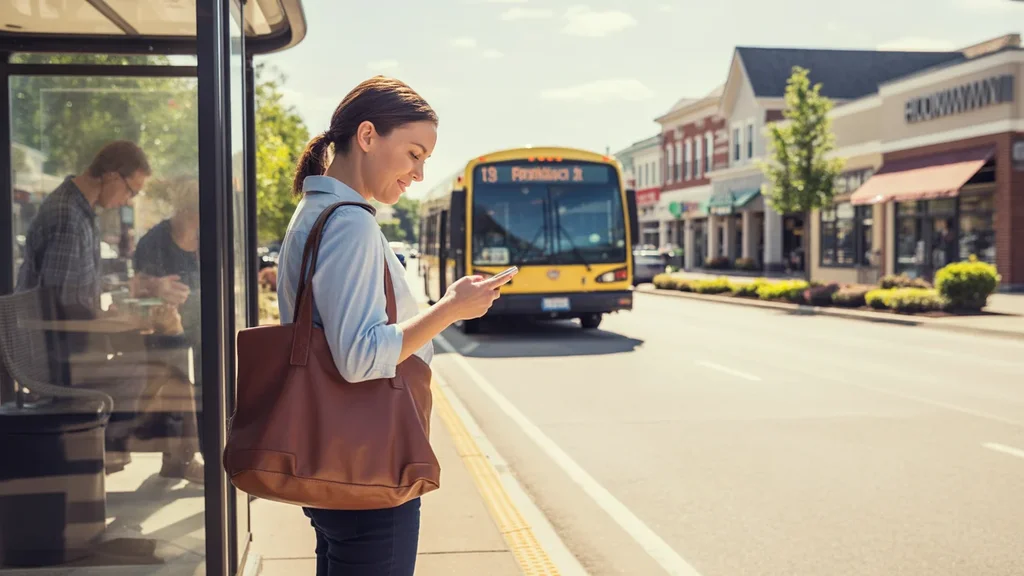
Public transit in Franklin centers around bus service. There is no rail system—light rail, commuter rail, or subway—serving the city. The bus network provides connections along certain corridors, particularly routes that link residential areas to commercial districts, employment centers, and regional destinations.
Transit tends to work best for residents living near established routes and whose daily destinations align with the corridors served. For example, someone living along a bus line that runs to a major employer or shopping district may find the service practical for regular trips. However, coverage is not comprehensive. Many residential neighborhoods, especially those in newer suburban developments on the city’s edges, are not served by transit at all. Late-night and weekend service is typically limited, and frequency during off-peak hours can make spontaneous or time-sensitive trips difficult.
For households that depend on transit due to cost constraints or preference, Franklin’s bus service provides a baseline level of access, but it requires planning, schedule awareness, and often a willingness to combine transit with walking or biking for the first and last mile of a trip.
Driving & Car Dependence Reality
Driving is the default mode of transportation in Franklin. The city’s layout—characterized by a mix of single-family neighborhoods, commercial corridors, and employment centers spread across a relatively wide area—makes car ownership functionally necessary for most residents. Errands, medical appointments, school drop-offs, and social activities are typically structured around vehicle access.
Parking is generally accessible and not a significant constraint. Most residential properties include driveways or garages, and commercial areas provide surface lots. This ease of parking reinforces the convenience of driving and reduces the friction that might otherwise push residents toward transit or alternative modes.
Sprawl plays a role in shaping car dependence. As residential development extends outward, the distance between home, work, and services increases, and the density required to support frequent, useful transit becomes harder to achieve. For families with multiple working adults, school-age children, or complex schedules, the flexibility of personal vehicles often outweighs the potential savings or environmental benefits of transit use.
The tradeoff is straightforward: driving offers control, predictability, and the ability to manage multi-stop trips efficiently, but it also locks households into the costs and responsibilities of vehicle ownership—fuel, insurance, maintenance, and depreciation.
Commuting Patterns & Daily Mobility
Commuting in Franklin typically involves personal vehicles. While some residents work within the city, many commute to nearby employment centers in the broader Nashville metro area. The structure of these commutes varies: some households manage a single daily round trip to a fixed workplace, while others juggle multiple stops, school runs, or errands that require flexibility and route variation.
For residents who work from home or have flexible schedules, proximity to walkable areas with corridor-clustered errands access can reduce the frequency of driving trips. However, even in these cases, a car remains necessary for trips that fall outside the immediate neighborhood—medical appointments, larger grocery runs, or visits to family and friends in other parts of the metro area.
The absence of rail transit and the limited reach of bus service mean that commuters who rely on public transportation face longer total trip times and reduced schedule flexibility compared to those who drive. This dynamic reinforces the dominance of car-based commuting, even among households that might prefer transit if coverage and frequency were stronger.
Who Transit Works For — and Who It Doesn’t
Public transit in Franklin works best for a narrow set of circumstances. Renters or homeowners living along established bus corridors, whose work or school destinations are also on those routes, can use transit effectively for regular trips. Single adults or couples without children, who have predictable schedules and limited need for multi-stop errands, are more likely to find bus service practical.
Transit becomes much less viable for families with children, especially those managing school schedules, extracurricular activities, and the need to transport sports equipment, groceries, or other cargo. The time cost of waiting for buses, transferring, and walking the last mile adds up quickly when managing multiple dependents or tight schedules.
Residents in peripheral neighborhoods—particularly newer subdivisions farther from the historic core—face the weakest transit access. For these households, car ownership is not optional; it’s the only realistic way to participate in daily life. Even in walkable pockets closer to downtown, the limited reach of bus routes means that transit serves as a supplement to driving rather than a replacement.
Retirees or individuals with mobility constraints may find transit difficult to use due to the physical demands of walking to stops, waiting outdoors, and navigating transfers. In these cases, driving or relying on rideshare services often becomes the more practical choice, despite the higher cost.
Transportation Tradeoffs in Franklin
Choosing between transit and driving in Franklin is less about optimizing cost and more about accepting tradeoffs in control, predictability, and time. Driving offers the ability to leave when you want, take the most direct route, and handle complex, multi-stop trips without coordination. It also provides climate control, privacy, and the capacity to carry groceries, equipment, or passengers.
Transit, where it exists, reduces the direct cost of fuel and vehicle wear, but it introduces schedule dependence, longer trip times, and reduced flexibility. For someone whose daily routine aligns well with bus routes and timing, transit can work. But for most households—especially those with children, variable work hours, or destinations outside the core corridors—the time cost and logistical friction of transit outweigh the financial savings.
Biking offers a middle option in some areas, particularly for short trips within walkable pockets or along streets with bike-friendly infrastructure. However, the moderate and uneven distribution of bike lanes, combined with Franklin’s suburban distances, limits cycling to a small share of trips for most residents.
The fundamental tradeoff is this: driving costs more in direct expenses but saves time and preserves flexibility. Transit costs less per trip but requires more planning, patience, and acceptance of limited coverage. In Franklin, the infrastructure and land use pattern tilt heavily toward the former.
FAQs About Transportation in Franklin (2026)
Is public transit usable for daily commuting in Franklin?
Public transit is usable for daily commuting if your home and workplace both fall along established bus routes and your schedule aligns with service hours. For most residents, however, transit does not provide the coverage, frequency, or flexibility needed to replace car ownership entirely.
Do most people in Franklin rely on a car?
Yes. The vast majority of Franklin residents rely on personal vehicles for commuting, errands, and daily mobility. The city’s layout, suburban density, and limited transit coverage make car ownership functionally necessary for most households.
Which areas of Franklin are easiest to live in without a car?
Older neighborhoods closer to the historic downtown core, where pedestrian infrastructure is denser and errands are more clustered along walkable corridors, offer the best chance of reducing car dependence. Even in these areas, however, most residents still own a vehicle for trips beyond the immediate neighborhood.
How does commuting in Franklin compare to nearby cities?
Franklin shares the car-dependent character common to many suburban cities in the Nashville metro area. Compared to urban cores with extensive transit networks, Franklin offers less public transportation coverage and relies more heavily on personal vehicles. Compared to more rural areas, Franklin provides better access to regional bus service and walkable pockets.
Can you get by with just a bike in Franklin?
Biking can work for short trips within certain neighborhoods or along corridors with bike infrastructure, but it is not a practical primary mode of transportation for most residents. The distances between home, work, and services, combined with limited and uneven bike lane coverage, make cycling a supplement to driving rather than a replacement.
How Transportation Fits Into the Cost of Living in Franklin
Transportation in Franklin is not just a budget line—it’s a structural factor that shapes where people live, how they spend their time, and what tradeoffs they accept in daily life. The dominance of car-based mobility means that households must account for vehicle ownership costs, fuel expenses, and the time spent driving when evaluating affordability and quality of life.
For renters or buyers choosing a neighborhood, proximity to work, schools, and errands can reduce driving frequency and fuel costs, but it rarely eliminates the need for a car. Walkable pockets offer some relief, particularly for households that can handle groceries, coffee runs, and short errands on foot, but these areas are limited in extent and often come with higher housing costs due to their desirability.
Transit provides a lower-cost option for residents whose circumstances align with bus routes and schedules, but the time cost and logistical constraints mean that most households prioritize the flexibility of driving. For a more detailed look at how transportation expenses fit into the broader picture of monthly costs, see what a budget has to handle in Franklin.
Understanding getting around Franklin means recognizing that mobility here is built around personal vehicles, with transit serving as a supplemental option for a small share of trips and residents. The city’s infrastructure, land use, and development pattern reflect this reality, and households planning a move should budget and plan accordingly. The goal is not to find a perfect solution, but to choose the tradeoffs that fit your household’s priorities, schedule, and financial capacity.
How this article was built: In addition to public economic data, this article incorporates location-based experiential signals derived from anonymized geographic patterns—such as access density, walkability, and land-use mix—to reflect how day-to-day living actually feels in Franklin, TN.