
| Transit Type | Coverage Level | Primary Use Case |
|---|---|---|
| Bus Service | Corridor-based | Fixed-route commuting, local errands |
| Rail Transit | Not available | — |
| Cycling Infrastructure | Notable presence | Recreation, short trips, fitness |
| Pedestrian Network | Mixed availability | Neighborhood-level walking |
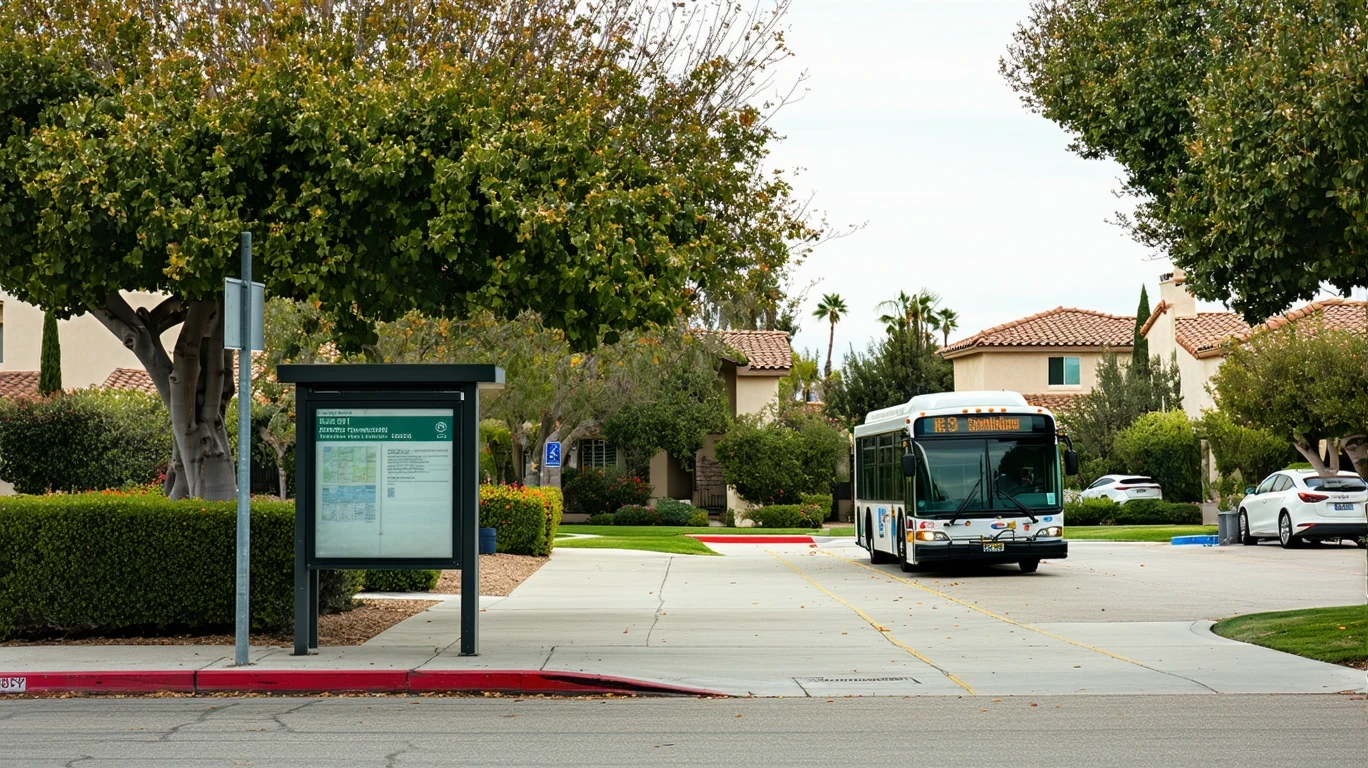
How People Get Around Fountain Valley
Transportation options in Fountain Valley reflect a suburban structure built primarily around car ownership, with bus service providing supplemental coverage along key corridors. Most households here rely on personal vehicles for daily mobility—getting to work, running errands, managing family logistics. The city’s low-rise residential layout and spread-out commercial areas make driving the default for most trips, even though pedestrian infrastructure exists in pockets and cycling routes are more developed than many visitors expect.
What newcomers often misunderstand is that Fountain Valley isn’t entirely car-locked. Bus service does operate here, and the cycling network is strong enough to support recreational rides and some practical short trips. But the reality is that transit works best for people with predictable, fixed-route commutes or those living near the handful of corridors where service concentrates. For families juggling multiple stops, off-peak schedules, or trips to areas beyond the bus grid, a car remains essential.
The city’s layout—predominantly single-family homes with commercial strips rather than dense mixed-use centers—means that even though grocery stores and daily services are accessible, reaching them without a vehicle requires either careful planning or acceptance of longer travel times. This isn’t a walkable urban core, but it’s also not a place where you’re stranded without options. The transportation structure here rewards those who can align their routines with available infrastructure and penalizes those who need maximum flexibility.
Public Transit Availability in Fountain Valley
Public transit in Fountain Valley centers around bus service, with no rail options currently available. The bus network serves specific routes rather than blanketing the city, which means transit viability depends heavily on where you live and where you need to go. Residents near major arterials and commercial corridors have functional access; those in quieter residential blocks farther from main roads face longer walks to stops and fewer route choices.
Transit works best here for single-destination commutes—someone traveling to a job site along a bus line, a student heading to a campus with direct service, or a resident running errands near a well-served shopping area. It falls short for multi-stop trips, late-night travel, or reaching employment centers outside the primary service zones. The absence of rail transit means no high-frequency backbone to anchor the system, so coverage remains corridor-dependent rather than grid-based.
For households evaluating whether they can reduce car dependence, the key question isn’t whether transit exists—it does—but whether your specific daily pattern aligns with where buses actually go. If your commute, childcare, and shopping all fall along served routes, transit becomes usable. If any one of those sits outside the network, you’re back to needing a vehicle for that piece, which often means owning a car anyway.
Driving & Car Dependence Reality
Driving is the dominant mobility mode in Fountain Valley because the city’s physical structure makes it the most practical choice for most households. Parking is generally abundant, both at home and at commercial destinations, which removes one of the friction points that discourages car use in denser areas. The trade-off is that households here absorb the full cost and responsibility of vehicle ownership—maintenance, insurance, registration, fuel—as a baseline rather than an optional expense.
Car dependence here isn’t about preference; it’s about geography. The distance between residential neighborhoods and employment centers, the spacing of services, and the limited reach of transit all push households toward owning at least one vehicle, often two. Families with school-age children, dual-income couples, or anyone working non-standard hours find that transit simply can’t cover the range of trips they need to make in a day.
The upside of car-oriented infrastructure is flexibility. You’re not constrained by bus schedules, route maps, or service hours. You can make multiple stops, adjust plans on the fly, and access the full range of Orange County employment and services. The downside is exposure: when gas prices rise, as they do periodically in California, every commute and errand becomes more expensive, and there’s limited ability to shift to alternatives without restructuring your entire routine.
Commuting Patterns & Daily Mobility
Commuting in Fountain Valley typically involves driving to employment centers in nearby cities or business districts within Orange County. The suburban layout means most jobs aren’t within walking or easy transit distance, so the daily commute becomes a central organizing feature of household logistics. Single-job commuters with predictable schedules can sometimes use bus service if their destination aligns with available routes, but multi-stop patterns—dropping kids at school, running an errand, then heading to work—almost always require a car.
The structure of daily mobility here rewards proximity and routine. Households that can live near their primary destinations—whether that’s a job site, a school, or family support—experience less friction. Those commuting longer distances or traveling to areas with poor transit links absorb more time and cost. The lack of rail transit means there’s no fast, high-capacity option for longer regional trips, so driving remains the default even when distances stretch into the range where transit would normally compete.
For people working from home or with flexible schedules, Fountain Valley’s transportation structure becomes less of a constraint. The need for daily commuting drops, and occasional trips for errands or meetings are manageable even with limited transit. But for households with rigid work schedules, school pickups, or caregiving responsibilities, the transportation system here demands car ownership and the financial commitment that comes with it.
Who Transit Works For — and Who It Doesn’t
Transit in Fountain Valley works best for renters living near bus corridors who commute to a single, fixed destination served by direct routes. It’s viable for individuals without complex daily logistics—someone heading to a job, a campus, or a regular appointment—who can structure their schedule around bus timing. It also works for households willing to combine transit with cycling or walking for the first and last mile, especially given the city’s stronger-than-expected bike infrastructure.
Transit doesn’t work well for families managing multiple stops, parents coordinating school and activity schedules, or anyone needing to travel during off-peak hours when service thins out. It’s not practical for reaching employment centers outside the bus network or for trips that require carrying large items, groceries for a full household, or equipment. Peripheral neighborhoods, farther from main corridors, face longer access times to stops, which erodes the time savings transit might otherwise offer.
Homeowners, particularly those with children, tend to default to car ownership regardless of transit availability because the flexibility and coverage gaps make full car-free living impractical. Renters closer to commercial corridors have more room to experiment with transit-first or car-light lifestyles, but even then, most find they need occasional vehicle access, whether through car-sharing, rentals, or rides from friends.
Transportation Tradeoffs in Fountain Valley
Choosing between transit and driving in Fountain Valley isn’t a simple cost comparison—it’s a tradeoff between predictability and flexibility. Transit offers lower direct costs for those who can use it consistently, but it constrains where you can go, when you can travel, and how much you can carry. Driving costs more in fuel, maintenance, and insurance, but it removes those constraints and gives you control over timing and routing.
For households trying to minimize transportation expenses, the question isn’t whether transit is cheaper in theory—it usually is—but whether it’s viable in practice given your specific daily pattern. If your routine fits within the bus network’s coverage, you gain cost savings and avoid parking hassles. If it doesn’t, attempting a transit-first approach just adds time and friction without eliminating the need for occasional car access, which often means paying for both systems.
The cycling infrastructure here offers a middle path for some households. Strong bike networks make short trips—errands within a few miles, recreational outings, fitness commutes—feasible without a car. But cycling doesn’t replace a vehicle for longer commutes, family trips, or travel in poor weather. It’s a supplement, not a substitute, and works best for households that already have access to a car when they need it.
How Transportation Shapes Daily Life in Fountain Valley
The way Fountain Valley is built—low-rise homes, corridor-based commercial areas, broadly accessible grocery and food options—means that while you can reach most daily needs without traveling far, you usually need a car to get there efficiently. The pedestrian network exists but doesn’t connect everywhere, and the bus system serves specific routes rather than offering comprehensive coverage. This creates a lived reality where most households own vehicles not because they prefer driving, but because the alternative requires restructuring their entire routine around limited transit schedules and coverage gaps.
For someone living near a bus line and working along that same corridor, the system is usable. They can run errands on foot or by bike in their neighborhood, take the bus to work, and avoid the cost and hassle of car ownership. But for a family with kids in school, parents working in different directions, and weekend activities scattered across the county, the transportation structure here demands at least one vehicle, often two. The difference isn’t about lifestyle preference—it’s about how the city’s physical layout and infrastructure align with your specific daily pattern.
This infrastructure reality shapes where people choose to live within Fountain Valley. Renters and younger households gravitate toward areas closer to bus routes and commercial corridors, where car-light living is more feasible. Families and homeowners tend to prioritize space and school access, accepting longer drives and higher transportation costs as part of the tradeoff. The transportation system doesn’t dictate these choices, but it heavily influences them, and understanding that influence is key to making decisions that fit your household’s needs and budget.
FAQs About Transportation in Fountain Valley (2026)
Is public transit usable for daily commuting in Fountain Valley?
Public transit is usable for daily commuting if your home and workplace both sit along served bus routes and your schedule aligns with service hours. It works best for single-destination commutes rather than multi-stop trips. Without rail transit, coverage is corridor-based, so viability depends entirely on where you live and work within the city.
Do most people in Fountain Valley rely on a car?
Yes, most households in Fountain Valley rely on personal vehicles for daily mobility. The suburban layout, limited transit coverage, and spacing between residential and commercial areas make car ownership the practical default for families, multi-income households, and anyone with complex daily logistics.
Which areas of Fountain Valley are easiest to live in without a car?
Areas near major bus corridors and commercial centers offer the most car-free or car-light viability. Renters and individuals with simple, fixed-route commutes find these neighborhoods more manageable without a vehicle. Peripheral residential blocks farther from main roads face longer walks to transit and fewer service options.
How does commuting in Fountain Valley compare to nearby cities?
Commuting in Fountain Valley follows a similar pattern to other Orange County suburbs: car-dominant, with bus service providing supplemental coverage rather than comprehensive alternatives. Cities with rail access or denser cores offer more transit options; Fountain Valley’s transportation structure rewards proximity and routine over flexibility.
Can you rely on cycling for transportation in Fountain Valley?
Cycling infrastructure in Fountain Valley is more developed than many suburban areas, making it viable for short trips, errands, and recreational use. However, cycling doesn’t replace a car for longer commutes, family logistics, or travel in poor weather. It works best as a supplement for households that already have vehicle access when needed.
How Transportation Fits Into the Cost of Living in Fountain Valley
Transportation in Fountain Valley isn’t just a line item in a budget—it’s a structural factor that shapes housing choices, time allocation, and financial flexibility. Households that can live near work, school, and services reduce both direct costs and the time burden of commuting. Those farther from key destinations or with complex daily patterns absorb higher transportation expenses and less predictable schedules.
The absence of rail transit and limited bus coverage mean that most households here treat car ownership as a fixed cost rather than a variable one. You’re not choosing between transit and driving on a trip-by-trip basis; you’re committing to vehicle ownership upfront and then using it for nearly everything. That shifts where money goes each month, with fuel, insurance, and maintenance becoming baseline expenses rather than optional ones.
For a clearer picture of how transportation costs interact with housing, utilities, and other expenses, the monthly budget breakdown offers numeric context and household-specific scenarios. Understanding the transportation structure here—what works, what doesn’t, and who benefits—helps you make decisions that fit your routine and reduce friction, even if the city’s infrastructure doesn’t offer the flexibility you might want.
How this article was built: In addition to public economic data, this article incorporates location-based experiential signals derived from anonymized geographic patterns—such as access density, walkability, and land-use mix—to reflect how day-to-day living actually feels in Fountain Valley, CA.