
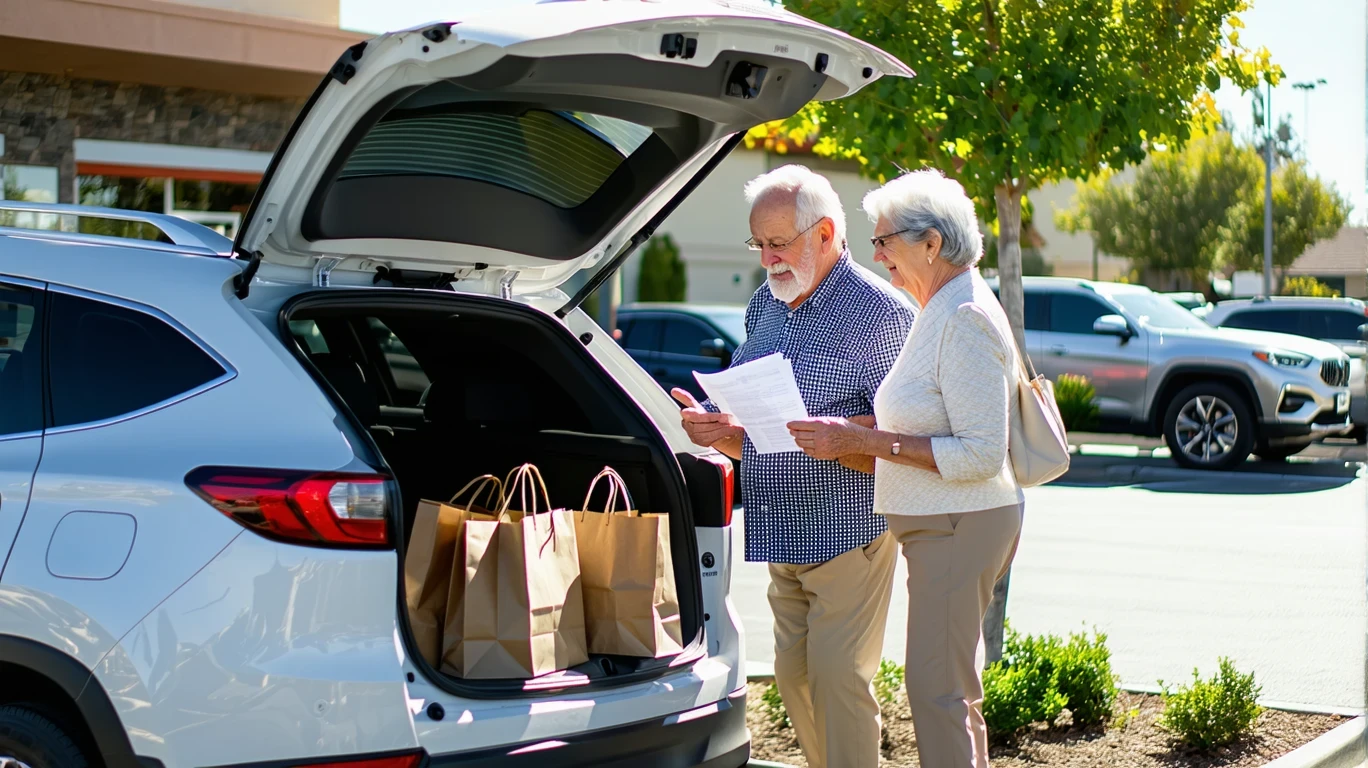
How Grocery Costs Feel in Fountain Valley
Grocery prices in Fountain Valley track closely with national averages, reflecting the city’s regional price parity index of 100—meaning no systematic markup or discount relative to the broader U.S. baseline. For households accustomed to California’s reputation for elevated costs, this positioning offers a degree of relief: staple items here don’t carry the premium seen in coastal metros or resort communities. But “average” doesn’t mean inexpensive in absolute terms, and the experience of grocery shopping in Fountain Valley varies sharply depending on household size, income cushion, and store choice. A single professional earning near the city’s median household income of $108,860 per year will navigate weekly trips with relative ease, while a family of four on a tighter budget feels every decision about brand, quantity, and retailer.
The pressure isn’t uniform. Singles and couples benefit from flexibility: smaller volumes mean less waste, more room to shift between discount and mid-tier stores, and the ability to absorb occasional premium purchases without destabilizing the week. Families, by contrast, face compounding exposure. Higher volume amplifies every per-unit price difference, and the frequency of shopping trips—often twice weekly or more—turns modest item-level variation into meaningful monthly pressure. In Fountain Valley, where grocery and food establishment density exceeds high thresholds, households have access to a competitive retail landscape. That density creates choice, but it also demands active decision-making: the gap between discount and premium tiers can be wider than the gap between any two items on the shelf.
What makes grocery costs feel manageable or tight here isn’t just the price of milk or chicken—it’s the interaction between income, household composition, and the retail environment. Fountain Valley’s median income provides a cushion for many, but that cushion thins quickly for larger households or those with irregular income. The city’s mixed land use and broad accessibility mean that discount, mid-tier, and premium grocers coexist within short distances, and the decision of where to shop—not just what to buy—becomes the primary lever for managing food spending.
Grocery Price Signals (Illustrative)
These prices illustrate how staple items tend to compare locally—not a full shopping list. They reflect regional price parity adjustments applied to national baselines and serve as anchors for understanding relative cost positioning, not checkout-accurate totals.
| Item | Price |
|---|---|
| Bread | $1.84/lb |
| Cheese | $4.84/lb |
| Chicken | $2.04/lb |
| Eggs | $2.58/dozen |
| Ground Beef | $6.75/lb |
| Milk | $4.10/half-gallon |
| Rice | $1.06/lb |
These figures show moderate pricing across proteins, dairy, and pantry staples. Ground beef and cheese carry the highest per-pound costs, while rice and bread remain accessible. Eggs and milk sit in the middle—neither bargain-bin cheap nor premium-tier expensive. For a household buying in volume, these per-unit prices compound quickly. A family purchasing five pounds of chicken weekly, multiple gallons of milk, and regular restocks of cheese and eggs will feel the cumulative weight far more than a single person buying half those quantities. The prices themselves don’t tell the full story; it’s the multiplication across household size and frequency that determines whether grocery costs feel routine or relentless.
Store Choice & Price Sensitivity
Grocery price pressure in Fountain Valley varies more by store tier than by any single item’s sticker price. The city’s high density of food and grocery establishments—confirmed by accessibility signals showing both food and grocery density exceeding high thresholds—means households can choose between discount, mid-tier, and premium retailers, often within a few miles. That choice matters more than most people expect. Discount grocers emphasize private-label staples, bulk packaging, and no-frills presentation, delivering meaningfully lower per-unit costs on high-volume items like rice, canned goods, pasta, and frozen vegetables. Mid-tier stores offer broader selection, name-brand options, and more convenience in layout and hours, but at a moderate markup. Premium grocers prioritize organic inventory, specialty items, prepared foods, and curated experiences—all of which carry higher baseline prices.
For families, discount tier access becomes critical. When a household is buying ten to fifteen pounds of chicken per month, multiple gallons of milk weekly, and restocking pantry staples every few weeks, even a 15–20% per-item difference between discount and mid-tier stores translates into noticeable monthly pressure. Singles and couples, by contrast, have more latitude: lower volumes mean the absolute dollar difference between tiers remains small, and the convenience or selection of a mid-tier store may justify the modest premium. Premium grocers serve a different function entirely—they’re not daily-driver stores for most households, but rather destinations for specific items, occasional variety, or when time constraints override price sensitivity.
Fountain Valley’s retail density also means that store choice isn’t just about driving farther—it’s about deciding whether proximity and convenience outweigh per-unit savings. A discount grocer two miles away versus a mid-tier store half a mile away creates a tradeoff between time, fuel, and cost per item. For households with tight schedules or limited transportation flexibility, the closer mid-tier option may win despite higher prices. For those with more control over timing and routes, the discount tier becomes the anchor, with mid-tier or premium stores reserved for fill-ins or specific needs. The competitive environment rewards intentionality: households that treat store choice as a primary cost lever—rather than defaulting to the nearest option—gain measurable control over grocery pressure.
What Drives Grocery Pressure Here
Income plays a moderating role but doesn’t eliminate sensitivity. Fountain Valley’s median household income of $108,860 per year provides a cushion that allows many households to absorb grocery costs without acute distress, but that cushion isn’t evenly distributed. Families with multiple dependents, single-income households, or those with irregular earnings face tighter margins, and grocery spending becomes one of the few flexible line items where adjustments can be made week to week. Higher earners may not notice the difference between discount and mid-tier pricing, but for households closer to or below the median, that difference determines whether the month closes comfortably or with strain.
Household size amplifies every price signal. A single person might spend $50–$70 on a weekly grocery trip and feel little pressure; a family of four buying similar items in larger quantities can easily double or triple that outlay. The compounding effect isn’t linear—larger households face not just higher volume but also greater dietary variety demands, more frequent restocking, and less flexibility to defer purchases. In Fountain Valley, where grocery density is high and store options are plentiful, families benefit from competitive pricing and tier variety, but they also bear the burden of making those choices repeatedly and consistently.
Regional distribution and access patterns also shape the experience. Fountain Valley’s mixed land use and moderate pedestrian infrastructure mean that most grocery shopping still happens by car, but the distances involved are short and the retail environment is dense. This reduces the friction of comparison shopping across tiers and makes it feasible to split trips between a discount grocer for staples and a mid-tier store for fill-ins. In less dense suburban environments, that kind of flexibility disappears—households default to the nearest store because the time cost of driving farther outweighs the per-item savings. Here, the structure of the city itself creates opportunity for households willing to engage with it.
Practical Ways People Manage Grocery Costs
Store tier strategy comes first. Households that anchor their shopping at discount grocers for high-volume staples—rice, pasta, canned goods, frozen vegetables, dairy, and proteins—gain the most control over baseline spending. Mid-tier stores can serve as fill-in destinations for specific items, variety, or convenience, but treating them as the primary grocer raises costs without adding proportional value. Premium stores, when used at all, work best for occasional specialty purchases or when time constraints make convenience worth the premium. The key is intentionality: defaulting to the nearest store without considering tier positioning forfeits one of the most effective levers for managing grocery pressure.
Buying in bulk reduces per-unit costs but requires upfront capital and storage space. Families with the capacity to purchase larger quantities of shelf-stable items—rice, beans, pasta, canned tomatoes, cooking oil—spread the cost over weeks or months and avoid the premium that smaller package sizes carry. Freezer space extends this logic to proteins: buying chicken, ground beef, or pork in larger packs and portioning at home cuts per-pound costs and reduces shopping frequency. Singles and couples face different math here—bulk purchases can lead to waste if consumption doesn’t keep pace, and smaller living spaces limit storage. For them, moderate package sizes and more frequent trips may actually minimize waste and cost together.
Seasonal awareness helps, even without numeric forecasts. Produce prices fluctuate with growing seasons and regional supply, and proteins shift with demand cycles and supply chain conditions. Households that adjust their buying patterns—emphasizing in-season produce, shifting between protein types based on current pricing, and stocking up on pantry staples during periodic promotions—smooth out cost volatility without requiring elaborate planning. The goal isn’t to chase every sale or optimize every purchase; it’s to avoid paying peak prices for items that will cost less in a few weeks.
Private-label products deliver the most straightforward savings. Store-brand staples—milk, eggs, butter, flour, sugar, canned goods, frozen vegetables—typically cost 10–30% less than name-brand equivalents with little to no difference in quality for basic items. For high-frequency purchases, that gap compounds quickly. Families buying multiple gallons of milk per week, several dozen eggs per month, and regular restocks of pantry staples see meaningful monthly differences by defaulting to private labels. Name brands make sense for items where taste, texture, or performance differences matter to the household, but treating them as the default across the board raises costs unnecessarily.
Groceries vs Eating Out (Directional)
The tradeoff between cooking at home and eating out isn’t just about convenience—it’s about cost structure and frequency. Grocery shopping involves upfront planning, time spent cooking, and cleanup, but it spreads the cost of ingredients across multiple meals. Eating out eliminates labor and delivers immediate convenience, but it also eliminates the ability to control portion sizes, ingredient quality, and per-meal cost. For singles and couples, the cost gap between a home-cooked meal and a casual restaurant meal may feel narrow enough that convenience often wins, especially on busy weekdays. For families, the gap widens sharply: feeding four people at a restaurant costs multiples of what the same meal would cost at home, and the frequency required to replace grocery shopping with dining out quickly becomes unsustainable.
In Fountain Valley, where food establishment density is high and dining options span fast-casual, mid-tier, and full-service restaurants, the temptation to substitute dining out for cooking is constant. But the math doesn’t favor frequent substitution for most households. A family spending $60–$80 on a single restaurant meal could prepare three to four home-cooked dinners for the same outlay, and the cumulative effect of even one or two additional restaurant meals per week adds up faster than the incremental cost of buying extra groceries. Singles and couples have more flexibility here—they can afford to treat dining out as a regular part of their routine without destabilizing their overall monthly expenses—but even for them, frequency matters. Replacing half of home-cooked meals with restaurant meals doubles food spending, and that shift shows up quickly in discretionary income.
The real tradeoff isn’t groceries versus dining out as binary categories—it’s about finding the frequency and context where each makes sense. Cooking at home anchors food spending and provides control; dining out adds variety and convenience but demands intentionality about frequency and cost per occasion. Households that treat dining out as occasional rather than default preserve the cost advantages of grocery shopping without eliminating flexibility entirely.
FAQs About Grocery Costs in Fountain Valley (2026)
Is it cheaper to shop in bulk in Fountain Valley? Bulk purchasing reduces per-unit costs for shelf-stable staples and proteins, but it requires upfront capital and storage space. Families with freezer capacity and consistent consumption patterns benefit most; singles and couples risk waste if volumes exceed actual usage.
Which stores in Fountain Valley are best for low prices? Discount-tier grocers deliver the lowest per-unit costs on high-volume staples like rice, pasta, canned goods, dairy, and proteins. Mid-tier stores offer broader selection and convenience at moderate markups, while premium grocers emphasize organic and specialty items at higher baseline prices. Store choice matters more than item-level optimization for managing overall grocery pressure.
How much more do organic items cost in Fountain Valley? Organic products typically carry premiums over conventional equivalents, with the gap widest for produce, dairy, and proteins. Households prioritizing organic inventory should expect meaningfully higher per-item costs, especially at premium-tier grocers. Discount and mid-tier stores increasingly offer organic private-label options at lower premiums than name-brand organic products.
How do grocery costs for two adults in Fountain Valley tend to compare to nearby cities? Fountain Valley’s regional price parity index of 100 places it at the national baseline, meaning grocery costs here don’t carry the systematic markups seen in higher-cost California metros. Nearby coastal cities and resort communities often show elevated pricing, while inland areas may offer modest savings. The competitive retail density in Fountain Valley provides tier variety that helps moderate costs relative to less dense suburban markets.
How do households in Fountain Valley think about grocery spending when cooking at home? Most households treat grocery shopping as the anchor for food spending, with store tier choice and bulk purchasing serving as primary cost levers. Families prioritize discount grocers for staples and reserve mid-tier or premium stores for fill-ins or specialty items. Singles and couples have more flexibility to balance convenience and cost, but even they benefit from intentional store choice rather than defaulting to proximity alone.
Does Fountain Valley’s grocery density make it easier to find deals? High grocery and food establishment density creates a competitive retail environment with multiple store tiers available within short distances. This density rewards comparison shopping and makes it feasible to split trips between discount grocers for staples and mid-tier stores for variety. Households willing to engage with that structure gain more control over costs than those in less dense markets where fewer options limit flexibility.
How does household size affect grocery cost pressure in Fountain Valley? Larger households face compounding exposure: higher volumes amplify per-unit price differences, and frequent restocking reduces flexibility to defer purchases. Families of four or more feel grocery pressure most acutely, even at median income levels, because the cumulative cost of feeding multiple people leaves less room for discretionary spending. Singles and couples benefit from lower volumes and greater ability to absorb occasional premium purchases without destabilizing their budget.
How Groceries Fit Into the Cost of Living in Fountain Valley
Grocery costs sit in the middle of Fountain Valley’s overall cost structure—less dominant than housing, more predictable than utilities, and more controllable than transportation for most households. With a median home value of $932,800 and median gross rent of $2,412 per month, housing absorbs the largest share of income for nearly everyone, and grocery spending operates within whatever margin remains after rent or mortgage, utilities, and transportation are covered. For households earning near or above the city’s median income of $108,860 per year, groceries feel manageable with intentional store choice and planning. For those below the median or supporting larger families, grocery costs become one of the few flexible line items where week-to-week adjustments can ease pressure elsewhere.
The interaction between grocery costs and other expenses matters more than the absolute price of any single item. A household paying $2,400 per month in rent and $150–$200 in utilities has less room to absorb elevated grocery spending than a household with lower fixed costs, even if both earn similar incomes. In Fountain Valley, where housing costs dominate and transportation typically requires a car, grocery spending becomes a lever for preserving discretionary income rather than a primary driver of financial strain. That doesn’t mean groceries are trivial—families buying in volume feel every tier-level price difference—but it does mean that managing grocery costs well creates breathing room elsewhere rather than solving affordability on its own.
For a complete picture of how grocery spending fits into monthly cash flow, including housing, utilities, transportation, and discretionary costs, see A Month of Expenses in Fountain Valley: What It Feels Like. That breakdown shows where money goes, which expenses are fixed versus flexible, and how different household types experience the city’s overall cost structure. Grocery costs are one piece of that picture—meaningful, controllable, and worth managing intentionally, but not the primary determinant of whether Fountain Valley feels affordable or tight. Store choice, household size, and income cushion shape the grocery experience here, and households that treat those variables as active decisions rather than defaults gain the most control over food spending without sacrificing quality or variety.
How this article was built: In addition to public economic data, this article incorporates location-based experiential signals derived from anonymized geographic patterns—such as access density, walkability, and land-use mix—to reflect how day-to-day living actually feels in Fountain Valley, CA.