
“I can walk to the grocery store and grab lunch near my apartment, but getting to work? That’s still a 35-minute drive. Fort Lauderdale tricks you like that—it feels walkable until you need to go somewhere that matters.”
That’s the transportation paradox many Fort Lauderdale residents navigate daily. The city offers pockets of genuine walkability, rail transit access, and dense commercial corridors—but those advantages don’t extend uniformly across the metro. Understanding transportation options in Fort Lauderdale means recognizing that mobility here is deeply neighborhood-dependent, and what works for one household type often fails for another.
This guide explains how people actually get around Fort Lauderdale in 2026, what public transit can and can’t do, where car dependence kicks in, and which household types benefit from the city’s mixed infrastructure.
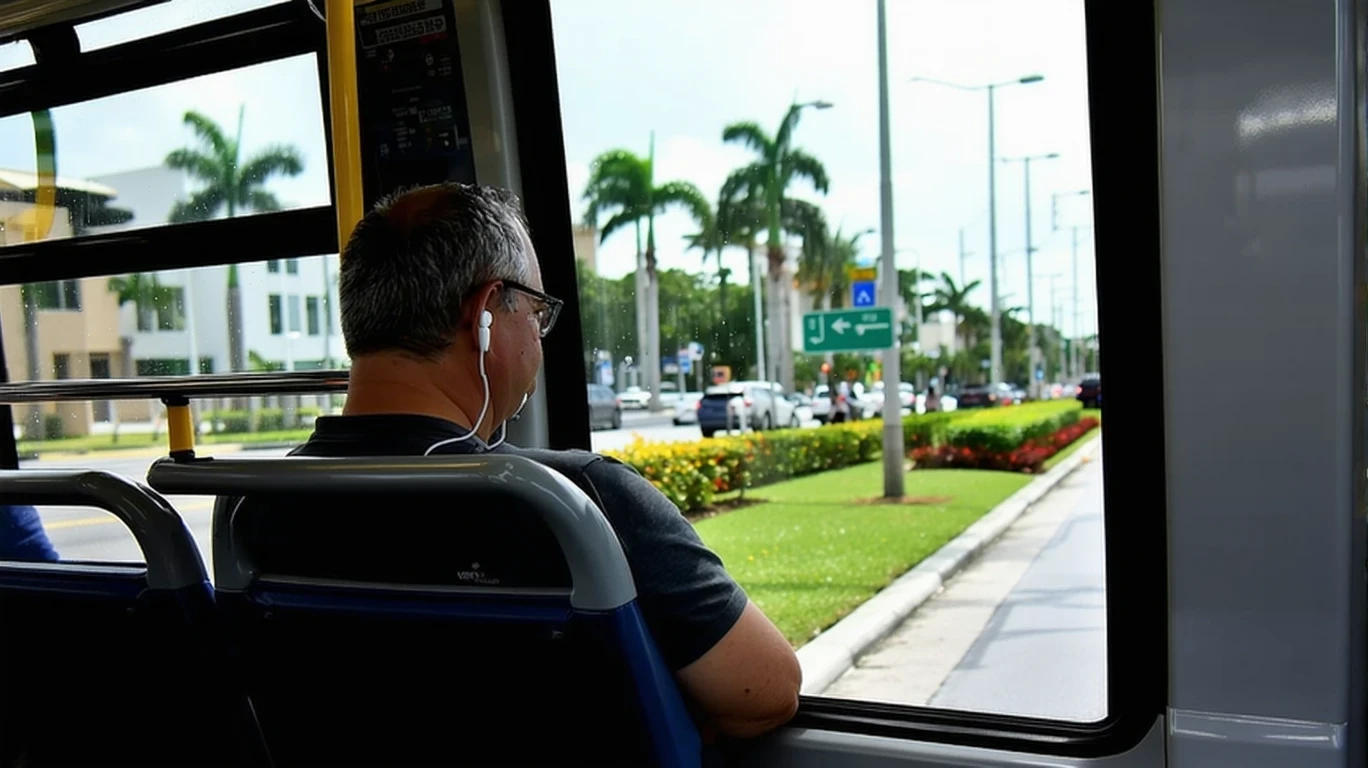
How People Get Around Fort Lauderdale
Fort Lauderdale operates as a layered city. In certain corridors and downtown areas, pedestrian infrastructure is substantial, commercial density is high, and rail service is present. Residents in these zones can structure daily life around walking, transit, and short trips. But step outside those pockets, and the infrastructure shifts quickly—roads widen, sidewalks thin out, and destinations spread apart.
The result is a city where mobility depends heavily on where you live. Newcomers often assume Fort Lauderdale functions like a traditional car-dependent suburb or a uniformly walkable urban core. It’s neither. Instead, it’s a metro where neighborhood selection determines whether you’ll rely on a vehicle for every errand or only for longer commutes.
With 26 minutes as the average commute and 37.6% of workers facing long commutes, Fort Lauderdale reflects a metro where distance and destination matter more than blanket assumptions about transit viability. Only 7.6% of residents work from home, meaning the vast majority must solve the commute question daily.
Public Transit Availability in Fort Lauderdale
Public transit in Fort Lauderdale often centers around systems such as Brightline and Broward County Transit, though coverage and service levels vary significantly by area. Rail service is present and provides a real alternative for residents whose origins and destinations align with station locations. For those living near rail corridors and commuting to employment centers along the line, transit becomes a practical option.
But rail’s usefulness is geographically constrained. Residents in lower-density residential areas, or those whose jobs sit outside transit corridors, find that the system doesn’t solve their daily mobility needs. Bus service exists throughout the metro, but without high frequency or extensive evening coverage, it functions more as a supplemental option than a primary commute solution for most households.
Transit works best in Fort Lauderdale’s denser neighborhoods—places where commercial amenities, residential buildings, and transit stops cluster together. In these areas, a household can realistically combine walking, rail, and occasional rideshare to manage daily errands and work trips. Outside these zones, transit becomes less viable, and car ownership shifts from optional to necessary.
Driving & Car Dependence Reality
For many Fort Lauderdale residents, driving remains the default. The metro’s layout—a mix of dense corridors and sprawling residential zones—means that even households in walkable neighborhoods often need a car for trips beyond their immediate area. Commuters heading to jobs in Broward County’s suburban office parks, parents managing school pickups, or workers with multi-stop schedules find that transit can’t accommodate the complexity of their routines.
Parking availability varies. In downtown Fort Lauderdale and along commercial corridors, street parking can be limited and metered. Residential neighborhoods typically offer more flexibility, though apartment complexes may charge separately for parking spaces. Newcomers should clarify parking arrangements before signing a lease, especially in denser areas where off-street parking isn’t guaranteed.
Car dependence in Fort Lauderdale isn’t universal, but it’s widespread. The city’s infrastructure supports driving well—roads are maintained, traffic flows reasonably outside peak hours, and gas prices as of early 2026 sit at $2.94 per gallon. But relying on a car means accepting the exposure that comes with it: fuel costs, maintenance, insurance, and the time cost of commuting in a metro where more than a third of workers face long commutes.
Commuting Patterns & Daily Mobility
Commuting in Fort Lauderdale reflects the metro’s mixed structure. Single-destination commuters—those traveling from home to one workplace and back—can sometimes optimize around transit if both endpoints align with rail or high-frequency bus routes. But households managing multiple stops, irregular schedules, or destinations in lower-density areas face friction that transit can’t solve.
The 26-minute average commute masks significant variation. Residents in walkable pockets near employment centers may face minimal commute times, while those in peripheral neighborhoods or commuting to jobs outside Fort Lauderdale’s core can easily exceed 40 minutes each way. The 37.6% long-commute figure suggests that a substantial share of workers absorb this friction daily, either by choice (trading housing cost or space for commute time) or by necessity (job locations that don’t align with affordable housing).
Daily mobility in Fort Lauderdale also depends on household composition. Singles and couples without children can often structure life around a smaller geographic radius, especially if they prioritize proximity to work and amenities. Families with school-age children, or households with caregiving responsibilities, typically need more flexibility—and that flexibility usually requires a car.
Who Transit Works For — and Who It Doesn’t
Transit in Fort Lauderdale works best for renters in dense, mixed-use neighborhoods near rail stations, particularly those with single-destination commutes and flexible schedules. If your job sits along a rail line, your apartment is within walking distance of a station, and your daily errands cluster near home, you can realistically minimize car dependence.
Transit works less well for families managing complex logistics—school runs, after-school activities, grocery trips with multiple bags, or jobs requiring site visits across the metro. It also struggles to serve residents in lower-density neighborhoods where the nearest transit stop is a 15-minute walk and service runs infrequently.
Homeowners in Fort Lauderdale’s suburban zones typically assume car ownership. The infrastructure in these areas—wide roads, limited sidewalks, dispersed commercial nodes—reflects a built environment designed around driving. Renters in these same areas face the same structural constraints, even if they’d prefer to avoid car ownership.
The key differentiator isn’t income or preference—it’s alignment. If your home, work, and daily destinations align with Fort Lauderdale’s walkable corridors and transit routes, the city’s infrastructure supports a lower-car or car-free lifestyle. If they don’t, the city’s structure pushes you toward driving, regardless of how much you’d prefer an alternative.
Transportation Tradeoffs in Fort Lauderdale
Choosing between transit and driving in Fort Lauderdale means weighing predictability, control, and flexibility against exposure and time.
Transit offers predictability in operating cost—no fuel price swings, no surprise maintenance bills—but sacrifices flexibility. If your schedule changes, if you need to make an unplanned stop, or if your destination sits outside transit coverage, you’re constrained. Driving offers control and flexibility but exposes you to fuel volatility, parking costs, and the time cost of traffic.
For households in walkable pockets, the tradeoff often tilts toward transit and walking, especially if work and errands align geographically. For households in lower-density areas or with complex daily routines, the tradeoff tilts toward driving, because transit can’t accommodate the variability.
Fort Lauderdale’s mixed infrastructure means these tradeoffs aren’t abstract—they’re lived daily, and they vary block by block. The city rewards households who can align their geography with their mobility needs and penalizes those who can’t.
How this article was built: In addition to public economic data, this article incorporates location-based experiential signals derived from anonymized geographic patterns—such as access density, walkability, and land-use mix—to reflect how day-to-day living actually feels in Fort Lauderdale, FL.
FAQs About Transportation in Fort Lauderdale (2026)
Is public transit usable for daily commuting in Fort Lauderdale?
It depends entirely on where you live and work. If both your home and workplace align with rail corridors or high-frequency bus routes, transit can work well. But for residents in lower-density neighborhoods or commuting to jobs outside transit coverage, driving remains far more practical. Fort Lauderdale’s transit infrastructure serves specific corridors effectively but doesn’t blanket the metro.
Do most people in Fort Lauderdale rely on a car?
Yes, the majority of Fort Lauderdale residents depend on cars for daily mobility. While walkable pockets and rail access exist, the metro’s overall layout and the dispersion of jobs and services mean that driving remains the dominant mode. Only 7.6% of workers are fully remote, so most households must solve the commute problem, and for many, that solution involves a vehicle.
Which areas of Fort Lauderdale are easiest to live in without a car?
Downtown Fort Lauderdale and neighborhoods near rail stations with high commercial density offer the best car-free or car-light potential. These areas combine walkable infrastructure, transit access, and nearby amenities. Renters prioritizing car-free living should focus on neighborhoods where grocery stores, workplaces, and transit stops all fall within a short walk.
How does commuting in Fort Lauderdale compare to nearby cities?
Fort Lauderdale’s 26-minute average commute sits in the middle range for South Florida metros, but the 37.6% long-commute figure suggests significant variability. Compared to Miami, Fort Lauderdale offers slightly less transit density but also less severe traffic congestion in many corridors. Compared to smaller nearby cities, Fort Lauderdale provides more transit options but also more sprawl, meaning where money goes in terms of time and transportation depends heavily on neighborhood and job location.
Can you get by with just a bike in Fort Lauderdale?
In certain neighborhoods, yes—but citywide, no. Fort Lauderdale has cycling infrastructure in some areas, particularly along commercial corridors and near the coast, but bike-to-road ratios remain moderate. Cyclists face gaps in connectivity, limited protected lanes in many zones, and the challenge of Florida’s heat and afternoon storms. Biking works well as a supplement to walking and transit in dense areas, but it’s rarely a standalone solution for all trips across the metro.
How Transportation Fits Into the Cost of Living in Fort Lauderdale
Transportation in Fort Lauderdale isn’t just a line item—it’s a structural factor that shapes housing choice, time allocation, and household flexibility. Residents in walkable, transit-accessible neighborhoods may pay more in rent but gain back time and reduce exposure to fuel and vehicle costs. Residents in lower-cost, car-dependent areas trade housing savings for commute time and transportation expenses.
The city’s mixed infrastructure means these tradeoffs are real and measurable, even if they don’t always show up in monthly expenses as cleanly as rent or utilities. A household that can walk to work and errands absorbs less financial and time cost than one driving 40 minutes each way, even if the rent differential seems modest on paper.
For a fuller picture of how transportation fits into overall household costs, see A Month of Expenses in Fort Lauderdale: What It Feels Like, which breaks down how mobility, housing, and daily costs interact across different household types.
Fort Lauderdale’s transportation reality rewards geographic alignment and punishes mismatches. Choose your neighborhood with your commute, daily routine, and mobility preferences in mind—not as an afterthought.