
“Fort Lauderdale feels like you’re always close to something good — the beach, a brewery, a park — but you pay for it in rent and traffic. It’s not quiet suburbia, and it’s not full-throttle Miami. It’s somewhere in between, and that works for some people more than others.”
Fort Lauderdale occupies an unusual emotional space along Florida’s southeast coast. It’s a city shaped by proximity to water, pockets of walkable density, and the tension between local life and tourist flow. For some, that combination feels vibrant and convenient. For others, it feels expensive and crowded without enough payoff.
Understanding whether Fort Lauderdale feels like a good fit depends less on whether people are “happy” here and more on whether the tradeoffs align with what you’re looking for. The city rewards those who value access to beaches, dining variety, and urban texture. It frustrates those who want spacious affordability, predictable quiet, or car-free convenience across the entire metro.
What Fort Lauderdale Feels Like Day to Day
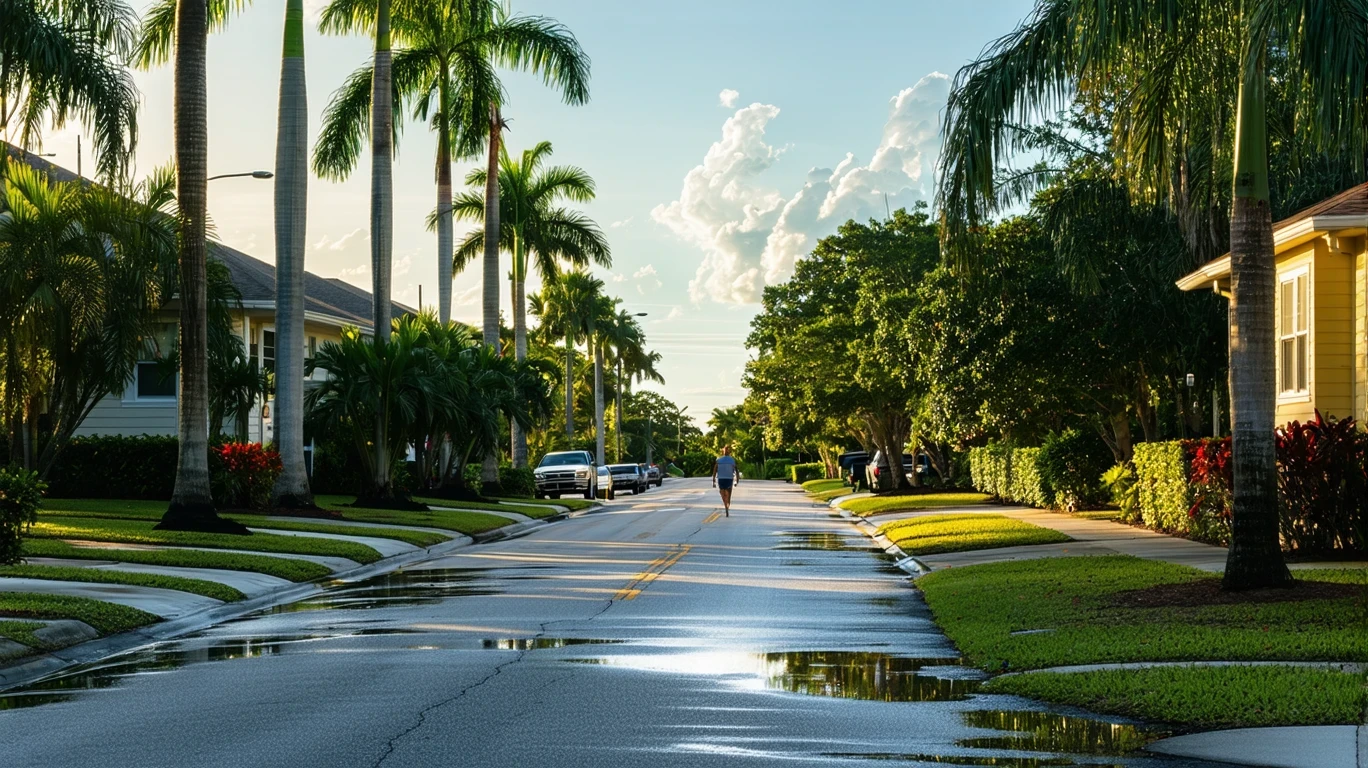
Fort Lauderdale’s vibe is defined by contrast. The city has substantial pedestrian infrastructure in certain areas, creating walkable pockets where errands, dining, and green space feel integrated into daily routines. Food and grocery density exceeds typical thresholds, and park access is woven throughout the city alongside visible water features. Rail transit exists, which sets Fort Lauderdale apart from purely car-dependent Florida metros.
But outside those walkable cores, the city still leans heavily on cars. Commutes average 26 minutes, and nearly 38% of workers face long commutes. The pedestrian-friendly zones don’t extend uniformly across the metro, so your day-to-day experience depends significantly on where you live and work. People in denser, mixed-use neighborhoods describe running errands on foot or bike. People in quieter residential areas describe driving everywhere.
This creates a split personality. Fort Lauderdale can feel like an active, accessible city if you’re positioned in the right neighborhood. It can feel like a sprawling, traffic-heavy suburb if you’re not.
Social Media Buzz in Fort Lauderdale
On platforms like Reddit, Facebook groups, and X, Fort Lauderdale conversations tend to circle around a few recurring themes: beach access, housing costs, traffic during season, and whether the city is “worth it” compared to cheaper alternatives inland or farther north.
There’s pride in the coastal lifestyle and the variety of things to do, but also fatigue around tourist congestion and rising rents. Locals often describe a love-hate relationship with seasonal population swings — the energy and activity are appealing, but the crowding and parking pressure wear thin.
“I love being ten minutes from the beach, but I hate that my rent went up $200 this year for the same apartment. It’s hard to justify staying unless you really use what the city offers.”
“Fort Lauderdale has way more going on than people give it credit for. You’re not stuck in pure suburbia, but you’re also not dealing with Miami chaos. It’s a good middle ground if you can afford it.”
“The walkability is hit or miss. Downtown and some neighborhoods near the water are great. Everywhere else, you’re driving. Don’t move here thinking you can ditch your car.”
The tone is pragmatic rather than celebratory. People who feel aligned with Fort Lauderdale tend to emphasize access and activity. People who feel friction tend to focus on cost and crowding.
Local News Tone
Local coverage in Fort Lauderdale tends to frame the city through the lens of growth, development, and identity negotiation. Headlines and story themes reflect ongoing conversation about what the city is becoming and who it’s for.
- “Residents Debate Density and Development Along Corridors”
- “New Dining and Retail Arrive as Neighborhoods Evolve”
- “Commuters Weigh Transit Options and Traffic Realities”
- “Seasonal Population Swings Shape Local Rhythms”
- “Community Voices Reflect on Affordability and Access”
The framing is rarely purely positive or purely critical. Instead, it reflects a city in transition, where long-time residents, newcomers, and seasonal visitors negotiate space and resources. There’s energy around new projects and amenities, but also caution about whether growth is sustainable or equitable.
Review-Based Public Perception
On platforms like Google Reviews, Yelp, and Nextdoor-style forums, Fort Lauderdale’s public perception splits along expectation lines. People who moved here for beach proximity, dining variety, and urban energy tend to praise the city’s accessibility and lifestyle options. People who expected suburban affordability or quiet predictability tend to express disappointment.
Positive reviews emphasize walkable neighborhoods, park access, and the ability to bike or take transit in certain areas. There’s appreciation for the density of grocery stores, restaurants, and services — daily errands feel manageable without long drives, at least in parts of the city.
Critical reviews focus on housing pressure, traffic during peak season, and the gap between walkable cores and car-dependent edges. Families looking for yard space and lower costs often feel priced out or compromised. Renters facing median gross rent of $1,627 per month describe budgets stretched thin, especially when income doesn’t keep pace.
Newer planned areas tend to receive praise for cleanliness and amenities but criticism for lack of character. Older pockets near the water receive praise for charm and walkability but mixed reviews on parking and density.
The common thread: Fort Lauderdale delivers on lifestyle and access for those who can afford it and live in the right areas. It frustrates those who need affordability, space, or uniform walkability across the metro.
Comparison to Nearby Cities
| Aspect | Fort Lauderdale | Miami | West Palm Beach |
|---|---|---|---|
| Overall Vibe | Beach-adjacent, walkable pockets, tourist-adjacent tension | High-energy urban core, intense density, cultural hub | Quieter coastal feel, less tourist pressure, more suburban |
| Walkability | Strong in certain neighborhoods, car-dependent elsewhere | Highly walkable in core areas, transit-rich | Limited walkability, more spread out |
| Housing Pressure | High rent, competitive market | Very high rent, intense competition | Moderate to high, more single-family options |
| Lifestyle Fit | Middle ground between suburban calm and urban energy | Full urban intensity, nightlife, culture | Relaxed coastal living, family-oriented |
Fort Lauderdale sits between Miami’s intensity and West Palm Beach’s suburban calm. If you want urban energy without Miami’s density and cost, Fort Lauderdale offers a compromise. If you want more space and quiet at a slightly lower price point, West Palm Beach may feel more aligned. If you want maximum walkability, transit access, and cultural activity, Miami delivers more — but at a higher cost and with more crowding.
None of these cities is objectively better. The question is which set of tradeoffs matches your priorities.
What Locals Are Saying
“I’m a remote worker, and Fort Lauderdale works perfectly for me. I can walk to coffee shops, the beach is close, and I’m not stuck in a boring suburb. Rent is high, but I use everything the city offers.” — Remote professional, late 20s
“We moved here for the lifestyle, but we’re starting to feel priced out. Our lease renewal was brutal, and we’re not sure we can justify staying unless our income goes up.” — Couple, early 30s
“Fort Lauderdale has more personality than I expected. There are real neighborhoods here, not just tourist zones. You just have to know where to look.” — Newcomer, mid 20s
“I’ve been here 15 years, and the city has changed a lot. More expensive, more crowded, but also more to do. It’s a tradeoff.” — Long-time resident, 50s
“If you don’t live near the beach or downtown, you’re driving everywhere. The walkable parts are great, but they’re small.” — Renter, outer neighborhood
“I retired here for the weather and the water. It’s exactly what I wanted. I don’t care about walkability or nightlife — I care about being warm and near the ocean.” — Retiree, 60s
“Fort Lauderdale feels like it’s trying to be a real city but hasn’t fully committed. You get some of the benefits and some of the frustrations of both suburban and urban life.” — Young professional, early 30s
Does Fort Lauderdale Feel Like a Good Fit?
Fort Lauderdale works well for people who value coastal access, dining and errand convenience, and pockets of walkable urban texture — and who can afford the rent or home prices that come with it. It appeals to remote workers, young professionals, and retirees who prioritize lifestyle over space. The city rewards those who live in the denser, mixed-use neighborhoods where the infrastructure supports walking, biking, and transit use.
It tends to frustrate families seeking affordability and yard space, car-free households outside the walkable cores, and anyone expecting uniform suburban predictability. The city’s split personality — walkable and transit-served in some areas, car-dependent and sprawling in others — means your experience depends heavily on where you land.
Fort Lauderdale isn’t a city where everyone feels the same way. It’s a city where alignment depends on whether you’re positioned to use what it offers and whether the cost feels worth it. If beach proximity, park access, and urban energy matter more than space and affordability, the tradeoff may feel fair. If not, the friction will likely outweigh the benefits.
For more insight into what drives expenses or what shapes quality of life in Fort Lauderdale, explore the related guides to see how the numbers and tradeoffs play out in practice.
How this article was built: In addition to public economic data, this article incorporates location-based experiential signals derived from anonymized geographic patterns—such as access density, walkability, and land-use mix—to reflect how day-to-day living actually feels in Fort Lauderdale, FL.
The perspectives shown reflect commonly expressed local sentiment and recurring themes in public discussion, rather than individual accounts.