
“Fontana gets a bad rap online, but honestly? It’s exactly what we needed—space, parks everywhere, and I can still take the train to work in LA. Not fancy, but it works.” That tension—between what Fontana is and what people expect it to be—shapes nearly every conversation about life here.
Fontana sits in the Inland Empire, a sprawling suburban city that has grown rapidly over the past two decades. It’s a place where families find room to breathe, where commuters trade urban rent for backyard space, and where the promise of affordability meets the reality of long drives and identity questions. The vibe here isn’t about charm or grit—it’s about tradeoffs that either feel smart or feel like compromise, depending on what you value.
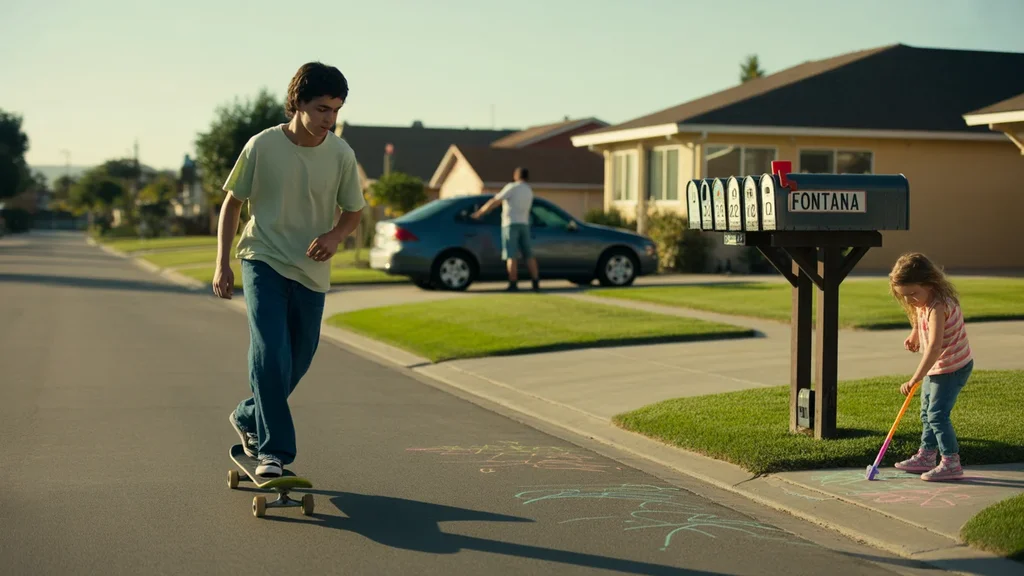
What It Feels Like to Live in Fontana
Fontana tends to work for people who want suburban infrastructure—parks, schools, grocery stores within reach—without paying coastal prices. The city has built out family-friendly amenities at a pace that matches its growth: playgrounds are common, green space is woven into neighborhoods, and errands don’t require a 20-minute drive. For households with kids, that density of infrastructure feels like a win. For people seeking walkable streets, local cafes, or evening activity, it can feel thin.
What surprises many newcomers is the presence of rail transit. Fontana has Metrolink service, which changes the math for commuters willing to trade driving for train time. That access creates pockets of residents who feel less car-trapped than the suburban form suggests. But the rail doesn’t erase the commute—33 minutes is the average, and nearly half of workers face long commutes. The city’s layout still assumes you’ll drive most of the time, even if you don’t have to drive everywhere.
The emotional center of Fontana is pragmatic optimism. People here tend to feel they made a rational choice: more house, less rent, access to jobs, room for kids. But that optimism bumps against frustration when the tradeoffs show up—traffic on the 10, limited dining variety, the sense that “real” culture is always somewhere else. Fontana doesn’t try to be Los Angeles or Orange County. It’s the place you move when you’ve decided those places aren’t worth the cost. Whether that feels like relief or resignation depends on what you left behind.
Social Media Buzz in Fontana
On platforms like Reddit and Facebook, Fontana discussions tend to split along predictable lines: defenders who emphasize value and convenience, and critics who frame the city as a placeholder. The tone is rarely extreme—more often it’s weary, protective, or matter-of-fact.
Common themes include pride in neighborhood upkeep, complaints about commute fatigue, and debates over whether the city has “arrived” or is still “becoming something.” Newer residents often express pleasant surprise at park access and grocery density. Long-time locals sometimes lament the loss of small-town feel as development accelerates. Remote workers and families with young kids tend to speak more positively; younger singles and creatives tend to feel restless.
“It’s not exciting, but it’s stable. I can afford a house, my kids walk to school, and I’m not drowning in rent. That’s enough for me right now.”
“Fontana feels like a place people settle, not a place people choose. It works, but it doesn’t inspire.”
“Honestly, the parks here are better than where I grew up in LA. We’re outside every weekend. People sleep on Fontana.”
The recurring emotional note is pragmatic acceptance. Fontana isn’t the subject of passionate advocacy or deep resentment—it’s the city people defend when pressed, but rarely brag about unprompted.
Local News Tone
Local coverage of Fontana tends to frame the city through the lens of growth, infrastructure catch-up, and identity formation. Headlines reflect a city in transition—adding amenities, debating development pace, and managing the tension between suburban comfort and urban aspiration.
- “New Retail and Dining Options Arrive as City Grows”
- “Residents Debate Density and Traffic as Development Continues”
- “Fontana Expands Park Access in Response to Family Growth”
- “Commuters Weigh Rail Access Against Drive Times”
- “City Works to Shed Old Reputation, Highlight New Investments”
The tone is rarely celebratory or critical—it’s observational, focused on change as a constant. Coverage tends to acknowledge that Fontana is still defining itself, and that residents have mixed feelings about what that definition should be. There’s little nostalgia and little utopian vision—just the steady hum of a city building out its infrastructure faster than its identity.
Review-Based Public Perception
On platforms like Google Reviews, Yelp, and Nextdoor, Fontana’s public perception clusters around expectation management. People who wanted suburban affordability, family infrastructure, and space tend to leave positive reviews. People who wanted walkability, nightlife, dining variety, or cultural texture tend to leave lukewarm or disappointed ones.
Praise often centers on:
- Park quality and accessibility
- Grocery and retail convenience
- Newer neighborhoods feeling clean and organized
- Value for housing dollar compared to LA or Orange County
- Family-friendly vibe and visible school infrastructure
Complaints often focus on:
- Limited dining variety and lack of local food culture
- Inconsistent walkability—some pockets feel connected, others feel isolated
- Traffic congestion during commute hours
- Perception that the city lacks distinct character or “soul”
- Healthcare limited to clinics; no local hospital for emergencies
Neighborhood variation matters here. Newer planned developments tend to get higher marks for upkeep and amenities. Older pockets closer to industrial zones get more mixed reviews, with residents noting wear and noise. But even in older areas, the functional infrastructure—parks, schools, grocery stores—remains accessible, which keeps dissatisfaction from tipping into regret.
Comparison to Nearby Cities
| Aspect | Fontana | Rancho Cucamonga | Riverside |
|---|---|---|---|
| Overall Vibe | Pragmatic suburban; family-focused, transit-accessible pockets | Polished suburban; more upscale feel, established retail | College-town energy; more walkable core, older character |
| Walkability | Pockets of walkability; car still dominant | Low; car-dependent throughout | Higher in downtown and near UCR; mixed elsewhere |
| Dining & Nightlife | Limited; chain-heavy, few local spots | More variety; upscale chains and some local options | Broader range; downtown has local bars and restaurants |
| Commute Feel | Long for many; rail option helps some | Similar; no rail, more freeway reliance | Slightly shorter average; more local employment |
| Family Infrastructure | Strong; parks and schools well-distributed | Strong; more established, higher-rated schools | Good; older parks, university presence adds texture |
Fontana sits between Rancho Cucamonga’s polish and Riverside’s texture. If you want suburban infrastructure without paying Rancho’s premium, Fontana delivers. If you want a walkable downtown or college-town energy, Riverside offers more. Fontana’s edge is value and rail access; its limitation is character and variety. Rancho feels more finished; Riverside feels more lived-in. Fontana feels like it’s still deciding what it wants to be.
What Locals Are Saying
“We moved here from Orange County when our second kid was born. The space is incredible, the parks are everywhere, and we’re not hemorrhaging money on rent. Yeah, the commute is long, but I take the train twice a week and it’s manageable. Fontana gets a lot of hate, but for us, it’s been the right call.”
“I work remotely, so the commute doesn’t hit me. What I notice is how quiet it is, how easy errands are, and how much green space there is. It’s not exciting, but I’m not looking for exciting right now. I’m looking for functional, and Fontana is that.”
“Fontana feels like a placeholder. I’m here because I can afford it, not because I love it. The parks are nice, sure, but there’s nothing to do at night, no local spots that feel special. It’s fine for now, but I don’t see myself staying long-term.”
“I grew up here, and it’s changed a lot. It used to feel smaller, more connected. Now it’s just sprawl. But I’ll say this—my kids have good schools, we have a yard, and I’m not spending half my paycheck on housing. That counts for something.”
“The rail access is underrated. I can get to LA without sitting in traffic, and that’s huge. Fontana isn’t sexy, but it’s practical. If you’re okay with that tradeoff, it works.”
“Healthcare is my biggest frustration. There’s no hospital here—if something serious happens, you’re driving to another city. For a city this size, that feels like a gap.”
“Fontana is what you make of it. If you need nightlife and culture, you’re going to be disappointed. If you need space, parks, and affordability, you’re going to be relieved. It’s not complicated.”
Does Fontana Feel Like a Good Fit?
Fontana tends to work for households prioritizing space, affordability, and family infrastructure over cultural texture and walkability. It works for commuters willing to trade time for housing value, especially those who can use rail transit. It works for remote workers who want suburban calm without isolation, and for families who value parks, schools, and grocery access over dining variety.
Fontana tends to frustrate people seeking walkable streets, local character, or evening activity. It frustrates those who feel the commute erodes quality of life, and those who want healthcare and cultural amenities within city limits. It frustrates people who moved for affordability but feel they gave up too much in exchange.
The city’s emotional profile is pragmatic, not passionate. People here tend to feel they made a smart financial decision, even if they don’t feel they found their dream place. The tradeoffs are visible and consistent: you get more house, less rent, and access to jobs—but you spend more time in transit, you drive more than you’d like, and you go elsewhere for texture.
If that equation feels like relief, Fontana will likely feel like a good fit. If it feels like compromise, the friction will show up quickly. The city doesn’t try to be something it’s not. It offers suburban infrastructure, rail access, and affordability. Whether that’s enough depends entirely on what you need it to be.
For more on how these tradeoffs play out financially, explore A Month of Expenses in Fontana: What It Feels Like. To understand how housing pressure shapes decisions, see Fontana Housing Pressure: Availability, Competition, Compromises. And for a closer look at what “enough” actually means here, read Living Comfortably in Fontana: What ‘Enough’ Actually Means.
How this article was built: In addition to public economic data, this article incorporates location-based experiential signals derived from anonymized geographic patterns—such as access density, walkability, and land-use mix—to reflect how day-to-day living actually feels in Fontana, CA.
The perspectives shown reflect commonly expressed local sentiment and recurring themes in public discussion, rather than individual accounts.