
“I thought I’d be able to take the bus at least a couple days a week,” says Marcus, who moved to Fishers from Indianapolis in 2023. “But after the first month, I realized the car wasn’t optional here — it’s the whole system.”
Transportation in Fishers revolves around driving. The city’s layout, development pattern, and infrastructure all reflect a car-first design, and that shapes daily life in ways that aren’t always obvious until you’re living here. While there are pockets of walkability and a notable presence of bike lanes, these features support local errands and recreation more than they replace the need for a vehicle. For most households, the question isn’t whether to own a car — it’s how much driving will define your routine and what that means for your time, flexibility, and exposure to fuel costs.
Understanding how people actually get around Fishers — and who benefits from the infrastructure that exists — helps clarify what kind of mobility tradeoffs you’ll face here.
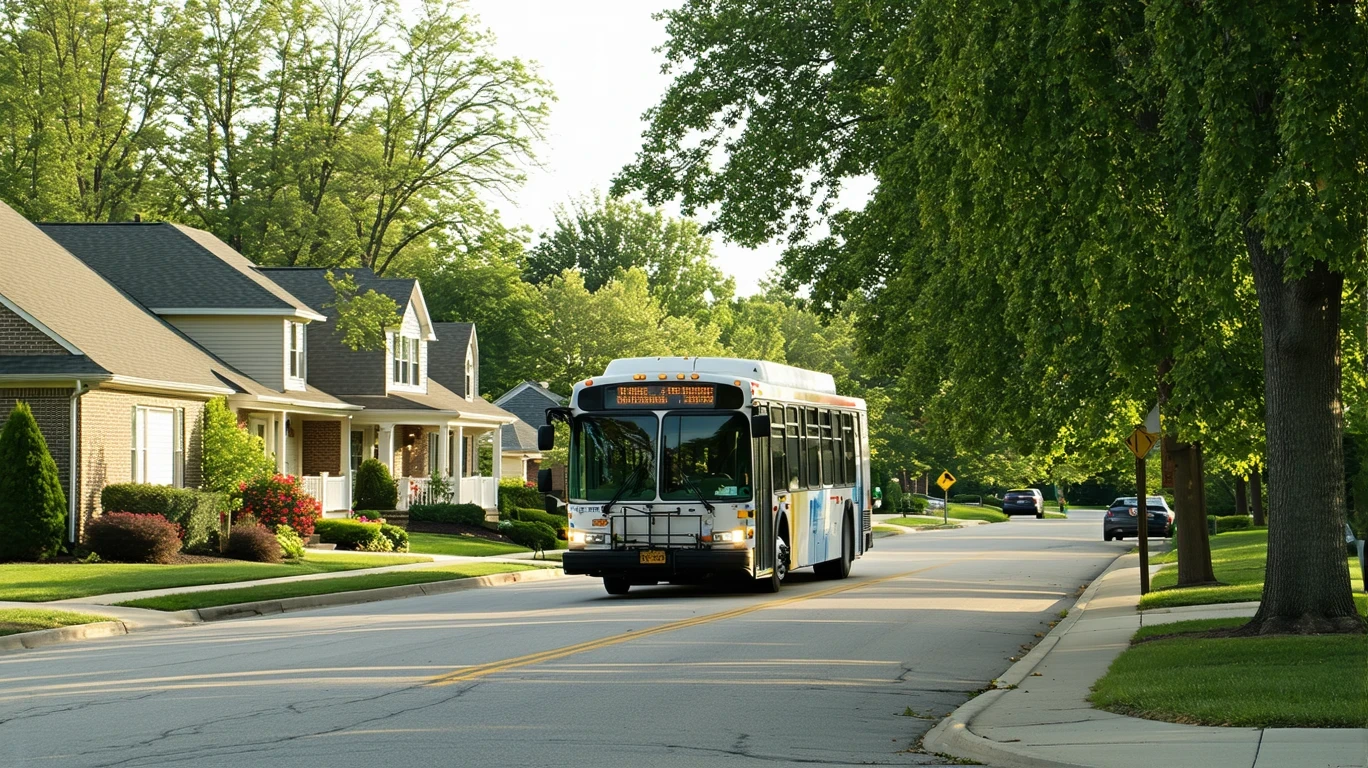
How People Get Around Fishers
Fishers is a suburban city built around the automobile. Roads are wide, parking is abundant, and most residential neighborhoods sit at a distance from commercial centers. The street network prioritizes car flow, and while there are areas where pedestrian and bike infrastructure is more developed, these tend to be concentrated rather than evenly distributed across the city.
The result is a transportation environment where driving is the default for nearly all trip types: commuting to work, grocery runs, school drop-offs, medical appointments, and social activities. Even households that live in one of the more walkable pockets typically own at least one vehicle, because the infrastructure beyond those pockets doesn’t support car-free living.
What newcomers often misunderstand is that Fishers’ walkability and bike infrastructure don’t function as alternatives to driving — they function as supplements. You might bike to a nearby park or walk to a coffee shop within your neighborhood, but you’ll still drive to work, to the grocery store in another part of town, and to most other destinations. The city’s land use pattern, with residential and commercial areas separated by distance and designed around parking access, makes multi-modal living difficult for most households.
Public Transit Availability in Fishers
Public transit plays a minimal role in daily transportation for Fishers residents. The city’s infrastructure does not support the kind of frequent, widespread transit service that would make it a practical option for commuting or routine errands. While some regional transit options may connect Fishers to nearby employment centers like Indianapolis, these services are limited in coverage, frequency, and hours of operation.
Transit works best — when it works at all — for specific, planned trips rather than spontaneous or time-sensitive travel. It tends to fall short in suburban areas, during early morning or late evening hours, and for trips that require transfers or cover distances beyond a single corridor. For households that rely on predictable schedules, multiple daily trips, or access to areas outside the urban core, transit is rarely a viable primary option.
The absence of a robust transit signal in the city’s infrastructure data reflects this reality: Fishers is not structured to support transit-dependent living. The density, land use mix, and street design that make transit functional in urban environments are largely absent here.
Driving & Car Dependence Reality
Driving is not just common in Fishers — it’s structurally necessary. The city’s development pattern spreads residential, commercial, and employment areas across a wide geography, and the distances involved make walking or biking impractical for most trips. Parking is plentiful and free in most locations, which removes one of the friction points that might otherwise encourage alternative transportation modes.
Car dependence here is tied to geography, not preference. Households that might prefer to drive less often find that the infrastructure doesn’t support that choice. Errands are clustered along commercial corridors rather than distributed evenly, so even a trip to pick up groceries, drop off dry cleaning, and stop at the pharmacy usually means driving to multiple locations rather than walking a single neighborhood loop.
For families with children, car dependence intensifies. School drop-offs, extracurricular activities, playdates, and medical appointments all require coordination and transportation, and the distances involved make carpooling or walking difficult to sustain. The result is a household rhythm built around vehicle access and scheduling.
Commute flexibility is one advantage of car dependence: you control your departure time, route, and stops. But that flexibility comes with exposure to fuel prices, maintenance costs, and the time cost of driving itself. In Fishers, where gas prices currently sit at $2.79 per gallon, fuel expenses are moderate but not negligible, especially for households managing multiple vehicles or long commutes.
Commuting Patterns & Daily Mobility
Most Fishers residents structure their commutes around single-occupancy vehicle trips, often traveling to employment centers in Indianapolis or other nearby suburban job hubs. Commutes tend to be straightforward in terms of routing — highways and major arterials provide direct access — but the time and distance involved vary widely depending on where you live in Fishers and where you work.
Households with flexible or remote work arrangements benefit significantly from Fishers’ layout. The walkable pockets and bike infrastructure that exist become more valuable when you’re not commuting daily, because they allow for local errands and recreation without adding to your driving load. For these households, car dependence is real but less intense.
For households commuting daily to Indianapolis or other regional employment centers, the calculus is different. The drive becomes a fixed cost in time and fuel, and the lack of viable transit alternatives means there’s little room to reduce that exposure. Multi-stop commutes — dropping kids at school, stopping for coffee, picking up groceries on the way home — add complexity and miles, and the infrastructure accommodates that pattern but doesn’t streamline it.
Who Transit Works For — and Who It Doesn’t
Transit in Fishers works for a very narrow slice of households: those whose trips align with limited regional routes, who have flexibility in timing, and who don’t require frequent or spontaneous travel. This might include occasional commuters to downtown Indianapolis, students with predictable schedules, or retirees making planned trips.
Transit does not work for households that need reliable, frequent service for daily commuting. It does not work for families managing multiple daily trips across different parts of the city. It does not work for anyone whose job, school, or errands fall outside the limited corridors served by regional transit.
Renters and younger households sometimes hope that transit will reduce their need for a car, especially if they’re moving from a more transit-rich environment. In Fishers, that hope rarely translates into reality. The city’s layout and the limited transit infrastructure mean that even households trying to minimize car use end up driving for most trips.
Homeowners in Fishers typically accept car dependence as part of the tradeoff for suburban space, school access, and neighborhood character. The transportation structure here favors households that prioritize those elements over walkability or transit access.
Transportation Tradeoffs in Fishers
Choosing to rely on driving in Fishers means accepting predictability and control in exchange for time and fuel exposure. You decide when you leave, what route you take, and where you stop. You’re not constrained by transit schedules, coverage gaps, or service interruptions. But you absorb the cost of fuel, the time cost of driving, and the need to own and maintain at least one vehicle — often more.
Choosing to attempt a car-light or car-free lifestyle in Fishers means accepting significant limitations. The walkable pockets and bike infrastructure that exist can reduce some driving, but they don’t eliminate the need for a vehicle for most households. Errands take longer, commuting becomes difficult or impossible, and spontaneous trips require planning or ride-sharing.
The tradeoff isn’t between two equal options. In Fishers, driving is the infrastructure default, and alternatives exist only at the margins. Households that thrive here are those that accept that structure and plan accordingly.
FAQs About Transportation in Fishers (2026)
Is public transit usable for daily commuting in Fishers?
Public transit in Fishers is limited and not structured to support daily commuting for most households. Regional connections may exist for specific routes, but frequency, coverage, and timing constraints make transit impractical as a primary transportation mode. Most residents rely on personal vehicles for commuting.
Do most people in Fishers rely on a car?
Yes. Fishers’ layout, land use pattern, and infrastructure are built around car travel. While walkable pockets and bike lanes exist, they supplement rather than replace vehicle use. The vast majority of households own at least one car, and many own two or more to accommodate work, school, and errands.
Which areas of Fishers are easiest to live in without a car?
No area of Fishers is truly designed for car-free living, but some neighborhoods with higher pedestrian and bike infrastructure density make it easier to handle local errands and recreation on foot or by bike. Even in these areas, most households still own a vehicle for commuting and trips beyond the immediate neighborhood.
How does commuting in Fishers compare to nearby cities?
Fishers commuting patterns are similar to other suburban cities in the Indianapolis metro area: car-dependent, highway-oriented, and structured around single-occupancy vehicle trips. Compared to Indianapolis itself, Fishers offers less transit access but also less congestion and more parking availability. Compared to smaller towns farther from the metro core, Fishers provides better road infrastructure and shorter distances to regional employment centers.
Does Fishers have bike lanes or trails?
Yes. Fishers has a notable presence of bike infrastructure, with bike lanes and trails distributed throughout parts of the city. These facilities are well-suited for recreation and short local trips, but they don’t replace the need for a car for most daily activities. Bike infrastructure here is an amenity, not a primary transportation mode.
How Transportation Fits Into the Cost of Living in Fishers
Transportation in Fishers isn’t just a line item — it’s a structural factor that shapes where you can live, how you spend your time, and what kind of flexibility you have in daily life. Car dependence means that vehicle ownership, fuel, insurance, and maintenance become fixed costs for most households, and those costs interact with housing choices, commute length, and day-to-day logistics.
Households that can reduce commute frequency — through remote work, flexible schedules, or proximity to employment — gain the most control over transportation exposure. The walkable pockets and bike infrastructure that exist in Fishers become more valuable in that context, because they allow for some local mobility without adding to the driving load.
For households commuting daily, transportation costs are less flexible. The infrastructure supports driving, and alternatives are limited. The tradeoff becomes one of time versus distance: living closer to work reduces fuel and time costs but may mean higher housing costs or fewer neighborhood options.
Understanding how transportation works in Fishers — and what it requires — helps clarify whether the city’s layout aligns with your household’s needs. The car-dependent structure here isn’t a flaw; it’s a design choice that favors certain household types and routines over others. Knowing that upfront makes the decision clearer.
How this article was built: In addition to public economic data, this article incorporates location-based experiential signals derived from anonymized geographic patterns—such as access density, walkability, and land-use mix—to reflect how day-to-day living actually feels in Fishers, IN.