
“Fishers checks a lot of boxes—safe, clean, good jobs—but sometimes it feels like you’re driving to everything. It’s comfortable, just not spontaneous.”
That quote captures the emotional center of life in Fishers: a place where financial stability and suburban order create real comfort, but where convenience and texture require intention. This isn’t a city struggling with its identity—it’s a city actively negotiating what kind of suburb it wants to be as it grows.
Understanding whether Fishers feels like a good fit means understanding the tradeoffs people navigate daily: between newer infrastructure and established character, between economic opportunity and day-to-day accessibility, between family-friendly branding and the realities of how households actually move through space.
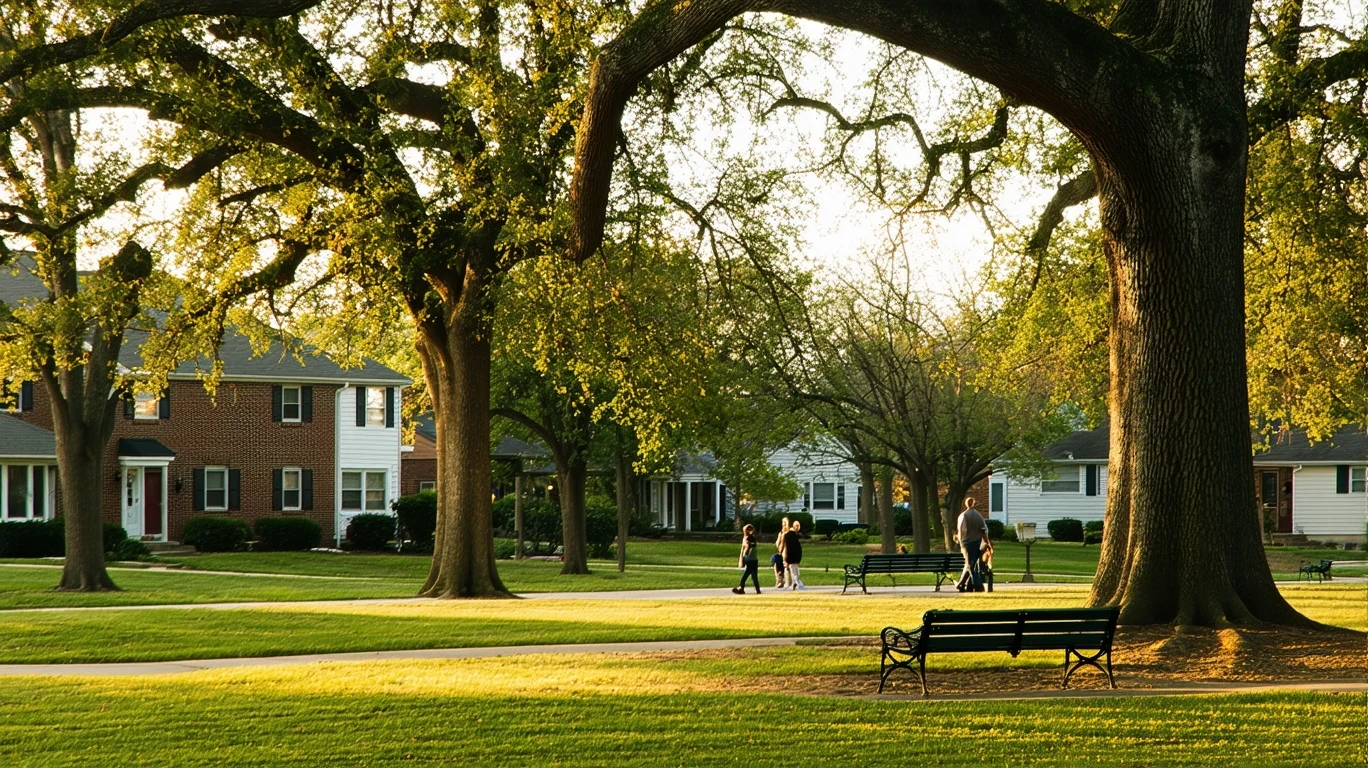
What Defines the Fishers Vibe
Fishers tends to reward people who value predictability and economic security. With a median household income of $126,548 and an unemployment rate of 3.3%, the city attracts professionals and families who’ve achieved financial comfort and want a place that reflects that stability. The housing market—with a median home value of $339,000 and median rent of $1,478 per month—signals a community that has invested heavily in newer development and maintained high standards.
But that same success creates friction for people who expect urban-style spontaneity or walkable daily errands. While Fishers has developed notable cycling infrastructure and walkable pockets in parts of the city, food and grocery options remain concentrated along corridors rather than distributed throughout neighborhoods. This means that even residents who live near pedestrian-friendly streets often find themselves planning trips and driving to handle routine errands.
The city’s building character sits in a mixed range—neither purely low-rise suburban nor notably vertical—and land use blends residential and commercial development. This creates a landscape that feels transitional: not quite the classic bedroom community, but not yet the mixed-use hub some residents hope for. People who thrive here tend to appreciate that in-between quality as flexibility; people who struggle with it often describe it as lack of identity.
Social Media Buzz in Fishers
Online conversations about Fishers tend to cluster around a few recurring themes: pride in the city’s amenities and safety, frustration with traffic and sprawl, and ongoing debate about what growth should prioritize. The tone is rarely angry—more often it’s protective, with long-time residents expressing concern about losing the qualities that made Fishers attractive in the first place, and newer arrivals defending the development that brought them here.
“It’s one of the best places to raise kids in Indiana, but you definitely pay for that—both in housing costs and in how much time you spend in the car.”
“I love that Fishers keeps adding parks and trails, but I wish we had more local spots you could just walk to for coffee or groceries without it being a whole thing.”
“People complain about chain restaurants, but honestly, the convenience and consistency are part of why we moved here. We wanted reliable, not quirky.”
The discussion reflects a community that knows what it has—economic strength, safety, newer infrastructure—and is negotiating what it’s willing to trade for continued growth. There’s less nostalgia for “the way things were” and more active tension about “what comes next.”
How Local Coverage Frames the City
Local media coverage of Fishers tends to focus on development, quality-of-life rankings, and the logistics of managing rapid growth. The tone is generally optimistic but not uncritical—stories often explore the gap between the city’s reputation and residents’ daily experience, particularly around transportation and accessibility.
Common headline themes include:
- “New Mixed-Use Development Promises Walkable Lifestyle”
- “Residents Weigh Convenience of Growth Against Traffic Concerns”
- “Fishers Ranks High for Families, But What Does That Mean Day-to-Day?”
- “City Explores How to Balance Suburban Roots with Urban Amenities”
- “Infrastructure Investment Continues as Population Grows”
The framing reflects a city in transition, where the narrative isn’t about problems to solve but about choices to make. Coverage rarely presents Fishers as a finished product—it’s more often depicted as a work in progress, which resonates with some residents and frustrates others.
Review-Based Public Perception
Public reviews of Fishers—whether on neighborhood platforms, Google, or local forums—tend to split along expectation lines. People who moved here seeking suburban safety, good schools, and economic opportunity tend to express satisfaction, even when acknowledging tradeoffs. People who expected more walkability, cultural variety, or spontaneous convenience tend to feel let down, even when they appreciate the city’s strengths.
Positive reviews often highlight:
- Clean, well-maintained neighborhoods and public spaces
- Access to parks, trails, and outdoor recreation
- Strong job market and proximity to Indianapolis
- Sense of safety and community investment
Critical reviews often mention:
- Car dependency for daily errands despite some walkable pockets
- Limited dining and entertainment variety compared to urban centers
- Traffic congestion during peak hours along main corridors
- Housing costs that feel high relative to lifestyle texture
Newer planned areas tend to receive praise for modern amenities and cohesive design, while older pockets are appreciated for established trees and slightly lower density. But across both, the recurring theme is that Fishers requires planning—whether that’s mapping out errands, coordinating carpools, or deciding when to drive into Indianapolis for cultural experiences.
Comparison to Nearby Cities
| Dimension | Fishers | Carmel | Noblesville |
|---|---|---|---|
| Overall Vibe | Economically strong, growth-focused, transitional suburban character | Polished, arts-forward, higher density in core areas | Small-town feel, slower pace, more established character |
| Walkability Feel | Pockets of pedestrian infrastructure, but errands require driving | Stronger walkable core, more mixed-use development | Limited walkability, classic car-dependent suburb |
| Cost Perception | High but justified by income levels and amenities | Premium pricing, reflects investment in public spaces | Slightly more accessible, trades polish for affordability |
| Family Appeal | Strong reputation, but infrastructure density varies | Highly family-oriented with robust programming | Traditional family suburb with hometown feel |
| Cultural Texture | Growing but still developing identity | Established arts scene and event calendar | Community-focused, less emphasis on cultural variety |
Fishers sits between Carmel’s polished, arts-forward identity and Noblesville’s slower, small-town character. If you prioritize economic opportunity and modern infrastructure but want slightly less density than Carmel, Fishers tends to fit. If you want a more established, slower-paced suburban feel with lower costs, Noblesville may align better. If you’re drawn to walkable downtown areas and cultural programming, Carmel’s core offers more texture—but at a premium.
The choice isn’t about which city is “better”—it’s about which tradeoffs match your priorities. Fishers appeals to people who value growth and opportunity over established character, and who are comfortable planning their days around driving.
What Locals Are Saying
“We moved here from Chicago for my husband’s job, and Fishers has been great for our budget and our kids’ safety. But I do miss being able to walk to the store or grab dinner without getting in the car every time.”
— Young parent, relocated from urban area
“I’ve lived here for fifteen years, and the growth has been a mixed bag. I love the new parks and trails, but the traffic on 116th Street is getting ridiculous, and it feels like we’re losing some of the quiet suburban feel.”
— Long-time resident, established neighborhood
“Fishers is perfect if you want a safe, clean place with good jobs and don’t mind driving everywhere. It’s not perfect if you want spontaneity or a lot of local character—you’ll be heading into Indy for that.”
— Professional, renting in newer development
“The cost of living here is higher than I expected, especially rent. You’re paying for the reputation and the amenities, but if you’re not using them, it can feel like you’re overpaying for convenience you don’t actually have.”
— Remote worker, moved from smaller Indiana town
“I appreciate that Fishers has invested in bike paths and green space. It’s not a walkable city in the traditional sense, but there are pockets where you can get outside without driving to a trailhead, and that matters to me.”
— Outdoor enthusiast, mid-30s
“It’s a great place to land if you want stability and space, but it’s not a place that surprises you. Everything is planned, everything is clean, and sometimes that feels a little sterile.”
— Newcomer from college town
“Fishers gets a lot of attention for being family-friendly, and it is—but that mostly means safe and affluent, not necessarily that there’s a ton of kid-focused infrastructure everywhere. You still have to drive to activities.”
— Parent of school-age children
Does Fishers Feel Like a Good Fit?
Fishers tends to work for people who value economic security, modern infrastructure, and suburban order, and who are comfortable with the planning and driving that come with corridor-based development. It appeals to professionals and families who’ve reached a level of financial comfort and want a place that reflects that achievement—clean, safe, and growing.
It tends to frustrate people who expect walkable spontaneity, dense cultural amenities, or a strong sense of established character. The city’s transitional quality—neither purely suburban nor urban—creates friction for residents who want a clearer identity or more texture in their daily routines.
The emotional experience of living in Fishers is less about happiness as a fixed state and more about alignment with tradeoffs. If you thrive on predictability and are willing to drive for convenience, the city delivers. If you need variety, walkability, or cultural depth without leaving your neighborhood, you’ll likely feel the gaps.
For readers exploring whether Fishers fits their needs, it’s worth considering how monthly expenses interact with the city’s infrastructure, what quality of life factors matter most to your household, and how housing tradeoffs shape your day-to-day experience. The city’s vibe isn’t about one right answer—it’s about knowing which tensions you’re willing to navigate.
How this article was built: In addition to public economic data, this article incorporates location-based experiential signals derived from anonymized geographic patterns—such as access density, walkability, and land-use mix—to reflect how day-to-day living actually feels in Fishers, IN.
The perspectives shown reflect commonly expressed local sentiment and recurring themes in public discussion, rather than individual accounts.