
Carol and Jim had spent thirty years in their four-bedroom colonial in Ann Arbor, raising kids and building careers. Now, with retirement six months away, they were asking themselves a question thousands of Michigan retirees face: should they stay put, or find a place better suited to the next chapter? Farmington Hills kept coming up in their conversations—close enough to family, walkable enough to matter, and with a hospital they’d heard good things about. But was it really the right fit for their seventies and eighties, or just a comfortable-sounding compromise?
Farmington Hills has quietly become a destination for retirees who want suburban stability without sacrificing access to services. It’s not a sunbelt retirement colony, and it doesn’t pretend to be. What it offers instead is a mature infrastructure, proximity to strong healthcare systems, and a cost structure that sits just below the national average. For retirees weighing independence against convenience, that combination matters more than amenities alone.
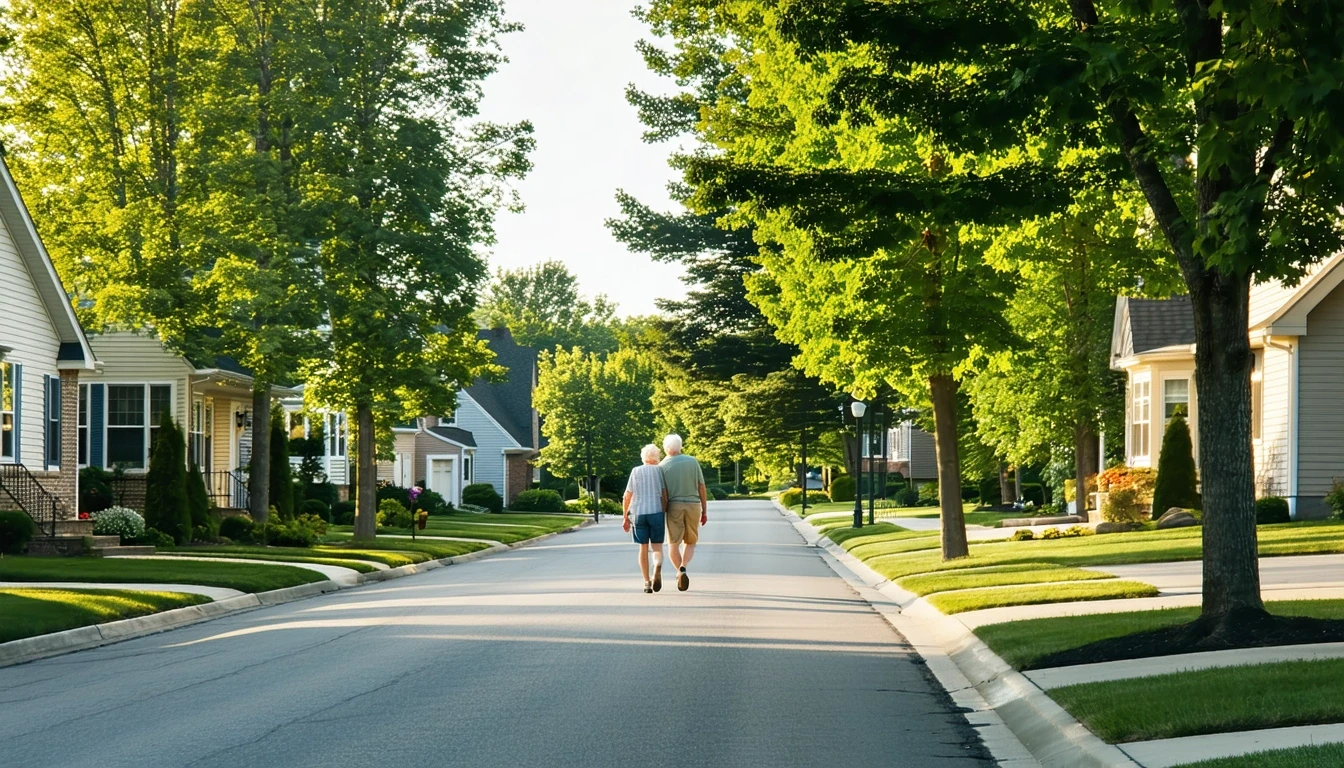
Why Retirees Choose Farmington Hills
Farmington Hills earns a retirement suitability score of 78 out of 100, reflecting its strengths in healthcare access, grocery availability, and moderate cost pressure, balanced against its cold-weather challenges and limited transit options. The city’s appeal rests on three pillars: a hospital within city limits, grocery density that supports aging in place, and pockets of walkability that reduce car dependence for routine errands. These aren’t luxuries—they’re the structural features that determine whether a retiree can stay independent at 75, or needs to relocate at 80.
The regional price parity index of 98 means costs here run slightly below the national baseline, a modest but meaningful cushion for retirees on fixed incomes. The median home value of $319,000 reflects a stable, established housing market—not bargain-basement, but not inflated by speculative pressure either. For retirees downsizing from larger homes, that often translates to equity they can reinvest in accessibility, healthcare, or simply peace of mind.
What sets Farmington Hills apart from other Detroit-area suburbs is the presence of both a hospital and high grocery density within the same community. That pairing reduces the logistical complexity of aging in place. When a retiree can reach a pharmacy, a primary care clinic, and a full-service grocery store without highway driving, the threshold for losing car keys rises significantly. It’s not about convenience—it’s about extending the years of autonomous living.
Healthcare Access for Seniors
Healthcare infrastructure is the single most important factor in evaluating a retirement destination, and Farmington Hills delivers where it counts. The city has a hospital facility within its boundaries, supported by pharmacies and outpatient services. This isn’t just about emergencies—it’s about the cumulative burden of routine care. Retirees managing chronic conditions, attending physical therapy, or coordinating specialist visits need proximity, not just quality. A ten-minute drive to a hospital is fundamentally different from a thirty-minute highway commute, especially in winter.
The presence of local clinics and pharmacies further reduces friction. Prescription refills, lab work, and follow-up appointments become manageable errands rather than half-day commitments. For couples where one partner no longer drives, this proximity allows the other to handle medical logistics without sacrificing their own independence. Medicare acceptance is widespread across the Detroit metro area, and Farmington Hills benefits from its integration into larger health systems that serve the region.
Specialist availability is strong due to the city’s position within the broader Detroit healthcare network. Cardiology, orthopedics, and geriatric care are accessible within a short drive, and many specialists maintain satellite offices in Farmington Hills itself. For retirees with complex health needs, this access to subspecialty care without relocating to a major urban center is a decisive advantage. Physical therapy and rehabilitation services are available locally, critical for recovery from surgery or injury.
Drive times to major medical centers in Detroit or Ann Arbor range from twenty to forty minutes depending on traffic, providing a backstop for tertiary care when needed. The combination of local routine care and regional specialty access creates a healthcare safety net that supports aging in place well into advanced age.
Senior-Friendly Amenities and Services
Farmington Hills supports an active retirement lifestyle through a mix of public amenities and private services, though retirees should expect to seek out opportunities rather than have them delivered automatically. Senior centers and community programs operate throughout the city, offering everything from fitness classes to social groups. These aren’t just recreational—they’re the infrastructure that prevents isolation, a health risk as serious as diabetes or hypertension for older adults.
Transportation options matter differently in retirement than they do during working years. Farmington Hills has bus service, which provides a baseline mobility option for retirees who no longer drive or want to reduce car dependence. The service isn’t comprehensive—this is a bus-only system without rail—but it connects key corridors and supports errands along commercial strips. For retirees living near these routes, it’s a meaningful safety net. Ride services and senior shuttle programs supplement public transit, though availability and cost vary.
Shopping accessibility is shaped by the city’s corridor-clustered errand pattern. Grocery stores, pharmacies, and everyday services concentrate along main roads rather than distributing evenly across neighborhoods. For retirees, this means some planning is required—errands aren’t always walkable from home, but they’re often walkable from each other once you’ve reached a commercial corridor. Grocery density is notably high, which translates to competitive pricing and variety, both of which matter on a fixed income. Delivery services have expanded significantly in recent years, offering an alternative for retirees who find winter driving stressful or physically taxing.
Libraries and lifelong learning opportunities are accessible through both city facilities and nearby institutions. Community colleges in the region offer senior audit programs, and local libraries host book clubs, lecture series, and technology training. These resources support cognitive engagement and social connection, both protective factors against cognitive decline.
Cost of Living for Retirees in Farmington Hills
Retirement budgets hinge on housing, healthcare, and the daily cost of staying fed and warm. In Farmington Hills, housing costs for retirees vary widely depending on the type of home and community. Condos and townhomes in 55+ communities typically offer lower maintenance burdens and built-in social infrastructure, though monthly fees can add several hundred dollars to housing costs. Single-family homes provide more space and autonomy but come with yard work, snow removal, and repair responsibilities that grow heavier with age.
Property taxes in Michigan are governed by Proposal A, which caps annual assessment increases for existing homeowners, providing some protection against tax volatility. Senior-specific exemptions and deferrals exist at the state level, though eligibility depends on income and home value. Retirees should verify current programs, as these can change with state budget cycles. The stability this framework provides is a real advantage for retirees planning twenty-year budgets.
Utility costs are shaped by Michigan’s cold winters and the energy required to heat a home from November through March. The electricity rate of 19.53¢/kWh and natural gas price of $10.24/MCF are the baseline, but actual bills depend on home size, insulation, and thermostat discipline. Winter heating dominates annual utility exposure, and retirees in older homes without updated insulation face higher costs. Efficiency programs offered by regional utilities can help reduce consumption, though the payoff timeline may extend beyond what makes sense for some retirees.
Michigan does not tax Social Security income, a significant advantage for retirees whose primary income source is federal benefits. Other retirement income—pensions, 401(k) distributions, IRA withdrawals—is partially taxed, though exemptions apply depending on age and income level. This tax treatment is more favorable than some neighboring states, and it’s a factor worth weighing when comparing Farmington Hills Cost Reality: The Big Pressure Points against alternatives.
Monthly Retirement Budget in Farmington Hills
Here’s what a typical monthly retirement budget might look like in Farmington Hills:
| Expense Category | Modest Lifestyle | Comfortable Lifestyle |
|---|---|---|
| Housing (mortgage/rent or condo fee) | $1,200 | $1,800 |
| Property taxes & insurance | $400 | $550 |
| Utilities (electric, gas, water) | $220 | $280 |
| Healthcare (Medicare supplement, Rx, co-pays) | $350 | $500 |
| Groceries & household supplies | $400 | $550 |
| Transportation (car, insurance, gas, maintenance) | $300 | $450 |
| Entertainment & dining | $200 | $400 |
| Miscellaneous (personal care, gifts, travel) | $180 | $350 |
| Total Monthly | $3,250 | $4,880 |
Estimates based on average senior spending patterns and local costs. Actual expenses vary by housing choice, health status, and lifestyle preferences. Figures are illustrative and do not include one-time costs or emergency reserves.
Community and Social Opportunities
Retirement isn’t just about managing costs and healthcare—it’s about maintaining purpose and connection. Farmington Hills offers a range of social infrastructure, though retirees will need to be proactive in seeking it out. Senior groups, hobby clubs, and volunteer organizations operate throughout the city, often anchored by libraries, faith communities, and recreation centers. These aren’t passive amenities—they require initiative, but the opportunities exist for retirees who want them.
Faith communities are well-represented across denominations, and many offer senior-specific programming, from Bible studies to service projects. For retirees whose social lives have historically centered on religious institutions, this continuity matters. Volunteer opportunities range from food banks to literacy programs, providing structure and meaning for retirees who miss the purpose that work once provided.
Recreation programs include walking groups, fitness classes, and seasonal activities that take advantage of the city’s parks and water features. Green space is present throughout Farmington Hills, offering venues for low-impact exercise and outdoor socialization. Walking groups are particularly valuable in retirement, combining physical activity with social engagement in a low-pressure format.
Cultural activities and seasonal events provide variety, though Farmington Hills is more of a participant in regional cultural life than a generator of it. Proximity to Detroit means access to museums, theaters, and concerts, while local events tend toward community festivals and farmers markets. For retirees who value cultural engagement, the city’s location within the metro area is an asset.
Proximity to family is often a deciding factor in retirement location, and Farmington Hills’s position within the Detroit metro area makes it accessible for adult children and grandchildren living throughout southeastern Michigan. The city’s highway access and moderate traffic make visits manageable, and the availability of hotels and restaurants supports hosting out-of-town relatives.
Aging in Place Considerations
The question isn’t whether Farmington Hills is pleasant at 65—it’s whether it remains viable at 85. Aging in place depends on the alignment between a retiree’s changing needs and the city’s structural capacity to support them. Farmington Hills has advantages here, but also constraints that retirees should weigh honestly.
Home modification services—ramps, grab bars, stairlifts, widened doorways—are available through regional contractors, though costs are borne by the homeowner unless covered by specific assistance programs. For retirees in single-family homes, planning for these modifications early, while still physically and financially able, extends the years a home remains safe and functional. Condos and townhomes often have fewer modification options due to shared walls and HOA restrictions, but they also eliminate stairs and exterior maintenance, tradeoffs worth considering.
In-home care availability is strong due to the city’s position within a large metro area. Home health aides, visiting nurses, and companion care services operate throughout Farmington Hills, though costs can be substantial and are rarely covered by Medicare. For retirees planning to age in place, budgeting for in-home care—or understanding when to transition to assisted living—is a necessary conversation.
Assisted living options exist both within Farmington Hills and in neighboring communities, ranging from independent senior apartments to full-service memory care facilities. The presence of these options locally means retirees can transition to higher levels of care without leaving the community they’ve built, a continuity that matters for both the retiree and their social network.
Walkability is uneven across Farmington Hills, shaped by the city’s walkable pockets rather than comprehensive pedestrian infrastructure. For retirees who prioritize walkability, choosing a home near one of these pockets—close to grocery stores, pharmacies, and bus routes—makes a significant difference in how long they can manage without a car. The city’s mixed land use means residential and commercial areas overlap in places, supporting this kind of walkable access where it exists.
Climate considerations are unavoidable in Michigan. Cold winters bring not just heating costs, but also mobility challenges—icy sidewalks, snow-covered driveways, and the physical demands of winter clothing and navigation. For retirees with arthritis, balance issues, or cardiovascular conditions, winter is a stressor that compounds with age. Some retirees manage this by snowbirding—spending winters elsewhere—but that strategy requires financial flexibility and a tolerance for managing two residences. Others adapt by reducing winter outings, relying more on delivery services, and budgeting for snow removal.
Emergency services in Farmington Hills are well-established, with fire, EMS, and police response times typical of a developed suburb. For retirees living alone, medical alert systems and regular check-ins become part of the safety infrastructure, supplementing public services.
FAQs About Retirement in Farmington Hills
What’s the average cost of retirement in Farmington Hills?
A modest retirement lifestyle in Farmington Hills runs approximately $3,250 per month, covering housing, utilities, healthcare, food, and transportation. A more comfortable lifestyle, with additional discretionary spending and higher housing quality, approaches $4,880 per month. These figures are illustrative and depend heavily on housing choice, health status, and whether a retiree still carries a mortgage. Michigan’s favorable tax treatment of Social Security income provides some relief, but heating costs in winter and healthcare expenses remain the primary variables.
How good is healthcare access for seniors?
Healthcare access is a core strength. Farmington Hills has a hospital within city limits, supported by pharmacies and outpatient clinics. This local presence reduces the logistical burden of routine care, specialist visits, and prescription management. The city’s integration into the broader Detroit healthcare network ensures access to subspecialty care when needed, without requiring relocation. For retirees managing chronic conditions or anticipating increased medical needs, this infrastructure is a decisive advantage.
Are there active senior communities?
Yes, though they require some initiative to engage. Senior centers, recreation programs, and volunteer organizations operate throughout Farmington Hills, offering social connection and structured activity. Faith communities provide additional programming for seniors, and the city’s parks and green spaces support walking groups and outdoor activity. The social infrastructure exists, but it’s not automatic—retirees who thrive here are those who actively seek out and build their own networks.
What are the tax implications of retiring in Michigan?
Michigan does not tax Social Security benefits, a significant advantage for retirees whose primary income is federal. Other retirement income—pensions, IRA distributions, 401(k) withdrawals—is subject to state income tax, though exemptions apply based on age and income level. Property taxes are capped for existing homeowners under Proposal A, providing some protection against assessment increases. Retirees should consult a tax professional to understand how their specific income mix will be treated, but Michigan’s overall tax environment is more favorable than many neighboring states.
Making the Move: Is Farmington Hills Right for Your Retirement?
Carol and Jim eventually chose Farmington Hills, but not because it was perfect. They chose it because the tradeoffs aligned with what mattered most to them: a hospital they could reach in ten minutes, grocery stores they could walk to if they had to, and winters they’d already learned to manage. They gave up year-round warmth and comprehensive transit, but they gained proximity to their daughter in Ann Arbor and a cost structure that didn’t force them to spend down their savings in the first decade.
Farmington Hills works best for retirees who value access over amenities, proximity over prestige, and structural support over resort-style living. It’s a place where aging in place is achievable, but not effortless—it requires planning, adaptation, and a realistic assessment of how needs will change over time. The city’s healthcare infrastructure, housing tradeoffs, and moderate costs create a foundation for independence, but the cold climate and limited transit mean retirees need to be intentional about where they live within the city and how they’ll manage mobility as they age.
For retirees weighing their options, the question isn’t whether Farmington Hills is the best retirement destination in the abstract—it’s whether the specific advantages it offers align with your specific needs, health trajectory, and tolerance for winter. If proximity to family, strong healthcare access, and a cost structure below the national average matter more than year-round outdoor activity and comprehensive public transit, Farmington Hills deserves serious consideration. If not, it’s worth being honest about that now, rather than discovering the misalignment at 80.
How this article was built: In addition to public economic data, this article incorporates location-based experiential signals derived from anonymized geographic patterns—such as access density, walkability, and land-use mix—to reflect how day-to-day living actually feels in Farmington Hills, MI.