
Do you really need a car to live in Farmington? For most people, the answer is yes—but not for the reasons you might assume. Farmington’s transportation landscape is shaped less by a total absence of alternatives and more by the practical realities of how daily life is structured here. While public transit exists and certain neighborhoods offer surprisingly walkable pockets, the combination of sparse grocery and food access, limited transit coverage, and the need to move between dispersed destinations means that driving remains the default for the majority of households.
Understanding transportation options in Farmington means recognizing that mobility here isn’t about choosing between transit and driving in equal measure—it’s about understanding where each mode works, where it falls short, and how the city’s layout quietly dictates which households can realistically reduce car dependence and which cannot.
How People Get Around Farmington
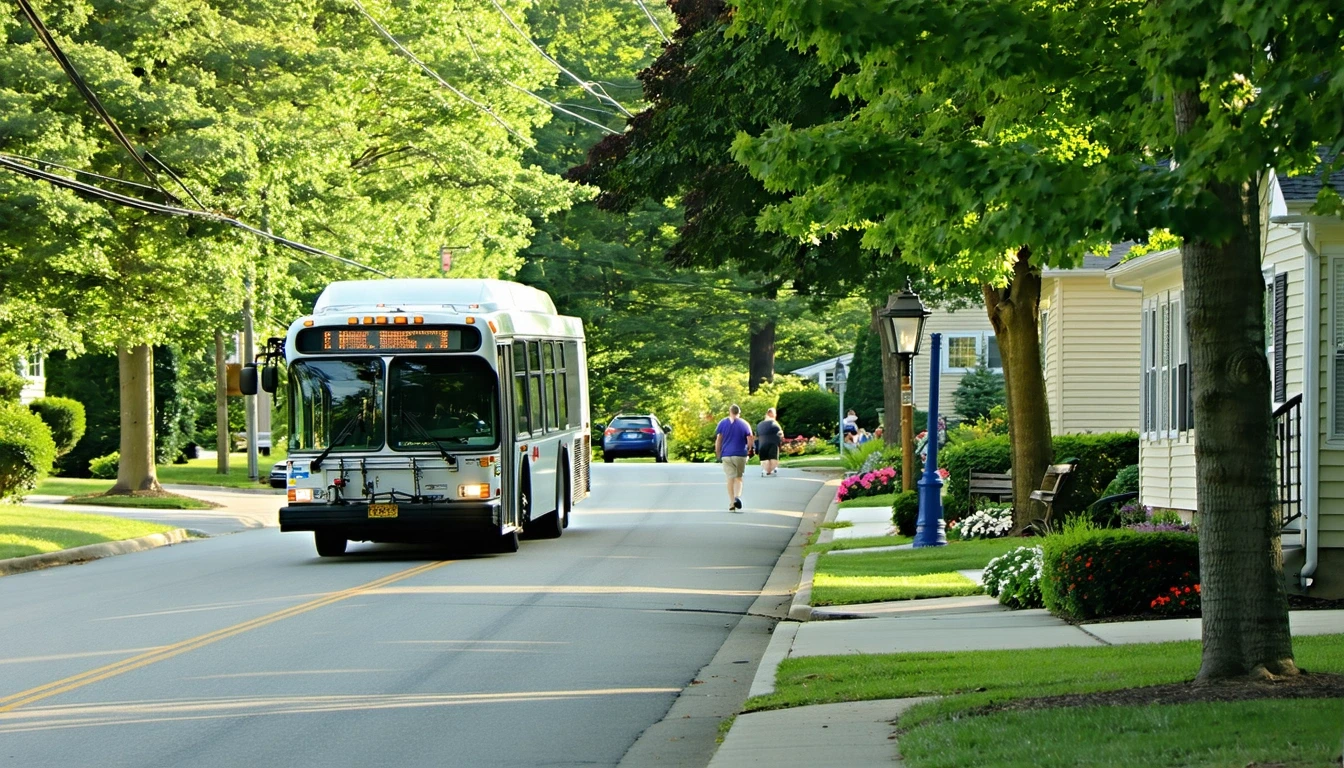
Farmington operates primarily as a car-first community, but with more texture than that label suggests. The city exhibits a mixed building height profile and a blend of residential and commercial land use, creating pockets where walking feels natural and functional. Pedestrian infrastructure in certain areas exceeds what you’d find in many comparable suburbs, with sidewalks, crossings, and pathways that support local movement on foot.
But walkability within a neighborhood doesn’t eliminate the need for a car when grocery stores, medical appointments, and other essential errands require traveling beyond those walkable zones. Food and grocery establishment density falls below the thresholds that would support car-free living, meaning that even residents in the most pedestrian-friendly parts of town typically drive for weekly shopping, healthcare visits, and errands that can’t be handled within a few blocks.
What newcomers often misunderstand is that Farmington’s layout allows for pleasant local walks without necessarily reducing overall car dependence. You might stroll to a neighbor’s house or take an evening walk through tree-lined streets, but you’ll still drive to the supermarket, the pharmacy, and most appointments. The city’s structure supports supplemental walking, not replacement mobility.
Public Transit Availability in Farmington
Public transit in Farmington centers around bus service, with no rail options present. Systems such as CT Transit provide coverage in parts of the city, though the network is designed more to connect Farmington to regional destinations than to serve as a comprehensive intra-city mobility solution.
Transit tends to work best along established corridors where bus routes align with commuter flows and anchor destinations. For residents living near these routes and commuting to locations well-served by the same network, transit can function as a viable primary mode—particularly for those willing to structure their schedules around service availability.
Where transit falls short is in coverage of residential areas outside these corridors, late-hour service, and connections to the dispersed errands infrastructure that defines daily life here. A bus route might get you to work, but it’s far less likely to get you to the grocery store, the pediatrician, and back home in a reasonable timeframe. The sparse density of food and grocery establishments amplifies this limitation, as the destinations themselves are spread across areas that aren’t well-connected by transit.
Transit in Farmington plays a supporting role rather than a foundational one. It exists, it serves specific populations and routes effectively, but it doesn’t eliminate the need for a car for most households.
Driving & Car Dependence Reality
Driving in Farmington isn’t just common—it’s structurally necessary for the majority of residents. The city’s development pattern, while incorporating mixed-use areas and walkable pockets, still disperses essential services across a geography that requires motorized transportation to navigate efficiently.
Parking is generally accessible and uncontested, reflecting the car-oriented nature of the built environment. Commute flexibility is high for those who drive; you’re not locked into fixed schedules, and you can chain errands, adjust routes, and respond to last-minute needs in ways that transit simply doesn’t accommodate here.
The tradeoff is exposure to vehicle costs—fuel, insurance, maintenance, and depreciation—but these are costs that most Farmington households have already accepted as part of the baseline cost structure. Gas prices in the area currently sit at $2.90 per gallon, a data point that matters more for budgeting than for deciding whether to own a car in the first place. For most people, the question isn’t whether driving is expensive; it’s whether the alternatives are practical enough to avoid it. In Farmington, they usually aren’t.
Car dependence here is a function of infrastructure, not preference. Even households that would prefer to drive less find that the city’s layout, errands density, and transit coverage make driving the path of least resistance for nearly all non-work travel.
Commuting Patterns & Daily Mobility
Commuting in Farmington typically follows a single-destination pattern for those working outside the home, though the specifics vary widely depending on where residents work and whether their employers are accessible via the available bus network. For those commuting to Hartford or other regional employment centers along transit corridors, bus service can be a functional option, particularly if work schedules align with service hours.
For everyone else—those working in office parks, retail centers, or other dispersed employment sites—driving is the default. The ability to structure a commute around personal timing, to stop for errands on the way home, or to adjust routes based on traffic or weather gives drivers a level of control that transit riders in Farmington simply don’t have.
Daily mobility beyond commuting reinforces car dependence. Running errands, attending appointments, picking up children, and managing household logistics all require moving between points that aren’t well-connected by walking or transit. Even in neighborhoods with strong pedestrian infrastructure, the destinations themselves are too spread out to make car-free errand running practical.
Who benefits from proximity? Residents living near their workplace and near the limited commercial clusters that do exist can reduce drive frequency, but they rarely eliminate it. The city’s errands infrastructure doesn’t support the kind of dense, walkable access that would allow a household to function without a vehicle.
How this article was built: In addition to public economic data, this article incorporates location-based experiential signals derived from anonymized geographic patterns—such as access density, walkability, and land-use mix—to reflect how day-to-day living actually feels in Farmington, CT.
Who Transit Works For — and Who It Doesn’t
Transit in Farmington works best for a narrow set of circumstances: individuals or households with a single commuter whose workplace is directly accessible via existing bus routes, who have flexibility in their schedule, and who can solve the errands problem separately—either by driving occasionally, coordinating with a partner who has a car, or living in one of the rare areas where grocery access is within walking distance.
It works less well for families managing multiple schedules, for households where both adults work in different directions, and for anyone whose daily routine requires moving between dispersed points on a tight timeline. The sparse food and grocery density means that even a committed transit user will likely need a car for weekly shopping unless they’re willing to accept significant inconvenience.
Renters in core areas near bus lines may find transit more viable than those in peripheral neighborhoods, but “viable” here means “possible with tradeoffs,” not “equivalent to driving.” Owners in walkable pockets benefit from pleasant local environments, but they still drive for most errands and appointments.
The household type least served by transit is the one most common in Farmington: families with children, dual incomes, and the need to manage complex logistics across multiple destinations daily. For them, transit isn’t a realistic primary mode—it’s an occasional supplement at best.
Transportation Tradeoffs in Farmington
The central tradeoff in Farmington’s transportation landscape is between the control and flexibility of driving and the limited reach of public transit. Driving offers predictability, schedule independence, and the ability to handle multi-stop errands efficiently. Transit offers lower per-trip costs for those who use it regularly, but at the expense of time, convenience, and coverage.
For most households, this isn’t a close call. The structure of daily life here—where money goes and how errands are distributed—favors driving so heavily that transit becomes a secondary consideration rather than a primary decision point.
The tradeoff isn’t about whether you can technically survive without a car; it’s about whether you’re willing to accept the friction, time cost, and logistical complexity that come with trying. For a small number of households in specific circumstances, that tradeoff pencils out. For the majority, it doesn’t.
FAQs About Transportation in Farmington (2026)
Is public transit usable for daily commuting in Farmington?
Public transit is usable for daily commuting if your workplace is directly accessible via existing bus routes and your schedule aligns with service hours. For commuters heading to Hartford or other regional centers along established corridors, bus service can function as a primary commute mode. For everyone else, driving remains the more practical option.
Do most people in Farmington rely on a car?
Yes. The majority of Farmington residents rely on a car for daily transportation. While walkable pockets exist and bus service is available, the sparse density of grocery stores and other essential services, combined with limited transit coverage, makes driving the default for most households.
Which areas of Farmington are easiest to live in without a car?
Areas with higher pedestrian-to-road ratios and proximity to bus routes offer the best chance of reducing car dependence, but even in these neighborhoods, most residents still need a car for grocery shopping and errands. No part of Farmington currently supports fully car-free living for a typical household.
How does commuting in Farmington compare to nearby cities?
Farmington’s commuting reality is similar to other car-dependent suburbs in the Hartford metro area. Transit options are more limited than in urban cores, and driving offers significantly more flexibility and coverage. Compared to denser cities with extensive rail networks, Farmington requires more reliance on personal vehicles.
Can you get by with one car in a two-adult household in Farmington?
It depends on work locations, schedules, and errands patterns. If both adults work along the same transit corridor or one works from home, a single car can be manageable. For households with divergent commutes or complex daily logistics, two cars typically prove necessary.
How Transportation Fits Into the Cost of Living in Farmington
Transportation in Farmington isn’t just a line item—it’s a structural factor that shapes where you can live, how you spend your time, and what level of logistical friction you’re willing to tolerate. The need for a car isn’t a preference; it’s a baseline assumption baked into the city’s layout and errands infrastructure.
This reality affects housing decisions, too. Proximity to work matters more when transit isn’t a viable fallback, and the ability to walk to a grocery store—rare here—becomes a premium feature rather than a standard expectation. For households evaluating whether Farmington fits their budget and lifestyle, transportation isn’t a variable to optimize; it’s a fixed cost to plan around.
For a fuller picture of how transportation costs interact with housing, utilities, and other expenses, see A Month of Expenses in Farmington: What It Feels Like, which breaks down the broader financial structure of living here.
The bottom line: Farmington’s transportation landscape rewards those who drive and penalizes those who don’t. If you’re moving here expecting to rely on transit or go car-free, adjust your expectations now. If you’re comfortable with car dependence and the costs that come with it, Farmington’s mobility structure won’t surprise you—it’ll just confirm what the city’s layout already suggests.