
A first-time renter in Farmington faces a baseline of $1,654 per month in gross rent before utilities, transportation, or household goods. A first-time buyer confronts a median home value of $375,700—a figure that shapes not just the down payment, but years of property tax exposure, maintenance cycles, and financial flexibility. These numbers define the entry point, but the housing decision in Farmington hinges on understanding what drives costs after move-in, how ownership and renting diverge over time, and which household types absorb the market’s structure most easily.
Farmington’s housing market reflects a community built around residential stability, strong income support, and institutional anchors like healthcare and education. But that stability comes with a cost floor that doesn’t bend for newcomers, and a physical layout that separates daily errands from the neighborhoods where people actually live. Choosing between renting and owning here isn’t just about monthly payments—it’s about aligning your household’s logistics, risk tolerance, and long-term plans with a market that rewards equity and punishes short tenures.
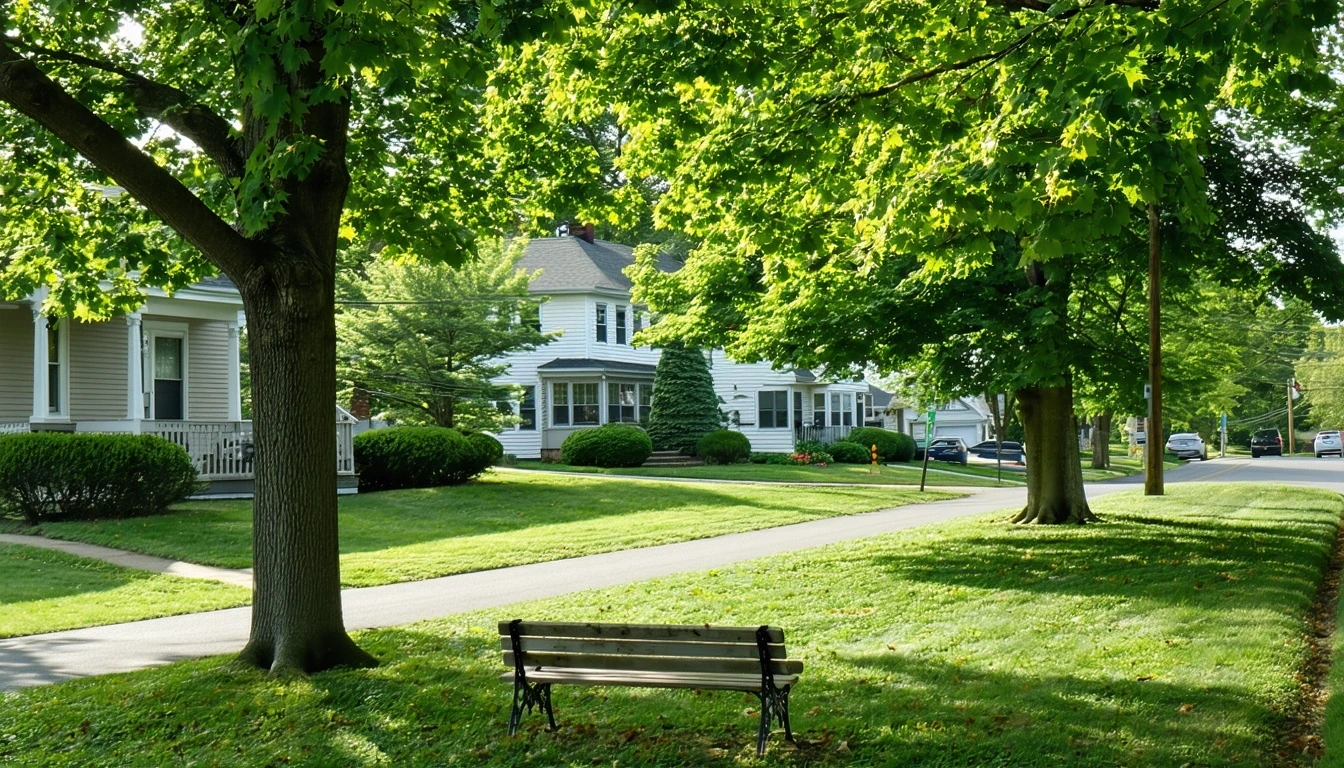
The Housing Market in Farmington Today
Farmington’s housing market operates as a high-floor, low-churn environment. The median household income of $118,329 supports a premium housing stock, but it also establishes a cost baseline that doesn’t accommodate entry-level buyers or cost-sensitive renters easily. This isn’t a market shaped by rapid development or speculative turnover—it’s a market sustained by institutional employment (healthcare, education, professional services) and households that stay long enough to build equity.
What newcomers often misunderstand is that Farmington’s housing costs aren’t driven by urban density or walkable commercial districts. The physical layout favors residential enclaves with green space and hospital access, but daily errands require driving even in neighborhoods with strong pedestrian infrastructure. Food and grocery establishments sit below density thresholds, meaning that convenience isn’t built into the street grid—it’s something you plan for with a car and time. This affects renters and owners equally, but it changes the calculus for households evaluating whether Farmington’s residential character justifies the entry cost.
The regional price parity index of 103 confirms that Farmington sits slightly above the national baseline, but the gap between the index and the actual home value signals that housing absorbs a disproportionate share of the cost premium. Renters feel this as limited inventory and upward pressure on lease renewals. Buyers feel it as a market where $375,700 is the center, not the ceiling, and where comparable homes in nearby towns might offer lower entry points without sacrificing commute access or school quality.
Renting in Farmington
Renting in Farmington means navigating a market with limited turnover and a tenant base that skews toward professionals in transition—relocating for work, waiting to buy, or testing the area before committing. Median gross rent of $1,654 per month reflects a market where landlords price for stability and quality, not volume. This isn’t a college town with seasonal vacancy or a commuter suburb with high churn. Rental inventory tends to cluster in a few apartment complexes and scattered single-family homes, and competition tightens when institutional employers hire in waves.
The rental experience in Farmington is shaped by the same errands friction that affects homeowners. Walkable pockets exist—pedestrian infrastructure is present and exceeds typical suburban ratios—but grocery stores, pharmacies, and everyday services require a car. For renters, this means that transportation costs don’t disappear just because you’re not paying a mortgage. You’re still driving to stock the fridge, pick up prescriptions, and manage household errands, and those trips add up in both time and fuel costs.
Lease renewals in Farmington tend to reflect the broader housing pressure rather than hyperlocal rent spikes. Landlords operate in a market where tenant demand remains steady, and where the alternative—buying—requires substantial savings and income stability. This gives landlords pricing power, but it also means that rent increases are more predictable than volatile. The risk for renters isn’t sudden displacement; it’s gradual cost creep that makes it harder to save for a down payment while covering monthly expenses.
Owning a Home in Farmington
Ownership in Farmington begins with a $375,700 median home value, and that figure carries long-term implications that extend far beyond the mortgage payment. Property taxes in Connecticut are assessed locally and funded primarily through real estate levies, meaning that a home valued at this level generates ongoing tax exposure that doesn’t flatten over time. Even without a specific mill rate in hand, buyers should assume that annual property tax bills will represent a significant share of ownership costs—often rivaling or exceeding the cost of utilities and maintenance combined.
Homeownership in Farmington also means absorbing the maintenance and climate exposure that renters offload to landlords. Winters bring freezing temperatures, and homes here face seasonal stress on roofing, siding, and heating systems. Older housing stock—common in established Connecticut towns—can mean higher upkeep costs, especially for systems like oil or gas furnaces, water heaters, and exterior wood trim. Buyers should budget not just for routine maintenance, but for the episodic costs that cold-climate homeownership imposes: frozen pipes, ice dam prevention, driveway sealing, and HVAC system longevity.
Governance exposure varies by neighborhood. Some subdivisions operate under homeowner associations that bundle services like landscaping, snow removal, or exterior maintenance, while others leave all upkeep to the individual owner. Without specific HOA prevalence data, buyers should verify governance structure before closing, as monthly or annual fees can add hundreds of dollars to the true cost of ownership—and those fees often rise faster than property taxes.
The ownership experience in Farmington rewards households that plan to stay long enough to recover transaction costs and build equity. High home values mean that selling within a few years can result in net losses after realtor commissions, closing costs, and the opportunity cost of capital tied up in the down payment. This is a market for households that value control, predictability, and long-term wealth accumulation over flexibility and liquidity.
Apartment vs House in Farmington — Cost Behavior Comparison
| Expense Category | Apartment | House |
|---|---|---|
| Base Housing Cost | $1,654/month median rent; predictable, includes some maintenance offload | $375,700 median value; mortgage + property tax exposure; equity-building but illiquid |
| Utility Exposure | Lower square footage limits heating/cooling load; electricity at 27.02¢/kWh still applies; landlord may cover heat in some units | Larger footprint increases consumption; cold-climate heating season dominates; electricity and natural gas ($16.29/MCF) both apply; owner absorbs all volatility |
| Maintenance Control | Landlord responsible for HVAC, roofing, exterior; tenant handles interior only; freezing-weather risks offloaded | Owner responsible for all systems; cold winters stress roofing, siding, heating equipment; episodic costs (furnace replacement, ice dam prevention) can be substantial |
| Errands Friction | Car required for groceries and daily needs regardless of apartment location; sparse food/grocery density means planning trips; proximity to commercial corridors varies | Car required; houses typically farther from mixed-use areas; errands require deliberate planning and time; walkable pockets exist but don’t reduce driving for household logistics |
| Flexibility | Lease terms allow exit after 12 months; no transaction costs beyond security deposit risk; easier to relocate for work or test the area | High home values make selling costly within first few years; transaction costs (realtor, closing) can exceed 8% of sale price; equity-building requires multi-year tenure |
Methodology note: The table above includes only categories where apartment and house costs behave differently in Farmington due to local housing stock, climate exposure, or infrastructure layout. Categories like parking, pest control, and HOA fees were excluded because they either don’t vary meaningfully between housing types in this market, or because local data wasn’t available to justify a Farmington-specific distinction. Utility and maintenance differences reflect the combination of Connecticut’s cold winters, above-average electricity rates, and the physical separation between residential areas and daily errands infrastructure.
Utilities & Upkeep Differences
Utility costs in Farmington are shaped by two forces: Connecticut’s above-average electricity rate of 27.02¢/kWh and the extended heating season that comes with freezing winters. For apartment renters, the smaller square footage and shared-wall construction reduce heating and cooling loads, but electricity costs still apply to lighting, appliances, and any window AC units or electric baseboards. Some landlords include heat in the rent, which shifts the exposure but doesn’t eliminate it—it just gets priced into the lease.
Homeowners face the full weight of seasonal utility swings. Natural gas, priced at $16.29 per MCF, powers many heating systems in the area, and consumption spikes during the coldest months. A typical single-family home might consume several MCF per month from December through March, and those bills don’t flatten just because spring arrives—deferred heating costs often show up as catch-up charges or budget billing adjustments. Electricity remains a year-round cost, but the heating season is the dominant driver of total utility exposure for homeowners.
Maintenance in Farmington isn’t just about routine upkeep—it’s about managing the stress that cold, wet winters impose on building systems. Roofs face ice dams, gutters freeze and pull away from fascia, and exterior wood trim expands and contracts with temperature swings. Homeowners also manage HVAC longevity, water heater replacement cycles, and the occasional emergency repair when a pipe freezes or a furnace fails during a cold snap. These aren’t annual costs, but they’re episodic and unavoidable, and they hit harder in cold-climate markets like Farmington than in temperate regions.
Apartment renters offload most of this risk to landlords, but they pay for it indirectly through rent levels that reflect the landlord’s own maintenance reserves. The tradeoff isn’t free—it’s a shift from unpredictable, episodic costs to predictable, ongoing rent. For households that value budget stability and can’t absorb a $5,000 furnace replacement on short notice, renting makes sense. For households that want control over system quality and can manage repair reserves, ownership offers long-term cost advantages despite the higher upfront exposure.
Rent vs Buy: Long-Term Exposure in Farmington
The rent-versus-buy decision in Farmington is less about monthly payment math and more about how each path handles cost volatility, control, and long-term wealth accumulation. Renters face lease renewals that reflect the broader housing market’s pressure, but they avoid property tax increases, maintenance surprises, and the transaction costs that come with selling. Owners face property tax exposure that rises with assessed values, maintenance costs that increase as homes age, and the opportunity cost of capital tied up in home equity—but they also build wealth through principal paydown and benefit from fixed mortgage payments that don’t rise with inflation.
In Farmington specifically, the high median home value of $375,700 means that ownership requires a substantial down payment and the income stability to service a mortgage, property taxes, and maintenance reserves simultaneously. For households planning to stay five years or longer, ownership becomes a wealth-building tool that also locks in housing cost predictability—at least for the mortgage portion. Property taxes and maintenance remain variable, but they’re more predictable than rent increases in a tight market.
Renters in Farmington gain flexibility and liquidity. They can relocate for work without selling, test the area before committing to a mortgage, and avoid the risk of buying into a market where home values might flatten or decline. But they also face the risk that rent increases outpace wage growth, making it harder to save for a down payment over time. In a market where the median household income is $118,329, renters earning below that threshold may find themselves priced out of ownership entirely unless they bring substantial savings from elsewhere.
The long-term cost structure favors ownership for households that can afford the entry point and plan to stay. But it punishes households that buy and then need to sell within a few years, because transaction costs and the illiquidity of home equity make short-term ownership expensive. Renters avoid that trap, but they trade wealth accumulation for flexibility—and in Farmington’s market, that tradeoff is meaningful.
FAQs About Housing Costs in Farmington
What does $1,654 per month rent actually cover in Farmington, CT?
Median gross rent of $1,654 per month typically covers the apartment or house itself, but rarely includes utilities, parking, or storage. Some landlords include heat or water, but electricity, internet, and renter’s insurance are almost always separate. Renters should budget for an additional $150–$250 per month in utilities depending on unit size and whether heat is included, plus the cost of maintaining a car for errands, since grocery and daily services require driving even in walkable neighborhoods.
How do property taxes affect homeownership costs in Farmington, CT?
Connecticut funds local services primarily through property taxes, and Farmington’s median home value of $375,700 means that annual tax bills represent a significant ongoing cost—often comparable to or exceeding utility and maintenance expenses combined. Property taxes don’t flatten over time; they rise with assessed values and municipal budget needs. Buyers should request the current tax bill during the offer process and assume that taxes will increase gradually, especially if home values appreciate or if the town faces budget pressure.
Is it cheaper to rent or buy in Farmington, CT over five years?
The answer depends on household income, down payment size, and how long you plan to stay. Ownership in Farmington builds equity and locks in mortgage payments, but it requires absorbing property taxes, maintenance, and transaction costs that renters avoid. Renters gain flexibility and liquidity, but they face lease renewals that reflect the broader housing market’s upward pressure. Over five years, ownership typically becomes cost-effective for households that can afford the entry point and don’t need to relocate, but renters who move frequently or lack substantial savings may find renting less risky despite the lack of equity accumulation.
Why does renting in Farmington, CT still require a car?
Farmington’s layout separates residential neighborhoods from daily errands infrastructure. Food and grocery establishments sit below density thresholds, meaning that even neighborhoods with strong pedestrian infrastructure—where sidewalks and crosswalks exceed typical suburban ratios—still require driving to stock the fridge, pick up prescriptions, or run household errands. Bus service is present, but routes and schedules are designed for commuting rather than errands. Both renters and owners face the same errands friction, which adds transportation costs regardless of housing type.
What maintenance costs should homeowners expect in Farmington, CT?
Cold-climate homeownership in Farmington means budgeting for both routine and episodic maintenance. Freezing winters stress roofing, siding, heating systems, and exterior trim, and homes here face seasonal risks like ice dams, frozen pipes, and HVAC failures during cold snaps. Routine costs include HVAC servicing, gutter cleaning, and driveway sealing. Episodic costs—furnace replacement, water heater failure, roof repair—can run into thousands of dollars and often arrive without warning. Owners should maintain a repair reserve and assume that older homes will require more frequent system replacements than newer construction.
Making Housing Choices in Farmington
Housing costs in Farmington reflect a market built for stability, equity accumulation, and households that value residential character over urban convenience. The median home value of $375,700 and median gross rent of $1,654 per month establish a cost floor that doesn’t bend for newcomers, and the physical layout—where errands require driving despite walkable pockets—adds transportation costs that affect renters and owners equally.
Renters gain flexibility and avoid the episodic costs of cold-climate homeownership, but they face lease renewals in a market with limited turnover and steady demand. Owners build equity and lock in mortgage payments, but they absorb property tax exposure, maintenance volatility, and the transaction costs that make short-term ownership expensive. The decision isn’t about which path is cheaper in isolation—it’s about which path aligns with your household’s income stability, savings capacity, and plans for the next five to ten years.
For dual-income professionals with substantial savings and a long-term commitment to the area, ownership in Farmington offers wealth accumulation and cost predictability despite the high entry point. For households in transition, testing the area, or prioritizing liquidity over equity, renting makes sense even if it means forgoing wealth accumulation in the near term. Either way, understanding what shapes the cost of living in Farmington means recognizing that housing isn’t just a monthly payment—it’s a structure of exposure, control, and tradeoffs that plays out differently depending on how long you stay and how much risk you’re willing to manage.
How this article was built: In addition to public economic data, this article incorporates location-based experiential signals derived from anonymized geographic patterns—such as access density, walkability, and land-use mix—to reflect how day-to-day living actually feels in Farmington, CT.