
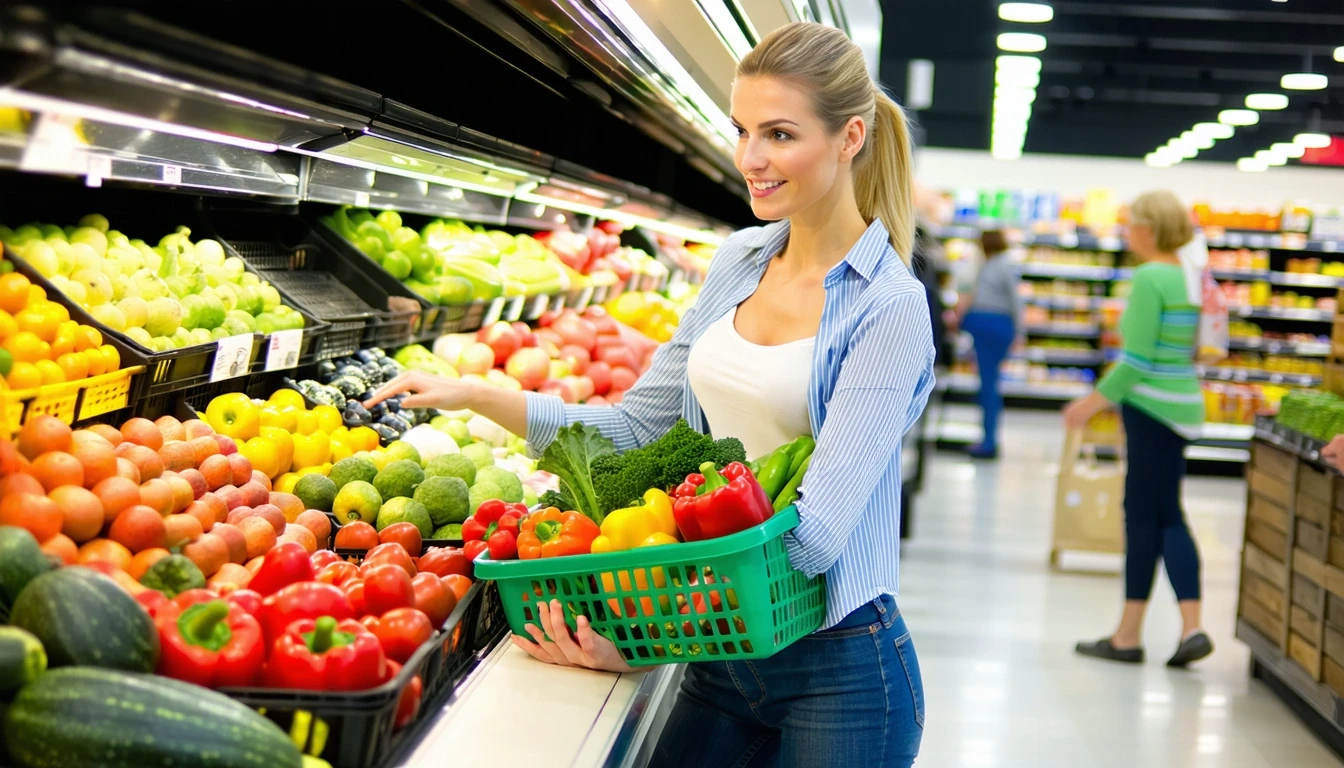
How Grocery Costs Feel in Farmington
Grocery prices in Farmington sit slightly above the national baseline, reflecting the town’s regional price environment where the cost of goods runs about 3% higher than the U.S. average. For most households here, that modest premium doesn’t create serious pressure—median household income in Farmington reaches $118,329 per year, well above state and national benchmarks, which means food spending occupies a smaller share of take-home pay than it does in many comparable communities. The grocery experience feels manageable for families earning at or above the local median, but it’s not invisible. Prices matter, store choice matters, and habits matter, particularly for single earners, younger households, or families stretching a budget across multiple dependents.
Who notices grocery costs most? Singles and one-income households feel price differences more acutely because there’s less income to absorb week-to-week variation. A $4.99-per-pound block of cheese or $6.95-per-pound ground beef might not register as a decision point for a two-income family, but it becomes a real consideration when you’re feeding yourself on $50,000 a year or managing a tight monthly budget. Families with children face a different pressure: volume. Even modest per-item premiums multiply across gallons of milk, dozens of eggs, and pounds of chicken each week. The price environment in Farmington isn’t extreme, but it’s also not a discount market, and households without significant income cushion feel that difference in every trip.
What shapes the grocery experience here isn’t just prices—it’s access. Farmington’s food and grocery establishment density falls below typical thresholds, meaning most residents drive to shop rather than walk or stop on the way home. There aren’t neighborhood grocers on every corner or clusters of competing stores within a few blocks. Instead, households plan trips to specific stores, often consolidating errands to minimize driving. That structure affects how people shop: you’re more likely to commit to one store per trip, which reduces spontaneous price comparison and makes store choice a bigger lever than it would be in a place where you pass three options on your commute. If you’re in a single-car household or coordinating schedules, grocery logistics become part of the planning burden, not an afterthought.
Grocery Price Signals (Illustrative)
These prices illustrate how staple items tend to compare locally—not a full shopping list. They’re derived estimates based on the regional price environment, adjusted for Farmington’s cost structure, and they help explain why grocery bills feel the way they do here. They don’t reflect store-level precision, weekly promotions, or brand variation, but they do show relative positioning for everyday purchases.
| Item | Estimated Price |
|---|---|
| Bread (per pound) | $1.90/lb |
| Cheese (per pound) | $4.99/lb |
| Chicken (per pound) | $2.10/lb |
| Eggs (per dozen) | $2.65/dozen |
| Ground beef (per pound) | $6.95/lb |
| Milk (per half-gallon) | $4.22/half-gallon |
| Rice (per pound) | $1.09/lb |
Derived estimate based on national baseline adjusted by regional price parity; not an observed local price.
Eggs at $2.65 per dozen and milk at $4.22 per half-gallon sit in a middle band—not bargain-bin pricing, but not premium either. Ground beef at $6.95 per pound reflects broader protein cost pressure that’s been persistent across the region, while chicken at $2.10 per pound offers a more budget-friendly alternative for households managing meat expenses. Cheese, rice, and bread fall into everyday staple territory, where small differences per unit add up over time, especially for families buying in volume. These aren’t the numbers you’d see on a single receipt, but they help explain why a typical grocery run in Farmington doesn’t feel cheap, even if it doesn’t feel prohibitively expensive either.
Store Choice & Price Sensitivity
Grocery price pressure in Farmington varies significantly by store tier, and understanding that spectrum matters more here than in places where you can easily comparison-shop across multiple locations in one trip. At the discount tier—stores built around private-label products, no-frills layouts, and high-volume turnover—you’ll find the lowest baseline prices, sometimes 15–25% below mid-tier chains on comparable items. These stores work well for households prioritizing cost control over selection or convenience, and they reward planning: you bring a list, you skip the extras, and you leave having spent meaningfully less than you would elsewhere.
Mid-tier grocery chains occupy the middle ground, offering broader selection, name-brand availability, and more predictable stock across categories. Prices here reflect the regional baseline most closely—neither discounted nor premium, but aligned with what the broader market supports. For many Farmington households, mid-tier stores represent the default choice: accessible, familiar, and reliable without requiring the trade-offs that come with discount shopping or the expense that comes with premium formats. If you’re not stretching a budget but also not indifferent to cost, this is where you land.
Premium and specialty grocers—organic-focused chains, upscale markets, prepared food destinations—charge notably more, sometimes 20–40% above mid-tier on comparable items, and much more on specialty products. These stores serve households for whom convenience, quality differentiation, or specific product availability justifies the cost. In Farmington, where median income supports discretionary spending, premium grocers attract steady traffic, but they’re not the norm for weekly staple runs. Store choice becomes a strategic decision rather than a passive one, and because driving is required regardless of which store you choose, proximity and habit often determine where households shop more than price alone.
What Drives Grocery Pressure Here
Income interaction explains much of why grocery costs feel different across Farmington households. At the median household income level of $118,329, food spending represents a small and manageable share of monthly cash flow. A $150–$200 weekly grocery bill, while not trivial, doesn’t create budget tension for a household bringing in nearly $10,000 per month before taxes. But for households earning $50,000–$70,000—whether single earners, younger families, or service-sector workers—that same weekly spend becomes a much larger share of take-home pay, and the modest regional price premium starts to matter. Grocery costs don’t scale with income; a gallon of milk costs the same whether you earn $40,000 or $140,000, which means lower-income households face disproportionate pressure even in an affluent town.
Household size amplifies cost sensitivity in predictable ways. A single adult might spend $50–$75 per week on groceries without much planning, but a family of four buying the same per-unit prices will easily double or triple that amount. Larger families feel the cumulative effect of Farmington’s modest price premium more acutely because every item gets multiplied by volume: more milk, more eggs, more chicken, more produce. The difference between a $2.50 gallon of milk and a $4.00 gallon might not register for a single person buying one per week, but it becomes a $6–$8 monthly difference for a family buying four gallons, and that pattern repeats across every category.
Access patterns also shape grocery pressure in ways that aren’t purely about prices. Because grocery density is sparse and most shopping requires a car, households can’t easily hop between stores to chase deals or compare prices in real time. You pick a store, you drive there, and you do your shopping. That reduces flexibility and makes store choice a higher-stakes decision. If you commit to a discount-tier store, you save money but accept limited selection. If you default to a mid-tier chain near your home or commute route, you pay the convenience premium. And if you’re relying on bus service—available in Farmington but not always aligned with grocery store locations—your options narrow further, and trip frequency becomes a logistical constraint rather than a cost-optimization tool.
Practical Ways People Manage Grocery Costs
Store loyalty based on tier, not brand, gives households the most direct control over grocery spending. Committing to a discount grocer for staples—dry goods, dairy, frozen basics—and supplementing with mid-tier or premium stores only for specific items reduces baseline costs without requiring extreme couponing or deprivation. This approach works especially well in Farmington, where driving is required anyway, so the friction of visiting multiple stores is lower than it would be in a walkable urban grid. The key is planning: knowing what you’ll buy where, and resisting the convenience trap of doing everything in one place when that place charges 20% more.
Buying in bulk when storage permits reduces per-unit costs and trip frequency, both of which matter in a car-dependent grocery environment. Larger packages of rice, pasta, canned goods, and frozen proteins cost less per pound and reduce how often you need to restock. For families with space and upfront cash flow, bulk buying also smooths out price volatility—you’re less exposed to week-to-week price swings when you’re not buying the same items every seven days. This strategy works less well for singles or apartment dwellers with limited storage, but for homeowners with pantry and freezer space, it’s one of the most effective levers available.
Seasonal and sale-driven shopping requires more attention but delivers meaningful savings over time. Proteins, produce, and packaged goods cycle through promotions, and households that plan meals around what’s discounted rather than what’s preferred can reduce costs without sacrificing nutrition. This doesn’t mean chasing every coupon or switching stores weekly, but it does mean checking circulars, noting patterns, and stocking up when prices drop. In Farmington, where grocery trips are planned rather than spontaneous, building this habit into your routine is more feasible than it would be in a place where you’re grabbing items on the way home from work.
Cooking from scratch instead of buying prepared or convenience foods reduces costs across nearly every category. A rotisserie chicken costs $8–$10; a whole raw chicken costs $5–$7 and yields more servings. Pre-cut vegetables, bagged salads, and meal kits all carry labor premiums that add up quickly. For households with time and willingness to cook, this is the most reliable way to stretch a grocery budget without compromising quality. It’s not always possible—time, energy, and skill are real constraints—but when it is, the difference is substantial and cumulative.
Groceries vs Eating Out (Directional)
The tradeoff between cooking at home and eating out isn’t purely financial—it’s also about time, effort, and convenience—but the cost difference is significant enough to shape weekly routines for budget-conscious households. A home-cooked dinner for two might cost $10–$15 in groceries, depending on the meal, while the same dinner at a mid-tier restaurant runs $40–$60 before tip. Over the course of a week, that difference compounds quickly, and for families, the gap widens further. Eating out occasionally doesn’t break a budget, but doing it frequently—three, four, five times a week—turns into a major cost driver that often exceeds grocery spending entirely.
In Farmington, where household incomes support discretionary spending, dining out is common, but it’s not a substitute for grocery shopping—it’s a supplement. Households that cook most meals at home and eat out once or twice a week maintain control over food costs while preserving flexibility and convenience. Those who rely heavily on takeout or restaurants, whether due to time constraints or preference, face much higher monthly food expenses, and that pressure shows up in overall cost of living more than grocery prices ever do. The decision isn’t binary, but the financial implication is clear: cooking at home remains the most effective way to manage food costs, and the gap between the two options is wide enough that even modest shifts in frequency matter.
FAQs About Grocery Costs in Farmington (2026)
Is it cheaper to shop in bulk in Farmington? Yes, for households with storage space and upfront cash flow, bulk buying reduces per-unit costs and limits exposure to week-to-week price swings. It works especially well for shelf-stable staples and frozen proteins, and because grocery trips here require driving anyway, consolidating purchases into less-frequent bulk runs also saves time and gas.
Which stores in Farmington are best for low prices? Discount-tier grocers—those built around private-label products and no-frills formats—offer the lowest baseline prices, often 15–25% below mid-tier chains on comparable items. Mid-tier stores provide broader selection and name-brand availability at moderate prices, while premium and specialty grocers charge notably more for convenience, quality differentiation, and prepared options.
How much more do organic items cost in Farmington? Organic products typically carry a 20–50% premium over conventional equivalents, with the gap widening for specialty items like grass-fed beef or artisanal dairy. For households prioritizing organic purchases, shopping at discount-tier stores that carry organic private-label lines can reduce that premium, though selection will be narrower than at premium grocers.
How do grocery costs for households in Farmington tend to compare to nearby cities? Farmington’s regional price parity sits slightly above the national baseline, which means grocery prices run modestly higher than in lower-cost areas but remain below what you’d find in higher-cost metro cores. The bigger difference often comes from income levels—Farmington households earn significantly more than state and national medians, which reduces relative grocery pressure even when absolute prices are elevated.
How do households in Farmington think about grocery spending when cooking at home? Most approach it as a controllable expense where store choice, planning, and cooking habits provide meaningful levers. High-income households may prioritize convenience and quality over price optimization, while budget-conscious families focus on discount-tier shopping, bulk buying, and meal planning to keep costs manageable. Because grocery access requires driving, trip planning and store loyalty play larger roles than spontaneous price comparison.
Do grocery costs in Farmington vary much by season? Produce prices fluctuate with seasonal availability—local and in-season items cost less, while out-of-season or imported produce carries premiums. Protein and dairy prices also shift based on supply conditions, weather impacts, and demand cycles, though these changes are less predictable than produce seasonality. Households that adjust shopping habits to favor what’s abundant and affordable in a given season can smooth out some of that volatility.
How does car dependency affect grocery shopping costs in Farmington? Because grocery density is sparse and most stores require driving, households face trip-planning constraints that limit spontaneous price comparison. You’re more likely to commit to one store per trip, which makes store choice a bigger decision and reduces the ability to chase deals across multiple locations. Gas costs and time also factor in, particularly for households making frequent small trips instead of consolidated weekly runs.
How Groceries Fit Into the Cost of Living in Farmington
Grocery costs in Farmington represent a noticeable but secondary component of overall living expenses. Housing—whether mortgage payments on a $375,700 median home value or rent at $1,654 per month—dominates household budgets in ways that food spending simply doesn’t. Utilities, transportation, and insurance all compete for budget share, and for most households here, groceries occupy a manageable middle tier: meaningful enough to warrant attention and planning, but not large enough to drive major financial decisions like whether to move, downsize, or change jobs.
That said, grocery spending is one of the few major cost categories where households retain significant control. You can’t negotiate your rent or property tax bill, and you can’t easily reduce your heating costs in winter beyond efficiency upgrades, but you can choose where you shop, what you buy, and how often you cook. For households feeling financial pressure—whether from monthly expenses that exceed income growth or from unexpected costs that disrupt cash flow—groceries become one of the first places to tighten up, not because the savings are transformative, but because the levers are accessible and the results are immediate.
Understanding how grocery costs work in Farmington—what drives them, who feels them most, and how behavior affects outcomes—gives you a clearer picture of where your money goes and where you have room to adjust. For a complete view of how food spending fits alongside housing, transportation, and utilities, the monthly budget breakdown walks through the full cost structure and shows how different household types experience financial pressure across all categories. Grocery costs matter, but they’re part of a larger system, and managing them well means understanding both the prices you face and the choices you control.
How this article was built: In addition to public economic data, this article incorporates location-based experiential signals derived from anonymized geographic patterns—such as access density, walkability, and land-use mix—to reflect how day-to-day living actually feels in Farmington, CT.