
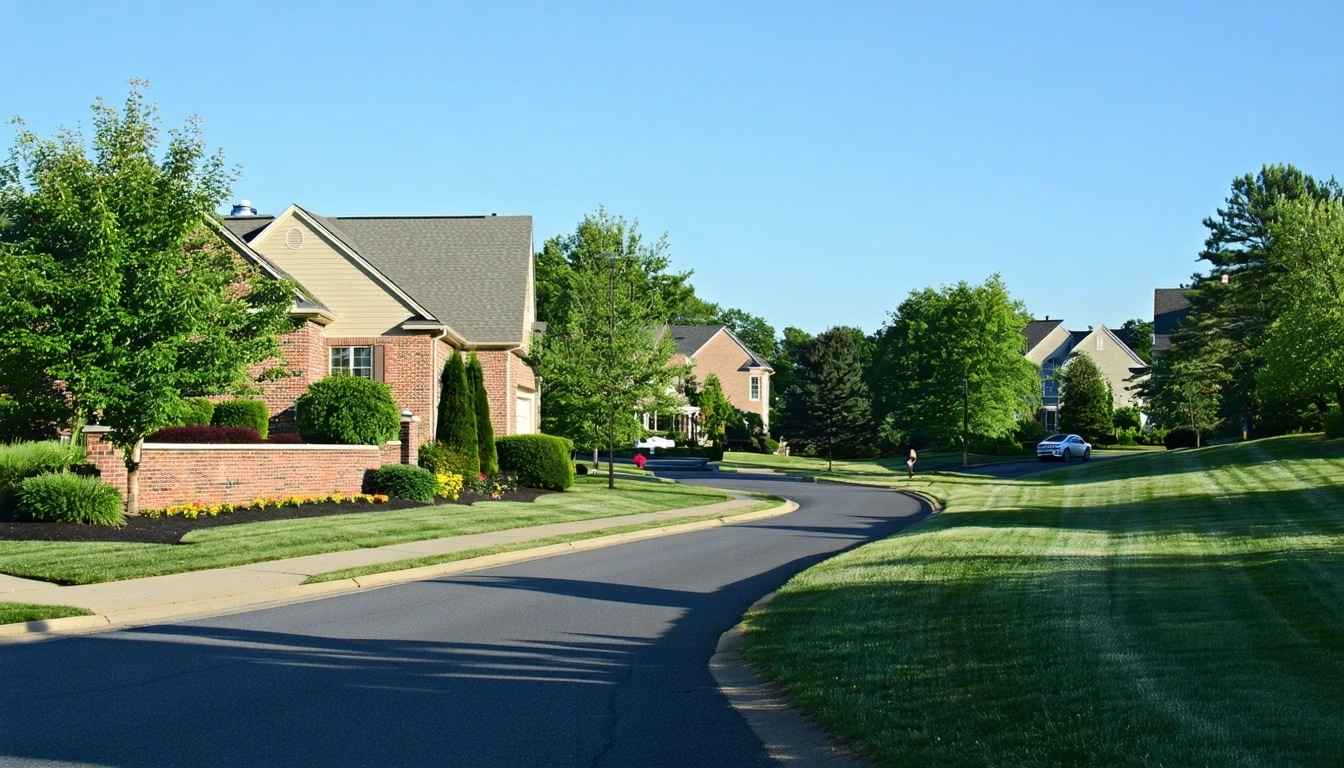
Scenario: You’re comparing two apartments—both $1,600/month, both in the Hartford metro. One’s in Farmington, the other in West Hartford. The rent looks identical. Then you check the grocery store situation: in Farmington, you’re driving 15 minutes each way for a full shop. In West Hartford, there’s a cluster of options within walking distance. Same rent, different daily friction. That’s the Farmington vs West Hartford decision in 2026—not about which city costs less overall, but about where cost pressure shows up and which household logistics you’re willing to manage.
Both cities sit in Connecticut’s Hartford metro, share the same regional economy, and attract similar professional households. But the structure of daily life differs in ways that change how the same income feels. Farmington offers more space and privacy with car-dependent access to everything. West Hartford trades some of that openness for walkable errands, rail transit, and denser amenities. The decision isn’t about affordability in the abstract—it’s about which costs become non-negotiable first, and which tradeoffs align with how you actually live.
This comparison explains where housing, transportation, groceries, utilities, and daily logistics create different pressure points for renters, owners, singles, couples, and families in 2026. No winner declarations, no total cost math—just a clear map of where your money and time go in each place.
Housing Costs: Similar Entry, Different Stock
Median home values sit nearly identical: $375,700 in Farmington, $370,500 in West Hartford. Median rent shows the same pattern—$1,654 in Farmington, $1,608 in West Hartford. On paper, housing entry costs look interchangeable. But the type of housing that price buys, and the ongoing obligations that come with it, differ in ways that matter for long-term budgets.
Farmington’s housing stock skews toward single-family homes with larger lots, lower building density, and more separation between residential and commercial zones. That means more space, more privacy, and often newer construction—but also higher baseline utility exposure (larger square footage to heat and cool), more yard maintenance, and potential HOA or service fees for landscaping, snow removal, or trash. The housing cost is front-loaded into the mortgage or rent, but the ongoing friction costs—time, fuel, and services—add up in ways that don’t show up in the listing price.
West Hartford’s housing includes more vertical, mixed-use buildings and denser residential blocks. Average building levels exceed the high threshold, meaning more multi-family units, townhomes, and apartments with shared walls. That typically translates to lower per-unit utility exposure (less exterior surface area, shared heating costs in some buildings), less yard upkeep, and walkable access to errands that reduces car dependency. But it also means less private outdoor space, more noise proximity, and sometimes higher condo or co-op fees that bundle services you might handle yourself in Farmington.
| Housing Type | Farmington Character | West Hartford Character |
|---|---|---|
| Single-family detached | Dominant; larger lots, newer builds common | Present but less common; smaller lots |
| Townhomes / duplexes | Limited availability | More prevalent in mixed-use zones |
| Apartments / condos | Scattered; often require driving to access | Broadly available; walkable to services |
| Median home value | $375,700 | $370,500 |
| Median gross rent | $1,654/month | $1,608/month |
For first-time buyers, the entry barrier is nearly identical in dollar terms, but the ongoing cost texture diverges. Farmington homeowners face more exposure to maintenance, fuel, and time costs tied to car dependency and property upkeep. West Hartford homeowners trade some of that for higher potential condo fees or less control over shared building decisions. Renters in Farmington often get more square footage for the same price, but absorb higher transportation and time costs. Renters in West Hartford pay for convenience and walkability, which reduces friction but limits space.
Housing takeaway: Households prioritizing space, privacy, and newer construction may find Farmington’s housing stock more aligned with their needs, despite higher ongoing logistics costs. Households sensitive to commute time, walkability, and lower utility exposure from smaller or shared-wall units will find West Hartford’s denser housing reduces daily friction, even if per-square-foot costs feel higher.
Utilities and Energy Costs: Same Rates, Different Exposure
Both cities share identical utility rate structures: electricity costs 27.02¢/kWh, and natural gas runs $16.29/MCF. The rates are the same because they’re served by the same regional providers. But the amount of energy a household uses—and the predictability of those bills—depends almost entirely on housing type, building age, and square footage, all of which differ structurally between Farmington and West Hartford.
Farmington’s housing stock leans toward larger single-family homes, often with more exterior walls, higher ceilings, and greater square footage to condition. That means higher baseline heating exposure during Connecticut’s cold winters and more cooling demand during humid summers. Older homes in Farmington may lack modern insulation or efficient HVAC systems, which amplifies seasonal volatility. Newer builds offer better efficiency, but the sheer size of the space still drives usage higher than a comparable apartment or townhome. Households in Farmington should expect utility bills to spike noticeably in January and February (heating) and July and August (cooling), with less predictability month-to-month unless the home has been recently upgraded.
West Hartford’s more vertical, mixed-use building character means more households live in multi-family units with shared walls, which naturally insulates against temperature extremes. Apartments and condos lose less heat through exterior surfaces, and shared building systems often distribute costs more evenly. That doesn’t eliminate seasonal swings, but it dampens them. Renters in West Hartford may also have utilities included in rent more often than in Farmington, which shifts the exposure from variable monthly bills to a fixed, predictable rent obligation. Homeowners in older West Hartford buildings still face heating costs, but the smaller footprint and denser construction typically reduce total usage compared to a detached home of the same age.
For single adults or couples in smaller units, utility costs in West Hartford tend to stay more predictable and lower in absolute terms, especially in newer or well-maintained buildings. Families in larger homes—whether in Farmington or West Hartford—face higher exposure, but Farmington’s housing stock skews toward the larger end, meaning more households there experience the upper range of seasonal volatility. Households planning to stay long-term in Farmington should budget for efficiency upgrades (insulation, windows, HVAC) as a way to reduce ongoing exposure, whereas West Hartford residents in multi-family buildings have less control but also less need for major interventions.
Utility takeaway: Households in Farmington face higher utility exposure due to larger, detached housing stock and greater car dependency for errands (more fuel usage). West Hartford’s denser, more vertical housing reduces per-unit energy costs and offers more predictability, especially for renters and smaller households. The difference isn’t the rates—it’s the volume of usage driven by housing form.
Groceries and Daily Expenses: Sparse vs Corridor-Clustered
Grocery staples cost roughly the same in both cities—bread runs about $1.90/lb, eggs $2.65/dozen, ground beef $6.95/lb, and milk $4.22/half-gallon. These are derived estimates based on regional price parity, not observed local prices, but they reflect the same baseline cost structure across the Hartford metro. The difference isn’t what you pay per item—it’s how much friction you encounter getting to the store, how often you can shop, and whether you’re forced into bulk buying or convenience spending because of access gaps.
Farmington shows sparse food and grocery density—both metrics fall below low thresholds. That means fewer stores per square mile, longer drives to reach full-service grocers, and limited walkable access to everyday staples. Households in Farmington typically consolidate grocery trips into weekly or bi-weekly hauls, often driving 10–15 minutes each way to reach a big-box store or regional chain. That reduces per-item costs (bulk buying is easier), but it increases fuel spending, time costs, and the risk of mid-week convenience runs to fill gaps. If you forget milk or need fresh produce between trips, you’re either driving again or paying more at a closer, smaller shop.
West Hartford, by contrast, shows corridor-clustered grocery access—food establishment density sits in the medium band, but grocery density exceeds the high threshold. That means concentrated options along main corridors, with walkable or short-drive access for most households. You’re more likely to shop multiple times per week in smaller increments, which reduces the need for bulk storage and allows more flexibility to buy fresh or on-sale items. But it also increases the temptation for convenience spending—grabbing takeout, stopping for coffee, picking up prepared foods—because the options are right there. The per-item grocery cost may be similar, but the total spending on food and daily expenses can creep higher if you’re not disciplined about frequency and impulse purchases.
For single adults and couples, West Hartford’s grocery accessibility reduces friction and allows more spontaneous, varied shopping. You’re less locked into a weekly routine, and you can walk or bike to the store if you want. But that convenience comes with exposure to lifestyle creep—more dining out, more grab-and-go meals, more small purchases that add up. Families managing larger volumes face a different tradeoff: Farmington’s car-dependent, bulk-shopping model works well if you have the time, vehicle space, and storage capacity to plan ahead. West Hartford’s corridor-clustered model works better if you value flexibility and want to avoid the logistics of a major weekly shop, but you’ll need to resist the convenience spending that proximity enables.
Grocery takeaway: Farmington’s sparse grocery access forces more planning, more driving, and more bulk buying, which lowers per-item costs but increases time and fuel exposure. West Hartford’s corridor-clustered access reduces friction and enables flexible, frequent shopping, but increases the risk of convenience spending creep. Households sensitive to time costs and logistics complexity may prefer West Hartford; those who can plan ahead and want to minimize per-item costs may prefer Farmington’s bulk-shopping model.
Taxes and Fees: Property Tax Dominance in Both Cities
| Housing Type | Farmington | West Hartford |
|---|---|---|
| 3BR House | $450,000 | $510,000 |
| 2BR Apartment | $1,800 | $2,100 |
Connecticut relies heavily on local property taxes to fund municipal services, and both Farmington and West Hartford follow that pattern. Neither city has local income taxes, and the statewide sales tax applies uniformly across the metro. The primary tax difference between the two cities comes down to property tax rates and how those rates interact with home values, assessment practices, and the mix of services included.
Property taxes in both cities are structured as mill rates applied to assessed home values, with periodic revaluations that can shift tax burdens as market values change. Farmington’s larger, single-family housing stock means homeowners there are often paying property taxes on higher assessed square footage and lot size, even if the median home value is similar to West Hartford. West Hartford’s denser, more vertical housing stock means more multi-family units and condos, where property tax obligations are sometimes lower per unit but may be bundled into condo fees or HOA assessments that include trash, snow removal, and shared services.
For renters, property taxes are invisible but still affect rent levels indirectly—landlords pass through tax costs over time. The difference is that renters in West Hartford may see more of those costs bundled into a single rent figure, while renters in Farmington may face separate charges for utilities, trash, or parking. Homeowners in both cities should expect property taxes to be a significant ongoing cost, but the predictability differs: Farmington homeowners with larger properties face more exposure to revaluation swings, while West Hartford homeowners in multi-family buildings may see more stable assessments but less control over how fees are allocated.
Both cities also charge typical municipal fees—trash collection, water/sewer, and parking permits where applicable. Farmington’s lower density means some services (like trash pickup) may be private rather than municipal, adding variability. West Hartford’s denser infrastructure often includes more bundled municipal services, which can feel more predictable but also less flexible. HOA fees are more common in Farmington’s newer developments, especially for townhomes or planned communities, and can range widely depending on what’s included (landscaping, snow removal, shared amenities). West Hartford’s condo fees serve a similar function but are more prevalent across the housing stock.
Tax and fee takeaway: Homeowners in both cities face significant property tax exposure, but Farmington’s larger housing stock amplifies the dollar impact per household. West Hartford’s denser housing often bundles fees into condo or HOA assessments, which increases predictability but reduces control. Renters in West Hartford see more costs rolled into rent; renters in Farmington may face more separate line items. Long-term homeowners should focus on assessment trends and revaluation cycles in both cities, as those drive the biggest swings in annual tax obligations.
Transportation & Commute Reality
West Hartford reports an average commute time of 21 minutes, with 4.6% of workers working from home and 22.0% facing long commutes. Farmington’s commute data isn’t available, but the structural differences in transit access and walkability tell the story: Farmington is car-dependent by design, while West Hartford offers more flexibility.
Farmington shows bus service but no rail transit, and the pedestrian-to-road ratio, while in the high band, reflects walkable pockets rather than comprehensive pedestrian infrastructure. That means most households rely on personal vehicles for commuting, errands, and daily logistics. Gas prices sit at $2.90/gallon for both cities, so the fuel cost per mile is identical—but the number of miles driven differs significantly. Farmington households drive more often, for more purposes, because the alternative (walking, biking, or transit) isn’t viable for most trips. That increases not just fuel costs, but also vehicle maintenance, insurance, and the time cost of being in the car.
West Hartford, by contrast, shows rail transit presence and a high pedestrian-to-road ratio with high confidence. The bike-to-road ratio also exceeds the high threshold, meaning cycling infrastructure is present and usable for some trips. That doesn’t eliminate car dependency entirely—many households still drive for work or regional errands—but it creates optionality. You can walk to the grocery store, bike to a nearby park, or take the train into Hartford for work or entertainment. That flexibility reduces the number of car trips per week, which lowers fuel costs, reduces wear on the vehicle, and frees up time that would otherwise be spent driving and parking.
For single adults and couples, West Hartford’s transit and walkability options can meaningfully reduce transportation costs, especially if one or both partners can commute by rail or bike. Families with kids face a different calculus: school drop-offs, activity shuttles, and weekend errands still require a car in both cities, but West Hartford’s denser layout means shorter trips and less time in the car overall. Farmington families should expect to drive more, for more purposes, and to budget accordingly—not just for fuel, but for the time cost of managing a car-dependent lifestyle.
Cost Structure Comparison
Housing dominates the cost experience in both Farmington and West Hartford, but the ongoing obligations that follow the initial rent or mortgage payment differ in ways that change how the same income feels. Farmington’s housing stock is larger, more spread out, and more car-dependent, which means lower per-square-foot costs but higher exposure to utilities, fuel, and time spent managing logistics. West Hartford’s denser, more vertical housing costs about the same upfront but reduces ongoing friction through walkability, transit access, and proximity to daily errands.
Utilities introduce more volatility in Farmington because the housing stock skews toward larger, detached homes with more exterior surface area to heat and cool. West Hartford’s multi-family buildings and shared-wall construction dampen seasonal swings and reduce per-unit energy usage. The rates are identical, but the volume of usage differs structurally, which means Farmington households should expect higher and less predictable utility bills unless they invest in efficiency upgrades.
Transportation patterns matter more in Farmington because nearly every trip requires a car. West Hartford’s rail transit, cycling infrastructure, and walkable errands reduce the number of car trips per week, which lowers fuel costs and frees up time. The difference isn’t just dollars—it’s the time budget required to manage a car-dependent lifestyle versus a more flexible, multi-modal one.
Grocery and daily expense pressure concentrates differently: Farmington’s sparse access forces bulk shopping and planning, which can lower per-item costs but increases fuel and time exposure. West Hartford’s corridor-clustered grocery density reduces friction and enables flexible, frequent shopping, but increases the risk of convenience spending creep if you’re not disciplined about impulse purchases.
The decision isn’t about which city is cheaper overall—it’s about which costs dominate your household. Households sensitive to time costs, logistics complexity, and daily friction may find West Hartford’s walkability and transit access worth the tradeoff of less space and higher convenience spending risk. Households prioritizing space, privacy, and lower per-square-foot housing costs may prefer Farmington’s car-dependent model, as long as they’re prepared for higher transportation and utility exposure.
How the Same Income Feels in Farmington vs West Hartford
Single Adult
Housing becomes the first non-negotiable, but the type of housing you can access differs. In Farmington, you’re likely renting a larger apartment or small house, but you’re driving everywhere—work, groceries, socializing. That means car insurance, fuel, and maintenance become fixed costs, and your schedule is shaped by commute times and errand logistics. In West Hartford, you might rent a smaller unit, but you can walk to the grocery store, bike to a park, or take the train to Hartford. Flexibility exists in how you spend your time, and transportation costs drop if you can reduce car dependency. The income feels tighter in Farmington if you value time over space; it feels tighter in West Hartford if you need square footage and are willing to drive for it.
Dual-Income Couple
Commute friction and car dependence become the primary variables. In Farmington, both partners are likely driving to work, which doubles fuel and vehicle costs and limits schedule flexibility. Grocery shopping and errands require planning and coordination, because nothing is walkable. In West Hartford, one or both partners might commute by rail or bike, which reduces transportation costs and frees up time for other priorities. Errands can be split more easily because stores and services are closer and more accessible. The income feels more flexible in West Hartford if both partners value time and convenience; it feels more stable in Farmington if you’re comfortable with car dependency and want more space for the same housing cost.
Family with Kids
Housing form and family infrastructure dominate. In Farmington, you’re likely in a single-family home with a yard, which means more space for kids but also more maintenance, higher utility exposure, and more driving for school, activities, and errands. Playground density is low, so outdoor recreation often requires a car trip. In West Hartford, you might be in a townhome or condo with less private outdoor space, but playground density is higher, parks are more accessible, and errands are easier to manage on foot or by bike. The income feels more exposed in Farmington if you’re sensitive to time costs and logistics complexity; it feels more constrained in West Hartford if you need private outdoor space and are willing to drive for it.
Decision Matrix: Which City Fits Which Household?
| Decision factor | If you’re sensitive to this… | Farmington tends to fit when… | West Hartford tends to fit when… |
|---|---|---|---|
| Housing entry + space needs | You need private outdoor space, larger square footage, and newer construction | You prioritize space and privacy over walkability and are comfortable with car-dependent access to everything | You value smaller, more efficient units with lower utility exposure and proximity to services over private yards |
| Transportation dependence + commute friction | You want to reduce car trips, fuel costs, and time spent driving | You’re comfortable driving for all errands and commuting by car, and you have reliable vehicle access | You can commute by rail or bike, or you value the flexibility to walk for daily errands and reduce car dependency |
| Utility variability + home size exposure | You want predictable, lower utility bills and less seasonal volatility | You’re willing to invest in efficiency upgrades and can absorb higher heating and cooling costs for larger homes | You prefer smaller, shared-wall units that reduce per-unit energy usage and dampen seasonal bill swings |
| Grocery strategy + convenience spending creep | You want to minimize per-item costs and are disciplined about bulk shopping and planning | You can plan weekly or bi-weekly grocery trips, have vehicle and storage space, and prefer bulk buying | You value flexible, frequent shopping with walkable access and can resist impulse purchases and convenience spending |
| Fees + friction costs (HOA, services, upkeep) | You want predictable, bundled fees and less responsibility for property maintenance | You prefer to handle yard work and services yourself and want more control over ongoing costs | You’re comfortable with condo or HOA fees that bundle services and reduce the time cost of property upkeep |
| Time budget (schedule flexibility, errands, logistics) | You want to minimize time spent on logistics and maximize schedule flexibility | You have the time and vehicle access to manage car-dependent errands and don’t mind planning ahead | You value walkable errands, rail transit options, and the ability to run errands without driving |
Lifestyle Fit
Farmington and West Hartford offer distinct lifestyle textures shaped by infrastructure, density, and access patterns. Farmington’s car-dependent layout and larger housing stock create a quieter, more private daily experience. You’re more likely to have a yard, a driveway, and separation from neighbors. That appeals to households who value space, privacy, and control over their environment. But it also means more time in the car, more planning required for errands, and less spontaneous access to dining, entertainment, or social activities. The lifestyle is structured around the home as the primary space, with outings requiring intentional trips.
West Hartford’s walkable pockets, rail transit, and corridor-clustered amenities create a more connected, flexible daily rhythm. You can walk to a coffee shop, bike to a park, or take the train into Hartford for work or events. That appeals to households who value convenience, variety, and the ability to move through the day without always needing a car. But it also means less private outdoor space, more noise proximity, and higher exposure to convenience spending if you’re not disciplined. The lifestyle is structured around the neighborhood as the primary space, with the home as one part of a broader, more accessible environment.
Both cities offer hospital access, which matters for families and older adults. Farmington’s hospital presence supports medical needs without requiring dense urban infrastructure, while West Hartford’s hospital comes with more walkable access to pharmacies and clinics. Outdoor access differs structurally: Farmington shows moderate park density with water features present, which supports recreational access but often requires a car to reach. West Hartford’s park density exceeds the high threshold, meaning more integrated green space within walking or biking distance, which reduces the friction of getting outside.
Farmington median household income: $118,329/year. West Hartford median household income: $124,150/year. Both cities attract professional, dual-income households, but the income difference reflects West Hartford’s denser, more urban-adjacent character and higher concentration of walkable, mixed-use neighborhoods.
Unemployment rate: 3.8% in both cities, reflecting stable regional labor markets. Current weather: Farmington sits at 32°F (feels like 25°F), while West Hartford is 33°F (feels like 26°F)—nearly identical winter conditions across the metro.
Frequently Asked Questions
Is Farmington or West Hartford more affordable for renters in 2026?
Median rent is nearly identical—$1,654/month in Farmington, $1,608/month in West Hartford—so the entry cost is comparable. The difference is what you get for that rent and what ongoing costs follow. Farmington renters typically access larger units with more private space, but they absorb higher transportation costs because nearly every errand requires a car. West Hartford renters often get smaller units, but they benefit from walkable grocery access, rail transit, and lower transportation exposure. The “more affordable” city depends on whether you value space and privacy or convenience and reduced car dependency.
How do grocery costs compare between Farmington and West Hartford in 2026?
Per-item grocery prices are similar across the Hartford metro—bread, eggs, milk, and meat cost roughly the same in both cities. The difference is access friction. Farmington’s sparse grocery density means longer drives, more bulk shopping, and more planning required to avoid mid-week convenience runs. West Hartford’s corridor-clustered grocery access allows more frequent, flexible shopping with walkable or short-drive options. Households in Farmington may spend less per item through bulk buying, but they spend more on fuel and time. Households in West Hartford face more temptation for convenience spending (takeout, prepared foods, coffee shops) because options are closer and more accessible.
Which city has better public transportation: Farmington or West Hartford?
West Hartford has rail transit service, which provides direct access to Hartford and regional destinations. Farmington has bus service only, with no rail options. That structural difference matters for households trying to reduce car dependency or avoid the cost of owning a second vehicle. West Hartford’s higher pedestrian-to-road ratio and cycling infrastructure also make it easier to combine transit with walking or biking for the first and last mile of a trip. Farmington’s transit is more limited and less integrated with daily errands, so most households there rely on personal vehicles for nearly all trips.
Do utility costs differ between Farmington and West Hartford in 2026?
Electricity and natural gas rates are identical—27.02¢/kWh and $16.29/MCF—because both cities are served by the same regional providers. But the amount of energy a household uses depends on