
Farmington is considered expensive in 2026, with a median home value of $375,700 and median rent of $1,654 per month anchoring the cost structure. The value proposition depends on housing entry cost versus car dependence—transportation and utility seasonality create recurring pressure beyond the initial housing hurdle.
You’re running the numbers for a move to Farmington, and the spreadsheet keeps landing in the same place: housing eats the budget before you’ve added a single other line item. That’s the reality of this Hartford-area suburb, where the cost structure is shaped less by day-to-day prices and more by the weight of entry barriers and the logistics of getting around.
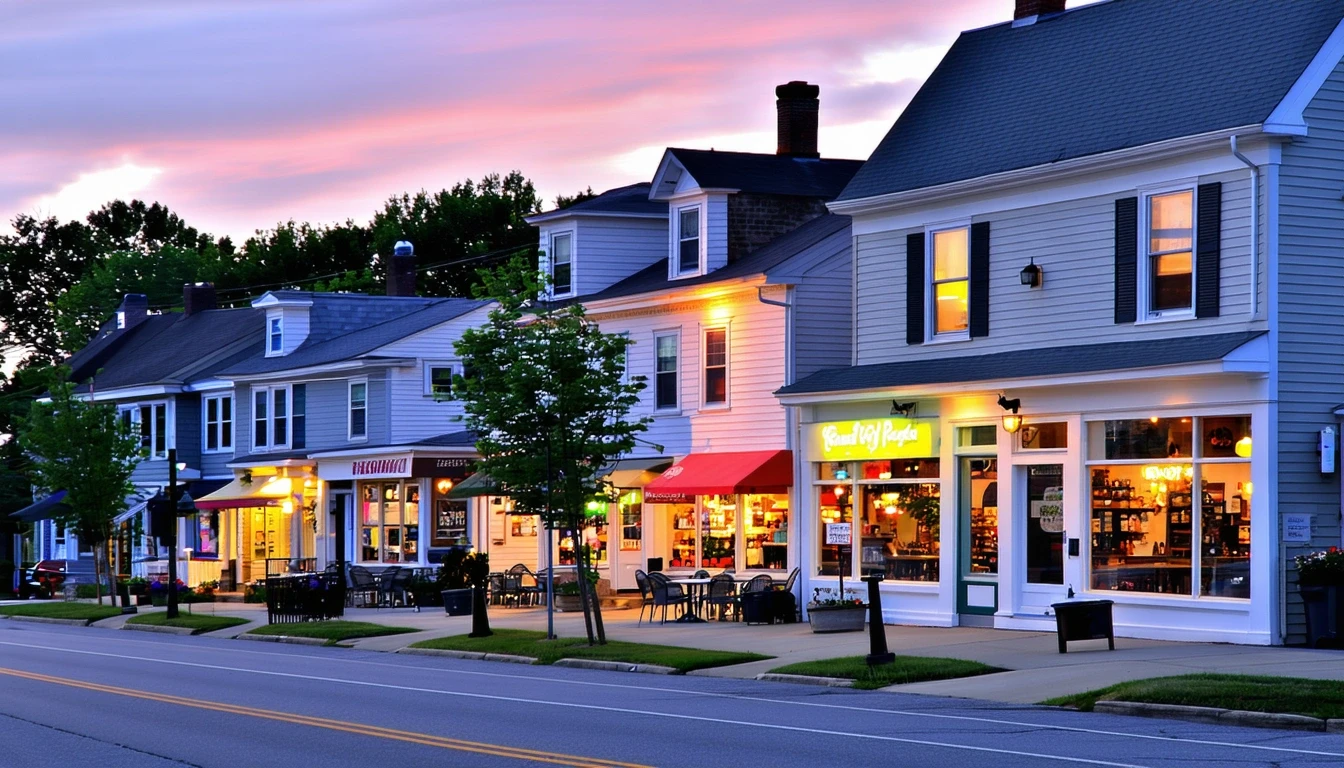
Overall Cost of Living Snapshot
Farmington’s regional price parity index sits at 103, meaning the overall cost level runs slightly above the national baseline. But that modest index masks the real story: costs here are front-loaded into housing and spread across transportation, while groceries and daily expenses track closer to typical suburban levels.
The primary cost driver is housing—both ownership and rental markets demand substantial monthly outlays. The secondary pressure points are transportation (car dependency is high despite pockets of walkable infrastructure) and electricity, which runs well above national averages at 27.02¢ per kilowatt-hour. Natural gas, at $16.29 per thousand cubic feet, adds moderate seasonal volatility during heating months.
Compared to many other Connecticut suburbs, Farmington sits in the higher tier. The median household income of $118,329 per year reflects the earning levels common here, but it also signals the income threshold the housing market expects. The unemployment rate of 3.8% indicates a stable local economy, though that stability comes with corresponding price floors across housing and services.
Driver verdict: Housing dominates, transportation sustains, and utilities swing seasonally. The surprises come not from grocery receipts but from the recurring cost of maintaining mobility and managing energy exposure in a climate with cold winters and warm summers.
Housing Costs (Primary Driver)
At $375,700, the median home value in Farmington represents a substantial entry cost. Ownership here means navigating not just the purchase price but also property taxes, insurance, and maintenance on homes that often sit on larger lots with older infrastructure. Heating and cooling a single-family home through Connecticut’s seasonal extremes adds another layer of recurring expense.
For renters, $1,654 per month is the median gross rent—a figure that typically excludes utilities, which tenants pay separately. Renting in Farmington offers flexibility and lower entry cost than buying, but it doesn’t eliminate housing pressure—rent at this level still commands a significant share of monthly cash flow, and rental stock is limited compared to ownership inventory.
The renting-versus-owning decision here hinges on time horizon and financial position. Renting makes sense for those testing the area, avoiding maintenance risk, or lacking the capital for a down payment. Buying makes sense for those planning to stay long enough to absorb transaction costs and build equity, and who can manage the operational cost of a larger home.
Conclusion: Farmington is primarily an ownership market. Rental options exist but are constrained, and both paths require navigating elevated baseline costs.
| Housing Type | Cost Anchor | What That Buys You |
|---|---|---|
| Median Home Value | $375,700 | Single-family home, often older construction, larger lot, suburban setting |
| Median Gross Rent | $1,654/month | Apartment or small rental unit, utilities typically separate, limited inventory |
Utilities & Energy Risk
Electricity in Farmington costs 27.02¢ per kilowatt-hour, a rate that sits well above the national average and translates into meaningful monthly exposure. For illustrative context, a household using 1,000 kilowatt-hours per month would face a baseline electric bill around $270 before fees or taxes—a figure that rises during summer cooling months and can be partially offset by efficiency measures or behavioral adjustments.
Natural gas, priced at $16.29 per thousand cubic feet (roughly 100 therms), powers heating in many homes. A household using one thousand cubic feet per month during winter would see a gas bill near $16 for the commodity alone, though total bills include distribution and service charges. The seasonal swing is real: heating a Connecticut home through extended cold stretches drives gas usage up sharply, while summer months see minimal gas consumption.
The current temperature of 32°F (feels like 25°F) underscores the heating exposure Farmington households face during winter. Cooling demand exists but is less extreme than in southern climates—still, the combination of elevated electricity rates and the need to manage both heating and cooling creates a dual-season cost burden.
Risk classification: moderate. Utility costs here are not the dominant expense, but they are large enough to matter and volatile enough to require planning. Households with older homes, poor insulation, or high square footage face the highest exposure.
Groceries & Daily Costs
Grocery costs in Farmington reflect the regional price level, with derived estimates indicating moderate upward pressure compared to national baselines. Bread runs around $1.90 per pound, eggs near $2.65 per dozen, and ground beef approximately $6.95 per pound. (Derived estimate based on national baseline adjusted by regional price parity; not an observed local price.)
For households, this translates into grocery bills that track slightly above national averages but remain far less impactful than housing or transportation. The bigger friction point is access: food and grocery establishment density in Farmington falls below typical thresholds, meaning most residents drive to shop rather than walk to nearby stores. That access gap doesn’t raise the per-item price, but it does reinforce car dependency and adds time and fuel cost to routine errands.
Daily costs—coffee, takeout, household supplies—follow similar patterns. Prices are elevated but not extreme, and the real cost comes from the logistics of acquiring goods rather than the sticker price alone.
Transportation Reality
Farmington’s transportation structure is defined by car dependency. While parts of the city feature substantial pedestrian infrastructure—resulting in walkable pockets with high pedestrian-to-road ratios—the sparse density of food and grocery establishments means most households cannot complete daily errands on foot. Bus service is present, but the lack of rail transit and the spread-out nature of residential and commercial areas make personal vehicle ownership functionally required for most residents.
Gas prices sit at $2.90 per gallon, a moderate rate that becomes significant when multiplied across regular commuting and errand trips. For illustrative context, a household driving a typical 25-mile round-trip commute in a vehicle averaging 25 miles per gallon would use one gallon per day, translating to roughly $2.90 in daily fuel cost before maintenance, insurance, or depreciation.
The transportation exposure in Farmington is not a one-time cost—it’s a recurring monthly line item that scales with household size, commute distance, and the number of vehicles required. Families with multiple drivers face compounded costs, while single-vehicle households must carefully manage scheduling and logistics.
Transportation is a structural cost here, not a discretionary one. The city’s layout and amenity distribution make driving the default, and that default carries ongoing financial weight.
Cost Exposure Profiles
Cost pressure in Farmington is not uniform—it depends on which exposures a household carries and how those exposures interact.
Low-exposure situations: A homeowner with a short commute, one fuel-efficient vehicle, and a well-insulated home faces manageable ongoing costs. The housing entry barrier is high, but once cleared, monthly outlays stabilize around property taxes, moderate utility bills, and limited transportation expense. Proximity to work and efficient energy use keep recurring costs predictable.
High-exposure situations: A renter with a long commute, multiple vehicles, and an older rental unit with poor insulation faces compounded pressure. Rent consumes a large share of income, transportation costs multiply across vehicles and distance, and utility bills swing sharply with the seasons. The lack of control over housing efficiency and the necessity of driving for nearly all errands create a cost structure with little room for adjustment.
The difference between these profiles is not income alone—it’s the interaction of housing type, commute length, vehicle count, and energy efficiency. Farmington rewards those who can minimize transportation exposure and manage housing costs through ownership, while penalizing those who must rent, commute long distances, or operate multiple vehicles.
Frequently Asked Questions
Is Farmington more affordable than West Hartford in 2026? Farmington’s median home value of $375,700 tends to run somewhat lower than West Hartford’s, though both are expensive by regional standards. The cost difference is modest, and transportation dependency in Farmington may offset any housing savings for households with long commutes.
What does a typical cost profile look like in Farmington? Most households face high housing costs (either mortgage or rent), moderate-to-high transportation expenses due to car dependency, and elevated utility bills driven by Connecticut’s electricity rates and seasonal heating needs. Grocery and daily costs are slightly above national averages but far less impactful than housing and transportation.
Do utilities cost more in Farmington than in nearby areas? Electricity rates in Farmington, at 27.02¢ per kilowatt-hour, are high across Connecticut and tend to be similar to nearby suburbs. Natural gas pricing is moderate, but the seasonal swing in heating costs is significant throughout the region.
What costs tend to surprise newcomers in Farmington? The recurring cost of transportation often surprises those expecting walkability—despite pockets of pedestrian infrastructure, sparse grocery and food density means most errands require driving. Utility bills, particularly electricity, also run higher than many expect.
Are property taxes higher in Farmington than in neighboring towns? Property tax rates vary across Connecticut towns and depend on both the mill rate and assessed home value. Farmington’s taxes are substantial given the median home value, though specific comparisons require looking at effective tax rates in each municipality.
Is Farmington a good value for families in 2026? Farmington offers a stable suburban environment with hospital access and moderate green space, but family infrastructure (schools and playgrounds) is limited relative to density. The value depends on whether a family prioritizes housing stability and low crime over walkable amenities and dense family services.
Can you live in Farmington without a car? Practically speaking, no. While bus service exists and some areas have strong pedestrian infrastructure, the sparse distribution of grocery stores and daily services makes car ownership necessary for most households to manage routine errands and commuting.
How do heating costs compare to cooling costs in Farmington? Heating costs dominate due to Connecticut’s cold winters, with natural gas or heating oil driving significant seasonal expense. Cooling costs exist but are smaller in magnitude, though elevated electricity rates mean air conditioning still adds noticeable summer expense.
How this article was built: In addition to public economic data, this article incorporates location-based experiential signals derived from anonymized geographic patterns—such as access density, walkability, and land-use mix—to reflect how day-to-day living actually feels in Farmington, CT.