
Fairview Heights, IL vs. Ofallon, IL: Cost of Living Comparison (2025)
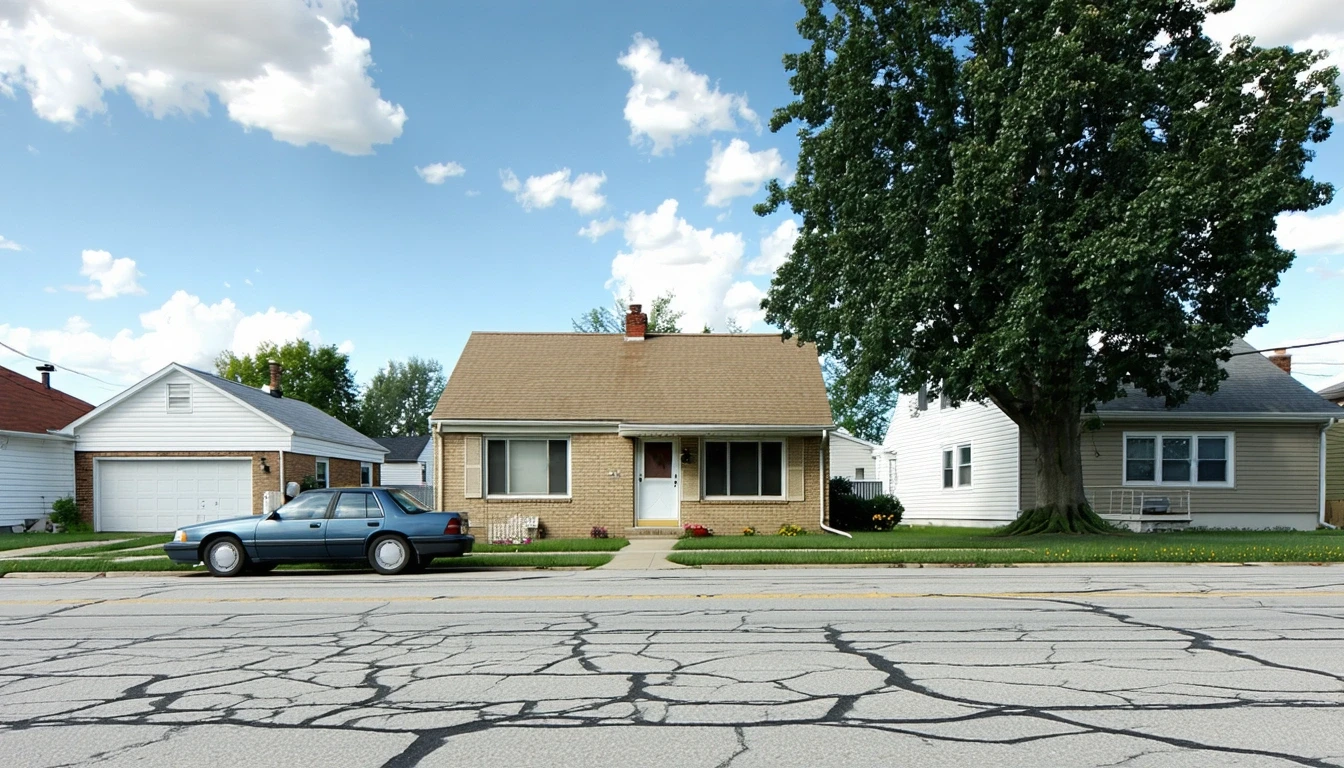
Fairview Heights and O’Fallon sit just miles apart in Illinois’s Metro East region, yet they attract distinctly different homebuyers and renters. Fairview Heights, positioned along Interstate 64 with immediate access to St. Louis, functions as a commercial hub with big-box retail, established neighborhoods, and a mix of older and newer housing stock. O’Fallon, by contrast, has evolved into one of the fastest-growing suburbs in the region, characterized by newer subdivisions, family-oriented amenities, and a more residential character. Both cities share St. Clair County tax structures and proximity to Scott Air Force Base, but their housing markets, daily expenses, and lifestyle offerings diverge in ways that matter significantly to household budgets in 2025.
For relocating families, military personnel, and professionals weighing Metro East options, understanding these cost differences is essential. Fairview Heights offers established infrastructure and commercial convenience, while O’Fallon provides newer construction and a suburban growth trajectory. The decision often hinges on whether buyers prioritize immediate retail access and varied housing ages, or prefer newer builds in a rapidly expanding community. This comparison examines housing, utilities, groceries, taxes, and lifestyle factors to help you determine which city aligns with your financial priorities and daily living preferences.
Both cities benefit from the Metro East’s lower cost structure compared to St. Louis County, but subtle differences in property values, utility expenses, and local fees can shift monthly budgets by hundreds of dollars. Whether you’re a first-time homebuyer, a renter exploring options near Scott Air Force Base, or a family seeking the best value in the region, this analysis provides the granular detail needed to make an informed choice between Fairview Heights and O’Fallon in 2025.
Housing Costs
Housing represents the most significant cost differential between Fairview Heights and O’Fallon. Fairview Heights features a diverse housing inventory spanning several decades, with ranch-style homes from the 1970s and 1980s alongside newer townhomes and apartments near the commercial corridor. Median home prices in Fairview Heights typically range from $165,000 to $195,000 for single-family homes, with older properties on the lower end and updated or newer construction commanding premiums. The rental market includes garden-style apartment complexes along Route 159 and scattered single-family rentals, with two-bedroom apartments generally ranging from $950 to $1,200 monthly depending on age and amenities.
O’Fallon’s housing market reflects its growth trajectory, with substantial new construction over the past two decades creating neighborhoods of modern builds with open floor plans and energy-efficient features. Median home prices in O’Fallon tend to run $185,000 to $225,000, with many newer subdivisions featuring homes in the $220,000–$280,000 range. The rental market is smaller relative to the ownership base, but two-bedroom apartments in newer complexes typically command $1,050 to $1,300 monthly. Three-bedroom homes for rent are less common but generally start around $1,400 in O’Fallon compared to $1,200–$1,350 in Fairview Heights. The difference reflects both housing age and the premium buyers place on O’Fallon’s newer inventory and perceived school quality.
For families seeking move-in-ready homes with modern layouts, O’Fallon’s newer construction offers clear advantages but comes with higher purchase prices and rents. Buyers willing to update older homes or prioritize location over age will find better entry points in Fairview Heights, where the housing stock’s diversity creates opportunities across price ranges. Young professionals and renters benefit from Fairview Heights’ slightly lower apartment costs and greater availability, while families planning long-term homeownership may justify O’Fallon’s premium for newer builds that require less immediate maintenance. The gap between median home prices—roughly $20,000 to $30,000—translates to approximately $150–$200 more monthly in mortgage payments, a meaningful difference for budget-conscious buyers.
| Housing Type | Fairview Heights | O’Fallon |
|---|---|---|
| Median Home Price | $165,000–$195,000 | $185,000–$225,000 |
| 2BR Apartment Rent | $950–$1,200 | $1,050–$1,300 |
| 3BR Home Rent | $1,200–$1,350 | $1,400–$1,650 |
| Typical Mortgage (3BR, 20% down, 7% rate) | ~$1,100–$1,300 | ~$1,250–$1,500 |
These differences matter most for families versus young professionals. Families prioritizing school districts and newer construction often absorb O’Fallon’s higher costs as an investment in perceived quality and resale value. Young professionals, singles, and renters find Fairview Heights’ lower entry costs and apartment availability more aligned with flexible lifestyles and proximity to retail employment. First-time buyers benefit from Fairview Heights’ accessible price points, while move-up buyers gravitate toward O’Fallon’s modern inventory.
Winner: Fairview Heights for overall housing affordability, offering lower median prices and rents that ease monthly budgets, particularly for renters and first-time buyers seeking entry into Metro East homeownership.
Utilities and Energy Costs
Utility expenses in both cities are shaped by Ameren Illinois electricity and natural gas service, along with municipal water and sewer systems managed by each city. Fairview Heights’ older housing stock—much of it built before modern energy codes—tends to generate higher heating and cooling costs, particularly in homes with original windows, insulation, and HVAC systems. Residents in 1970s and 1980s ranch homes often report winter natural gas bills reaching $150–$200 monthly during peak heating months, with summer electric bills for air conditioning climbing to $140–$180. Newer townhomes and updated properties perform better, but the overall housing age skews utility averages upward.
O’Fallon’s newer construction benefits from energy-efficient building standards, including improved insulation, double-pane windows, and modern HVAC systems. Homeowners in subdivisions built after 2000 typically see winter heating bills in the $100–$140 range and summer cooling costs around $110–$150, reflecting tighter building envelopes and more efficient systems. Water and sewer costs are comparable between the cities, generally running $60–$80 monthly for typical household usage, though O’Fallon’s newer infrastructure may offer slightly more predictable billing without the emergency repairs that occasionally affect older systems in Fairview Heights.
For families occupying larger homes, the energy efficiency gap becomes more pronounced. A 2,000-square-foot home built in 1978 in Fairview Heights may cost $200–$250 monthly in combined utilities during winter, while a similarly sized 2010-built home in O’Fallon might run $150–$190. Over a year, this difference can approach $500–$700, a meaningful consideration for budget-conscious households. Renters in newer apartment complexes in both cities benefit from landlord-maintained systems and shared-wall efficiency, though Fairview Heights’ older apartment stock may still show higher electric bills during temperature extremes. Ameren Illinois offers energy efficiency rebates and off-peak programs that residents in both cities can leverage, but the baseline efficiency of O’Fallon’s housing stock provides a structural advantage.
Winner: O’Fallon for lower utility costs driven by newer, energy-efficient housing stock that reduces heating and cooling expenses, particularly benefiting families in single-family homes during Illinois’s temperature extremes.
Groceries and Daily Expenses
Fairview Heights functions as a regional retail destination, hosting major grocery chains including Schnucks, Walmart Supercenter, Target, Aldi, and Save-A-Lot along the Route 159 corridor. This concentration creates competitive pricing, with Aldi and Walmart offering budget-friendly staples and Schnucks providing mid-range options with frequent sales. A typical weekly grocery bill for a family of four shopping strategically across these stores runs $140–$180, with budget-conscious shoppers easily achieving the lower end by prioritizing Aldi and Walmart. Dining options span fast-casual chains, local diners, and sit-down restaurants, with average meal costs around $12–$15 per person at casual spots and $8–$10 for quick-service meals.
O’Fallon offers Schnucks, Dierbergs, Walmart, and Aldi, providing similar grocery access but with a slightly more suburban layout requiring short drives between stores. Pricing remains competitive, though Dierbergs skews toward higher-end selections that can nudge weekly bills upward for shoppers prioritizing organic or specialty items. A comparable family of four can expect $150–$190 weekly, with the higher end reflecting O’Fallon’s newer store formats and slightly elevated pricing on prepared foods and specialty departments. Dining out in O’Fallon centers on family-friendly chains and local restaurants, with per-person costs similar to Fairview Heights—$12–$16 at casual dining spots and $9–$11 for quick meals.
The practical difference lies in shopping convenience and household behavior. Fairview Heights’ dense retail corridor allows for multi-store trips within minutes, enabling price-conscious shoppers to cherry-pick deals across Aldi, Walmart, and Schnucks efficiently. O’Fallon’s more dispersed layout may lead households to consolidate shopping at a single store, potentially missing savings opportunities. Singles and couples find both cities equally affordable for groceries, while larger families benefit from Fairview Heights’ competitive density. Coffee runs, household goods, and personal care items cost similarly in both cities, with big-box stores like Target and Walmart ensuring price parity on non-food essentials.
Winner: Fairview Heights for slightly lower grocery and daily expenses, driven by concentrated retail competition and the convenience of multi-store comparison shopping within a compact commercial corridor.
Taxes and Fees
Both Fairview Heights and O’Fallon operate within St. Clair County’s property tax structure, but local rates and municipal fees introduce meaningful differences. Fairview Heights’ composite property tax rate typically runs 7.5%–8.5% of assessed value, reflecting city, county, school district, and special district levies. For a home assessed at $180,000, annual property taxes generally fall between $4,500 and $5,100, or roughly $375–$425 monthly when escrowed with a mortgage. O’Fallon’s composite rate tends slightly lower, around 7.0%–8.0%, due to different school district boundaries and municipal levies. The same $180,000 home in O’Fallon might generate $4,200–$4,800 annually, or $350–$400 monthly—a difference of $25–$50 monthly that compounds over years of homeownership.
Sales tax in both cities stands at 8.5%–9.0%, combining state, county, and local rates with minimal practical difference for residents. Municipal fees diverge more noticeably: Fairview Heights charges separate fees for trash collection (typically $15–$20 monthly) and water/sewer ($60–$80 monthly), while O’Fallon bundles some services differently, with water/sewer running $65–$85 and trash collection around $18–$22. Homeowners in subdivisions with homeowners associations face additional costs—more common in O’Fallon’s newer developments—where HOA fees range from $30 to $150 monthly depending on amenities like pools, landscaping, and common area maintenance. Fairview Heights has fewer HOA-governed communities, reducing this expense for many homeowners.
For renters, property taxes are embedded in rent but don’t appear as separate line items, making the difference less visible. However, landlords in O’Fallon’s higher-priced rental market may pass along HOA fees and slightly higher property taxes through rent premiums. Homeowners feel the impact directly: over a 30-year mortgage, the $25–$50 monthly property tax difference between cities compounds to $9,000–$18,000 in total tax payments, a significant long-term consideration. Buyers should request detailed tax estimates during home searches, as rates vary by specific school district and special service areas within each city.
Winner: O’Fallon for slightly lower property tax rates that reduce long-term homeownership costs, though buyers in HOA-governed subdivisions must account for additional monthly fees that can offset this advantage.
Cost Summary Table
| Expense Category | Fairview Heights (Monthly) | O’Fallon (Monthly) |
|---|---|---|
| Housing (3BR home, mortgage or rent) | $1,200–$1,350 | $1,400–$1,650 |
| Utilities (electric, gas, water/sewer) | $180–$230 | $150–$190 |
| Groceries (family of four) | $560–$720 | $600–$760 |
| Transportation (gas, insurance, maintenance) | $350–$450 | $350–$450 |
| Property Taxes (homeowners, monthly escrow) | $375–$425 | $350–$400 |
| Miscellaneous (trash, HOA, personal) | $100–$150 | $150–$250 |
| Estimated Monthly Total | $2,765–$3,325 | $3,000–$3,700 |
The monthly cost difference between Fairview Heights and O’Fallon ranges from $235 to $375, with Fairview Heights offering the lower overall expense profile. This gap stems primarily from housing costs, where Fairview Heights’ older, more affordable inventory reduces mortgage or rent payments by $200–$300 monthly. O’Fallon’s advantage in utilities—saving $30–$40 monthly—partially offsets this but doesn’t close the gap. For a household budgeting $3,000 monthly for core expenses, Fairview Heights fits comfortably, while O’Fallon pushes toward $3,200–$3,400, requiring higher gross monthly income to maintain the same savings rate or discretionary spending cushion.
Families prioritizing newer homes and energy efficiency may find O’Fallon’s higher costs justified by lower utility bills and reduced maintenance needs, effectively trading upfront housing expense for long-term operational savings. Renters and first-time buyers benefit more clearly from Fairview Heights’ lower entry costs, which free up budget for other priorities or accelerate savings goals. Over a year, choosing Fairview Heights over O’Fallon could save a household $2,800–$4,500, a meaningful sum for emergency funds, retirement contributions, or discretionary spending.
Estimates reflect 2025 costs for a mid-size household (2-bedroom apartment or 3-bedroom home) using published regional data, local utility averages, and typical household spending patterns. Actual expenses vary with household size, lifestyle choices, and specific neighborhood characteristics. Gross monthly income figures are pre-tax; households should budget housing and total expenses at appropriate percentages of take-home pay.
Lifestyle Fit and Indirect Cost Impacts
Fairview Heights and O’Fallon offer distinct lifestyle experiences that indirectly shape household budgets. Fairview Heights’ commercial density along Route 159 places residents within minutes of shopping, dining, and services, reducing drive times and fuel costs for daily errands. The city’s established neighborhoods feature mature trees and varied architectural styles, appealing to buyers who value character over uniformity. Walkability is limited outside specific apartment complexes and townhome developments, with most errands requiring short drives. The city’s proximity to Interstate 64 and Route 159 provides quick access to St. Louis, typically 15–20 minutes to downtown, benefiting commuters and reducing transportation time costs.
O’Fallon’s suburban layout prioritizes residential neighborhoods over commercial density, with shopping and services dispersed across the city’s expanding footprint. Newer subdivisions feature sidewalks, parks, and greenways that encourage walking within neighborhoods, though most errands still require driving. Commute times to St. Louis run slightly longer—20–30 minutes depending on destination—adding incremental fuel and vehicle wear costs for daily commuters. However, O’Fallon’s family-oriented amenities, including well-regarded schools, sports complexes, and community events, reduce the need for costly extracurricular programs or long drives to recreational facilities. Families with children often find that O’Fallon’s built-in amenities offset higher housing costs by reducing spending on external activities.
Both cities serve Scott Air Force Base personnel, with commute times under 15 minutes, making either a practical choice for military families. Fairview Heights’ retail concentration supports quick shopping trips and reduces the temptation for costly convenience purchases, while O’Fallon’s newer housing stock lowers maintenance and repair expenses that can surprise owners of older homes. Fairview Heights averages 16–18 minutes for daily errands due to commercial proximity, while O’Fallon’s dispersed layout extends this to 20–25 minutes. For households valuing time efficiency and lower transportation costs, Fairview Heights holds an edge. For families prioritizing neighborhood amenities, school quality, and modern housing that minimizes surprise repairs, O’Fallon’s lifestyle benefits justify its higher costs.
O’Fallon’s newer subdivisions feature energy-efficient builds that can save homeowners $500–$700 annually in utility costs compared to Fairview Heights’ older housing stock. This efficiency, combined with reduced maintenance needs, makes O’Fallon attractive for buyers planning long-term homeownership despite higher purchase prices. Conversely, Fairview Heights’ lower entry costs and commercial convenience suit renters, young professionals, and budget-focused buyers who prioritize affordability and immediate access to services over neighborhood uniformity and modern construction.
Frequently Asked Questions
Is Fairview Heights more affordable than O’Fallon in 2025?
Yes, Fairview Heights offers lower median home prices, rents, and overall monthly expenses, typically saving households $235–$375 monthly compared to O’Fallon. This affordability stems from older housing stock and lower property values, making Fairview Heights a better fit for budget-conscious buyers and renters.
Are rental prices lower in Fairview Heights or O’Fallon?
Rental prices are generally lower in Fairview Heights, with two-bedroom apartments ranging $950–$1,200 compared to $1,050–$1,300 in O’Fallon. Three-bedroom home rentals also cost less in Fairview Heights, typically $1,200–$1,350 versus $1,400–$1,650 in O’Fallon, reflecting the newer construction and perceived amenities in O’Fallon.
How do grocery costs compare between Fairview Heights and O’Fallon in 2025?
Grocery costs are slightly lower in Fairview Heights due to concentrated retail competition along Route 159, where Aldi, Walmart, and Schnucks create pricing pressure. A family of four typically spends $140–$180 weekly in Fairview Heights versus $150–$190 in O’Fallon, where more dispersed stores and higher-end options like Dierbergs can nudge costs upward.
Are property taxes higher in O’Fallon than in Fairview Heights?
Property taxes are slightly lower in O’Fallon, with composite rates around 7.0%–8.0% compared to Fairview Heights’ 7.5%–8.5%, saving homeowners approximately $25–$50 monthly on a $180,000 home. However, O’Fallon’s prevalence of HOA fees in newer subdivisions can offset this advantage, adding $30–$150 monthly depending on the community.
Do utility bills tend to be higher in Fairview Heights or O’Fallon during the winter?
Utility bills are generally higher in Fairview Heights during winter due to older housing stock with less efficient insulation and HVAC systems, often reaching $150–$200 monthly for heating. O’Fallon’s newer, energy-efficient homes typically see winter heating costs of $100–$140, a difference that compounds over Illinois’s cold months and can save O’Fallon residents $500–$700 annually.
Making Your Decision: Which City Fits Your Budget?
Fairview Heights emerges as the clear winner for overall affordability in 2025, offering lower housing costs, competitive grocery pricing, and reduced monthly expenses that benefit renters, first-time buyers, and budget-conscious households. The city’s established infrastructure, commercial density, and accessible price points make it an ideal choice for young professionals, military personnel seeking proximity to Scott Air Force Base, and families prioritizing immediate savings over newer construction. Monthly cost advantages of $235–$375 compound into annual savings of $2,800–$4,500, meaningful sums that accelerate financial goals or provide breathing room in household budgets. If your priority is stretching your dollar while maintaining access to Metro East amenities and St. Louis commuting convenience, Fairview Heights delivers strong value.
O’Fallon justifies its higher costs for buyers prioritizing modern housing, energy efficiency, and family-oriented amenities. The city’s newer construction reduces utility bills and maintenance surprises, while well-regarded schools and recreational facilities create a lifestyle that minimizes external spending on activities and programs. Families planning long-term homeownership, move-up buyers seeking contemporary layouts, and households valuing neighborhood cohesion find O’Fallon’s premium worthwhile. The $200–$300 monthly housing cost increase buys tangible benefits: lower utility bills, reduced repair needs, and community amenities that enhance daily life. If your household income comfortably supports $3,200–$3,700 monthly expenses and you prioritize quality of life alongside cost considerations, O’Fallon offers a compelling Metro East option.
Ready to explore your next move? IndexYard provides detailed neighborhood guides, moving cost calculators, and local insights to help you navigate Fairview Heights, O’Fallon, and the broader Metro East market. Compare properties, review school ratings, and access expert resources tailored to your relocation needs—start your search today and find the Illinois community that fits your lifestyle and budget.