
Can you live in Fairfield without a car? For most people, the honest answer is no—but the full picture is more nuanced than that. Fairfield sits in a part of Ohio where personal vehicles dominate daily life, yet bus service does exist, and certain pockets of the city offer more pedestrian-friendly infrastructure than others. Understanding how people actually get around here—and who benefits from transit versus who absorbs the friction of car dependence—matters just as much as knowing what gas costs or where the bus stops are.
This article explains the transportation reality in Fairfield: what options exist, how mobility shapes daily routines, and which households can realistically reduce their reliance on driving. It’s not about calculating commute costs or comparing fare structures—it’s about understanding how the city’s layout, infrastructure, and transit access interact to define how you’ll move through your day.
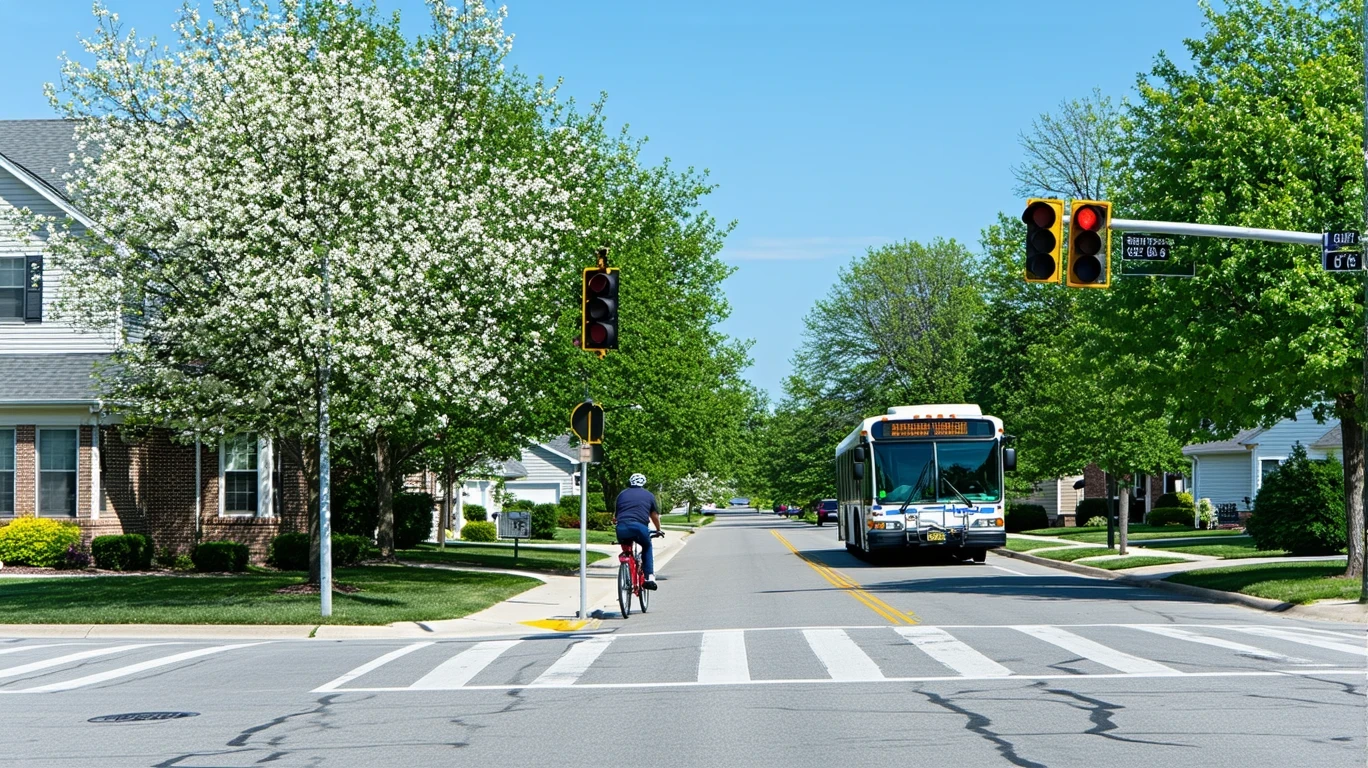
How People Get Around Fairfield
Fairfield operates primarily as a car-oriented community. The city’s low-rise residential neighborhoods, spread-out commercial corridors, and limited density mean that most errands, work commutes, and social trips require a personal vehicle. While bus service is available, it functions as a supplemental option rather than a backbone system that eliminates the need for a car.
What surprises some newcomers is that Fairfield does have pockets with substantial pedestrian infrastructure—sidewalks, crosswalks, and pathways that support walking within certain neighborhoods. But walkability within a neighborhood doesn’t translate to walkability between destinations. Grocery stores, medical offices, and employment centers are often separated by distances that make driving the default choice, even for residents who live in areas with good sidewalks.
The result is a mobility pattern where nearly everyone owns at least one vehicle, and many households operate two. Transit exists, but it’s used selectively—by those whose routes align with bus coverage, whose schedules allow for less flexibility, or who are intentionally minimizing vehicle expenses. For the majority, driving isn’t a preference; it’s the structure of daily life here.
Public Transit Availability in Fairfield
Public transit in Fairfield often centers around regional bus service, which provides connections within the city and to nearby areas. The system is real and functional, but it’s not comprehensive. Coverage tends to work best along major corridors where residential areas, shopping centers, and employment hubs cluster. Outside those routes, service becomes sparse or nonexistent, leaving large portions of the city effectively car-dependent by default.
Bus service in Fairfield is most practical for residents who live near established routes and whose daily destinations fall along those same lines. If your home, workplace, and errands all align with the bus network, transit can reduce or eliminate some driving. But for households whose routines involve multiple stops, off-peak travel, or destinations in less-served areas, the bus becomes impractical quickly.
The system also reflects the broader regional transit structure, where buses are designed more for commuter access than for dense, frequent, all-day service. That means longer waits between buses, limited evening and weekend coverage, and routes that prioritize major roads over neighborhood penetration. It’s a system that works for some people in some situations—but it doesn’t replace the flexibility and reach of a personal vehicle for most households.
Driving & Car Dependence Reality
In Fairfield, driving isn’t just convenient—it’s structurally necessary for the vast majority of residents. The city’s layout, with residential neighborhoods separated from commercial and employment centers, means that even short errands often require a car. Parking is generally abundant and free, which removes one of the friction points that might otherwise encourage transit use or walkability. The trade-off is that households absorb the full cost and responsibility of vehicle ownership: fuel, insurance, maintenance, and depreciation.
Car dependence here is tied directly to geography. Fairfield’s low-rise, spread-out form means that density is insufficient to support the kind of transit frequency or walkable errand access found in more compact cities. Even in neighborhoods with good sidewalks and pedestrian infrastructure, the distances between home and daily destinations make walking impractical for most trips. You might walk within your neighborhood, but you’ll drive to the grocery store, the doctor’s office, or your job.
For households evaluating whether they can reduce vehicle ownership, the question isn’t whether Fairfield has transit—it does—but whether your specific routine aligns with the limited routes and schedules available. For most people, the answer is no, and that means accepting car dependence as a baseline condition of living here. Gas prices, currently around $2.85 per gallon, are part of that equation, but the deeper cost is the inflexibility: without a car, your access to work, services, and social life contracts significantly.
Commuting Patterns & Daily Mobility
Commuting in Fairfield typically means driving, often alone, to a job that may be within the city or in a nearby suburb or urban center. The city’s position within the broader Cincinnati metro area means that some residents commute outward to other parts of the region, while others work locally. Either way, the commute structure is built around personal vehicles, not transit schedules.
For households with flexible or remote work arrangements, Fairfield’s car-oriented layout is less of a burden—you’re not commuting daily, so vehicle use becomes more discretionary. But for those with traditional work schedules, especially jobs that require arriving at specific times or involve multiple stops throughout the day, driving is non-negotiable. The bus system doesn’t offer the frequency or coverage needed to support complex, multi-stop routines or tight timing windows.
Daily mobility in Fairfield also reflects the sparse accessibility of errands. Because grocery stores, pharmacies, and other services are spread out and not densely clustered, even non-work trips tend to require driving. You might consolidate errands into a single car trip, but you’re unlikely to walk or bus to multiple stops in a single afternoon. That pattern—drive to work, drive to the store, drive to appointments—defines how most people move through their day here.
Who Transit Works For — and Who It Doesn’t
Transit in Fairfield works best for a narrow slice of residents: those who live near a bus route, work or attend school along that same route, and have schedules flexible enough to accommodate longer travel times and limited service windows. For this group—often younger renters, students, or households intentionally minimizing car expenses—the bus can handle some or most transportation needs, especially if paired with occasional rideshare or car access for off-route trips.
Transit does not work well for families with children, especially those managing school drop-offs, extracurriculars, and grocery runs. It’s also impractical for shift workers, anyone whose job requires travel to multiple sites, or households living in neighborhoods outside the main bus corridors. In these cases, the time cost and logistical complexity of relying on transit outweigh any savings from reducing vehicle ownership.
Homeowners in Fairfield are far more likely to be car-dependent than renters, not because of tenure itself, but because homeownership here tends to correlate with living in lower-density, more peripheral neighborhoods where transit coverage is weakest. Renters closer to commercial corridors or near bus stops may find transit more viable, but even then, most still own at least one vehicle for flexibility and backup.
Transportation Tradeoffs in Fairfield
Choosing between transit and driving in Fairfield isn’t really a choice for most households—it’s a question of whether your specific situation allows transit to work at all. For the small number of residents whose routines align with bus routes, transit offers lower direct costs and eliminates some of the hassles of car ownership. But it comes with trade-offs: longer travel times, less schedule flexibility, and reduced access to destinations outside the bus network.
Driving, by contrast, offers control, speed, and access to the entire region. You’re not constrained by route maps or service hours, and you can handle complex, multi-stop days without planning around a bus schedule. The cost is financial—fuel, insurance, maintenance—and the responsibility of managing a vehicle. But in Fairfield’s low-density, car-oriented environment, that cost buys you something transit can’t: the ability to live a fully functional daily life without constant logistical friction.
For households trying to minimize transportation expenses, the real tradeoff isn’t transit versus driving—it’s accepting limited mobility versus paying for full access. If your work, errands, and social life all fall within a narrow geographic band served by the bus, you might reduce or eliminate car ownership. But for most people, that constraint is too severe, and the cost of driving becomes a non-negotiable part of living in Fairfield.
FAQs About Transportation in Fairfield (2026)
Is public transit usable for daily commuting in Fairfield?
Public transit is usable for daily commuting if your home and workplace both fall along established bus routes and your schedule allows for longer travel times and limited service frequency. For most residents, however, the bus network doesn’t provide the coverage or flexibility needed for reliable daily commuting, especially for jobs with strict start times or multiple work sites.
Do most people in Fairfield rely on a car?
Yes. The vast majority of Fairfield residents rely on a personal vehicle for work, errands, and daily mobility. The city’s layout, low density, and limited transit coverage make car ownership the default for most households, and many families operate two vehicles to manage work and household logistics.
Which areas of Fairfield are easiest to live in without a car?
Areas near major bus routes and closer to commercial corridors offer the best chance of reducing car dependence, though even in these neighborhoods, most residents still own vehicles. Living without a car in Fairfield is feasible only for those whose work, errands, and social life align closely with transit routes and who are willing to accept significant constraints on mobility and schedule flexibility.
How does commuting in Fairfield compare to nearby cities?
Commuting in Fairfield is similar to other car-oriented suburbs in the Cincinnati metro area: driving is the dominant mode, transit exists but is limited, and commute patterns reflect the region’s spread-out employment centers. Compared to denser urban cores with more robust transit, Fairfield offers less flexibility for non-drivers but also less congestion and more parking availability for those who do drive.
Can you reduce transportation costs in Fairfield without giving up a car?
Yes, by managing driving patterns, consolidating errands, and choosing housing closer to work or daily destinations. Reducing commute distance and frequency has a larger impact on transportation costs than trying to substitute transit for driving, given the limited coverage and flexibility of the bus system here. Fuel prices and vehicle efficiency also matter, but the biggest lever is proximity and trip reduction, not mode substitution.
How Transportation Fits Into the Cost of Living in Fairfield
Transportation in Fairfield isn’t just a line item—it’s a structural factor that shapes where you can live, how you manage your time, and what kind of flexibility you have in daily life. Because driving is necessary for most households, the cost of owning and operating a vehicle becomes a baseline expense, not an optional one. That means fuel, insurance, maintenance, and depreciation are baked into the cost of living here, whether you drive five miles a day or fifty.
For households evaluating whether Fairfield fits their budget, understanding monthly expenses means accounting for transportation as a fixed cost, not a variable one. Unlike cities where transit can meaningfully reduce or eliminate car ownership, Fairfield’s layout and transit limitations mean that most people will own at least one vehicle, and many will own two. That reality doesn’t make Fairfield unaffordable, but it does mean that transportation costs are less negotiable than in denser, more transit-rich places.
The good news is that Fairfield’s car-oriented structure also brings predictability. Parking is abundant and typically free, congestion is manageable, and the driving environment is straightforward. You’re paying for vehicle access, but you’re getting reliable, flexible mobility in return. For households who value control over their schedule and don’t want to depend on transit timing or coverage, that tradeoff works. For those hoping to minimize transportation costs by relying on public transit, Fairfield will require a clear-eyed assessment of whether your specific routine can realistically function without a car—and for most people, it can’t.
How this article was built: In addition to public economic data, this article incorporates location-based experiential signals derived from anonymized geographic patterns—such as access density, walkability, and land-use mix—to reflect how day-to-day living actually feels in Fairfield, OH.