
Is Fairfield the kind of place you grow roots—or just pass through? For many residents, the answer hinges on what you’re willing to trade. This Cincinnati-area suburb offers affordable housing, quiet streets, and the kind of low-rise residential character that appeals to families seeking space without the premium price tag. But it also asks you to plan ahead—because while some pockets feel surprisingly walkable, daily errands often mean getting in the car, and the local amenities don’t always match the convenience you’d find closer to the urban core.
The vibe here isn’t about excitement or spontaneity. It’s about predictability, value, and proximity to larger opportunities without living in the middle of them. People who feel at home in Fairfield tend to appreciate the breathing room, the manageable cost of entry, and the straightforward suburban rhythms. Those who feel restless often cite the errand-running logistics, the limited dining and entertainment options within walking distance, and the sense that you’re always driving somewhere else to get what you need.
What Defines Fairfield’s Emotional Tone
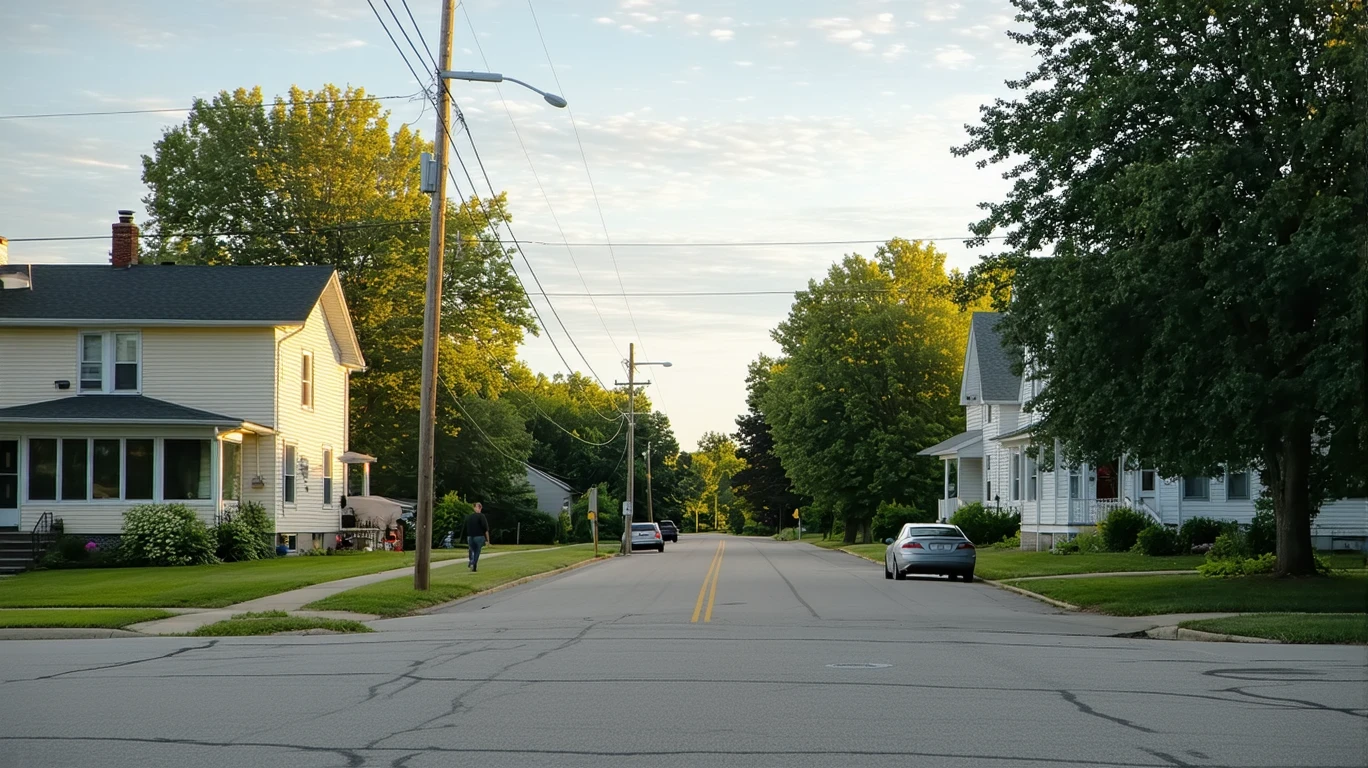
Fairfield operates in a practical register. It’s not trying to be trendy, and it’s not pretending to be a walkable urban village. The housing stock is modest and accessible, with a median home value that sits comfortably below the regional average. The residential blocks are low-rise and tree-lined, and there’s a mix of older homes and newer construction that gives different parts of town distinct textures—though none of them feel particularly dense or bustling.
What stands out in public sentiment is the recurring tension between structure and access. The city has pockets with strong pedestrian infrastructure—sidewalks, crossings, and pathways that suggest walkability—but the grocery stores, restaurants, and everyday services are spread thin. That gap creates a daily friction: you might be able to walk around your neighborhood comfortably, but you’re still driving to the supermarket, the pharmacy, and most other errands. For households that value car-free convenience, that’s a dealbreaker. For those who were planning to drive anyway, it barely registers.
Another defining feature is Fairfield’s relationship to Cincinnati. The city functions as a bedroom community for many residents, offering lower housing pressure and a quieter environment while staying close enough to access the metro’s job centers, hospitals, and cultural amenities. That proximity is a major selling point, but it also means Fairfield itself doesn’t carry the same weight of local identity or destination appeal. You live here because it works logistically and financially—not because it’s where everything happens.
Social Media Buzz in Fairfield
On platforms like Facebook and Reddit, Fairfield residents tend to discuss the city in terms of tradeoffs rather than absolutes. Conversations often circle around value, convenience, and the logistics of daily life. There’s a pragmatic tone—people aren’t romanticizing the place, but they’re also not tearing it down. Instead, they’re weighing what works against what doesn’t.
Common themes include affordability, proximity to Cincinnati, and the challenge of finding local services without driving. One frequently expressed sentiment: “It’s a good place to own a home if you don’t mind that everything requires a car—even the stuff that feels like it should be closer.” Another: “We moved here for the price and the space, and we got both. But if you’re expecting a walkable downtown or a lot of local restaurants, you’ll be disappointed.”
There’s also a thread of protectiveness—residents who feel the city gets unfairly overlooked or dismissed as “just another suburb.” These voices emphasize the community feel, the solid schools in certain areas, and the fact that it’s quieter and less congested than neighboring towns. But even the defenders acknowledge the limitations: “It’s not exciting, but it’s stable. And sometimes that’s exactly what you need.”
Local News Tone
Local coverage of Fairfield tends to frame the city through the lens of steady, incremental change rather than dramatic transformation. The topics that recur most often involve infrastructure updates, retail development, and the ongoing conversation about what kind of growth the community wants. There’s a sense that Fairfield is in a slow process of redefining itself—not abandoning its suburban roots, but trying to add more texture and convenience without losing the affordability that drew people here in the first place.
Simulated headline-style themes that capture the tone of local discussion include:
- “Community Debates What Growth Should Look Like”
- “New Retail Options Arrive as Residents Weigh Convenience”
- “Balancing Quiet Residential Character with Everyday Access”
- “Infrastructure Improvements Aim to Ease Daily Logistics”
- “Families Drawn to Affordability, but Errand Planning Remains a Theme”
The overall impression is one of a city that’s functional and evolving, but not in a hurry. There’s no sense of crisis or celebration—just steady attention to the practical details of making a suburban community work for the people who live there.
Review-Based Public Perception
On platforms like Google Reviews, Yelp, and Nextdoor, Fairfield’s public perception reflects a mix of appreciation and mild frustration. The praise tends to focus on housing value, neighborhood safety, and the general ease of suburban life. The criticism centers on limited walkable amenities, sparse dining options, and the need to drive for nearly everything.
People who moved to Fairfield expecting suburban comfort and affordable homeownership tend to feel satisfied. They highlight the spacious lots, the manageable traffic, and the lower cost structure compared to closer-in neighborhoods. One common refrain: the city delivers exactly what it promises—if what you wanted was a quiet, car-dependent suburb with good access to Cincinnati.
On the other hand, residents who hoped for more local texture—walkable coffee shops, a variety of restaurants, parks with programming—often express disappointment. The infrastructure for walking exists in pockets, but the destinations don’t. That mismatch creates a sense of missed potential: “You can walk around the block just fine, but there’s nowhere to walk to.”
Neighborhood variation plays a role, though it’s more about age and layout than dramatic differences in character. Newer planned areas tend to feel more uniform and car-oriented, while older pockets have more established trees and slightly denser street grids. But across the board, the expectation is the same: you’ll need a car, and you’ll be planning your errands in batches.
Comparison to Nearby Cities
| Aspect | Fairfield | Hamilton | Mason |
|---|---|---|---|
| Overall Vibe | Practical, quiet, value-focused suburban | Grittier, more urban texture, revitalizing downtown | Polished, family-oriented, higher-end suburban |
| Walkability | Pockets of infrastructure, sparse destinations | More walkable downtown core, mixed elsewhere | Limited, car-dependent, planned community feel |
| Local Amenities | Basic services, limited dining variety | More local dining and arts, evolving scene | Chain retail and restaurants, family-focused |
| Housing Affordability | Accessible, below regional median | More affordable, older housing stock | Higher prices, newer construction |
| Community Feel | Steady, low-key, practical | Scrappier, more diverse, community-driven | Polished, organized, suburban cohesion |
Fairfield sits in the middle of a spectrum. Hamilton offers more grit and urban texture, with a revitalizing downtown that appeals to people seeking character and walkability—but it comes with older infrastructure and a rougher reputation in some areas. Mason, on the other hand, skews more polished and family-focused, with higher home prices and a more curated suburban experience. Fairfield offers a compromise: less expensive than Mason, less rough around the edges than Hamilton, but also less distinctive than either.
If you’re drawn to affordability and quiet residential life, and you’re comfortable driving for most errands, Fairfield makes sense. If you want more walkable local texture or a stronger sense of place, Hamilton might feel more rewarding. If you’re willing to pay more for newer amenities and a more polished suburban environment, Mason could be the better fit.
What Locals Are Saying
“We bought here because we could actually afford a house with a yard. It’s not fancy, but it’s ours, and the neighborhood is quiet. Just know you’re driving everywhere.” — Young family, first-time homebuyers
“I work in Cincinnati and wanted something affordable that wasn’t too far out. Fairfield checks the boxes, but I do wish there were more local restaurants and things to do without getting back on the highway.” — Remote worker, renting
“It’s a solid, no-frills suburb. You’re not going to find a lot of excitement here, but that’s kind of the point. It’s stable, and the cost of living is manageable.” — Long-time resident, retired
“The walkability is weird—there are sidewalks everywhere, but nothing to walk to. I end up driving to the grocery store even though it feels like it should be closer.” — Newcomer, young professional
“Good place to raise kids if you’re on a budget. The schools vary, but the housing is affordable, and it’s safe. Just be ready to plan your errands and drive a lot.” — Parent, school-age children
“I moved here from closer to downtown, and I miss the convenience. But I also don’t miss the rent. It’s a tradeoff, and for now, it’s working.” — Renter, mid-30s
“Fairfield doesn’t get enough credit. It’s not flashy, but it’s functional, and the people are friendly. If you’re looking for affordable suburban life near Cincinnati, it’s worth considering.” — Homeowner, empty nester
Does Fairfield Feel Like a Good Fit?
Fairfield’s emotional profile is defined by practicality, not passion. It works for people who prioritize affordability, space, and proximity to Cincinnati over local walkability and amenity density. The city offers a straightforward suburban experience: quiet streets, accessible housing, and the kind of low-key residential rhythm that appeals to families and budget-conscious buyers. But it also requires planning—because while the infrastructure for walking exists in pockets, the destinations don’t, and nearly every errand means getting in the car.
This tends to work for households who were already planning to drive, who value financial breathing room, and who see Fairfield as a stable base rather than a destination in itself. It tends to frustrate people who hoped for more local texture, who wanted to walk to coffee or dinner, or who expected a stronger sense of place beyond the residential blocks.
If you’re asking whether Fairfield feels like a good fit, the answer depends on what you’re optimizing for. If it’s cost, space, and access to a larger metro, Fairfield delivers. If it’s walkable convenience, local character, or spontaneous neighborhood life, you’ll likely feel the gaps. The city doesn’t try to be something it’s not—and for the right household, that clarity is exactly what makes it work.
For more context on how these tradeoffs play out financially, explore income pressure and what different household types tend to experience, or dive into the details of monthly spending and where the real cost drivers show up in day-to-day life.
How this article was built: In addition to public economic data, this article incorporates location-based experiential signals derived from anonymized geographic patterns—such as access density, walkability, and land-use mix—to reflect how day-to-day living actually feels in Fairfield, OH.
The perspectives shown reflect commonly expressed local sentiment and recurring themes in public discussion, rather than individual accounts.