
How much is enough to feel at ease? In Fairfield, the answer depends less on hitting a specific income number and more on whether your earnings align with how the city’s cost structure actually behaves—and whether your expectations match the tradeoffs that define daily life here.
Fairfield sits in the Cincinnati metro area with a median household income of $67,182 per year and a regional price level about 6% below the national baseline. Housing costs anchor around $1,096 per month for rent or a median home value of $196,600. But comfort isn’t determined by averages—it’s shaped by which costs dominate your attention, how much flexibility you need, and whether the city’s infrastructure supports or complicates your routines.
What “Living Comfortably” Means in Fairfield
Comfort in Fairfield means different things depending on your household type and lifestyle expectations. For some, it’s the ability to choose housing based on preference rather than necessity. For others, it’s absorbing a high heating bill in January without rearranging spending elsewhere. For families, it might mean managing school drop-offs, grocery runs, and errands without every trip requiring deliberate planning.
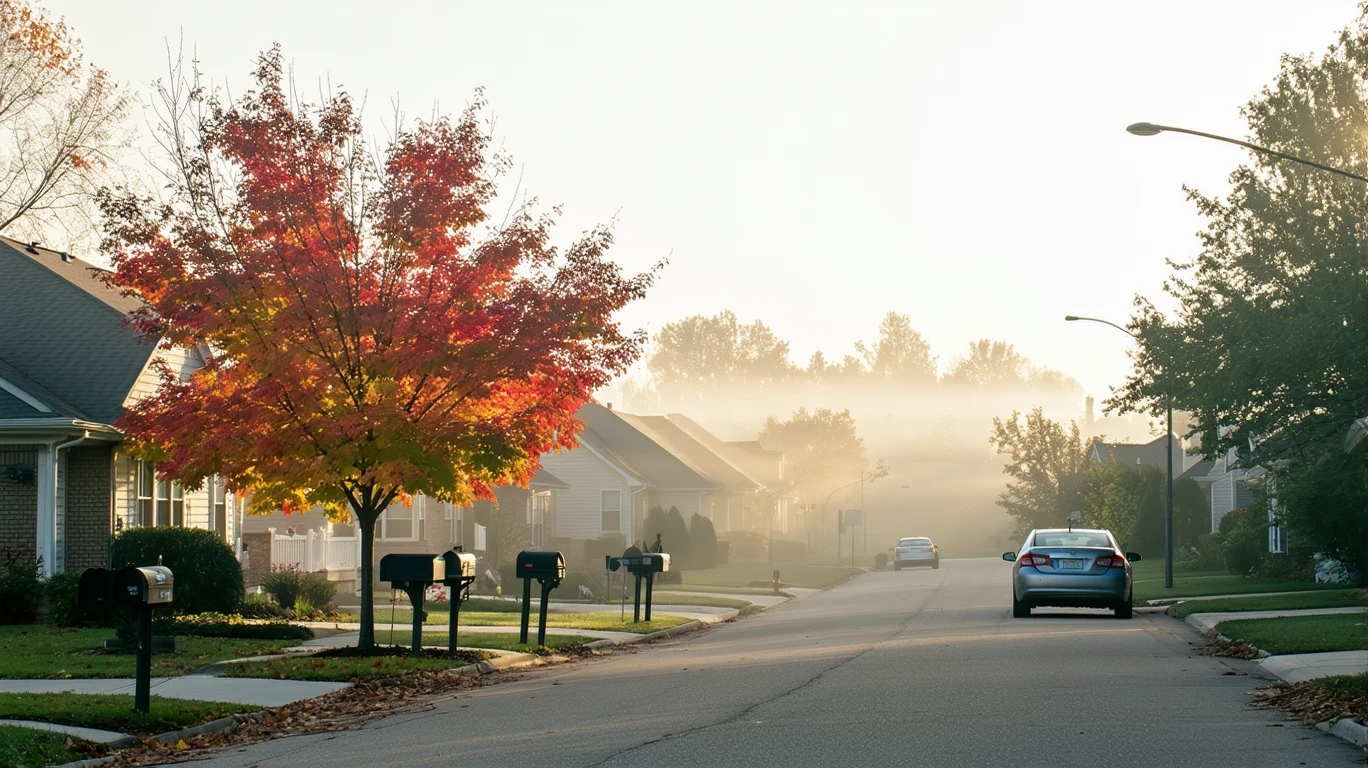
Fairfield is a low-rise suburban city with mixed residential and commercial land use. Walkable pockets exist, and bus service is present, but daily errands accessibility is sparse—food and grocery establishment density falls below typical thresholds. That means even households living in more pedestrian-friendly areas will likely depend on a car for routine tasks. The city’s infrastructure doesn’t eliminate the need for driving; it just makes some neighborhoods slightly easier to navigate on foot within their own boundaries.
Comfort here also means weathering a long heating season. With current temperatures near 2°F and extended cold stretches common, natural gas costs (currently $23.03 per MCF) and electricity (17.66¢ per kWh) create seasonal expense swings that affect budget predictability. Households that can absorb these swings without adjusting thermostats or delaying other purchases experience less day-to-day financial stress.
Where Income Pressure Shows Up First
In Fairfield, income pressure surfaces most visibly in monthly expenses tied to housing, utilities, and transportation—not because any single cost is extreme, but because the combination demands both money and logistical effort.
Housing offers a tradeoff: renting at $1,096 per month provides flexibility but no equity accumulation, while ownership at a median price of $196,600 requires managing property taxes, maintenance, and insurance on top of mortgage payments. Neither path is inherently easier; the question is whether your income allows you to choose based on goals rather than constraints.
Utility volatility is another early pressure point. Heating a home through a cold Ohio winter creates bills that fluctuate significantly month to month. Households operating close to their income limits often find themselves adjusting usage or deferring other spending during peak heating months. Those with more cushion simply pay the bill and move on.
Transportation costs layer on top. Fairfield’s sparse grocery and errands accessibility means most households need a car, even in areas with some walkable infrastructure. Gas prices currently sit at $2.85 per gallon, and routine trips—work commutes, grocery runs, school pickups—add up quickly. The time cost matters too: sparse accessibility increases the number of trips required and the planning burden involved.
For families, the pressure intensifies. School density and playground availability fall below typical thresholds, which means parents often drive farther for activities, childcare, or school-related errands. Healthcare access is routine-local—clinics are present, but no hospital—so serious medical needs require travel. These aren’t catastrophic costs, but they’re persistent, and they compound when income is tight.
How the Same Income Feels Different by Household
Households at similar income levels often experience very different pressure depending on size, structure, and expectations.
Single adults in Fairfield face lower absolute costs but higher per-person exposure to fixed expenses. Rent or mortgage, utilities, and car expenses don’t scale down proportionally for one person. Sparse errands accessibility increases either time spent driving or the frequency of trips, and walkable pockets help within their boundaries but don’t eliminate the need for a vehicle. A single adult earning near the median household income has room to maneuver, but someone earning significantly less will feel the squeeze on housing and transportation first.
Couples without children benefit from shared housing and utility costs, and dual incomes—if both partners work—create meaningful breathing room. The car dependency remains, but the cost per person drops. Utility swings during heating season are easier to absorb when two incomes are contributing. Couples at or above the median household income generally experience less day-to-day pressure, though those relying on a single income face tradeoffs similar to single adults.
Families encounter the most complex cost structure. Housing needs often expand, utility usage rises, and the logistics burden multiplies. Limited family infrastructure—low school and playground density—means more driving for activities, pickups, and errands. Sparse grocery accessibility turns routine shopping into a planned event rather than a quick stop. Families earning at or slightly above the median often find themselves managing carefully, especially if childcare or extracurricular costs enter the picture. Comfort for families in Fairfield typically requires income well above the median or a high tolerance for logistical complexity.
The Comfort Threshold (Qualitative)
The transition to comfortable living in Fairfield isn’t marked by a specific income figure—it’s the point where financial decisions stop being dictated by bills and start reflecting preferences.
Households below this threshold make tradeoffs constantly: choosing rent over ownership because saving for a down payment isn’t feasible, adjusting the thermostat during cold snaps to keep utility bills manageable, or planning every grocery trip to minimize driving. They’re not in crisis, but they’re managing tightly.
Above the threshold, choices expand. Housing becomes a matter of preference—neighborhood, space, yard—not just affordability. Utility bills get paid without monthly recalculation. Transportation shifts from a budget constraint to a time-convenience tradeoff. Families can absorb the logistics burden—extra driving, activity costs, occasional dining out—without constant recalibration.
The threshold also depends on expectations. A household accustomed to urban density and walkable errands will find Fairfield’s car dependency more costly—financially and mentally—than a household that already expects to drive everywhere. Similarly, someone who values spontaneous access to dining, entertainment, or services will feel the friction of sparse accessibility more acutely than someone comfortable with planning and routine.
Why Online Cost Calculators Get Fairfield Wrong
Most cost-of-living calculators fail to capture what actually creates pressure in Fairfield because they focus on totals rather than texture.
A calculator might correctly estimate that rent, utilities, and transportation add up to a certain monthly figure. But it won’t tell you that sparse grocery accessibility means you’ll drive more often than you expect, or that walkable pockets exist but don’t eliminate car dependency. It won’t explain that heating season lasts longer and hits harder than mild-climate assumptions suggest, or that limited family infrastructure increases the logistics load for parents.
Calculators also assume uniform behavior: that everyone commutes the same distance, uses the same amount of utilities, or shops with the same frequency. In reality, Fairfield’s infrastructure—low-rise, mixed land use, sparse errands accessibility—shapes behavior in ways that vary widely by household type. A single adult might adapt easily; a family with young children might find the same setup exhausting.
The result is that people often move to Fairfield expecting costs to align with a calculator’s output, only to discover that the real challenge isn’t the total—it’s the constant need to plan, drive, and manage around a structure that doesn’t support spontaneous convenience.
How to Judge Whether Your Income Fits Fairfield
Rather than asking “Is my income high enough?” ask whether your income and expectations align with how Fairfield actually works.
- How sensitive are you to housing tradeoffs? Can you afford to choose based on preference, or will you default to the lowest-cost option available?
- Can you absorb seasonal utility swings? Will a high heating bill in January force you to cut back elsewhere, or can you pay it and move on?
- Is time or money your limiting factor? Sparse errands accessibility and car dependency mean more driving. If your income is tight, can you afford the fuel and maintenance? If your time is limited, can you tolerate the planning burden?
- How much logistical complexity can you manage? Families especially need to consider whether limited school density, sparse grocery access, and routine-local healthcare align with their capacity to coordinate and drive.
- What do you expect from your neighborhood? Walkable pockets exist, but they don’t eliminate the need for a car. If you’re moving from a place where errands were walkable and transit was robust, Fairfield will feel more car-dependent than the data suggests.
If your answers suggest you’ll be managing tightly—adjusting thermostats, planning every trip, choosing housing by necessity—you’ll likely feel income pressure even if your earnings match or exceed the median. If your answers suggest flexibility and tolerance for driving and planning, Fairfield’s cost structure is more likely to feel manageable.
How this article was built: In addition to public economic data, this article incorporates location-based experiential signals derived from anonymized geographic patterns—such as access density, walkability, and land-use mix—to reflect how day-to-day living actually feels in Fairfield, OH.
FAQs About Living Comfortably in Fairfield
Is $67,000 a year enough to live comfortably in Fairfield?
For a single adult or couple without children, income near the median household figure of $67,182 per year (roughly $5,600 gross per month) often provides enough flexibility to manage housing, utilities, and transportation without constant tradeoffs. For families, that same income typically requires careful management, especially if childcare, activities, or medical travel enter the picture. Comfort depends on household size, expectations, and tolerance for logistical complexity.
What income level do most families need to feel comfortable in Fairfield?
Families generally need income well above the median to absorb the combined pressure of housing, utility volatility, car dependency, and the logistics burden created by limited family infrastructure and sparse errands accessibility. There’s no single threshold, but families earning significantly below the median often find themselves managing tightly, while those earning well above it experience fewer day-to-day tradeoffs.
Does Fairfield’s lower cost of living mean you need less income than other cities?
Fairfield’s regional price level sits about 6% below the national baseline, which does reduce some costs. But the city’s infrastructure—sparse grocery access, car dependency, long heating season—creates pressures that don’t show up in simple cost comparisons. You might spend less on rent than in a higher-cost city, but you’ll likely spend more on transportation and utilities than you would in a milder climate or a more walkable place. The question isn’t whether costs are lower in absolute terms; it’s whether your income aligns with the specific tradeoffs Fairfield requires.
How do utility costs affect comfortable living in Fairfield?
Utility costs in Fairfield are driven primarily by heating season, which is long and intense. Natural gas prices and electricity rates create seasonal swings that affect budget predictability. Households with income cushion absorb these swings without adjusting behavior. Those operating closer to their limits often reduce usage, delay other spending, or feel stress during peak months. Comfort depends less on the average utility cost and more on whether your income allows you to pay the bill without recalibration.
Can you live comfortably in Fairfield without a car?
It’s unlikely. Even in areas with walkable pockets and bus service, sparse grocery and errands accessibility means most routine tasks require driving. Bus service exists but doesn’t eliminate car dependency for the majority of households. A car isn’t just a convenience in Fairfield—it’s a functional necessity for managing daily life. Households without a vehicle will face significant time costs and logistical friction.
Fairfield can work well for some households—but only if expectations match reality. Comfort here depends on whether your income supports not just the costs, but the structure: the driving, the planning, the seasonal swings, and the tradeoffs that come with a low-rise, car-dependent suburb in a cold-weather region. If your earnings and expectations align with that reality, Fairfield offers stability and relative affordability. If they don’t, the gap will show up quickly—not in any single bill, but in the constant effort required to make it all work.