
Budgeting Smarter in Everett
Quick quiz: How far does $4,000/month actually go in Everett? The answer depends less on the headline rent or mortgage figure and more on how costs stack once you’re living here—and what newcomers often underestimate is the interaction between housing, commuting, and the friction costs that show up after move-in.
Understanding the monthly budget in Everett starts with one anchor: median gross rent sits at $1,611 per month, while the median home value is $471,200. But neither figure tells the full story. Everett’s cost structure is shaped by commute dependence, seasonal utility exposure, and a pattern of errands and services that cluster along corridors rather than spreading evenly across neighborhoods. That means budgeting here isn’t just about the big-ticket items—it’s about recognizing where small, recurring costs add up and where you have control.
Median household income in Everett is $77,806 per year (approximately $6,484 gross monthly). For many households, the budget pressure point isn’t one dominant expense—it’s the layering of moderate costs across housing, transportation, utilities, and the administrative friction that comes with maintaining a household in a city where rail transit exists but car ownership remains the norm for most daily errands.
A Simple Budget Map: How Costs Behave by Household Type
The table below illustrates how cost behavior and exposure differ by household type in Everett. It does not estimate what each household spends, but rather describes the nature of each cost category—whether it’s stable or volatile, fixed or flexible, and what drives variation.
| Category | Jasmine (single renter) | Sam & Elena (couple) | Ortiz family (2 kids, owners) |
|---|---|---|---|
| Housing (Rent or Mortgage) | Fixed monthly; median rent $1,611 | Shared cost advantage; fixed if renting, stable if mortgage locked | Mortgage stable if fixed-rate; property tax and insurance add volatility |
| Utilities | Seasonal; electric 13.33¢/kWh, gas $15.51/MCF; apartment size limits exposure | Moderate seasonal swing; shared usage reduces per-person impact | Size-sensitive; heating and cooling loads higher in single-family home |
| Food (Groceries + Eating Out) | Flexible; corridor-clustered grocery access requires planning | Shared shopping trips reduce per-person friction; eating out discretionary | Volume-sensitive; meal planning essential given family size |
| Transportation | Commute-dependent; gas $4.36/gal; rail present but car likely needed for errands | Exposure doubles if both commute; single-car households face coordination costs | Commute-dependent plus kid logistics; multi-car ownership common |
| Fees / Friction Costs | Minimal if apartment; trash/water often included | Low to moderate; depends on housing type and parking needs | Admin-heavy: HOA possible, trash separate, maintenance episodic but recurring |
| Discretionary (life + surprises) | Compressed by fixed costs; flexibility depends on income margin | Moderate flexibility; dual income provides buffer | Discretionary-compressed; kid activities and household surprises reduce slack |
| What Changes This Most | Commute distance and housing location | Whether both partners commute and car ownership strategy | Home size, maintenance timing, and school/activity logistics |
Methodology: This guide uses only city-level figures provided in the IndexYard data feed for 2026. Where exact category totals aren’t provided, categories are described directionally to show budget behavior rather than a receipt-accurate total.
The Real Cost Drivers in Everett
In Everett, the budget stress point is rarely one big bill—it’s the stack of small “friction” costs that show up after move-in. Housing pressure is the foundation: whether you’re paying the median rent of $1,611 or carrying a mortgage on a home valued near $471,200, that fixed cost sets the baseline. But the next layer—transportation—is where many households underestimate exposure.
With gas at $4.36 per gallon and an average commute of 26 minutes, transportation costs are exposure-driven rather than fixed. For illustrative context, a typical round-trip commute of 25 miles at 25 MPG would consume about 20 gallons per month, translating to roughly $87 in fuel alone—before insurance, maintenance, or parking. That figure scales quickly for dual-income households or families managing school and activity logistics. While rail transit is present in Everett, the corridor-clustered nature of grocery stores and services means most households still rely on a car for daily errands, even if they can occasionally use transit for work commutes.
Utilities add seasonal variability. Electricity at 13.33¢/kWh and natural gas at $15.51/MCF are moderate by regional standards, but exposure depends on housing type and size. Single renters in apartments face limited seasonal swings, while families in single-family homes see heating and cooling costs shift noticeably between mild and peak months. The Pacific Northwest’s cool, damp climate means heating dominates utility exposure in winter, though summer cooling needs remain modest compared to hotter regions.
The table below outlines common friction costs in Everett. These are the recurring, often-overlooked expenses that add administrative weight to a household budget:
- HOA or association dues: Common in newer developments and condos; typically cover exterior maintenance, landscaping, and shared amenities, though amounts vary widely.
- Trash and recycling: Often billed separately for single-family homes; apartments may include it in rent.
- Water and sewer: Usually metered and billed by the city; costs scale with household size and usage patterns.
- Parking and permits: Relevant in denser neighborhoods or for households with multiple vehicles; street parking may require permits in some areas.
- Seasonal upkeep: HVAC servicing before heating season, gutter cleaning in fall, and minor storm prep (Pacific Northwest wind and rain exposure) are recurring but episodic.
How Households Keep the Budget Under Control (Without Living Like a Monk)
Budgeting in Everett isn’t about deprivation—it’s about recognizing where you have leverage and where you don’t. The biggest controllable variable for most households is transportation exposure. Reducing commute frequency (even one day per week working from home), consolidating errands into fewer trips, or coordinating schedules to share vehicles all reduce fuel consumption and wear without requiring lifestyle sacrifice. With 11.6% of workers already working from home and 39.3% facing long commutes, even modest adjustments to commute patterns can stabilize this category.
Utilities offer seasonal control opportunities. Heating costs dominate winter months in Everett’s cool climate, so small efficiency moves—sealing drafts, using programmable thermostats, and lowering heat during unoccupied hours—reduce exposure without discomfort. Cooling costs remain modest, so summer utility bills tend to be lower and more predictable. The key is recognizing that utility costs are efficiency-sensitive rather than fixed, meaning behavior changes translate directly into lower bills.
For food costs, the corridor-clustered nature of grocery access in Everett rewards planning. Households that batch shopping trips, cook at home more frequently, and limit impulse dining-out spending see noticeable budget relief. Groceries remain flexible and volume-sensitive, so families especially benefit from meal planning and reducing food waste.
Here are practical tactics that work in Everett’s cost structure:
- Consolidate errands: Plan weekly shopping and service trips to minimize fuel consumption and time spent driving.
- Adjust commute timing: Even one fewer round-trip per week reduces transportation exposure meaningfully over a year.
- Seal and insulate: Small weatherization efforts reduce heating costs in winter without major investment.
- Use programmable thermostats: Lower heat during work hours and overnight to cut gas usage without sacrificing comfort.
- Batch cooking and meal prep: Reduces both grocery waste and the temptation to eat out on busy weeknights.
- Monitor subscription creep: Recurring digital services, memberships, and auto-renewals add up; audit quarterly.
- Coordinate vehicle use: For dual-income couples, sharing one vehicle or carpooling even part-time reduces insurance, fuel, and maintenance costs.
- Time major purchases: HVAC servicing, home repairs, and vehicle maintenance are more affordable when scheduled in advance rather than handled as emergencies.
What It Actually Feels Like to Budget in Everett
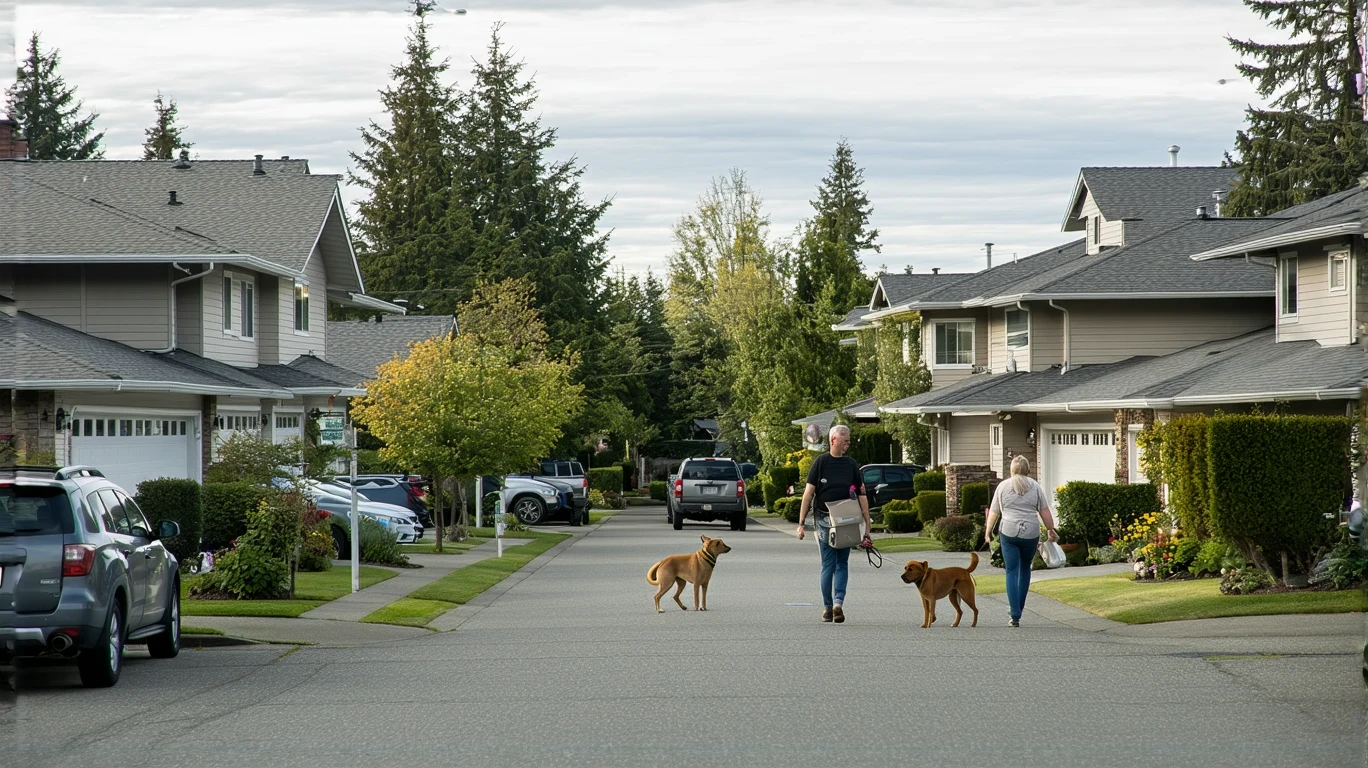
Living in Everett means navigating a city where infrastructure supports multiple mobility options—rail transit is present, and walkable pockets exist—but daily life still tilts toward car dependence. Grocery stores and services cluster along commercial corridors rather than spreading evenly through residential neighborhoods, so even though you can walk in some areas, running errands almost always requires driving. That creates a budget texture where transportation isn’t just commute fuel—it’s also the time and cost of getting to the store, the pharmacy, the hardware shop.
For families, the presence of schools at moderate density and a hospital in town reduces some logistical friction, but playground availability is limited, meaning kid activities often require driving to specific parks or facilities. Couples and single renters benefit from the option to use transit for work trips, but the corridor-clustered errands pattern means most still keep a car. The result is a budget where transportation feels less like a fixed line item and more like a variable that responds to how much coordination and planning you’re willing to do.
The mixed building height and land-use patterns mean Everett doesn’t feel uniformly suburban or urban—it’s a city with pockets of walkability and transit access layered into a broader car-oriented structure. That duality shows up in household budgets: some expenses (like rent or mortgage) are fixed and predictable, while others (like transportation and utilities) are exposure-driven and respond to behavior, season, and household logistics.
How this article was built: In addition to public economic data, this article incorporates location-based experiential signals derived from anonymized geographic patterns—such as access density, walkability, and land-use mix—to reflect how day-to-day living actually feels in Everett, WA.
FAQs About Monthly Budgets in Everett (2026)
Is $4,000 per month enough to live in Everett?
For a single renter, $4,000 gross monthly income covers median rent ($1,611) and leaves room for utilities, transportation, and food, though discretionary spending will be limited. For a couple or family, $4,000 would be tight unless housing costs are shared or below median.
What’s the biggest budget surprise for people moving to Everett?
Transportation costs often exceed expectations because even though rail transit exists, most daily errands require a car due to corridor-clustered grocery and service access. Gas at $4.36/gallon and commute distances add up quickly.
How much do utilities typically cost in Everett?
Utility costs are seasonal and size-sensitive. Electricity at 13.33¢/kWh and natural gas at $15.51/MCF mean heating dominates winter bills, especially in single-family homes, while summer cooling needs remain modest.
Can you live in Everett without a car?
Rail transit and walkable pockets exist, but the corridor-clustered nature of grocery stores and services makes car-free living logistically challenging for most households. Transit works better for commuting than for daily errands.
What’s the best way to keep a budget under control in Everett?
Focus on controllable variables: reduce commute frequency where possible, consolidate errands to minimize driving, and make small efficiency improvements to reduce heating costs in winter. These adjustments stabilize the most volatile budget categories without requiring major lifestyle changes.
Planning Your Next Step
Budgeting in Everett comes down to understanding three primary drivers: housing sets the baseline, transportation exposure scales with commute and errands patterns, and utilities add seasonal variability that responds to efficiency and household size. The city’s mixed infrastructure—rail transit and walkable pockets layered into a car-dependent structure—means budgeting here rewards planning and coordination more than it punishes income level.
If you’re evaluating whether Everett fits your financial picture, start by exploring housing tradeoffs to understand what rent or ownership looks like in different neighborhoods. Then review the grocery cost structure to see how food expenses behave across household types. Finally, consider how your commute and daily errands will interact with the city’s corridor-clustered services and moderate transit options.
The households that budget successfully in Everett aren’t necessarily the highest earners—they’re the ones who recognize where costs are fixed, where they’re flexible, and where small adjustments create meaningful relief. That clarity turns budgeting from a source of stress into a tool for confidence.