
What’s comfort worth? In Escondido, the answer depends less on your paycheck and more on how your household actually functions day to day. Median household income here sits at $77,554 per year, but that figure tells you almost nothing about whether you’ll feel stretched, stable, or genuinely comfortable. The difference comes down to housing tradeoffs, transportation logistics, and how much friction you’re willing to tolerate in daily errands and family routines.
This article won’t hand you a target salary or a pass/fail income threshold. Instead, it explains where pressure shows up first, how the same income feels wildly different depending on household structure, and what separates households that thrive from those that constantly negotiate tradeoffs.
What “Living Comfortably” Means in Escondido
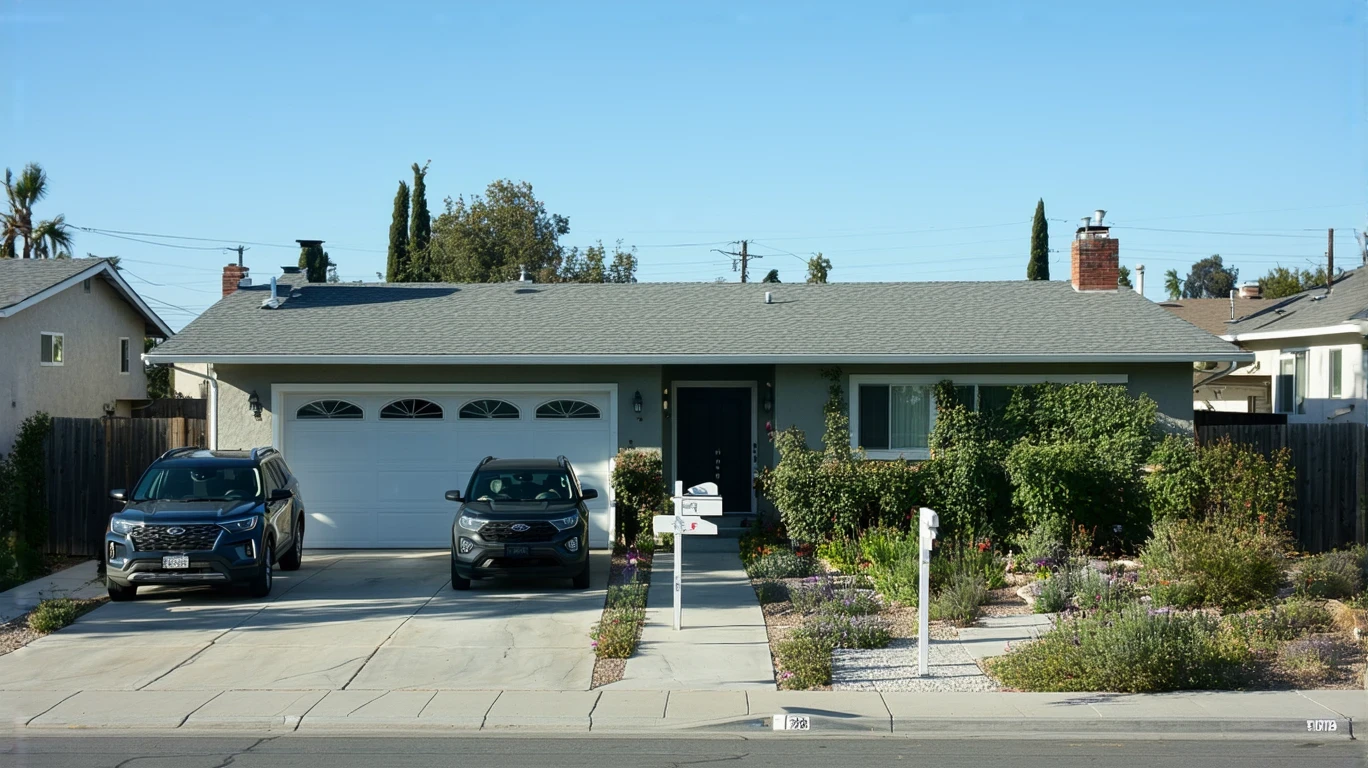
Comfort in Escondido isn’t about luxury—it’s about control. It means your housing doesn’t dictate every other decision. It means utility bills don’t spike unpredictably in summer. It means you can run errands without mapping out a multi-stop driving route every time you need groceries and prescriptions. And for families, it means access to schools and activities doesn’t require constant workarounds.
The city’s low-rise, mixed-use character creates pockets of walkability, and rail service is present, but most households still depend heavily on cars. Grocery density is high along certain corridors, but food options overall sit in the medium band, meaning convenience isn’t evenly distributed. If you expect to walk to daily needs or rely on transit for most trips, you’ll find yourself adjusting expectations quickly.
Climate plays a quieter but persistent role. Escondido’s warm, dry conditions mean extended cooling seasons. Electricity rates here run 34.71¢/kWh—well above many inland markets—so air conditioning isn’t just a summer expense; it’s a recurring budget line that compounds housing costs. Comfort, then, also means absorbing seasonal utility swings without rearranging spending elsewhere.
Where Income Pressure Shows Up First
Housing dominates financial stress in Escondido. Median rent is $1,833 per month, and median home values sit at $616,400. For renters, that monthly figure represents roughly 28% of the median household income before taxes—close to the traditional affordability threshold but offering little cushion. For aspiring buyers, the gap between income and home prices creates a structural barrier that doesn’t resolve with modest raises or careful budgeting.
Transportation adds a second layer of pressure. Gas prices run $4.64 per gallon, and while rail service exists, the corridor-clustered errands pattern means most households still drive frequently. If your work, schools, and regular stops aren’t aligned along transit-friendly routes, you’re managing fuel costs, vehicle maintenance, and time lost to driving. The presence of bike infrastructure in some pockets helps, but it doesn’t eliminate car dependency for most families.
Utility volatility surfaces next. High electricity rates combined with extended heat exposure mean cooling costs aren’t predictable or optional. Households without control over insulation, window quality, or thermostat settings—renters, especially—face bills that swing with weather, not behavior. That variability makes it harder to stabilize monthly cash flow, even when income is steady.
For families, housing pressure intersects with limited school density and sparse family infrastructure. Playgrounds and schools don’t meet density thresholds across the city, so accessing quality options often requires driving, time, or both. That’s not a dealbreaker for every household, but it adds logistical weight that single adults and couples without children don’t carry.
How the Same Income Feels Different by Household
A single adult earning near the median can often find workable housing and absorb transportation and utility costs without constant tradeoffs. Walkable pockets and rail access create genuine flexibility for those whose routines align with transit and denser corridors. Dining, entertainment, and errands become manageable when you’re optimizing for one person’s schedule and preferences.
Couples at similar income levels experience less per-person housing pressure, but transportation costs double if both partners work or maintain separate routines. If one partner works locally and the other commutes, or if errands require multiple stops across less-connected areas, the convenience gap widens. Dual incomes help, but they don’t eliminate friction—they just shift which tradeoffs feel tolerable.
Families face compounding pressure. Housing needs grow, but so do transportation demands. School density is low, so accessing preferred schools often means driving. Playgrounds, pediatric care, and family activities aren’t uniformly accessible, meaning parents spend more time coordinating logistics. Routine healthcare is available locally through clinics, but hospital access requires travel. The same income that keeps a couple comfortable often leaves families negotiating between space, location, and convenience.
The Comfort Threshold (Qualitative)
Comfort in Escondido arrives when housing stops dictating every other decision. It’s the point where you can absorb a high utility month without cutting groceries, where transportation becomes a matter of preference rather than cost anxiety, and where saving becomes plausible instead of aspirational.
For renters, that threshold often appears when rent consumes closer to 25% of gross income rather than 30% or more. For buyers, it’s when the mortgage, taxes, insurance, and maintenance together feel sustainable across seasons, not just in average months. For families, it includes enough margin to handle school-related costs, activities, and the logistical complexity of managing multiple schedules without constant financial recalibration.
You know you’ve crossed it when tradeoffs become choices. When you can decide whether to drive or take transit based on convenience, not cost. When a surprise repair or medical bill doesn’t cascade into other categories. When your household’s routine works with the city’s infrastructure, rather than against it.
Why Online Cost Calculators Get Escondido Wrong
Most cost-of-living calculators reduce Escondido to a set of averages: median rent, typical utilities, standard transportation. They miss the texture entirely. They don’t account for corridor-clustered errands, which mean convenience depends heavily on where you live within the city. They don’t reflect the difference between walkable pockets and car-dependent stretches. They don’t capture how limited school density reshapes family logistics, or how high electricity rates interact with extended cooling seasons.
Calculators also treat households as interchangeable. A single adult with flexible work, a couple with aligned schedules, and a family with school-age children all get the same “cost of living” figure, even though their day-to-day realities diverge sharply. The same income that works seamlessly for one household type creates constant friction for another.
People feel surprised after moving because they optimized for totals, not for how costs interact with daily behavior. They assumed rail access meant less driving, or that median rent meant predictable housing options, or that proximity to San Diego implied urban-level convenience. Escondido rewards households whose expectations align with its low-rise, corridor-focused, car-dependent structure. It penalizes those who assume otherwise.
How to Judge Whether Your Income Fits Escondido
Instead of asking “Is my income high enough?” ask these:
- How sensitive are you to housing tradeoffs? Can you accept smaller spaces, older buildings, or less-central locations to keep rent or mortgage manageable? Or do you need specific housing features that push costs higher?
- Can you absorb seasonal utility swings? Will a summer cooling bill that runs higher than winter months disrupt your cash flow, or can you smooth that variability without stress?
- Is time or money your limiting factor? If errands require driving and planning, does that feel tolerable, or does it erode quality of life? Can you trade convenience for lower costs, or does friction compound quickly?
- How much transportation flexibility do you need? If rail service and walkable pockets don’t cover your routine, are you comfortable driving most places and managing fuel costs at $4.64 per gallon?
- For families: How much logistical complexity can you manage? If school access requires driving and family infrastructure is limited, does that fit your capacity, or does it add unsustainable weight?
Your answers reveal fit better than any income figure. Escondido works well for households that value space, tolerate car dependency, and don’t require urban-density convenience. It’s harder for those who expect walkable access to everything, frequent transit options, or tightly integrated family infrastructure.
FAQs About Living Comfortably in Escondido
Is $77,554 per year enough to live comfortably in Escondido?
It depends entirely on household size and expectations. For a single adult or couple without children, that income often supports stable housing and manageable transportation and utility costs. For families, the same income creates tighter margins, especially when school access, space needs, and logistical complexity increase. Comfort isn’t about hitting a number—it’s about whether your income absorbs your household’s specific friction points.
Can you live in Escondido without a car?
Rail service is present, and some pockets support walking and biking, but most households still depend on cars for errands, work, and family logistics. Grocery density is high along certain corridors, but food and service options overall require planning. If your routine aligns with transit and denser areas, car-free or car-light living is possible. For most families and many working adults, a car remains essential.
How do utility costs affect comfort in Escondido?
Electricity rates run 34.71¢/kWh, and extended cooling seasons mean air conditioning isn’t optional. Renters without control over insulation or windows face higher, less predictable bills. Homeowners can invest in efficiency upgrades, but upfront costs matter. Utility volatility doesn’t break budgets on its own, but it reduces flexibility and makes month-to-month cash flow harder to stabilize.
Is Escondido affordable for families?
Affordability for families depends on how much logistical friction you can tolerate. School density is low, family infrastructure is limited, and accessing preferred schools or activities often requires driving and time. Housing costs are high relative to median income, and space needs grow faster than budgets. Families who prioritize space over convenience and accept car dependency often find workable arrangements. Those who need tightly integrated services and walkable access face steeper tradeoffs.
What income level removes financial stress in Escondido?
There’s no universal threshold. Financial stress eases when housing consumes a smaller share of income, when transportation becomes a choice rather than a cost concern, and when utility and maintenance expenses don’t require constant rebalancing. For some households, that happens slightly above the median. For others—especially families needing larger housing and managing complex logistics—it requires significantly more. The transition point is personal, not statistical.
How this article was built: In addition to public economic data, this article incorporates location-based experiential signals derived from anonymized geographic patterns—such as access density, walkability, and land-use mix—to reflect how day-to-day living actually feels in Escondido, CA.
Escondido can work well for some households—but only if expectations match reality. If you value space, accept car dependency, and can absorb utility variability, the city’s structure supports stable living. If you expect urban convenience, frequent transit, or tightly integrated family services, the gaps will show up quickly. Comfort here isn’t about earning more—it’s about aligning what you need with what the city actually offers.
—