
Is Encinitas expensive to live in? Encinitas is considered expensive in 2026, with a median home value of $1,354,600 and median rent of $2,480 per month anchoring the cost structure. The value proposition depends on housing entry cost versus the ability to reduce car dependency within walkable pockets, where rail access and high grocery density lower daily logistics friction.
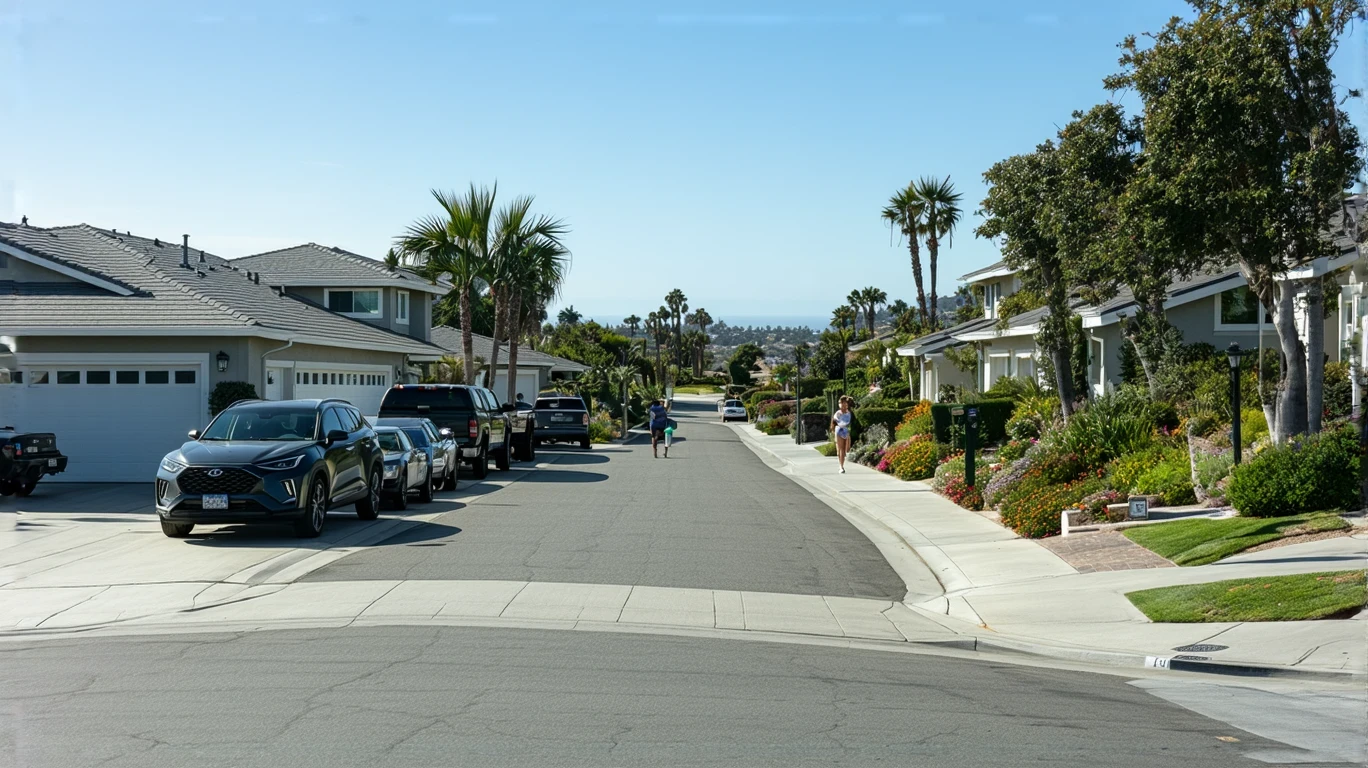
Overall Cost of Living Snapshot
Over the last five years, Encinitas has seen housing costs rise faster than income growth, widening the gap between ownership entry barriers and rental affordability thresholds. The regional price parity index of 111 indicates that goods and services cost approximately 11% more than the national baseline, but this aggregate figure understates the intensity of housing pressure. Median household income sits at $142,506 per year, which places many households in a position where housing consumes a larger share of gross income than the standard 30% affordability heuristic would suggest is sustainable.
The primary cost driver in Encinitas is housing ownership. A median home value exceeding $1.3 million creates a steep entry threshold that shapes household financial strategy for years. Rent, while elevated at $2,480 per month, represents a secondary pressure point—significant, but not the dominant constraint for most households weighing long-term settlement. Electricity rates of 31.91¢ per kWh and natural gas prices of $21.89 per MCF (roughly 100 therms) add moderate utility exposure, particularly during cooling months in a coastal climate. Transportation costs are shaped by a gasoline price of $4.59 per gallon and a street structure that supports rail transit and cycling infrastructure in certain areas, reducing—but not eliminating—car dependency.
Driver verdict: Housing ownership dominates cost pressure in Encinitas, with surprises emerging from the interaction between high entry costs and the ability to reduce vehicle reliance in walkable pockets. Utility volatility is moderate, and grocery costs reflect the regional price premium but do not drive household differentiation the way housing does.
Housing Costs (Primary Driver)
Encinitas is an ownership-dominant market. The median home value of $1,354,600 reflects both coastal location appeal and the retirement-oriented character of the city, where long-term residents and retirees prioritize stability and access to amenities over affordability. For buyers, this means significant upfront capital requirements, long-term mortgage exposure, and property tax obligations that compound over time. Ownership here is not a short-term financial decision—it is a multi-decade commitment that locks in both cost predictability and exposure to market fluctuations.
Renting in Encinitas offers a lower entry threshold but does not eliminate cost pressure. At $2,480 per month, median gross rent represents a substantial recurring obligation, particularly for households without dual incomes or those in early career stages. Renters avoid property tax exposure and maintenance volatility, but they face renewal risk and limited control over long-term housing stability. The choice between renting and owning in Encinitas is less about monthly payment comparison and more about whether a household prioritizes flexibility or long-term equity accumulation in a high-cost coastal market.
This is a city where housing decisions are shaped by entry cost, not by the promise of affordability over time. Buyers gain stability but absorb significant financial exposure; renters gain flexibility but remain subject to market-driven rent adjustments.
| Housing Type | Cost Anchor | What That Buys You |
|---|---|---|
| Median Home Value | $1,354,600 | Long-term ownership stability, equity accumulation, property tax and maintenance exposure |
| Median Gross Rent | $2,480/month | Lower entry threshold, flexibility, renewal risk, no property tax burden |
Utilities & Energy Risk
Electricity in Encinitas is priced at 31.91¢ per kWh, which is elevated relative to many U.S. markets but consistent with California’s broader rate structure. For a household using approximately 1,000 kWh per month—a typical baseline for moderate consumption—the illustrative monthly cost before fees and taxes would be around $319. Cooling demand in a coastal climate is less extreme than in inland areas, but extended warm periods still drive seasonal usage spikes. Households with older HVAC systems, poor insulation, or larger square footage face higher exposure.
Natural gas is priced at $21.89 per MCF (approximately 100 therms). In heating months, a household using around 1 MCF per month might see an illustrative cost near $22 before fees and taxes, though actual usage varies widely based on home size, insulation quality, and heating system efficiency. Natural gas exposure in Encinitas is moderate—not negligible, but far less intense than in colder climates where heating dominates winter budgets.
Risk classification: moderate. Utility costs in Encinitas are shaped more by rate structure and seasonal variability than by extreme climate exposure. Electricity is the larger recurring cost, and households with high cooling or electric heating needs will feel the impact of the per-kWh rate. Natural gas remains a secondary concern, relevant primarily in winter months and for homes reliant on gas heating or water heating systems.
Groceries & Daily Costs
Grocery costs in Encinitas reflect the regional price premium indicated by the 111 RPP index. Derived estimates based on national baselines adjusted for regional price parity suggest moderate upward pressure across common categories: bread at $2.05 per pound, eggs at $2.86 per dozen, ground beef at $7.49 per pound, and milk at $4.55 per half-gallon. These figures are not observed local prices but illustrative benchmarks that help frame the cost texture of routine shopping.
For households, this translates into steady, incremental pressure rather than dramatic sticker shock. A family buying groceries weekly will notice the difference compared to lower-cost regions, but the impact is distributed across many small purchases rather than concentrated in a single category. The city’s high grocery density—supported by experiential signals showing food and grocery establishment availability exceeding density thresholds—means that competition and access reduce friction, even if prices remain elevated. Shoppers have options, and the ability to compare prices across multiple stores within a short distance provides some leverage against cost creep.
Daily costs in Encinitas are shaped less by scarcity and more by the baseline price environment. Households that cook frequently, buy in bulk, or adjust purchasing patterns can moderate grocery exposure, but they cannot eliminate the regional premium entirely.
Transportation Reality
Transportation in Encinitas operates on a dual structure: car dependency remains the default for most households, but the presence of rail transit and notable cycling infrastructure creates pockets where vehicle reliance can be reduced. Experiential signals derived from anonymized geographic patterns show that the pedestrian-to-road ratio exceeds high thresholds in certain areas, and bike infrastructure is present throughout parts of the city. Rail service is available, providing a viable alternative for commuters traveling to nearby employment centers or regional destinations.
For households living within walkable pockets—areas where grocery density is high, pedestrian infrastructure is substantial, and transit stops are accessible—daily errands and short trips can often be managed without a car. This reduces fuel costs, vehicle wear, and parking friction. However, most households in Encinitas still own at least one vehicle, and many own two, because the city’s layout and the dispersed nature of employment, services, and social destinations make car ownership a practical necessity for broader mobility.
Gasoline is priced at $4.59 per gallon. For a typical commuter driving 25 miles round trip in a vehicle averaging 25 miles per gallon, the illustrative daily fuel cost before any fees or taxes would be around $4.59, or roughly $92 per month for 20 commuting days. This is a recurring exposure that compounds with vehicle maintenance, insurance, and registration costs. Households with two working adults, each commuting separately, face double the transportation burden.
Transportation in Encinitas is not a fixed cost—it is a variable exposure shaped by household structure, work location, and the ability to leverage transit or cycling infrastructure. The city offers tools to reduce car dependency, but it does not eliminate the need for vehicle ownership entirely.
Cost Exposure Profiles
Cost exposure in Encinitas is dominated by housing entry decisions and compounded by transportation structure. The highest-exposure households are those attempting to enter the ownership market without significant capital reserves, or those renting while managing long commutes and multi-vehicle transportation needs. These households face simultaneous pressure from high housing costs, recurring fuel expenses, and limited ability to reduce transportation dependency.
Lower-exposure households are typically those who have already entered the ownership market at an earlier price point, live within walkable pockets where daily errands do not require a car, or have flexible work arrangements that reduce commuting frequency. Retirees—who make up a significant portion of Encinitas residents—often fall into this category, having locked in housing costs years ago and facing lower transportation demands due to reduced work-related travel.
The structural difference between high and low exposure is not income alone—it is timing, location within the city, and household logistics. A renter with a short commute and access to rail transit faces different cost pressures than a homeowner with a long drive and multiple vehicles. A household that can walk to grocery stores and bike to local services experiences Encinitas differently than one that must drive for every errand.
Utility volatility adds a secondary layer of exposure, particularly for households in larger homes or those with older, less efficient systems. Electricity costs are not trivial, and seasonal cooling demand can create bill spikes that strain budgets already stretched by housing and transportation. Natural gas exposure is moderate but not negligible, especially in winter months when heating usage rises.
The key insight is that cost exposure in Encinitas is not uniform. It is shaped by where you live within the city, how you move through it, and whether you entered the housing market before or after the recent surge in home values. The city rewards those who can leverage its walkable pockets and transit infrastructure, but it penalizes those who must rely on cars for every trip and who face high housing entry costs simultaneously.
Frequently Asked Questions
Is Encinitas more affordable than nearby coastal cities in 2026? Encinitas tends to be expensive relative to many nearby areas, with a median home value exceeding $1.3 million and rent above $2,400 per month. Coastal location and retirement appeal drive housing pressure, making direct affordability comparisons difficult without specific data on neighboring cities.
What does a typical cost profile look like in Encinitas? A typical cost profile in Encinitas is dominated by housing—either high ownership entry costs or elevated rent—followed by transportation expenses tied to car dependency and moderate utility costs driven by electricity rates. Grocery costs reflect a regional premium but are secondary to housing and transportation pressures.
Do utilities cost more in Encinitas than in inland California areas? Electricity rates in Encinitas are elevated at 31.91¢ per kWh, consistent with California’s broader rate structure. Coastal climate moderates cooling demand compared to inland areas, but the per-kWh rate still creates meaningful exposure for households with high usage or inefficient systems.
What costs tend to surprise newcomers in Encinitas? Newcomers are often surprised by the compounding effect of high housing costs and transportation expenses, particularly if they underestimate the need for vehicle ownership despite the presence of rail transit and cycling infrastructure. Utility bills can also exceed expectations due to California’s elevated electricity rates.
Are property taxes higher in Encinitas than in other San Diego County cities? Property tax rates in California are governed by Proposition 13, which caps the base rate at 1% of assessed value plus voter-approved local assessments. Encinitas property taxes reflect the city’s high home values, meaning absolute tax amounts are substantial even if the rate structure is consistent across the county.
Can you live in Encinitas without a car? Living without a car in Encinitas is possible within certain walkable pockets where grocery density is high, pedestrian infrastructure is strong, and rail transit is accessible. However, most households still find vehicle ownership necessary for broader mobility, employment access, and errands outside the immediate neighborhood.
How does the cost of living in Encinitas compare to the national average? Encinitas is more expensive than the national average, with a regional price parity index of 111 indicating costs approximately 11% above the baseline. Housing drives most of this difference, with home values and rent far exceeding typical U.S. markets.
What is the biggest financial challenge for renters in Encinitas? The biggest financial challenge for renters in Encinitas is managing the $2,480 median monthly rent while facing renewal risk and limited control over long-term housing pressure. Renters avoid property tax exposure but remain vulnerable to market-driven rent increases and lack the equity-building potential of ownership.
How this article was built: In addition to public economic data, this article incorporates location-based experiential signals derived from anonymized geographic patterns—such as access density, walkability, and land-use mix—to reflect how day-to-day living actually feels in Encinitas, CA.