
How much is enough to feel at ease? In El Cajon, the answer depends less on hitting a magic number and more on whether your income can absorb the city’s particular cost structure without constant recalibration. Comfort here isn’t about luxury—it’s about whether your paycheck lets you make choices instead of concessions, whether bills arrive as routine or crisis, and whether saving feels possible or fictional.
This article explains how income pressure works in El Cajon, who tends to feel comfortable and who doesn’t, and why the same earnings can produce very different experiences depending on household shape and expectations.
What “Living Comfortably” Means in El Cajon
Comfortable living in El Cajon means your housing doesn’t force you into a location you’d rather avoid, your car costs feel manageable rather than suffocating, and seasonal utility swings don’t require you to change behavior. It means eating out occasionally without guilt, replacing a broken appliance without panic, and knowing that an unexpected $500 expense won’t cascade into missed payments.
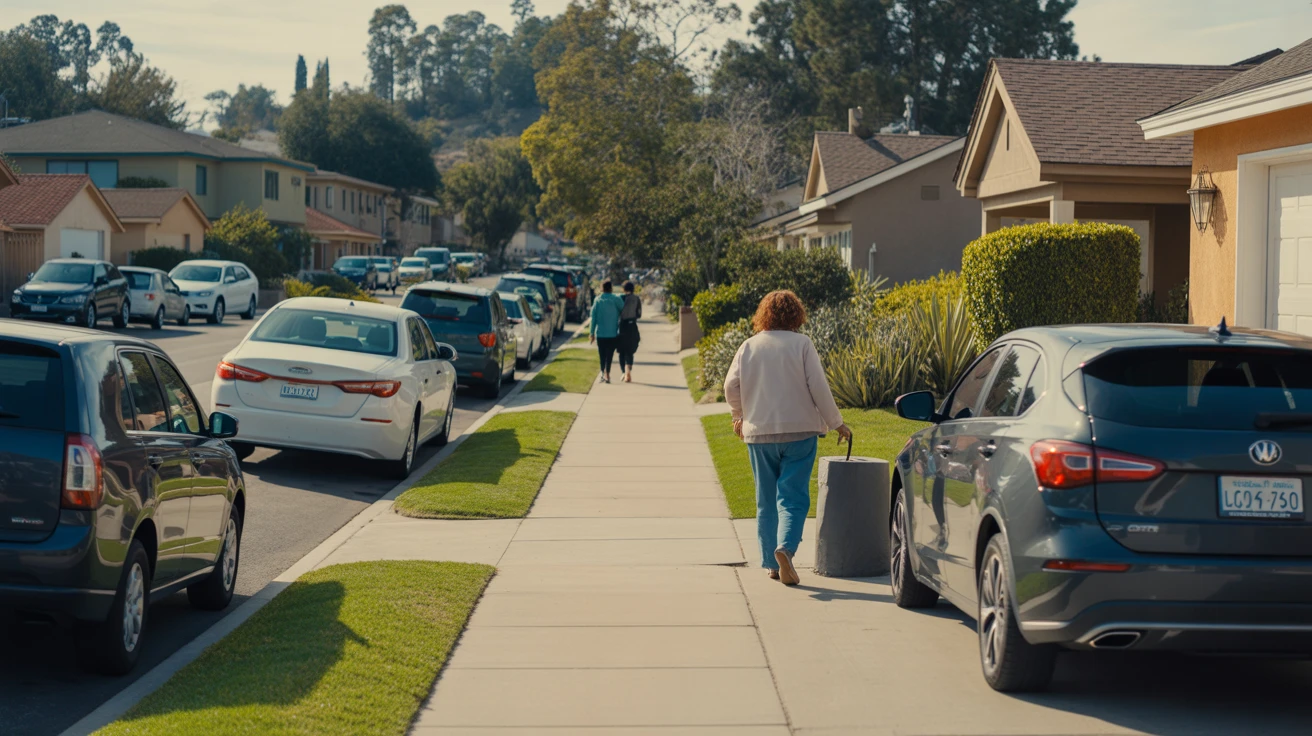
Comfort is also about time. In a car-oriented city where pedestrian infrastructure sits below walkability thresholds, nearly every household needs at least one vehicle to function. That means comfort includes affording not just the car payment, but insurance, fuel at $4.38 per gallon, and maintenance—without those costs eating into grocery money or forcing you to skip an oil change.
El Cajon’s median household income sits at $64,128 per year (about $5,344 gross per month). For some households, that income delivers stability. For others, it means perpetual tradeoffs. The difference comes down to household size, housing expectations, and how much margin you need to feel secure.
Where Income Pressure Shows Up First
Housing dominates financial stress in El Cajon. Median gross rent runs $1,686 per month, and the median home value stands at $593,500. For renters, that rent figure represents roughly 32% of the median household’s gross monthly income—right at the edge of the traditional affordability threshold. For buyers, that home price requires either substantial savings, dual income, or acceptance of a long commute from a cheaper market.
Transportation costs layer on top. Because El Cajon’s street design favors cars over pedestrians and transit—even though rail service exists—most households can’t reduce transportation expenses by going car-free. Fuel costs, insurance, and vehicle depreciation become fixed, non-negotiable budget lines. If both adults in a household commute separately, those costs double, and suddenly transportation rivals rent as a pressure point.
Utility exposure remains moderate but noticeable. Electricity rates in the region run 31.91¢ per kilowatt-hour, and El Cajon’s inland climate brings warm summers that demand air conditioning. Natural gas prices sit at $21.94 per thousand cubic feet, relevant for heating during cooler months. These aren’t catastrophic costs, but they’re high enough that a household already stretched by rent and car payments will feel every seasonal swing.
For families, additional pressure comes from needing more space and navigating school access. El Cajon’s family infrastructure shows moderate school density but limited playground availability, meaning parents may need to drive kids to recreational spaces. Healthcare access is local for routine needs—clinics are present—but hospital services require travel, adding time and potential costs during emergencies.
How the Same Income Feels Different by Household
A single adult earning $50,000 per year (about $4,167 gross per month) in El Cajon will likely spend 40% or more of gross income on rent for a one-bedroom apartment. Add car insurance, fuel, utilities, and groceries, and there’s little room for savings or unexpected expenses. Comfort at this income level requires either a rent-controlled situation, a roommate, or extreme discipline. Social life, dining out, and travel become rare luxuries rather than regular features.
A couple with combined income of $75,000 per year (about $6,250 gross per month) experiences less acute pressure. Rent still claims a significant share, but splitting costs makes utilities, internet, and groceries more manageable. If both partners work locally and can share one vehicle, transportation costs stay reasonable. If both commute separately, however, the second car erodes much of that breathing room. Comfort here depends heavily on commute logistics and whether both incomes are stable.
Families face the steepest climb. A household earning $80,000 per year (about $6,667 gross per month) with two children will find that rent or mortgage payments for a three-bedroom home consume a large portion of income. Childcare, if needed, can rival rent as an expense. The car-oriented layout means parents spend significant time driving kids to school, activities, and parks. Monthly spending in El Cajon becomes a constant negotiation between competing needs: housing size, school quality, proximity to work, and discretionary spending all pull in different directions.
Households at similar income levels often experience very different pressure depending on whether they own or rent, how many cars they need, and whether they have flexibility to adjust housing size or location. A family that accepts a smaller home in a walkable pocket may ease transportation costs slightly, but El Cajon’s low-rise, car-oriented design means those pockets are limited.
The Comfort Threshold (Qualitative)
Comfort in El Cajon begins when housing no longer forces compromise on safety, space, or commute length. It’s the point where you can afford the home or apartment you actually want, not just the one you can tolerate. It’s when your car feels like a tool rather than a financial burden—when a tank of gas or a maintenance visit doesn’t require budget reshuffling.
Comfort also means utility bills arrive as predictable line items, not monthly surprises. It means you can run the air conditioning during a heat wave without guilt, and you can replace an aging appliance without a multi-month savings campaign. It’s when groceries, dining, and entertainment shift from “either/or” to “and”—when you can buy the better cut of meat and still go to a movie that weekend.
Most importantly, comfort is when saving becomes automatic rather than aspirational. It’s when an emergency fund isn’t a distant goal but a growing reality, and when retirement contributions feel responsible rather than reckless.
This threshold isn’t a single number. It shifts depending on household size, debt load, health costs, and expectations. But in El Cajon, it generally requires income well above the median, particularly for families.
Why Online Cost Calculators Get El Cajon Wrong
Most cost-of-living calculators treat El Cajon as a simple math problem: add up rent, utilities, groceries, and transportation, then multiply by household size. But those tools miss the texture of how costs actually behave here.
They assume you can reduce transportation costs by walking, biking, or taking transit. In reality, El Cajon’s car-oriented street layout and limited pedestrian infrastructure mean most households need at least one car regardless of proximity to work or errands. Even though rail service exists and food and grocery options are broadly accessible, the daily rhythm of life here still revolves around driving. Calculators that assume “average” transportation costs undercount what it actually takes to function.
They also treat housing as a static line item, ignoring the tradeoffs people make. A lower rent might mean a longer commute, which increases fuel costs and time stress. A higher rent might buy proximity to work but eliminate savings capacity. Calculators show the rent number but not the compromises it forces.
Finally, they miss the emotional weight of living paycheck-to-paycheck. A budget that “works” on paper—where income technically exceeds expenses—can still feel suffocating if there’s no margin for error, no capacity to absorb a surprise bill, and no path toward saving. Comfort isn’t just about the math adding up; it’s about the math adding up with room to breathe.
How to Judge Whether Your Income Fits El Cajon
Rather than asking “Is my income enough?”, ask yourself these questions:
- Can you afford the housing you actually want, or only the housing you can tolerate? If you’re already compromising on size, location, or quality before you arrive, income pressure will define your experience.
- How many cars will your household need, and can you absorb those costs comfortably? In El Cajon, car ownership isn’t optional for most people. If adding a second vehicle would strain your budget, expect daily logistics to create constant friction.
- Do seasonal utility swings force you to change behavior, or can you run heating and cooling as needed? If you’ll need to monitor the thermostat closely to avoid bill shock, comfort will feel distant.
- How much financial margin do you need to feel secure? Some people tolerate thin margins well; others find them unbearable. Be honest about which type you are.
- Can you absorb a $1,000 surprise expense without it cascading into other problems? If not, El Cajon’s cost structure will likely feel relentless.
Your answers to these questions matter more than any income threshold. Where your money goes in El Cajon depends not just on prices, but on how your household is shaped and what tradeoffs you’re willing to make.
FAQs About Living Comfortably in El Cajon
Is $60,000 a year enough for a single person in El Cajon?
It can work, but expect tight margins. Rent will claim a large share of your income, and car ownership will take another significant bite. Comfort at this income level requires discipline, minimal debt, and willingness to limit discretionary spending. Saving will be slow.
Can a family live comfortably in El Cajon on $80,000 a year?
It depends on what “comfortably” means to you. You’ll likely afford rent or a mortgage, keep the cars running, and cover groceries and utilities. But there won’t be much cushion for emergencies, and discretionary spending will require careful prioritization. Childcare costs, if applicable, will tighten margins significantly.
Does El Cajon require two incomes to feel stable?
For most households, yes. Single-income households can survive, but comfort—defined as housing choice, transportation flexibility, and financial margin—generally requires dual income unless the single earner makes well above the median.
How does El Cajon compare to other San Diego County cities for affordability?
El Cajon sits in the middle range. It’s more affordable than coastal San Diego neighborhoods but more expensive than some farther inland communities. The tradeoff is proximity to the broader metro area without paying coastal premiums. However, the car dependency and moderate utility costs mean savings on rent can be offset by transportation and energy expenses.
What income level makes saving realistic in El Cajon?
Saving becomes realistic when housing, transportation, and utilities together consume less than 60-65% of gross income. For most households, that requires income above $75,000 for couples and above $90,000 for families. Below those levels, saving happens slowly and requires significant discipline.
How this article was built: In addition to public economic data, this article incorporates location-based experiential signals derived from anonymized geographic patterns—such as access density, walkability, and land-use mix—to reflect how day-to-day living actually feels in El Cajon, CA.
El Cajon can work well for some households—but only if expectations match reality. Comfort here isn’t about hitting a single income number; it’s about whether your earnings, household shape, and lifestyle expectations align with the city’s cost structure and car-dependent rhythm. If they do, El Cajon offers stability and access to the broader San Diego metro. If they don’t, the gap between income and ease will feel wider than the numbers alone suggest.
—