
Edwardsville is considered moderately priced in 2025, with average rent for a 2-bedroom apartment around $1,400 and overall costs for housing, groceries, utilities, and taxes running slightly below the national average.
When Sarah Martinez accepted a job offer at a healthcare facility in Edwardsville, she spent weeks calculating whether her salary would stretch far enough. She mapped out rent for a two-bedroom apartment, estimated her electric bill for Illinois summers, and compared grocery prices at local chains. Like many newcomers to this Metro East city, she quickly discovered that understanding the true cost of living in Edwardsville requires looking beyond headline rent figures to account for utilities, property taxes, commute expenses, and the dozens of smaller costs that shape monthly budgets. For anyone considering a move to this college town just outside St. Louis, building a realistic financial picture means examining every category of household spending with local data in hand.
Edwardsville offers a distinctive blend of small-town charm and suburban convenience, sitting roughly 25 miles northeast of downtown St. Louis. Home to Southern Illinois University Edwardsville, the city attracts a mix of faculty, healthcare professionals, and families seeking quality schools and a slower pace than the metro core. The local economy benefits from education, healthcare, and regional retail, creating a stable job market that supports a population of around 26,000. Understanding what it costs to live here in 2025 means accounting for Illinois tax structures, Midwest utility patterns, and a housing market that balances affordability with proximity to major employment centers across the river in Missouri.
Housing Costs in Edwardsville
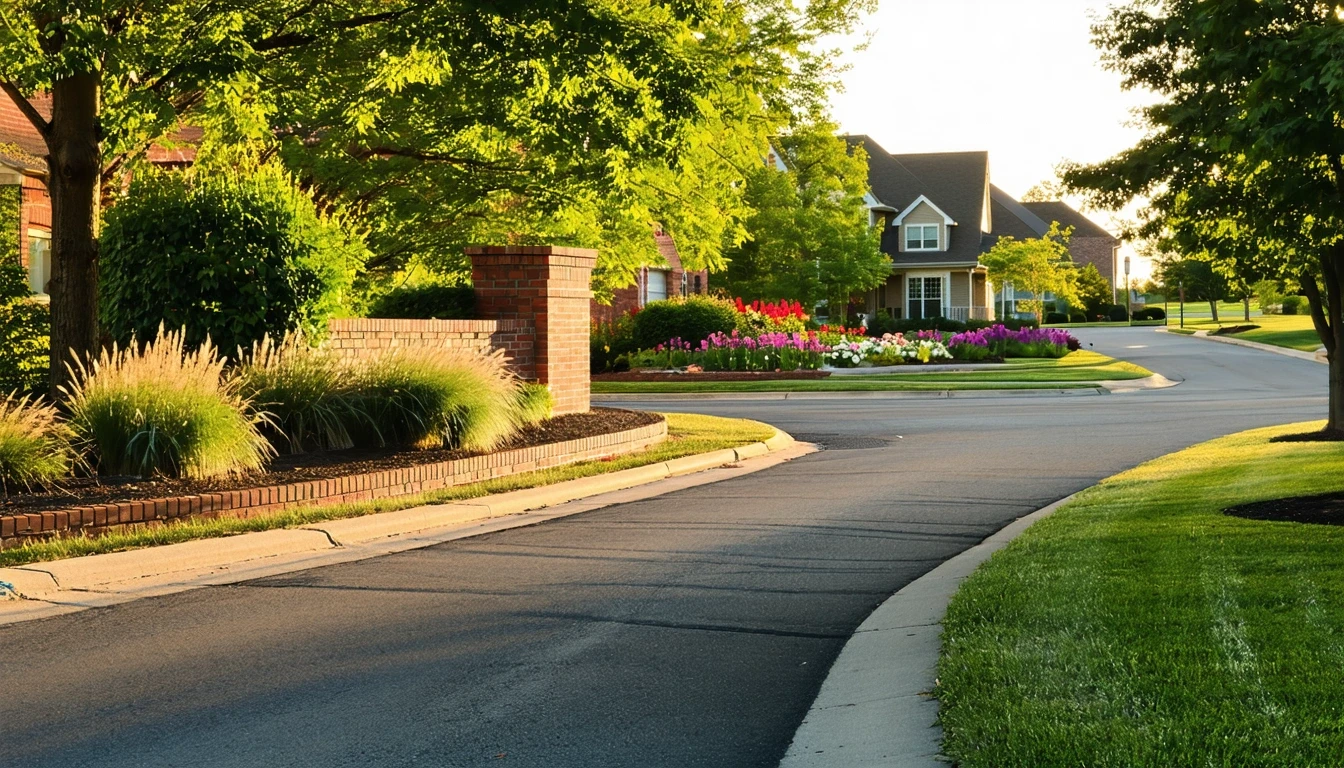
Housing represents the largest slice of most household budgets, and Edwardsville presents renters and buyers with a range of options that reflect its dual identity as a college town and family-oriented suburb. Rental inventory includes everything from older apartment complexes near campus to newer townhome developments along the city’s southern edge. A typical two-bedroom apartment in Edwardsville rents for approximately $1,200 to $1,600 per month, with location and amenities driving the variation. Units closer to SIUE or downtown Edwardsville tend toward the lower end of that range, while newer construction with updated finishes, in-unit laundry, and attached garages command premiums approaching $1,800 monthly.
For buyers, the Edwardsville housing market offers solid value compared to many St. Louis suburbs. Median home prices hover around $325,000 to $400,000 for a three-bedroom single-family home, though older ranch-style properties in established neighborhoods can be found in the $250,000 range. Newer subdivisions in areas like Governors’ Hill or near the Route 157 corridor feature larger homes with modern floor plans, often listing between $400,000 and $550,000. Property taxes in Madison County run approximately 2.1% to 2.4% of assessed value annually, translating to roughly $5,500 to $8,000 per year for a $350,000 home—a significant consideration when calculating total housing costs. Homeowners association fees vary widely, from zero in older neighborhoods to $50–$150 monthly in planned communities with shared amenities like pools or landscaping services.
| Neighborhood Type | 2BR Apartment Rent | 3BR Home Price |
|---|---|---|
| Near SIUE / Downtown | $1,200 – $1,400 | $250,000 – $325,000 |
| Established Residential | $1,300 – $1,500 | $300,000 – $375,000 |
| Newer Subdivisions | $1,500 – $1,800 | $400,000 – $550,000 |
Renters should budget for standard deposits—typically one month’s rent plus a security deposit equal to one month—and plan for annual increases of 3% to 5% in a stable market. Buyers need to account not only for mortgage principal and interest but also property taxes, homeowners insurance (around $1,200 to $1,500 annually), and potential HOA dues. These combined costs mean that a $350,000 home with a 20% down payment could carry a total monthly housing expense of $2,400 to $2,700, depending on interest rates and tax assessments.
Utilities and Energy Bills
Utility costs in Edwardsville reflect the Midwest’s seasonal extremes, with natural gas heating dominating winter bills and electric air conditioning driving summer expenses. A typical household can expect to pay between $150 and $250 per month for combined electric, gas, water, and trash services, though individual months may swing higher or lower depending on weather. Ameren Illinois serves the area for electricity and natural gas, with residential electric rates averaging around 13 to 15 cents per kilowatt-hour. A 1,000-square-foot apartment might use 600 to 800 kWh monthly in moderate months, translating to $80 to $120 in electric charges before fees and taxes.
Natural gas costs spike in winter when furnaces run continuously through January and February cold snaps. A well-insulated home might see gas bills of $60 to $90 in mild months, climbing to $150 to $200 during peak heating season. Conversely, summer air conditioning can push electric bills to $140 to $180 for a single-family home, especially during July and August heat waves. Water and sewer services, typically billed by the city or local utility district, add another $50 to $70 monthly, while trash collection runs $15 to $25 depending on the provider and service level. Renters in apartment complexes often find water, sewer, and trash included in rent, simplifying budgeting but sometimes masking the true cost of utilities.
| Utility Type | Average Monthly Cost |
|---|---|
| Electric (moderate use) | $80 – $140 |
| Natural Gas (seasonal avg) | $60 – $120 |
| Water & Sewer | $50 – $70 |
| Trash Collection | $15 – $25 |
| Total Estimated | $205 – $355 |
Internet service from providers like Spectrum or AT&T adds another $60 to $90 monthly for reliable broadband speeds, a necessity for remote work or streaming entertainment. Bundling services can yield modest savings, but most households should plan for a combined utility and connectivity budget of $250 to $350 per month year-round, with seasonal peaks pushing that figure higher in extreme weather.
Groceries and Daily Expenses
Grocery costs in Edwardsville align closely with national averages, benefiting from competition among several major chains including Schnucks, Dierbergs, Walmart, and ALDI. A single adult practicing moderate grocery habits—cooking most meals at home, balancing fresh produce with pantry staples—can expect to spend $300 to $450 per month. Couples typically see monthly grocery bills in the $500 to $800 range, while a family of four often budgets $900 to $1,300 depending on dietary preferences, reliance on convenience foods, and frequency of dining out.
Local prices for common staples reflect Midwest agricultural advantages and regional distribution networks. A gallon of milk runs $3.50 to $4.50, a dozen eggs $2.50 to $4.00, and a loaf of sandwich bread $2.00 to $3.50. Chicken breast averages $4.00 to $5.50 per pound, while ground beef ranges from $5.00 to $7.00 depending on lean percentage. A five-pound bag of rice costs $4.00 to $6.00, and a pound of coffee $8.00 to $12.00 for mid-tier brands. Fresh produce prices fluctuate seasonally, with local farmers markets offering competitive rates on tomatoes, corn, and other summer crops, while winter imports drive up costs for berries and leafy greens.
| Grocery Item | Typical Price |
|---|---|
| Gallon of Milk | $3.50 – $4.50 |
| Dozen Eggs | $2.50 – $4.00 |
| Loaf of Bread | $2.00 – $3.50 |
| Chicken Breast (per lb) | $4.00 – $5.50 |
| Ground Beef (per lb) | $5.00 – $7.00 |
| Rice (5 lb bag) | $4.00 – $6.00 |
| Coffee (1 lb) | $8.00 – $12.00 |
Dining out in Edwardsville offers a range of price points, from fast-casual chains to locally owned restaurants along Main Street and near the SIUE campus. A casual lunch runs $10 to $15 per person, while a sit-down dinner with drinks averages $20 to $35 per person. Couples who dine out twice weekly should budget an additional $200 to $300 monthly beyond groceries. Coffee shop visits, convenience store snacks, and occasional takeout add incremental costs that can easily total $100 to $150 monthly for an individual, underscoring the importance of tracking discretionary food spending alongside planned grocery budgets.
Taxes and Hidden Fees
Illinois tax structures significantly impact the cost of living in Edwardsville, with state and local levies affecting everything from retail purchases to vehicle ownership. The combined sales tax rate in Edwardsville is approximately 8.35%, reflecting state, county, and municipal components. This rate applies to most goods and many services, adding noticeable costs to furniture purchases, electronics, and other big-ticket items. Groceries enjoy a reduced rate (around 1% to 2%), but prepared foods and restaurant meals face the full sales tax burden.
Property taxes, as noted earlier, represent a substantial ongoing expense for homeowners. Madison County’s effective rate of roughly 2.1% to 2.4% means a $350,000 home generates an annual tax bill of $7,350 to $8,400, or $610 to $700 monthly when escrowed with a mortgage payment. These taxes fund local schools, municipal services, and county operations, and they can increase as property values rise or local governments adjust millage rates. New buyers should request recent tax bills and understand that assessments may change after a sale closes, potentially raising future obligations.
Vehicle ownership in Illinois carries additional costs beyond fuel and insurance. Annual registration fees range from $150 to $200 depending on vehicle age and type, while the state requires emissions testing in certain counties (though Madison County is currently exempt). Homeowners may face permit fees for renovations, fence installations, or shed construction, typically $50 to $200 depending on project scope. Trash collection, if not included in rent or HOA dues, runs $15 to $25 monthly. Homeowners association fees, where applicable, cover landscaping, snow removal, and shared amenities, but can also include special assessments for major repairs or improvements, creating unpredictable expenses that strain budgets.
- Property tax: $610 – $700/month for a $350,000 home
- Sales tax: 8.35% on most purchases
- Vehicle registration: $150 – $200 annually
- HOA fees: $0 – $150/month depending on neighborhood
- Trash collection: $15 – $25/month if not included
- Permit fees: $50 – $200 for home projects
Monthly Budget Breakdown by Household Type
Synthesizing housing, utilities, groceries, transportation, and taxes into a comprehensive budget reveals what it truly costs to live in Edwardsville across different household configurations. The table below presents realistic monthly estimates for three common scenarios: a single adult, a couple, and a family of four. These figures assume moderate lifestyles—renting or owning typical properties, cooking most meals at home, maintaining one vehicle per adult, and budgeting for routine expenses without extravagant discretionary spending. All amounts represent gross monthly income (pre-tax) needed to cover expenses comfortably, allowing for savings and occasional leisure spending.
| Expense Category | Single Adult | Couple | Family of Four |
|---|---|---|---|
| Housing (rent or mortgage) | $1,100 | $1,600 | $2,400 |
| Utilities (electric, gas, water, trash) | $150 | $220 | $280 |
| Groceries | $350 | $650 | $1,100 |
| Transportation (fuel, insurance, maintenance) | $300 | $500 | $700 |
| Taxes & Fees (property tax, vehicle reg, etc.) | $100 | $650 | $750 |
| Miscellaneous (internet, phone, personal care) | $200 | $300 | $400 |
| Total Monthly | $2,200 | $3,920 | $5,630 |
Methodology: These 2025 estimates for Edwardsville draw on publicly available national and regional sources including the U.S. Census Bureau, Bureau of Economic Analysis (BEA), Bureau of Labor Statistics (BLS), and Federal Reserve Economic Data (FRED). Where city-specific figures are unavailable, safe regional ranges are applied (e.g., typical 2BR rents, grocery costs per adult). All amounts are expressed as gross monthly income (pre-tax) and rounded to whole dollars. Actual expenses vary by household size, lifestyle, and neighborhood choice.
Single adults living in Edwardsville can maintain a comfortable lifestyle on a gross monthly income of approximately $2,800 to $3,200, allowing for the $2,200 in core expenses plus savings and discretionary spending. Couples benefit from shared housing and utility costs, but still require $5,000 to $5,500 gross monthly to cover the $3,920 baseline and build financial cushion. Families of four face the highest demands, needing $7,000 to $7,500 gross monthly to manage the $5,630 in essentials while funding childcare, extracurriculars, and emergency reserves. These figures underscore the importance of dual incomes for families and careful budgeting for single earners, especially when factoring in Illinois income tax (4.95% flat rate) and federal withholding.
Lifestyle Considerations and Quality of Life
Beyond raw dollar figures, the cost of living in Edwardsville must be weighed against quality-of-life factors that shape daily experience and long-term satisfaction. Commute times play a significant role in both financial and personal well-being. Many Edwardsville residents work locally in education, healthcare, or retail, enjoying sub-15-minute commutes that minimize fuel costs and maximize family time. Others cross the Mississippi River to jobs in St. Louis or surrounding Missouri suburbs, facing 30- to 45-minute drives that add $150 to $250 monthly in fuel and vehicle wear. The lack of robust public transit means car ownership is effectively mandatory, but the tradeoff is ample parking, minimal traffic congestion, and the flexibility to explore the broader Metro East region.
Housing choices directly influence lifestyle tradeoffs. Renting near downtown Edwardsville or SIUE offers walkability to restaurants, coffee shops, and campus events, reducing transportation needs and fostering a sense of community. However, these areas often feature older buildings with fewer modern amenities and limited private outdoor space. Buying a home in newer subdivisions delivers spacious yards, updated kitchens, and proximity to top-rated schools, but requires longer drives for entertainment and higher upfront costs. Families prioritizing school quality often gravitate toward neighborhoods within the Edwardsville School District 7 boundaries, accepting higher home prices and property taxes in exchange for strong academic programs and extracurricular opportunities.
The city’s small-town character appeals to those seeking a slower pace and tight-knit community, but it also means fewer dining and entertainment options compared to larger metros. Residents frequently drive to St. Louis for professional sports, concerts, and cultural attractions, adding occasional costs for tickets, parking, and meals. Local parks, trails, and the SIUE campus provide free or low-cost recreation, while the absence of major tourist crowds keeps everyday costs predictable. For individuals and families willing to embrace a suburban-to-rural lifestyle with periodic urban excursions, Edwardsville offers a compelling balance of affordability, safety, and quality schools—a combination that justifies the financial commitment for many households.
Frequently Asked Questions
Is Edwardsville more affordable than nearby cities in 2025? Edwardsville tends to be slightly more affordable than St. Louis suburbs like Clayton or Ladue, where home prices and property taxes run higher, but it costs more than smaller Metro East towns such as Troy or Maryville. The tradeoff is access to better schools and amenities than the smaller towns while avoiding the premium prices of the most exclusive St. Louis-area neighborhoods.
What is a realistic monthly budget for a single person in Edwardsville? A single adult should plan for approximately $2,200 in core expenses (rent, utilities, groceries, transportation, taxes) and aim for a gross monthly income of $2,800 to $3,200 to cover discretionary spending, savings, and unexpected costs. This assumes moderate housing choices and limited dining out.
Do utilities cost more in Edwardsville than in other Illinois cities? Utility costs in Edwardsville are fairly typical for southern Illinois, with Ameren rates consistent across the region. Seasonal swings can be pronounced due to heating and cooling demands, but overall expenses align with state averages and remain below rates in northern Illinois where winter heating needs are more intense.
How much does a family of four spend per month in Edwardsville? A family of four typically spends around $5,630 monthly on housing, utilities, groceries, transportation, taxes, and miscellaneous expenses, requiring a gross household income of $7,000 to $7,500 to maintain a comfortable lifestyle with room for savings and occasional leisure activities.
Are property taxes higher in Edwardsville than in Missouri suburbs? Yes, Illinois property taxes are generally higher than those in Missouri. Madison County’s effective rate of 2.1% to 2.4% means a $350,000 home generates $7,350 to $8,400 annually in property taxes, compared to roughly $3,500 to $4,500 for a similar home in many Missouri suburbs, though Missouri has higher income and personal property taxes that partially offset the difference.
Is it cheaper to rent or buy in Edwardsville in 2025? Renting offers lower upfront costs and flexibility, making it attractive for short-term residents or those uncertain about long-term plans. Buying builds equity and locks in housing costs, but requires substantial down payments and exposes owners to property tax increases and maintenance expenses. For those planning to stay five years or more, buying often proves more cost-effective over time.
How do grocery costs in Edwardsville compare to the national average? Grocery costs in Edwardsville run close to the national average, with competitive pricing from multiple chains and access to regional farms for seasonal produce. Shoppers who frequent ALDI or Walmart can reduce costs further, while those preferring organic or specialty items at Schnucks or Dierbergs may see bills 10% to 15% higher than baseline estimates.
What hidden costs should newcomers to Edwardsville anticipate? Newcomers should budget for vehicle registration fees ($150–$200 annually), potential HOA dues ($50–$150 monthly in some neighborhoods), higher-than-expected property taxes, and the need for reliable personal transportation since public transit is limited. Winter heating bills and summer cooling costs can also surprise those unfamiliar with Midwest seasonal extremes.