
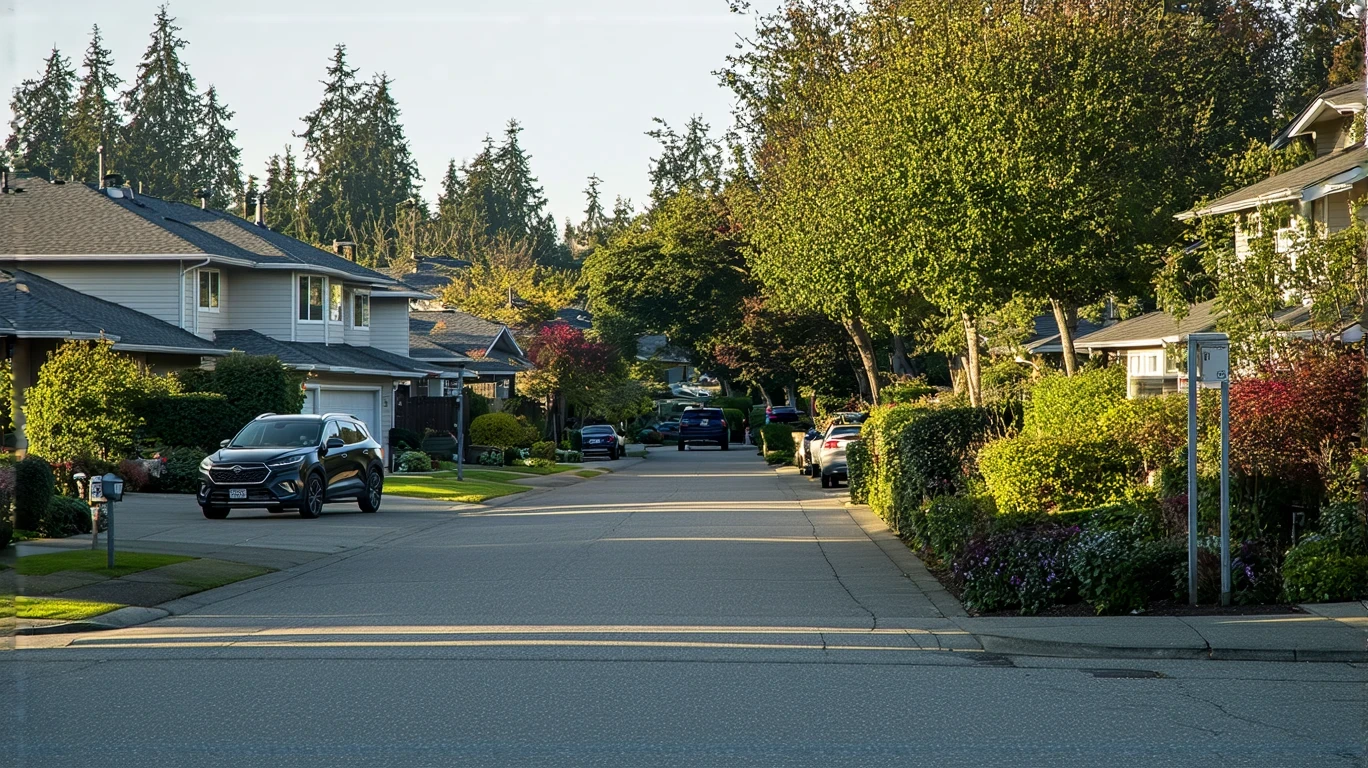
Edmonds and Kent sit within the same Seattle metro region, yet the way cost pressure shows up in daily life differs substantially between them. Edmonds, perched along Puget Sound with walkable downtown pockets and rail transit access, attracts households prioritizing access and neighborhood texture. Kent, positioned farther south in the valley with more sprawling residential development, draws families and first-time buyers seeking entry points into homeownership. The decision between these two cities in 2026 isn’t about which one costs less overall—it’s about which cost structure aligns with how a household actually lives, commutes, and manages day-to-day logistics.
Both cities face the same regional economic pressures: tight housing inventory, long commutes for many workers, and the Pacific Northwest’s mild but damp climate that shapes utility usage year-round. Yet the trade-offs reveal themselves in different categories. Edmonds front-loads cost pressure into housing, where median home values reach $761,300 and median rent sits at $1,821 per month. Kent distributes pressure differently: median home values of $478,400 and rent of $1,742 per month lower the entry barrier, but transportation, utilities, and household logistics introduce friction elsewhere. For households sensitive to upfront housing costs, Kent offers more flexibility. For those prioritizing walkability, transit access, and reduced car dependence, Edmonds reshapes the cost equation by reducing transportation exposure and increasing day-to-day convenience.
This comparison explains where costs concentrate, how they behave over time, and which households feel the differences most acutely. It does not declare a winner or calculate total monthly expenses. Instead, it clarifies the mechanisms that make the same gross income feel stable in one city and tight in the other, depending on what a household values and how they navigate daily life.
Housing Costs
Housing dominates the cost experience in both cities, but the entry barrier and ongoing obligations differ sharply. Edmonds’ median home value of $761,300 reflects its waterfront proximity, established neighborhoods, and access to transit and walkable commercial corridors. Kent’s median home value of $478,400 positions it as a more accessible entry point for first-time buyers, though the housing stock skews toward single-family homes in car-dependent subdivisions. For renters, the gap narrows: Edmonds’ median gross rent of $1,821 per month sits modestly above Kent’s $1,742 per month, a difference that matters more for larger units or families seeking extra bedrooms than for single adults or couples in smaller apartments.
The structural difference extends beyond price. Edmonds’ housing market includes a mix of older single-family homes, townhomes, and small apartment buildings concentrated near downtown and transit corridors. This variety supports households who prioritize walkability and proximity to services, even if it means accepting smaller square footage or older construction. Kent’s housing landscape tilts toward newer single-family developments and larger apartment complexes along arterial roads, offering more space per dollar but requiring car ownership for most errands. Renters in Kent may find more availability in larger two- and three-bedroom units, while Edmonds renters face tighter inventory in walkable areas and more competition for units near the ferry terminal and Sounder station.
For buyers, the difference in entry barrier reshapes household planning. A household targeting homeownership in Edmonds must navigate higher down payment requirements, larger monthly mortgage obligations, and property taxes tied to higher assessed values. Kent lowers that threshold significantly, allowing buyers to enter the market sooner or with less savings, though ongoing costs—utilities, transportation, and maintenance—may offset some of that initial advantage. Families prioritizing space, newer construction, or proximity to specific school districts may find Kent’s housing stock better aligned with their needs. Households willing to trade square footage for walkability, transit access, and reduced car dependence may find Edmonds’ higher upfront cost justified by lower transportation exposure and more predictable daily logistics.
| Housing Type | Edmonds | Kent |
|---|---|---|
| Median Home Value | $761,300 | $478,400 |
| Median Gross Rent | $1,821/month | $1,742/month |
Housing takeaway: Edmonds concentrates cost pressure into the entry barrier, rewarding households who can absorb higher upfront housing costs with walkability and transit access that reduce transportation dependence. Kent spreads pressure more evenly, lowering the threshold for ownership but requiring car ownership and longer commutes for most households. Renters face similar monthly obligations in both cities, but the trade-off between space and location becomes more pronounced. First-time buyers and families seeking square footage may find Kent’s structure more forgiving; households prioritizing convenience and reduced car dependence may find Edmonds’ higher housing costs offset by savings elsewhere.
Utilities and Energy Costs
Utility cost behavior in Edmonds and Kent reflects both regional climate patterns and differences in housing stock age and density. Electricity rates sit close together—13.85¢/kWh in Edmonds and 14.06¢/kWh in Kent—but natural gas pricing diverges more noticeably, with Edmonds at $16.72/MCF and Kent at $24.71/MCF. The Pacific Northwest’s mild, damp climate means heating dominates winter utility bills, while cooling needs remain minimal compared to other U.S. regions. Households in both cities face predictable seasonal swings, but the magnitude of those swings depends more on home size, insulation quality, and heating system efficiency than on location alone.
Edmonds’ housing stock includes a higher share of older single-family homes and smaller townhomes, many built before modern insulation standards became common. These homes may experience higher heating exposure during wet, chilly winters, even with lower natural gas prices. Kent’s newer single-family developments often feature better insulation and more efficient HVAC systems, which can moderate heating costs despite higher natural gas rates. However, Kent’s larger average home sizes mean baseline usage tends to run higher, offsetting some of the efficiency gains. Apartment dwellers in both cities benefit from shared-wall construction that reduces heating exposure, though older buildings in Edmonds may still show higher variability depending on unit placement and window quality.
Household size and housing type interact with utility exposure in predictable ways. Single adults or couples in smaller apartments face lower baseline usage and more stable bills year-round, with heating costs spiking modestly in winter but rarely becoming unmanageable. Families in larger single-family homes—especially those with older construction or poor insulation—experience more pronounced seasonal swings, particularly in Edmonds where damp cold penetrates poorly sealed homes. Kent’s newer construction offers more predictability for families, though higher natural gas rates mean any inefficiency in the heating system shows up quickly in winter bills. Households planning to stay long-term may find value in efficiency upgrades—programmable thermostats, weatherstripping, attic insulation—that reduce volatility and improve comfort, though the payoff timeline depends on home age and current condition.
Utility takeaway: Edmonds offers lower natural gas rates but older housing stock that may increase heating exposure for poorly insulated homes. Kent’s higher natural gas prices affect larger homes more acutely, though newer construction provides better baseline efficiency. Families in single-family homes face more volatility in both cities, while apartment dwellers enjoy more predictable bills. Households sensitive to seasonal cost swings should prioritize home age, insulation quality, and heating system efficiency over rate differences alone, as housing characteristics drive exposure more than the rate structure itself.
Groceries and Daily Expenses
Grocery and everyday spending pressure in Edmonds and Kent reflects differences in access, convenience, and household logistics rather than dramatic price gaps. Both cities sit within the same regional price environment, sharing access to major grocery chains, discount retailers, and specialty stores scattered across the Seattle metro. The meaningful difference lies in how households navigate daily errands: Edmonds’ walkable downtown and mixed-use corridors allow some households to consolidate trips and reduce car dependence, while Kent’s more dispersed commercial development requires driving for most grocery runs, adding time and fuel costs to the equation.
Edmonds supports a mix of grocery options within a compact area—regional chains, natural food co-ops, and smaller neighborhood markets cluster near downtown and along Highway 99. Households living near these corridors can walk or bike for smaller trips, reducing the frequency of large weekly hauls and allowing more flexibility to shop sales or adjust purchases based on immediate needs. Kent’s grocery landscape spreads along arterial roads and within strip mall developments, favoring car-based shopping trips and bulk purchasing. Families managing larger volumes may find Kent’s big-box access more efficient for stocking up, though the lack of walkable alternatives means every trip requires a car, adding friction even for quick top-ups or forgotten items.
Dining out and convenience spending follow similar patterns. Edmonds’ downtown supports a denser concentration of cafes, bakeries, and casual restaurants within walking distance of residential neighborhoods, creating more opportunities for spontaneous spending but also more temptation to substitute dining out for home cooking. Kent’s restaurant options cluster near shopping centers and require driving, which may reduce frequency but also limits flexibility for households juggling tight schedules. Single adults and couples in Edmonds may find themselves spending more on coffee, takeout, and quick meals simply because access is frictionless. Families in Kent may spend less on dining out due to logistical barriers, though the time cost of driving to every errand adds its own burden.
Grocery and daily expense takeaway: Edmonds offers more walkable access to groceries and dining, reducing transportation friction but increasing temptation for convenience spending. Kent requires car-based shopping for most households, which can lower spontaneous spending but adds time and fuel costs to every trip. Families managing larger grocery volumes may find Kent’s big-box access more efficient, while single adults and couples in Edmonds benefit from flexibility and reduced car dependence. The cost difference is less about prices and more about how access shapes habits, time budgets, and the ease of managing day-to-day logistics.
Taxes and Fees

Washington State’s tax structure—no income tax, reliance on sales and property taxes—affects both Edmonds and Kent equally at the state level, but local property tax rates and city-specific fees introduce meaningful differences in how tax pressure shows up for homeowners and renters. Property taxes in both cities fund schools, infrastructure, and local services, with rates tied to assessed home values and voter-approved levies. Edmonds homeowners face property tax obligations on higher assessed values, which translates to larger annual bills even if the effective rate remains comparable to Kent. Kent homeowners benefit from lower assessed values, reducing the absolute dollar amount of property taxes, though the effective rate may not differ dramatically.
Sales taxes apply uniformly across the region, affecting all households equally when purchasing goods and services. The burden falls more heavily on households with higher consumption, particularly those managing larger families or frequent discretionary spending. Neither city offers meaningful relief from sales tax exposure, though households in Edmonds may reduce taxable purchases slightly by walking to errands and avoiding impulse buys during car-based shopping trips. Kent households, reliant on car-based shopping, may face more frequent exposure to sales tax on convenience purchases, takeout, and gas station stops.
City-specific fees—utilities, trash collection, stormwater management—vary by provider and service area, though neither city imposes unusually high fees compared to regional norms. Homeowners in both cities may encounter HOA fees depending on neighborhood and housing type, with newer developments in Kent more likely to include mandatory HOA memberships that bundle landscaping, common area maintenance, and sometimes trash or water services. Edmonds’ older neighborhoods less frequently carry HOA obligations, though some townhome and condo developments include monthly fees. Renters typically see these costs embedded in rent rather than billed separately, though transparency varies by landlord.
Tax and fee takeaway: Edmonds homeowners face higher absolute property tax bills due to higher assessed home values, though the effective rate structure remains similar to Kent. Kent homeowners benefit from lower assessed values, reducing property tax obligations but not eliminating them. Sales taxes affect all households equally, with exposure driven more by consumption habits than location. HOA fees appear more frequently in Kent’s newer developments, adding predictable monthly obligations that may bundle services but also reduce flexibility. Long-term homeowners in both cities should expect property tax bills to track assessed value changes over time, with Edmonds’ higher baseline creating more exposure to future levy increases.
Transportation & Commute Reality
Transportation costs in Edmonds and Kent reflect both commute patterns and the structural differences in how households navigate daily life. Edmonds offers rail transit access via the Sounder commuter line and walkable pockets near downtown, reducing car dependence for some households and lowering transportation exposure for those who can structure their routines around transit and foot traffic. Kent lacks comparable transit infrastructure, requiring car ownership for nearly all households and concentrating transportation costs into gas, maintenance, insurance, and parking. Gas prices in Edmonds sit at $4.15/gallon, while Kent’s prices run lower at $3.80/gallon, a difference that matters most for households driving long distances daily.
Commute times average 28 minutes in Edmonds and 30 minutes in Kent, though both cities show high percentages of workers facing long commutes—47.9% in Edmonds and 48.3% in Kent report commutes exceeding typical thresholds. The similarity in commute duration masks a difference in commute texture: Edmonds residents near the Sounder station can reach downtown Seattle via rail, avoiding traffic variability and reducing per-mile fuel costs. Kent residents rely almost entirely on car-based commutes along I-5 or State Route 167, where congestion, weather, and incidents introduce unpredictability and increase fuel consumption during stop-and-go driving.
For households working remotely or with flexible schedules, the transportation difference narrows. Edmonds’ 11.0% work-from-home rate and Kent’s 12.0% rate suggest similar shares of residents avoid daily commutes entirely, reducing transportation exposure regardless of location. For those commuting daily, the choice between Edmonds and Kent hinges on whether transit access and walkability justify higher housing costs. Households prioritizing reduced car dependence, lower fuel costs, and more predictable commute times may find Edmonds’ structure worth the premium. Households requiring car ownership regardless—due to job location, family logistics, or preference—may find Kent’s lower housing costs and slightly cheaper gas prices more aligned with their needs, even if commute times remain comparable.
Cost Structure Comparison
Housing pressure dominates the cost experience in Edmonds, where median home values and rent set a higher baseline that affects buyers and renters differently. Buyers face a steeper entry barrier, requiring larger down payments and absorbing higher monthly mortgage obligations, though the trade-off includes walkability, transit access, and reduced transportation dependence. Renters see a more modest gap, with Edmonds’ median rent sitting slightly above Kent’s, a difference that matters most for families seeking larger units or extra bedrooms. Kent lowers the housing threshold significantly, allowing buyers to enter the market sooner and renters to access more space per dollar, though the savings come with trade-offs in transportation and logistics.
Utilities introduce more volatility in Kent due to higher natural gas prices, though the impact depends heavily on home size, age, and heating system efficiency. Edmonds’ older housing stock may offset its lower natural gas rates with higher baseline usage in poorly insulated homes, while Kent’s newer construction provides better efficiency but larger square footage increases total consumption. Families in single-family homes face more pronounced seasonal swings in both cities, while apartment dwellers enjoy more predictable bills year-round. The difference is less about which city costs more and more about which housing characteristics amplify or dampen utility exposure.
Transportation patterns matter more in Kent, where car ownership becomes non-negotiable for nearly all households and daily errands require driving. Edmonds reduces car dependence for households near transit and walkable corridors, lowering fuel costs and reducing time spent navigating traffic. The difference in gas prices—higher in Edmonds, lower in Kent—matters most for households driving long distances daily, though Edmonds’ transit access and walkability can offset higher per-gallon costs by reducing total miles driven. For households requiring a car regardless of location, Kent’s lower gas prices provide modest relief, though the time cost of car-based errands remains.
Daily living costs—groceries, dining, convenience spending—concentrate differently based on access and habits. Edmonds’ walkable downtown increases opportunities for spontaneous spending but also reduces the friction of running quick errands, allowing households to shop more flexibly and avoid large weekly hauls. Kent’s car-based shopping requires more planning and consolidation, which can reduce convenience spending but adds time and fuel costs to every trip. Families managing larger grocery volumes may find Kent’s big-box access more efficient, while single adults and couples in Edmonds benefit from reduced car dependence and more flexible routines.
The decision between Edmonds and Kent hinges on which costs dominate a household’s budget and how they navigate daily logistics. Households sensitive to housing entry barriers may prefer Kent’s lower threshold, even if transportation and utility costs introduce friction elsewhere. Households prioritizing walkability, transit access, and reduced car dependence may find Edmonds’ higher housing costs justified by lower transportation exposure and more predictable daily routines. For families seeking space and newer construction, Kent offers more square footage per dollar, though the trade-off includes longer car-based commutes and less flexibility in daily errands. For single adults and couples willing to accept smaller spaces in exchange for convenience, Edmonds reshapes the cost equation by reducing transportation dependence and increasing access to services within walking distance.
How the Same Income Feels in Edmonds vs Kent
Single Adult
For a single adult, housing becomes the first non-negotiable cost, with Edmonds requiring more income to secure a one-bedroom apartment near walkable areas or transit. Flexibility exists in transportation, where Edmonds allows some households to reduce or eliminate car ownership, lowering insurance, maintenance, and fuel costs. Kent requires a car for nearly all errands, locking in transportation obligations regardless of income level. Dining and convenience spending in Edmonds may creep higher due to walkable access, while Kent’s car-based errands introduce time costs that reduce spontaneous purchases. The same gross income feels tighter in Edmonds if housing absorbs too much, but more flexible if transit and walkability reduce transportation exposure.
Dual-Income Couple
For a dual-income couple, housing pressure in Edmonds concentrates into rent or mortgage obligations, leaving less room for discretionary spending unless both incomes remain stable. Transportation costs in Kent double if both partners require cars for work, while Edmonds offers the possibility of one-car or car-free arrangements for couples living near transit. Utility costs remain predictable in both cities for apartment dwellers, though couples in single-family homes face more volatility during heating season. The same gross income feels more stable in Kent if both partners drive and value space, but more flexible in Edmonds if one partner works remotely or near transit and the couple prioritizes walkability over square footage.
Family with Kids
For families, housing becomes non-negotiable first, with Kent offering more space per dollar and Edmonds requiring trade-offs between square footage and location. Transportation pressure in Kent intensifies with multiple cars, school drop-offs, and activity shuttling, while Edmonds reduces some of that friction for families near schools and transit. Grocery and daily errands in Kent require more planning and car-based trips, adding time costs that compete with work and family schedules. Utility exposure in both cities depends on home size and age, with larger homes in Kent facing higher baseline usage despite better insulation. The same gross income feels tighter in Edmonds if housing absorbs too much and the family requires space, but more predictable in Kent if the family values square footage and accepts car dependence as part of daily logistics.
Decision Matrix: Which City Fits Which Household?
| Decision factor | If you’re sensitive to this… | Edmonds tends to fit when… | Kent tends to fit when… |
|---|---|---|---|
| Housing entry + space needs | Down payment size, mortgage obligations, square footage per dollar | You prioritize walkability and transit access over space and can absorb higher upfront costs | You need more square footage, newer construction, or a lower entry barrier to ownership |
| Transportation dependence + commute friction | Car ownership costs, fuel spending, commute predictability | You work near transit, value walkability, or can structure routines around rail access | You require a car regardless of location and prioritize lower gas prices over transit options |
| Utility variability + home size exposure | Seasonal heating costs, home age, insulation quality | You live in a smaller apartment or townhome with shared walls and lower baseline usage | You prioritize newer construction with better efficiency despite larger square footage |
| Grocery strategy + convenience spending creep | Walkable access, spontaneous purchases, time spent on errands | You value flexibility in daily errands and can manage temptation for convenience spending | You prefer bulk shopping, car-based trips, and fewer opportunities for spontaneous purchases |
| Fees + friction costs (HOA, services, upkeep) | Predictable monthly obligations, bundled services, maintenance responsibilities | You prefer older neighborhoods with fewer HOA obligations and more control over services | You value bundled services and predictable HOA fees in newer developments |
| Time budget (schedule flexibility, errands, logistics) | Commute unpredictability, errand consolidation, household coordination | You work remotely or near transit and value walkable access that reduces errand friction | You have flexible schedules and prefer consolidating errands into car-based trips |
Lifestyle Fit
Edmonds and Kent offer distinct lifestyle textures shaped by geography, infrastructure, and neighborhood character. Edmonds sits along Puget Sound, with a walkable downtown that includes local shops, cafes, and a ferry terminal connecting to the Olympic Peninsula. The city’s pedestrian-friendly corridors and rail transit access via the Sounder line support households who prioritize reduced car dependence and proximity to water. Parks and green spaces integrate throughout the city, with waterfront trails and forested areas providing outdoor access without requiring long drives. Families and retirees drawn to Edmonds often value the slower pace, community events, and access to both urban amenities and natural surroundings.
Kent, positioned farther south in the Green River Valley, offers a more suburban, car-oriented lifestyle with newer housing developments and commercial corridors spread along arterial roads. The city lacks the walkable downtown character of Edmonds, though it provides access to regional parks, trails, and recreational facilities that require driving to reach. Kent’s central location within the valley offers shorter drives to SeaTac Airport, Southcenter Mall, and employment hubs in Renton and Auburn, making it a practical base for households prioritizing regional access over neighborhood walkability. Families in Kent often value space, newer construction, and proximity to schools, even if daily errands require a car.
The lifestyle difference extends to how households spend discretionary time. Edmonds supports more spontaneous outings—walking to dinner, browsing shops, or catching a ferry—while Kent requires more planning and car-based trips for entertainment and recreation. Households in Edmonds may find themselves spending more on dining and activities simply because access is frictionless, while Kent households may spend less on spontaneous outings but invest more time coordinating logistics. For households with young children, Kent’s newer parks and playgrounds offer well-maintained facilities, though Edmonds’ waterfront and forested trails provide more varied outdoor experiences within walking or biking distance. For retirees or remote workers, Edmonds’ walkability and transit access reduce the need for daily driving, while Kent’s quieter residential streets and larger homes offer more space for hobbies and hosting.
Edmonds median household income: $110,057 per year
Kent median household income: $86,966 per year
Frequently Asked Questions
Is Edmonds or Kent more affordable for renters in 2026?
Kent offers slightly lower median rent at $1,742 per month compared to Edmonds’ $1,821 per month, though the difference narrows for smaller units. The meaningful trade-off lies in access and transportation: Edmonds renters near walkable areas and transit can reduce car dependence, lowering transportation costs, while Kent renters require car ownership for most errands. Families seeking larger apartments may find Kent’s inventory more accessible, while single adults and couples prioritizing walkability may find Edmonds’ modest rent premium justified by reduced transportation exposure.
How do housing entry barriers differ between Edmonds and Kent for first-time buyers in 2026?
Edmonds’ median home value of $761,300 creates a substantially higher entry barrier than Kent’s $478,400, requiring larger down payments and higher monthly mortgage obligations. Kent allows first-time buyers to enter the market sooner or with less savings, though ongoing costs—utilities, transportation, and maintenance—may offset some of that initial advantage. Buyers prioritizing walkability and transit access may find Edmonds worth the premium, while those seeking space and newer construction may find Kent’s lower threshold more aligned with their needs.
Which city has lower transportation costs for daily commuters in 2026?
Kent offers lower gas prices at $3.80 per gallon compared to Edmonds’ $4.15 per gallon, though the difference matters most for households driving long distances daily. Edmonds reduces transportation exposure for households near the Sounder station or walkable corridors, allowing some residents to eliminate or reduce car ownership. Kent requires car ownership for nearly all households, locking in fuel, insurance, and maintenance costs regardless of commute distance. Households working near transit or downtown Seattle may find Edmonds’ higher gas prices offset by lower total miles driven, while those requiring a car regardless of location may find Kent’s lower gas prices more advantageous.
Do utility costs differ significantly between Edmonds and Kent in 2026?
Electricity rates remain similar—13.85¢/kWh in Edmonds and 14.06¢/kWh in Kent—but natural gas prices diverge, with Edmonds at $16.72/MCF and Kent at $24.71/MCF. The impact depends more on home size, age, and heating system efficiency than on location alone. Edmonds’ older housing stock may increase heating exposure despite lower natural gas rates, while Kent’s newer construction offers better efficiency but larger homes increase total consumption. Families in single-family homes face more volatility in both cities, while apartment dwellers enjoy more predictable bills year-round.
Which city offers better walkability and access to daily errands in 2026?
Edmonds supports walkable access to groceries, dining, and services near downtown and along transit corridors, reducing car dependence for households who can structure routines around foot traffic. Kent requires car-based shopping for most households, with grocery stores and restaurants spread along arterial roads and within strip mall developments. Edmonds’ walkability reduces transportation friction and allows more flexible daily routines, though it may increase temptation for convenience spending. Kent’s car-based errands require more planning and consolidation, which can lower spontaneous purchases but adds time and fuel costs to every trip.
Conclusion
Edmonds and Kent present distinct cost structures shaped by housing entry barriers, transportation dependence, and daily logistics. Edmonds concentrates cost pressure into housing, where higher median home values and rent create a steeper entry barrier but reward households with walkability, transit access, and reduced car dependence. Kent lowers the housing threshold significantly, offering more space per dollar and newer construction, though the trade-off includes car-based commutes,