
Owning a home in Edmond means more than a mortgage payment. Property taxes, insurance, utilities, yard upkeep, and the occasional repair all stack on top of the purchase price—and in a city where single-family homes dominate and errands often require a car, those ongoing costs shape the ownership experience as much as the initial price tag.
With a median home value of $304,700 and median household income of $96,389 per year, Edmond sits in a zone where ownership feels accessible to stable dual-income families but demands careful planning around the less visible expenses that follow closing day. Renters face their own tradeoffs: median gross rent of $1,257 per month buys predictability, but it also means limited control over cost increases and fewer options within walking distance of daily needs.
This article breaks down the full cost structure of housing in Edmond—what renters and owners actually pay beyond the headline figures, how climate and infrastructure drive ongoing expenses, and which household types fit the city’s housing market without stretching too thin.
—
The Housing Market in Edmond Today
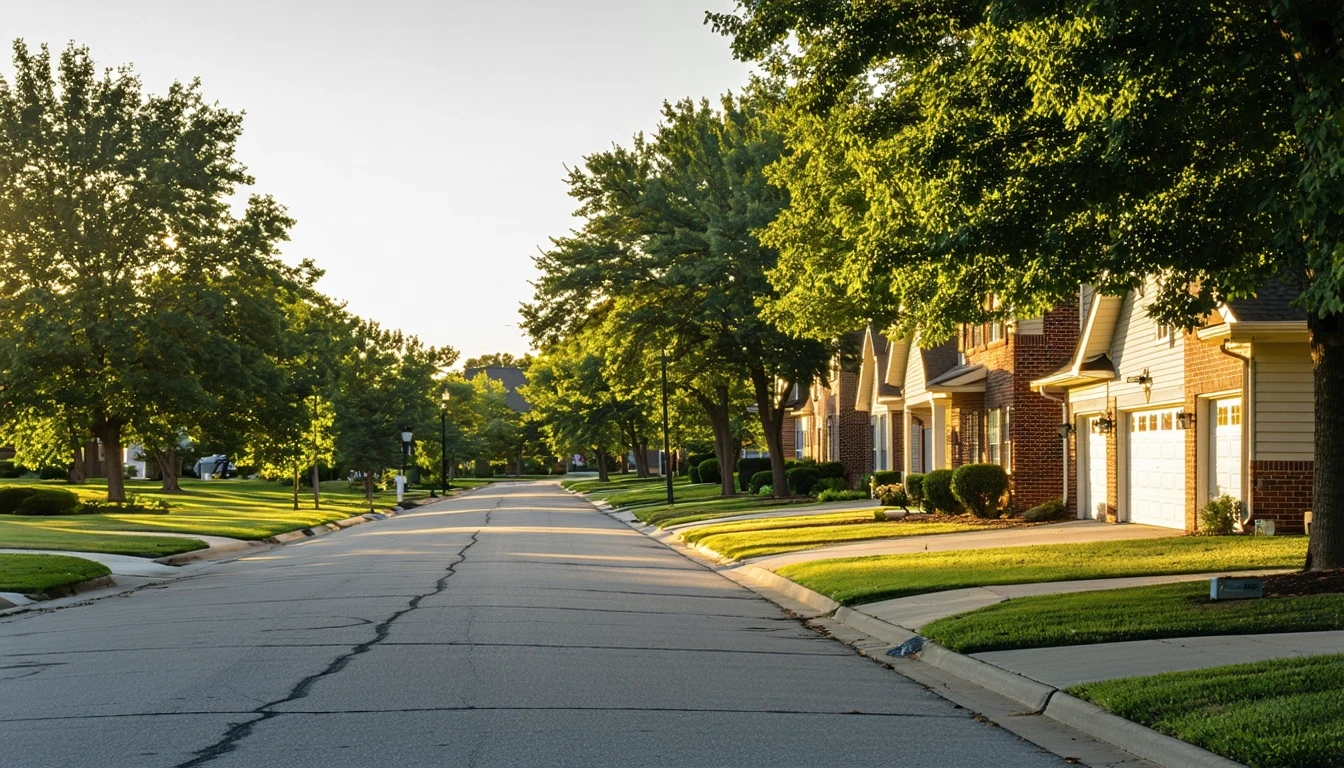
Edmond functions as a commuter suburb within the Oklahoma City metro, drawing families and professionals who want space, schools, and a quieter residential character without leaving the region entirely. The housing stock reflects that role: low-rise neighborhoods, detached homes with yards, and a layout that prioritizes car access over walkable commercial corridors.
The $304,700 median home value positions Edmond below many comparable suburbs in faster-growing metros, but it’s not a bargain market. Buyers here are paying for stability, school access, and a community that skews toward ownership rather than transient rental populations. The unemployment rate of 3.2% signals a steady local economy, which supports housing demand but also means inventory moves when priced correctly.
What newcomers often misunderstand is that Edmond’s housing affordability isn’t just about the purchase price—it’s about whether you’re prepared for the ongoing costs that come with suburban homeownership in a place where grocery density sits below typical thresholds and most errands require a car. The structure of daily life here adds friction that doesn’t show up in a mortgage calculator.
—
Renting in Edmond
At $1,257 per month, median gross rent in Edmond reflects a market where rental housing exists but isn’t the dominant mode. Most renters here occupy single-family homes, duplexes, or small apartment complexes rather than high-density buildings, which means utility costs often fall directly on the tenant and maintenance responsibilities can blur depending on lease terms.
Rental pressure in Edmond comes less from scarcity and more from the mismatch between what renters want (walkable access to groceries, transit options, lower car dependency) and what the city’s infrastructure actually provides. With food and grocery options concentrated along corridors rather than distributed evenly, renters without reliable transportation face logistical challenges that homeowners with two-car garages simply don’t encounter.
Lease renewals in Edmond tend to track broader regional trends rather than hyperlocal demand spikes, but renters should expect increases that reflect property tax adjustments, insurance rate changes, and landlord cost pass-throughs. The advantage of renting here is predictability within the lease term and the ability to avoid maintenance surprises; the disadvantage is limited control over long-term cost trajectory and fewer housing options that reduce car dependency.
—
Owning a Home in Edmond
Ownership in Edmond means taking on the full cost stack: property taxes, homeowners insurance, utilities, yard maintenance, and the structural upkeep that comes with aging single-family homes. The $304,700 median home value is the entry point, but the ongoing expenses determine whether ownership remains comfortable or becomes a source of financial strain.
Property taxes in Oklahoma are assessed locally, and while specific rates weren’t provided in the data, buyers should expect annual tax bills that adjust with assessed value changes and local budget needs. Unlike renters, who can walk away at lease end, owners absorb those increases directly and must plan for the possibility that tax exposure grows faster than income.
Homeowners insurance in Edmond reflects the region’s exposure to severe weather—hail, wind, and occasional tornadoes create claims risk that insurers price into premiums. Older homes or those with aging roofs face higher rates, and deductibles for wind and hail damage can be substantial. This isn’t a one-time cost; it’s an annual obligation that can shift dramatically after a bad storm season.
Utility exposure differs sharply between renters and owners. At 13.34¢/kWh for electricity and $36.97/MCF for natural gas, Edmond’s rates are moderate, but single-family homes with larger square footage, older HVAC systems, and full yard irrigation face higher seasonal bills than apartment renters. Cooling costs dominate summer months, while winter heating—though less extreme than northern climates—still drives noticeable gas usage during cold snaps.
Yard maintenance, gutter cleaning, HVAC servicing, and the eventual roof or water heater replacement all fall on the owner. These aren’t monthly expenses, but they’re predictable over time, and households without an emergency fund or maintenance reserve often find themselves caught off-guard when multiple systems age out simultaneously.
—
Apartment vs House in Edmond — Cost Behavior Comparison
| Expense Category | Apartment | House |
|---|---|---|
| Cooling & Heating | Lower square footage and shared walls reduce exposure; landlord may control system efficiency | Larger footprint and standalone structure increase seasonal utility swings; owner controls upgrades but absorbs full cost |
| Yard & Exterior Upkeep | Not applicable; landlord handles grounds | Mowing, edging, irrigation, and seasonal cleanup required; adds time and recurring expense |
| Storm & Weather Exposure | Landlord manages roof, siding, and structural repairs after severe weather | Owner pays for wind, hail, and storm damage repairs subject to insurance deductibles and coverage limits |
| Transportation Dependency | Same car dependency as houses; sparse grocery access affects both | Same car dependency as apartments; low errands accessibility limits non-car options |
Why these categories? The table reflects cost distinctions that actually vary in Edmond due to climate (cooling and storm exposure), housing stock (low-rise detached homes with yards), and infrastructure (sparse grocery density that affects both renters and owners equally). Categories like base rent vs mortgage weren’t included because they don’t explain cost behavior—they’re just different payment structures. The goal here is to show where apartment living reduces exposure and where it doesn’t.
—
Utilities & Upkeep Differences
Utility and maintenance exposure in Edmond is shaped by two factors: the dominance of single-family housing and the region’s climate swings. Summers bring extended heat that pushes air conditioning into daily use, while winters are generally mild but punctuated by occasional freezing stretches that require heating. Homes with older insulation, single-pane windows, or aging HVAC systems face noticeably higher bills during peak months.
Apartment renters benefit from smaller conditioned spaces and often share walls that buffer temperature extremes, reducing both cooling and heating costs. They also avoid direct responsibility for appliance replacement, water heater failures, and HVAC breakdowns—costs that homeowners must budget for as systems age.
Homeowners in Edmond face yard maintenance as a recurring obligation rather than an occasional task. The growing season is long, and irrigation during dry summer stretches can drive water bills higher. Gutter cleaning, roof inspections after hail events, and exterior paint touch-ups all add to the upkeep burden. These aren’t catastrophic expenses individually, but they compound over time and require either DIY labor or contractor costs.
The key difference isn’t that houses cost more—it’s that houses in Edmond expose owners to weather-driven volatility and deferred maintenance risk that renters can offload to landlords. For households with time, tools, and emergency savings, that tradeoff is manageable. For those without, it becomes a source of financial stress that wasn’t obvious at closing.
—
Rent vs Buy: Long-Term Exposure in Edmond
Renting in Edmond offers short-term cost predictability and the ability to avoid maintenance surprises, but it also means accepting that lease renewals will reflect landlord cost pass-throughs—property tax changes, insurance rate hikes, and regional rent pressure. Renters can’t control those increases, and they don’t build equity or lock in a fixed housing cost over time.
Ownership provides cost stability in one dimension—a fixed-rate mortgage payment—but introduces volatility in others. Property taxes can rise with assessed values or local budget needs. Insurance premiums shift with claims history and regional weather patterns. Maintenance costs are unpredictable in timing but inevitable over a long enough horizon. Owners gain control and equity accumulation, but they also absorb every cost increase and every repair directly.
The decision between renting and buying in Edmond isn’t about which is cheaper in year one—it’s about which risk profile fits your household. Renters trade equity for flexibility and lower exposure to weather-driven repair costs. Owners trade predictability for control and the ability to stabilize their largest monthly expense over decades. Both paths work, but only if the household understands what they’re taking on beyond the initial payment.
For families planning to stay in Edmond long-term, ownership makes sense if they can handle the full cost stack without stretching. For households in transition, testing the job market, or unwilling to manage yard work and storm repairs, renting avoids exposure that doesn’t show up in a lease agreement.
—
FAQs About Housing Costs in Edmond
Is $304,700 affordable for a median-income household in Edmond?
With median household income at $96,389 per year, a $304,700 home sits within traditional affordability guidelines for dual-income families with stable employment and minimal debt. However, affordability depends on the full cost stack—taxes, insurance, utilities, and maintenance—not just the mortgage. Single-income households or those without emergency reserves may find ongoing costs harder to absorb.
How much do utilities typically cost for a single-family home in Edmond?
Electricity at 13.34¢/kWh and natural gas at $36.97/MCF are moderate rates, but total utility costs depend on home size, insulation quality, HVAC efficiency, and seasonal weather. Larger homes with older systems face higher bills during summer cooling and winter heating periods. Apartment renters generally see lower utility costs due to smaller square footage and shared walls.
Does renting in Edmond make sense long-term?
Renting works long-term for households that value flexibility, want to avoid maintenance risk, or aren’t ready to absorb the full ownership cost stack. It doesn’t build equity, and lease renewals will reflect landlord cost increases, but it also avoids property tax exposure, insurance volatility, and weather-driven repair bills that homeowners face.
What hidden costs do new homeowners in Edmond often miss?
Buyers often underestimate ongoing expenses beyond the mortgage: annual property tax and insurance bills, HVAC servicing, yard maintenance, storm damage repairs, and the eventual replacement of roofs, water heaters, and appliances. These costs aren’t monthly, but they’re predictable over time and require either cash reserves or access to credit.
How does Edmond’s car dependency affect housing costs?
With grocery density below typical thresholds and errands accessibility limited, most households need at least one reliable vehicle—and often two. That adds insurance, fuel, maintenance, and depreciation costs on top of housing expenses. Renters and owners face the same transportation burden, but it’s a cost layer that doesn’t show up in rent or mortgage comparisons.
—
Making Housing Choices in Edmond
Housing costs in Edmond extend well beyond the purchase price or monthly rent. Ownership here means taking on property taxes, insurance, utilities, yard work, and weather-driven repairs in a market where single-family homes dominate and car dependency is the norm. Renting offers predictability and lower maintenance exposure, but it also means limited control over cost increases and fewer housing options that reduce reliance on driving.
The households that thrive in Edmond’s housing market are those who understand the full cost stack before committing—dual-income families with emergency reserves, buyers who can handle deferred maintenance without panic, and renters who accept that flexibility comes at the cost of equity accumulation. The households that struggle are those who stretch to afford the purchase price without planning for the ongoing expenses that follow.
For a broader look at where your money goes in Edmond, including how housing fits into the larger cost structure, see our cost overview guide. And if you’re planning a month of expenses in Edmond, our budget breakdown explains how housing, utilities, and transportation costs interact in practice.
How this article was built: In addition to public economic data, this article incorporates location-based experiential signals derived from anonymized geographic patterns—such as access density, walkability, and land-use mix—to reflect how day-to-day living actually feels in Edmond, OK.