
Eastvale’s housing market reflects its identity as a planned suburban community in Riverside County, built largely in the 2000s and designed around family living. With a median home value of $676,500 and median gross rent of $2,965 per month, the city sits at the higher end of Inland Empire pricing—closer to Orange County’s suburban fringe than to older Riverside neighborhoods. This isn’t a legacy market shaped by decades of turnover; it’s a newer, master-planned environment where housing costs are tightly tied to commute access, school quality expectations, and the amenities that come with recent development.
What surprises many newcomers is how much of the cost structure extends beyond the headline rent or purchase price. Property taxes, homeowners association fees, insurance, and maintenance aren’t afterthoughts—they’re recurring expenses that reshape the true cost of living here. Utilities, while not extreme, are influenced by Southern California’s energy pricing and the realities of cooling single-family homes in a warm, inland climate. And because Eastvale’s layout prioritizes car access over transit, transportation becomes a hidden but persistent cost layer for nearly every household.
This article breaks down the components of housing expense in Eastvale, explains how renting and owning diverge in cost behavior over time, and clarifies which households are positioned to absorb the financial structure this city requires.
The Housing Market in Eastvale Today
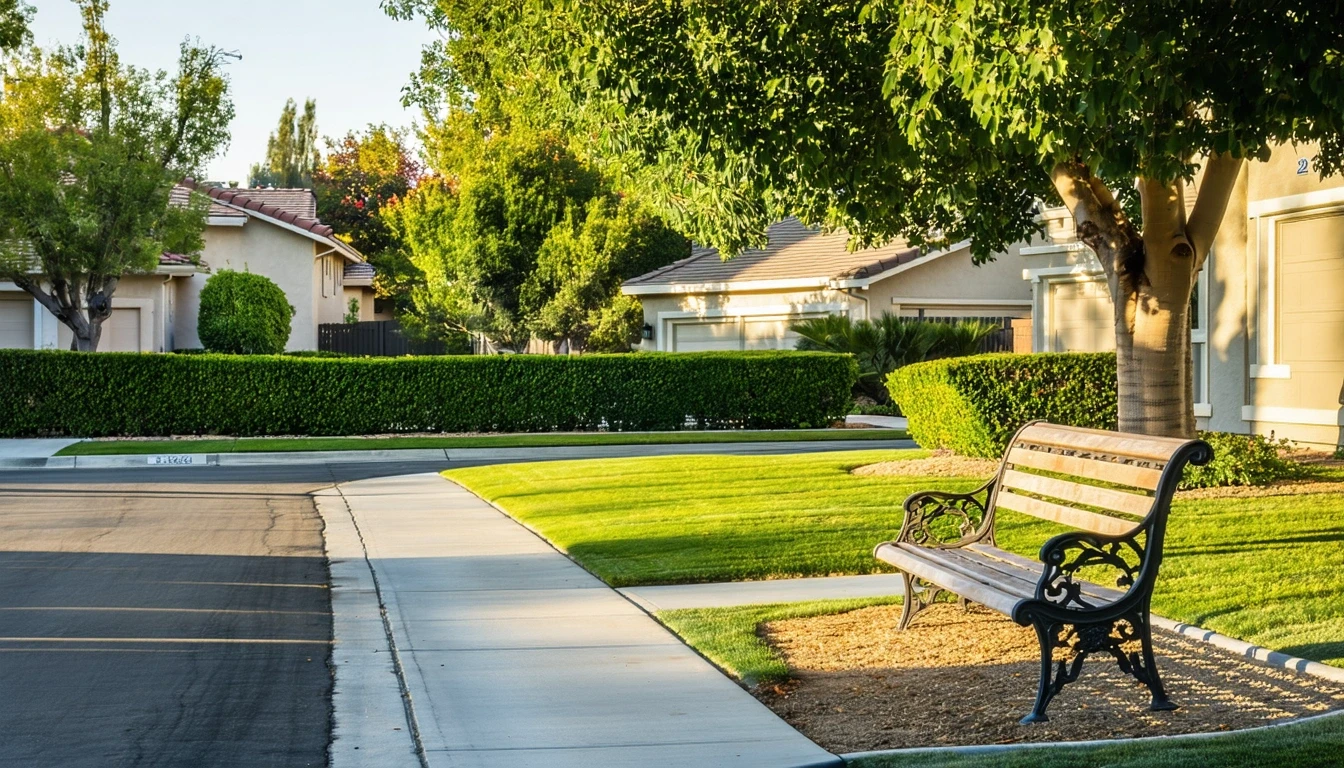
Eastvale’s housing stock is dominated by single-family homes built during the region’s mid-2000s expansion, with a smaller share of townhomes and apartment complexes clustered near commercial corridors. The city was incorporated in 2010, and much of its residential fabric reflects the master-planned aesthetic of that era: wide streets, attached garages, HOA-managed landscaping, and parks woven into neighborhood layouts. This isn’t a city with historic bungalows or aging apartment blocks—it’s a suburb designed for families with cars, steady incomes, and expectations of space.
The $676,500 median home value positions Eastvale above much of Riverside County but below the coastal premium of Orange County, which lies just to the west. That proximity matters: many Eastvale residents commute toward Orange County job centers or use the I-15 corridor to reach employment hubs in Corona, Ontario, or Riverside. The housing market here functions as an affordability release valve for families priced out of Irvine or Anaheim but unwilling to move farther inland. As a result, demand is driven less by local employment and more by regional access and school district reputation.
Because the housing stock is relatively new, maintenance surprises are less common than in older cities, but the trade-off is that HOA governance, landscaping standards, and community amenities are baked into the cost structure. Buyers and renters alike should expect that “housing” in Eastvale includes not just the structure, but the managed environment around it.
Renting in Eastvale
At $2,965 per month, the median gross rent in Eastvale reflects the cost of accessing newer housing stock in a family-oriented suburb with strong park infrastructure and proximity to major highways. This figure includes rent but may not fully capture utility costs, parking fees, or pet deposits, which vary by property and landlord. Renters here are typically paying for space, safety, and school access—not walkability, nightlife, or transit convenience.
Rental inventory skews toward larger units: two- and three-bedroom apartments, townhomes, and single-family home rentals. Studio and one-bedroom options are scarce, which makes Eastvale a poor fit for single renters or couples seeking compact, low-maintenance living. The rental market is structured around families, and pricing reflects that. Renters without children or without the need for multiple bedrooms will find better cost efficiency in older Riverside neighborhoods or in more urbanized parts of the Inland Empire.
Because Eastvale’s layout is car-dependent—grocery stores and dining are corridor-clustered rather than neighborhood-integrated—renters must budget for vehicle ownership, fuel, and insurance on top of rent. Public transit exists in the form of bus service, but it is not a viable substitute for a car in day-to-day logistics. This makes the true cost of renting higher than the rent figure alone suggests, especially for households managing commutes to Orange County or Los Angeles County job centers.
Rental volatility in Eastvale tends to follow regional patterns rather than hyper-local shocks. Lease renewals are influenced by Inland Empire demand, interest rate shifts, and the broader Southern California housing shortage. Renters should expect annual increases, but the market is not as volatile as coastal cities with constrained supply and speculative investment pressure.
Owning a Home in Eastvale
Ownership in Eastvale begins with the $676,500 median home value, but the full cost picture includes property taxes, homeowners association fees, insurance, and the ongoing expense of maintaining a single-family home in a warm, dry climate. These costs are not optional, and they do not remain static. Property taxes adjust with assessed value over time, HOA fees rise to cover community maintenance and amenity upgrades, and insurance premiums shift with regional risk assessments and carrier behavior.
Property taxes in California are governed by Proposition 13, which caps annual increases at 2% for existing owners but resets the assessed value upon sale. This means new buyers face higher tax bills than long-term residents, and that gap widens over time. While the property tax rate itself is not provided in the data, buyers should assume that the tax burden will be calculated on the purchase price, not the previous owner’s assessed value. This reset is a significant cost jump for anyone moving from a rental or from another state.
HOA fees are common in Eastvale, particularly in neighborhoods with shared parks, pools, and landscaped entryways. These fees fund amenities that define the suburban experience here—playgrounds, walking paths, green space maintenance—but they also represent a fixed monthly cost that does not build equity and cannot be eliminated. Buyers should verify HOA fee amounts and review the association’s financial health and reserve funding before closing, as underfunded HOAs can impose special assessments to cover deferred maintenance or unexpected repairs.
Homeowners insurance in Eastvale is shaped by California’s wildfire risk, even though the city itself is not in a high-fire-severity zone. Insurers price policies based on regional exposure, and premiums have risen across Southern California as carriers reassess risk and withdraw from certain markets. Buyers should budget for insurance costs that exceed national averages and should expect those costs to increase over time, particularly if state or federal policy shifts affect the availability of coverage.
Maintenance costs in Eastvale are driven by climate and housing type. Cooling systems work harder in summer heat, landscaping requires irrigation in a dry climate, and exterior surfaces endure sun exposure that accelerates wear. Roofs, HVAC systems, and water heaters have finite lifespans, and replacement costs are not trivial. Ownership here means budgeting for these cycles, not just the mortgage payment.
Apartment vs House in Eastvale — Cost Behavior Comparison
| Expense Category | Apartment | House |
|---|---|---|
| Cooling Costs | Lower due to smaller square footage and shared walls that reduce heat gain | Higher due to larger floor plans, more windows, and standalone structure exposed on all sides |
| Water & Landscaping | Typically included in rent or HOA; resident does not manage irrigation | Owner pays for irrigation, lawn care, and water usage in a dry climate requiring regular watering |
| HOA or Community Fees | Often embedded in rent; covers shared amenities and exterior maintenance | Separate monthly fee for community parks, pools, and landscaping; not optional and subject to increases |
| Maintenance Responsibility | Landlord handles HVAC, appliances, and structural repairs; tenant exposure is minimal | Owner bears full cost of HVAC replacement, roof repair, and system failures; no landlord buffer |
| Parking | Assigned or covered parking often included; some complexes charge separately | Garage included; no separate fee but adds to property tax basis and insurance cost |
Methodology note: This table reflects cost behavior differences driven by Eastvale’s climate (warm, dry summers requiring cooling and irrigation), housing stock (newer single-family homes with HOA governance), and infrastructure (car-dependent layout with limited transit). Categories omitted—such as heating costs and snow removal—do not vary meaningfully in this region and were excluded to focus on locally relevant distinctions.
Utilities & Upkeep Differences
Utility exposure in Eastvale is shaped by Southern California’s energy pricing and the city’s inland climate. Electricity rates stand at 31.91¢/kWh, which is above the national average and reflects California’s grid costs, renewable energy mandates, and tiered pricing structures. Natural gas is priced at $21.89 per MCF, used primarily for water heating and, in some homes, cooking. Heating demand is minimal due to mild winters, but cooling is a recurring summer expense, particularly in single-family homes with larger square footage and sun-exposed walls.
Apartment residents benefit from smaller spaces and shared walls, which reduce cooling load and lower electricity bills. Many complexes also include water and trash service in the rent, shifting those costs away from the tenant. House owners, by contrast, pay for all utilities separately and must manage irrigation for landscaping, which adds to water bills in a region where lawns and shrubs require consistent watering to survive the dry season.
Maintenance exposure diverges sharply between renters and owners. Renters call the landlord when the air conditioner fails or the water heater leaks; owners pay for the service call, the parts, and the labor. In a city where most homes are less than 20 years old, catastrophic failures are less common than in older housing markets, but systems still age, and replacement costs are significant. HVAC systems, in particular, are critical in Eastvale’s climate, and a failure during a summer heat wave is both uncomfortable and expensive to resolve quickly.
Homeowners should also budget for exterior maintenance: paint fades under intense sun, roofing materials degrade faster in heat, and concrete driveways crack as soil shifts. These are not annual expenses, but they are inevitable, and deferring them leads to larger bills later. HOA rules may also mandate certain maintenance standards, adding pressure to keep up appearances even when budgets are tight.
Rent vs Buy: Long-Term Exposure in Eastvale
The decision to rent or buy in Eastvale is less about monthly payment math and more about cost structure and control over time. Renters face annual lease renewals and the risk of rent increases, but they avoid property tax resets, HOA fee escalation, and the cost of replacing major home systems. Owners lock in a mortgage payment (if financed at a fixed rate) but take on every other cost that rises with inflation, policy changes, or deferred maintenance coming due.
Renting offers flexibility, which matters in a commuter city where job changes or remote work shifts can make proximity to Eastvale less essential. If a household’s employment moves to downtown Los Angeles or San Diego, breaking a lease is simpler than selling a home. Renters also avoid the transaction costs of buying and selling—realtor commissions, closing costs, and the time required to list and close a sale.
Ownership offers stability, particularly for families who value school continuity and want to avoid the disruption of moving. It also provides protection against rent increases and the ability to modify the home—renovations, landscaping changes, and interior upgrades that renters cannot make. But ownership in Eastvale requires a long time horizon to absorb transaction costs and to benefit from equity accumulation. Buyers who move within five years often find that closing costs, maintenance expenses, and realtor fees erode any home value gains.
Property taxes in California rise more slowly for existing owners than for new buyers, thanks to Proposition 13’s assessment cap. This creates a growing cost advantage for long-term owners, but it also means that new buyers enter at a higher tax basis and must hold the property long enough for that gap to matter. Renters, meanwhile, are indirectly paying the landlord’s property tax bill, but they are not locked into a specific assessed value or responsible for future increases tied to their own purchase.
Insurance and HOA fees are wildcards for owners. Both can rise unpredictably, and neither is within the homeowner’s control. Renters are insulated from these increases unless the landlord passes them through at lease renewal, and even then, renters can move. Owners cannot escape HOA fees without selling, and insurance is non-negotiable for anyone with a mortgage.
The long-term cost advantage of ownership depends on home value appreciation, which is not guaranteed. Eastvale’s market is tied to regional demand, interest rates, and the broader California housing shortage. Buyers who assume steady appreciation may find that economic downturns, policy changes, or shifts in remote work patterns alter the trajectory. Renters avoid this risk entirely but also forgo any equity upside.
FAQs About Housing Costs in Eastvale
What is the median home price in Eastvale, CA?
The median home value in Eastvale is $676,500, reflecting the city’s newer housing stock, family-oriented amenities, and proximity to Orange County job centers. This figure represents the middle of the market; individual home prices vary based on size, location, and condition.
How much does it cost to rent in Eastvale?
The median gross rent in Eastvale is $2,965 per month. This figure includes rent but may not cover utilities, parking, or other fees. Rental inventory is dominated by larger units—two- and three-bedroom apartments and single-family homes—making Eastvale less affordable for single renters or couples seeking smaller spaces.
Are HOA fees common in Eastvale?
Yes. Many neighborhoods in Eastvale are governed by homeowners associations that manage shared amenities such as parks, pools, and landscaping. HOA fees are a recurring monthly cost that does not build equity and can increase over time to cover maintenance and reserve funding. Buyers should verify fee amounts and review the association’s financial health before purchasing.
Is Eastvale affordable for first-time homebuyers?
Eastvale’s high median home value and car-dependent layout make it challenging for first-time buyers with limited savings or single incomes. The city is better suited to dual-income households with stable employment and the ability to cover not just the mortgage, but also property taxes, HOA fees, insurance, and maintenance. First-time buyers should also budget for transportation costs, as car ownership is essential here.
How do utility costs in Eastvale compare to other Inland Empire cities?
Electricity rates in Eastvale are 31.91¢/kWh, which is above the national average and consistent with Southern California’s energy pricing. Natural gas is priced at $21.89 per MCF. Utility costs are driven more by usage patterns—cooling in summer, water for landscaping—than by rate differences across Inland Empire cities. Single-family homeowners will see higher bills than apartment renters due to larger spaces and irrigation needs.
Making Housing Choices in Eastvale
Eastvale’s housing market rewards households with high incomes, long time horizons, and a preference for suburban stability over urban convenience. The city’s strengths—newer homes, abundant parks, strong playground infrastructure—come with a cost structure that extends well beyond the rent or mortgage payment. Property taxes reset for new buyers, HOA fees are common and recurring, and car ownership is non-negotiable. Utilities are manageable but not trivial, and maintenance costs are inevitable for homeowners in a climate that stresses cooling systems and exterior surfaces.
Renters gain flexibility and avoid the risks of ownership, but they pay a premium for newer housing stock and must absorb the cost of car dependency just as owners do. Families with children benefit most from Eastvale’s layout and amenities, while single renters, transit-dependent households, and first-time buyers with limited savings will find the city’s cost structure difficult to absorb. The decision to rent or buy here is not about monthly payment comparison—it’s about which cost behaviors and tradeoffs align with a household’s income stability, mobility needs, and long-term plans.
For more context on how housing fits into broader monthly expenses and day-to-day financial planning, see the related budget breakdown. And for households considering a move to Eastvale, understanding moving companies and logistics early can reduce stress and unexpected costs during the transition.
How this article was built: In addition to public economic data, this article incorporates location-based experiential signals derived from anonymized geographic patterns—such as access density, walkability, and land-use mix—to reflect how day-to-day living actually feels in Eastvale, CA.