

Eastvale and San Bernardino sit just miles apart in California’s Inland Empire, yet the financial experience of living in each feels fundamentally different in 2026. Both cities draw from the same regional job market and share similar climate patterns, but the structure of daily costs—where pressure concentrates, what remains predictable, and which households feel the squeeze—diverges sharply. This isn’t a story about one city being universally cheaper or better. It’s about understanding which cost mechanisms dominate your household, and which city aligns with how you actually live.
For the fictional Martinez family—two working parents with school-age kids—the choice between Eastvale and San Bernardino has become a kitchen-table debate. Eastvale offers newer neighborhoods, abundant parks, and a layout that supports walking to errands in pockets of the city. San Bernardino provides lower entry costs and established transit routes, but with older housing stock and a commute pattern that leans heavily on driving. The question isn’t which city costs less overall; it’s where each family member’s daily routine creates friction, and whether that friction shows up as upfront dollars, ongoing volatility, or time lost to logistics.
This comparison explains how cost structure differs between Eastvale and San Bernardino across housing, utilities, groceries, transportation, and taxes—focusing on exposure, predictability, and fit rather than attempting to declare a winner. By the end, you’ll understand which households thrive in each city, and why the same income can feel stable in one place and stretched thin in the other.
Housing Costs
Housing is where the clearest structural difference emerges. Eastvale’s median home value sits at $676,500, while San Bernardino’s is $347,100. For renters, the gap is similarly wide: Eastvale’s median gross rent is $2,965 per month, compared to San Bernardino’s $1,319 per month. These aren’t just different price points—they represent entirely different entry barriers and ongoing obligations.
In Eastvale, the housing stock skews newer, with master-planned communities, larger floor plans, and amenities like parks and playgrounds woven into neighborhood design. The upfront cost to enter this market—whether as a buyer assembling a down payment or a renter covering first month, last month, and deposit—is substantially higher. Once you’re in, however, the housing itself tends to be more predictable: newer construction often means lower maintenance surprises, better insulation, and less exposure to sudden repair costs. Homeowners face higher property tax obligations due to assessed values, but the trade-off is a more stable physical environment.
San Bernardino’s housing market offers a fundamentally different proposition. Lower entry costs make it accessible to households that would struggle to qualify for Eastvale’s rent or mortgage thresholds. The housing stock is older on average, which introduces more variability: some homes have been well-maintained and updated, while others carry deferred maintenance that can translate into unexpected expenses for both renters (via landlord pass-throughs) and owners (via direct repair costs). The ongoing cost experience in San Bernardino is less about the monthly payment and more about managing unpredictability—HVAC systems that fail in summer heat, plumbing that requires attention, and utility bills that spike due to poor insulation.
| Housing Metric | Eastvale | San Bernardino |
|---|---|---|
| Median Home Value | $676,500 | $347,100 |
| Median Gross Rent | $2,965/month | $1,319/month |
| Typical Housing Stock | Newer, master-planned | Older, mixed condition |
| Primary Cost Pressure | Entry barrier | Ongoing volatility |
For first-time buyers, San Bernardino’s lower home values reduce the down payment hurdle and monthly mortgage obligation, but the trade-off is accepting more exposure to maintenance and repair costs over time. Families prioritizing space, newer construction, and lower day-to-day friction may find Eastvale’s higher entry cost worth the reduction in ongoing surprises. Renters face a similar calculus: Eastvale’s higher rent buys access to newer units and amenities, while San Bernardino’s lower rent preserves cash flow but may come with older appliances, less efficient climate control, and variable landlord responsiveness.
Housing takeaway: Eastvale’s cost pressure is front-loaded—qualifying and moving in requires substantial resources, but ongoing housing costs are more predictable. San Bernardino’s pressure is distributed—entry is easier, but households must budget for variability in maintenance, repairs, and utility efficiency. High-income households with savings can absorb Eastvale’s entry barrier and benefit from stability. Households prioritizing immediate affordability or building savings while renting will find San Bernardino’s structure more accessible, provided they can manage unpredictability.
Utilities and Energy Costs
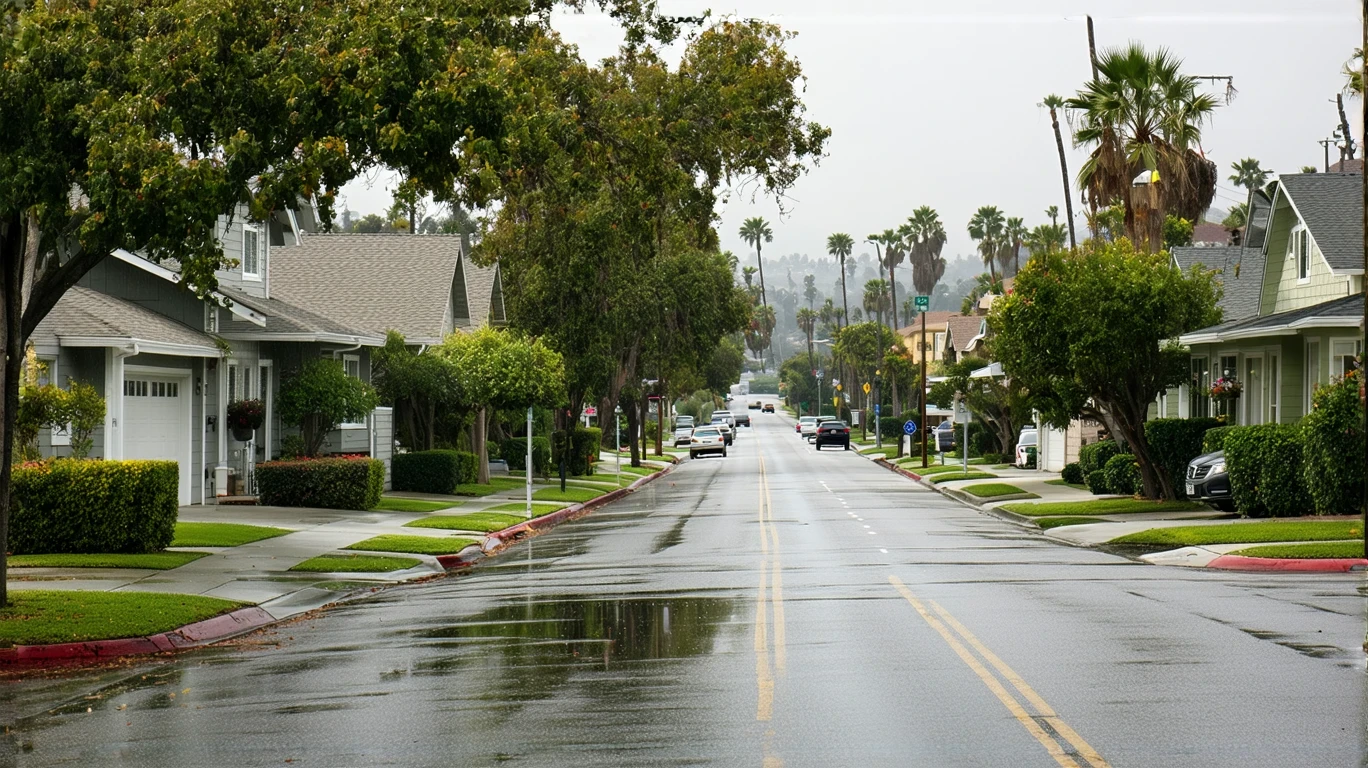
Utility costs in both cities are shaped by similar regional factors—hot, dry summers that demand extended cooling, and mild winters with minimal heating needs—but the experience diverges based on housing age, size, and efficiency. Eastvale’s electricity rate is 31.91¢/kWh, while San Bernardino’s is slightly higher at 33.60¢/kWh. Natural gas pricing is nearly identical ($21.89/MCF in Eastvale, $21.94/MCF in San Bernardino), meaning the difference in utility exposure comes down to how much energy a household actually uses, not what they pay per unit.
In Eastvale, newer homes with modern insulation, dual-pane windows, and efficient HVAC systems reduce baseline energy consumption. Larger floor plans mean more square footage to cool, but better construction mitigates some of that exposure. Households in single-family homes with two-car garages and open floor plans will still see elevated summer bills, but the variability is lower—cooling costs are high but predictable. Apartments and townhomes in Eastvale benefit from shared walls and smaller footprints, keeping utility bills more stable year-round.
San Bernardino’s older housing stock introduces more volatility. Homes built in earlier decades often lack modern insulation, have single-pane windows, and rely on aging HVAC systems that work harder to maintain comfortable temperatures. This doesn’t just raise baseline usage—it makes bills less predictable. A particularly hot week can push cooling costs sharply higher in an older home, and households may face the added burden of repair or replacement costs if an aging air conditioner fails mid-summer. Renters in older units may have less control over efficiency upgrades, leaving them exposed to landlord decisions about maintenance and equipment replacement.
Household size and daily routines amplify these differences. A family of four in a larger Eastvale home will face higher absolute utility costs due to square footage, but the monthly variation is manageable. The same family in an older San Bernardino home may see lower baseline costs in mild months, but sharper spikes when temperatures climb or when inefficient systems struggle. Single adults or couples in smaller units experience less dramatic swings in both cities, but San Bernardino renters in older buildings may still encounter higher-than-expected bills due to poor insulation or outdated appliances.
Utility takeaway: Eastvale’s utility exposure is driven by home size and lifestyle, but newer construction keeps costs more predictable. San Bernardino’s exposure is driven by housing age and efficiency, introducing more volatility and less control for renters. Households that value stable, plannable bills and can afford larger homes will find Eastvale’s structure easier to manage. Households willing to accept seasonal spikes and potential repair costs in exchange for lower baseline housing costs may find San Bernardino’s trade-off acceptable, especially if they can negotiate efficiency upgrades or choose newer rental units.
Groceries and Daily Expenses
Grocery and everyday spending pressure in Eastvale and San Bernardino is shaped less by price differences—both cities share the same regional price parity index—and more by access, convenience, and the friction involved in running errands. The structural differences show up in how much planning, driving, and time households invest to keep costs manageable.
Eastvale’s layout includes pockets of mixed-use development where grocery stores, pharmacies, and everyday retailers cluster along accessible corridors. Families in certain neighborhoods can walk or make short drives to handle weekly shopping, reducing both transportation costs and the temptation to make frequent convenience runs. The city’s high density of parks and playgrounds also supports a rhythm where errands can be combined with outdoor time, reducing the need for separate trips. However, Eastvale’s newer development means fewer discount grocery options and more reliance on mid-tier and premium chains, which can raise baseline grocery costs for households that don’t actively seek out sales or bulk purchasing.
San Bernardino offers a broader mix of grocery options, including discount chains, ethnic markets, and big-box stores that cater to price-sensitive shoppers. For households willing to plan around sales, buy in bulk, and comparison-shop across multiple stores, San Bernardino’s grocery landscape offers more flexibility to control costs. The trade-off is that errands often require more driving, more time, and more logistical coordination. Without the walkable pockets found in parts of Eastvale, even routine trips—picking up milk, grabbing a prescription—become car-dependent tasks that add incremental transportation costs and time friction.
Dining out and convenience spending follow a similar pattern. Eastvale’s newer commercial corridors include fast-casual chains and family-friendly restaurants that fit the city’s demographic profile, but these options skew toward mid-range pricing. San Bernardino’s more established restaurant scene includes a wider range of price points, from budget-friendly taquerias to sit-down dining, giving households more control over how much they spend when they choose not to cook. However, the convenience of grabbing takeout or stopping for coffee can quietly erode grocery savings if it becomes a frequent habit.
For single adults and couples, grocery pressure in both cities is manageable with planning, but Eastvale’s layout makes it easier to avoid impulse spending by reducing trip frequency. Families managing larger grocery volumes face a clearer trade-off: Eastvale’s convenience and walkability reduce logistical burden but may raise baseline costs, while San Bernardino’s price flexibility requires more active management and driving to capture savings.
Groceries takeaway: Eastvale’s cost pressure is driven by convenience and access—households pay for the ability to handle errands with less friction, but baseline grocery prices skew higher. San Bernardino’s pressure is driven by logistics and planning—households can find lower prices, but capturing those savings requires more time, more trips, and more coordination. Families prioritizing time savings and walkable errands will find Eastvale’s structure worth the cost. Households with flexible schedules and a willingness to shop strategically will find San Bernardino’s options more adaptable to tight budgets.
Taxes and Fees
Property taxes, sales taxes, and recurring local fees create different cost rhythms in Eastvale and San Bernardino, shaped by assessed home values, municipal service structures, and the prevalence of homeowner associations. While both cities fall under California’s broader tax framework, the way these obligations accumulate and affect household budgets varies significantly.
In Eastvale, higher median home values translate directly into higher annual property tax bills for homeowners. California’s Proposition 13 caps the base tax rate and limits annual increases, but the initial assessed value—set at purchase—determines the baseline obligation. A home valued at $676,500 carries a substantially higher property tax burden than one valued at $347,100, even at the same rate. For long-term Eastvale residents who purchased years ago, this burden grows slowly and predictably. For recent buyers or those planning to move in, the upfront property tax obligation is part of the higher entry cost.
Eastvale’s newer master-planned communities also introduce HOA fees as a common recurring cost. These fees vary widely depending on the neighborhood and amenities—some cover landscaping, street maintenance, and access to pools or parks, while others are minimal. For households accustomed to older neighborhoods without HOAs, this represents a new category of monthly obligation that doesn’t exist in much of San Bernardino’s housing stock. The trade-off is that HOA-managed neighborhoods often require less individual maintenance spending, as common areas and exterior upkeep are handled collectively.
San Bernardino’s lower home values reduce the property tax burden for owners, freeing up cash flow for other expenses or savings. However, older housing stock and less centralized neighborhood management mean that homeowners bear more direct responsibility for maintenance, repairs, and exterior upkeep—costs that can be unpredictable and difficult to budget for. Renters in both cities are indirectly affected by property taxes (landlords factor them into rent), but the lower baseline in San Bernardino contributes to the overall lower rent structure.
Sales taxes in both cities are set at the county and state level, meaning everyday purchases—groceries, gas, household goods—are taxed at similar rates. The difference in sales tax exposure comes down to spending volume and habits, not the rate itself. Households that spend more on taxable goods (dining out, retail purchases, fuel) will pay more in absolute sales tax, but this scales with income and lifestyle rather than location.
Taxes and fees takeaway: Eastvale’s tax and fee structure is front-loaded and ongoing—higher property taxes due to home values, plus HOA fees in many neighborhoods. The trade-off is more predictable maintenance and managed amenities. San Bernardino’s structure is lighter on recurring fees but shifts more maintenance responsibility and variability onto individual homeowners. Long-term homeowners in Eastvale benefit from Prop 13’s protections and stable HOA-managed environments. Recent buyers and renters face higher baseline obligations. San Bernardino homeowners trade lower taxes for more direct maintenance exposure, while renters benefit from lower baseline rent that reflects the reduced tax burden.
Transportation & Commute Reality
Transportation costs and commute patterns shape daily life differently in Eastvale and San Bernardino, driven by infrastructure, distance to employment centers, and the practical viability of alternatives to driving. While both cities sit in the car-dependent Inland Empire, the texture of getting around and the time-versus-money trade-offs vary in ways that affect household budgets and schedules.
Eastvale’s layout includes walkable pockets where pedestrian infrastructure supports short trips to parks, schools, and some errands. The pedestrian-to-road ratio exceeds typical suburban thresholds in parts of the city, and the presence of cycling infrastructure in limited areas suggests that some households can reduce car dependence for local errands. However, Eastvale remains primarily car-oriented for commuting to work, especially for households employed in Riverside, Ontario, or farther west toward Orange County. Gas prices in Eastvale sit at $4.61/gallon, meaning longer commutes or frequent driving add up quickly. The trade-off is that Eastvale’s newer roads, less congested intersections, and proximity to major highways can reduce commute time variability, even if the distance traveled is substantial.
San Bernardino offers more established public transit infrastructure, with bus service present throughout the city. The average commute time is 28 minutes, and 38.6% of workers face long commutes, reflecting the city’s role as a regional hub with connections to employment centers in Riverside, Los Angeles, and beyond. Gas prices are slightly lower at $4.22/gallon, which provides modest savings for households that drive frequently. However, the practical viability of reducing car dependence depends heavily on where you live and work—bus routes may cover your commute, or they may require transfers and extended travel times that make driving the only realistic option.
For single adults and couples without school-age children, San Bernardino’s transit options and lower gas prices can reduce transportation costs, especially if daily routines align with bus routes. Families managing school drop-offs, extracurricular activities, and grocery runs will likely find that car ownership remains non-negotiable in both cities, but Eastvale’s layout reduces the number of trips required by clustering errands and amenities within shorter distances. The time cost of commuting—whether spent in traffic or on a bus—also factors into household logistics, particularly for dual-income families coordinating schedules.
Transportation takeaway: Eastvale’s transportation pressure is driven by higher gas prices and car dependence for commuting, but walkable pockets and clustered amenities reduce the frequency of short trips. San Bernardino’s pressure is driven by longer average commutes and reliance on older transit infrastructure, but lower gas prices and established bus routes provide some flexibility for households willing to plan around transit schedules. Families prioritizing time savings and fewer daily trips will find Eastvale’s layout more efficient. Households with flexible schedules and a willingness to use transit or tolerate longer commutes will find San Bernardino’s lower transportation costs and established routes more adaptable.
Where Cost Pressure Concentrates
Housing dominates the cost experience in Eastvale. The higher entry barrier—whether measured in down payment, first month’s rent, or ongoing mortgage and property tax obligations—shapes every other financial decision. Households that can absorb this upfront cost gain access to newer construction, more predictable utility bills, walkable errands in parts of the city, and abundant green space. The trade-off is that flexibility to redirect income toward other goals—travel, education savings, discretionary spending—shrinks until housing costs are locked in and stable.
In San Bernardino, cost pressure is more distributed. Lower housing entry costs preserve cash flow and savings capacity, but ongoing expenses—utilities in older homes, maintenance surprises, transportation costs for longer commutes—introduce more variability. Households that thrive in San Bernardino are those that can manage unpredictability, plan around sales and discounts, and tolerate the logistical friction of car-dependent errands and transit schedules. The city rewards active financial management and flexibility, but punishes households that lack time or bandwidth to optimize.
Utilities and energy exposure follow housing stock. Eastvale’s newer homes reduce volatility but raise baseline costs due to larger square footage. San Bernardino’s older homes introduce sharper seasonal spikes and less control over efficiency, particularly for renters. Families in larger homes face higher absolute costs in Eastvale, but the predictability makes budgeting easier. Families in older San Bernardino homes face lower baseline costs but must prepare for summer cooling surges and potential repair expenses.
Daily living and groceries reflect access and convenience. Eastvale’s corridor-clustered errands and walkable pockets reduce trip frequency and time costs, but baseline grocery prices skew higher due to the mix of available stores. San Bernardino’s broader range of discount options and ethnic markets offer price flexibility, but capturing those savings requires more driving, more planning, and more time. For households with tight schedules, Eastvale’s convenience is worth the cost. For households with flexible routines and a focus on maximizing every dollar, San Bernardino’s structure offers more control.
Transportation and commute patterns introduce a time-versus-money trade-off. Eastvale’s higher gas prices and car dependence for commuting are offset by shorter local trips and less congested roads. San Bernardino’s lower gas prices and transit options provide flexibility, but longer average commutes and reliance on older infrastructure add time costs that can’t be ignored. Dual-income families coordinating drop-offs, pickups, and errands will feel this difference acutely.
The better choice depends on which costs dominate your household. Households sensitive to upfront barriers and ongoing volatility may prefer Eastvale’s higher entry cost in exchange for stability and reduced daily friction. Households sensitive to preserving cash flow and willing to manage variability may prefer San Bernardino’s lower entry cost and broader price flexibility. For high-income households, the difference is less about price and more about predictability and lifestyle fit. For moderate-income households, the difference is about where financial pressure shows up—at the front door, or spread across the month.
How the Same Income Feels in Eastvale vs San Bernardino
Single Adult
For a single adult, housing becomes the first non-negotiable cost, and the difference between Eastvale and San Bernardino is stark. In Eastvale, securing even a one-bedroom apartment requires substantial upfront cash and a higher share of monthly income, leaving less room for discretionary spending or savings. Flexibility exists in transportation—walkable errands reduce gas costs—but the baseline housing obligation dominates. In San Bernardino, lower rent preserves cash flow and allows for faster savings accumulation, but older housing stock introduces utility volatility and the need to budget for seasonal spikes. The role of commute friction depends on job location: Eastvale’s layout reduces local trip frequency, while San Bernardino’s transit options provide alternatives to driving if routes align with daily routines.
Dual-Income Couple
For a dual-income couple, the decision shifts from affordability to optimization. In Eastvale, higher housing costs are more manageable with two incomes, and the trade-off becomes whether the predictability of newer construction and reduced daily friction justifies the upfront commitment. Flexibility disappears in housing but reappears in lifestyle—walkable errands, abundant parks, and less time spent managing logistics. In San Bernardino, lower housing costs free up income for travel, dining out, or building savings, but the couple must actively manage grocery planning, utility variability, and transportation logistics. The time cost of commuting becomes more pronounced when both partners work, and the ability to combine errands or rely on transit determines whether San Bernardino’s lower baseline costs translate into actual financial breathing room.
Family with Kids
For families, non-negotiable costs expand to include school proximity, playground access, and the logistical complexity of coordinating multiple schedules. In Eastvale, higher housing costs buy access to newer neighborhoods with integrated parks, playgrounds, and schools within walking or short driving distance. The upfront cost is substantial, but the reduction in daily friction—fewer trips, more predictable routines, less time spent managing logistics—creates breathing room in the family schedule. In San Bernardino, lower housing costs preserve income for extracurriculars, education savings, or unexpected expenses, but the family must navigate older housing stock, longer commutes, and more car-dependent errands. Flexibility exists in grocery spending and the ability to shop strategically, but the time cost of managing a larger household in a less walkable environment adds friction that can’t be measured in dollars alone.
Decision Matrix: Which City Fits Which Household?
| Decision Factor | If You’re Sensitive to This… | Eastvale Tends to Fit When… | San Bernardino Tends to Fit When… |
|---|---|---|---|
| Housing entry + space needs | You prioritize newer construction and predictable ongoing costs over lower upfront barriers. | You have savings to cover higher entry costs and value stability in housing quality and maintenance. | You need to preserve cash flow and can manage variability in older housing stock and repair exposure. |
| Transportation dependence + commute friction | You want to minimize daily trip frequency and reduce time spent managing logistics. | You benefit from walkable errands in pockets of the city and can tolerate higher gas prices for longer commutes. | You can align daily routines with transit routes or accept longer commutes in exchange for lower gas prices. |
| Utility variability + home size exposure | You prefer predictable monthly bills and less exposure to seasonal spikes or repair costs. | You value newer construction with better insulation and efficient systems, even if baseline costs are higher due to square footage. | You can budget for seasonal volatility and potential HVAC or insulation issues in exchange for lower baseline housing costs. |
| Grocery strategy + convenience spending creep | You want to reduce trip frequency and avoid impulse spending driven by logistical friction. | You prioritize convenience and clustered errands, even if baseline grocery prices skew higher due to store mix. | You have time to plan around sales, shop multiple stores, and capture discounts in exchange for more driving and coordination. |
| Fees + friction costs (HOA, services, upkeep) | You want to minimize individual maintenance responsibility and benefit from managed amenities. | You accept HOA fees and higher property taxes in exchange for predictable upkeep and access to parks and pools. | You prefer lower recurring fees and are willing to manage your own maintenance and exterior upkeep directly. |
| Time budget (schedule flexibility, errands, logistics) | You need to minimize the time cost of daily routines and maximize schedule predictability. | You benefit from shorter local trips, walkable pockets, and integrated parks that reduce the need for separate outings. | You have flexible schedules and can absorb longer commutes or more driving in exchange for lower baseline housing costs. |
Lifestyle Fit
Beyond dollars and cents, Eastvale and San Bernardino offer fundamentally different daily rhythms. Eastvale’s newer development and master-planned neighborhoods create an environment where outdoor space is abundant and accessible. Parks exceed density thresholds, water features are present, and playgrounds are woven into residential areas. For families with young children, this translates into less driving to find green space and more opportunities to combine errands with outdoor time. The city’s mixed urban form—both residential and commercial land use detected—means that some neighborhoods support a rhythm where daily needs can be met without long drives, even if the city as a whole remains car-oriented.
San Bernardino’s character reflects its longer history and more established infrastructure. The city serves as a regional hub with connections to employment centers, healthcare facilities, and transit routes that extend beyond its borders. For households that value proximity to urban amenities, cultural diversity, and a broader mix of dining and entertainment options, San Bernardino offers more variety. The trade-off is that accessing these amenities often requires more intentional planning and driving, and the city’s older housing stock means that neighborhood quality varies more widely than in Eastvale’s newer developments.
Commute times and work-from-home flexibility also shape lifestyle fit. San Bernardino’s average commute of 28 minutes reflects its role as a connector city, with 12.3% of workers able to work from home. For households that can reduce commute frequency or rely on transit, this structure works. For those who must commute daily, the time cost adds up. Eastvale’s lack of commute data in the feed suggests variability, but the city’s proximity to major highways and newer road infrastructure generally supports faster travel times to regional employment centers, even if distances are substantial.
Recreation and culture also differ. Eastvale’s parks, playgrounds, and water features create a family-oriented environment where outdoor activity is part of the daily routine. San Bernardino’s longer history and denser commercial corridors offer more dining variety, cultural institutions, and entertainment options that appeal to adults and older households. The choice depends on whether your household prioritizes outdoor space and predictable routines, or access to a broader range of urban amenities and cultural experiences.
Quick facts: Eastvale’s park density exceeds high thresholds, with water features and playgrounds integrated throughout the city. San Bernardino’s transit infrastructure includes established bus routes, with clinics and pharmacies present for routine healthcare access.
Climate and housing interaction: Both cities experience hot, dry summers that demand extended air conditioning use, but Eastvale’s newer housing stock with modern insulation reduces the intensity of cooling costs compared to San Bernardino’s older homes. This doesn’t just affect utility bills—it shapes comfort and livability during peak summer months, particularly for families with young children or older adults sensitive to heat exposure.
Frequently Asked Questions
Is Eastvale or San Bernardino more affordable for renters in 2026?
San Bernardino offers lower median gross rent, making it more accessible for renters prioritizing cash flow and savings capacity. Eastvale’s higher rent buys access to newer construction, more predictable utility costs, and walkable errands in parts of the city. The better choice depends on whether you prioritize lower upfront costs or reduced ongoing friction and volatility.
How do grocery costs compare between Eastvale and San