
Between 2020 and 2024, U.S. grocery prices climbed more than 25 percent—outpacing wage growth in most metros and reshaping how families think about their food budgets. In Durham, NC, that pressure shows up not just at checkout, but in the choices households make about where to shop, how often to stock up, and whether convenience or price wins out on any given week. Understanding how grocery costs feel here, and why they vary so much by store tier and household size, matters for anyone planning a move or trying to get a handle on monthly expenses.
Durham sits just below the national average for overall cost of living, with a regional price parity index of 98, meaning goods and services here tend to run about 2 percent below the U.S. baseline. That modest discount shows up in some grocery categories, but the benefit isn’t uniform—and it doesn’t mean food shopping feels cheap. With a median household income of $74,710 per year, many Durham households have room to absorb grocery volatility, but singles, young families, and anyone on a fixed income still feel the squeeze when staple prices drift upward or when store access requires extra driving.
How Grocery Costs Feel in Durham
Grocery pressure in Durham is shaped less by a single “average” price level and more by the interaction between household size, income, and store choice. For a single person, per-person food costs run high because there’s no economy of scale—buying for one often means smaller packages, more frequent trips, and less ability to take advantage of bulk discounts. A couple shopping together can split costs and plan more efficiently, but they’re still sensitive to price swings on proteins, dairy, and fresh produce. Families with children face the steepest pressure: larger quantities, more frequent restocking, and less flexibility to substitute or skip categories when prices spike.
In Durham, food and grocery options are concentrated along commercial corridors rather than spread evenly across neighborhoods. That clustering means access depends heavily on proximity to retail strips. Some parts of the city—especially areas with high pedestrian-to-road ratios and mixed residential and commercial land use—support walking or biking to groceries, giving households more frequent access and the ability to compare prices across nearby stores. Other neighborhoods sit farther from these corridors, requiring a car trip and often defaulting to a single store or format. This structure amplifies the importance of store tier: households near discount or mid-tier options can shop strategically, while those reliant on convenience formats or isolated premium stores face higher baseline costs and less pricing flexibility.
The result is that grocery costs in Durham don’t feel uniform. They vary by where you live, how you get around, and whether you have the time and transportation to seek out better prices. For households with cars and flexible schedules, day-to-day costs stay manageable. For those relying on transit, walking, or limited store access, grocery pressure builds faster—not because prices are universally high, but because options narrow.
Grocery Price Signals (Illustrative)
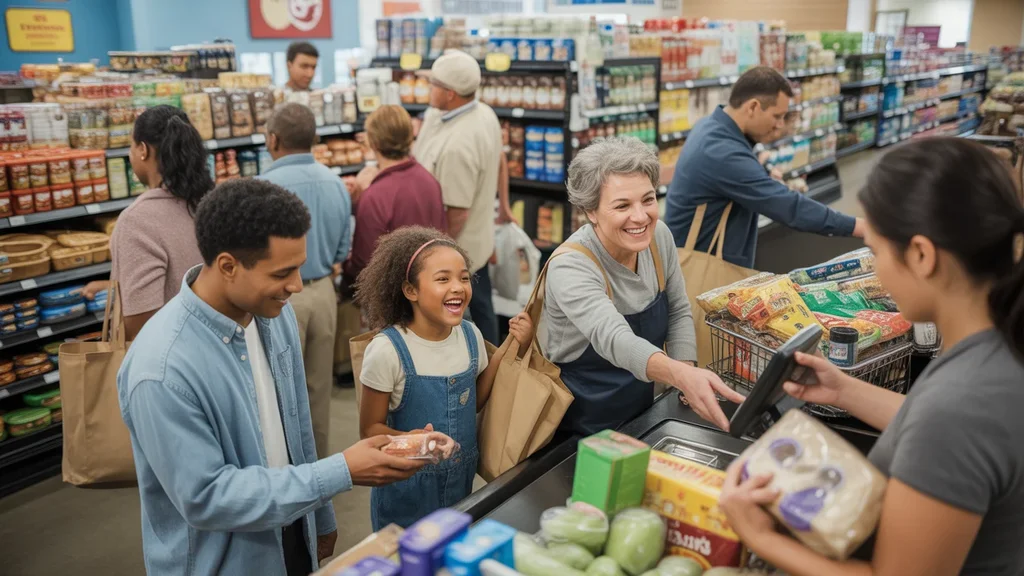
Item-level prices offer a snapshot of how staple costs compare locally—not a complete shopping list, but a set of anchors that help explain relative price positioning. The figures below are derived estimates based on national baselines adjusted by regional price parity, not observed local prices. They illustrate cost texture rather than checkout-accurate totals.
| Item | Price |
|---|---|
| Bread | $1.81/lb |
| Cheese | $4.75/lb |
| Chicken | $2.00/lb |
| Eggs | $2.53/dozen |
| Ground Beef | $6.62/lb |
| Milk | $4.02/half-gallon |
| Rice | $1.04/lb |
Derived estimate based on national baseline adjusted by regional price parity; not an observed local price.
These prices reflect mid-tier positioning—neither discount-floor nor premium-ceiling. Chicken and rice sit comfortably below national averages, while ground beef and cheese track closer to or slightly above typical metro pricing. Eggs and milk hover near the middle, sensitive to seasonal and supply-chain shifts but not dramatically elevated. The variation across categories matters more than any single figure: a household leaning heavily on proteins will feel ground beef and cheese costs more acutely, while one building meals around chicken, rice, and eggs can keep per-meal expenses lower.
What these numbers don’t capture is the spread between store tiers. A discount grocer in Durham might price chicken 20 to 30 percent below a premium format, while a convenience store near a residential pocket could run 15 to 25 percent above mid-tier. That range—often wider than the city-to-city differences people worry about—explains why store choice drives grocery pressure as much as the city itself.
Store Choice & Price Sensitivity
Grocery costs in Durham vary more by store tier than by neighborhood or season. Discount formats—no-frills chains focused on private label and high-volume turnover—offer the lowest baseline prices, often 15 to 25 percent below mid-tier grocers on staples like dairy, proteins, and packaged goods. These stores require more planning: limited selection, fewer specialty items, and sometimes less convenient locations. But for households prioritizing cost control, they deliver the most predictable savings.
Mid-tier grocers—regional and national chains with broader selection, frequent promotions, and loyalty programs—sit in the middle. Prices run higher than discount formats but lower than premium stores, and the trade-off is convenience: better produce variety, more brand options, and locations closer to residential areas. For couples and small families, mid-tier stores often hit the sweet spot between price and friction. Sales and loyalty discounts can bring per-item costs close to discount levels on rotating categories, rewarding households that plan around weekly ads.
Premium grocers—focused on organic, specialty, and prepared foods—charge the highest baseline prices, often 25 to 40 percent above discount formats on comparable items. The appeal isn’t price; it’s selection, quality perception, and convenience. For high-income households or those prioritizing specific dietary needs, the premium is worth it. For cost-sensitive shoppers, even occasional trips to premium formats can distort weekly spending.
In Durham, where grocery access clusters along corridors, the ability to move between tiers depends on transportation and time. Households with cars and flexible schedules can mix formats—discount for staples, mid-tier for fill-ins, premium for specialty items. Those relying on walking, transit, or limited store access often default to whichever format sits closest, losing the pricing flexibility that makes grocery costs manageable elsewhere in the city.
What Drives Grocery Pressure Here
Income plays a quieter role in Durham than in higher-cost metros, but it still shapes how grocery volatility feels. At $74,710 median household income, most Durham families can absorb moderate price swings without cutting categories. But that median masks wide variation: younger households, single-income families, and anyone earning below $50,000 feel grocery pressure more acutely, especially when proteins, dairy, or fresh produce spike. For these households, a 10 percent jump in chicken or eggs isn’t background noise—it’s a budget event that forces substitution or reduced frequency.
Household size amplifies sensitivity. A single person might spend less in absolute terms but faces the highest per-person cost: no bulk discounts, more packaging waste, and less ability to ride out price swings by cooking in volume. Couples gain efficiency but still feel pressure on high-ticket items like meat and cheese. Families with children face the steepest climb: larger quantities, less flexibility to skip categories, and constant restocking. A family of four buying mid-tier staples in Durham will spend substantially more than a couple, not just because they buy more, but because per-unit costs don’t scale down as volume rises—especially in mid-tier and premium formats.
Regional distribution patterns also matter. Durham’s position within the broader Research Triangle means it benefits from relatively dense grocery infrastructure and competitive pricing on shelf-stable goods. But fresh produce, dairy, and proteins—categories more sensitive to transportation and spoilage—see more volatility. Seasonal shifts in supply don’t create dramatic price swings here, but they do tighten margins for households already shopping at the edge of their budget.
Practical Ways People Manage Grocery Costs
Managing grocery costs in Durham starts with store format decisions. Households that can access discount grocers and plan around their limitations—narrower selection, fewer brands, less frequent restocking—gain the most consistent cost control. Shopping discount for staples and mid-tier for fill-ins splits the difference between price and convenience, reducing per-trip costs without adding excessive planning burden.
Buying in bulk lowers per-unit costs on non-perishables and freezer-friendly proteins, but only if storage and upfront cash flow allow it. A household with freezer space and the ability to spend more in a single trip can lock in lower per-pound pricing on chicken, ground beef, and cheese. Those without that flexibility pay the convenience premium on smaller packages.
Cooking at home consistently—rather than mixing home cooking with takeout or convenience meals—reduces per-meal costs substantially, but the savings depend on planning and time. Households that batch-cook or prep ingredients in advance stretch grocery dollars further than those buying for single meals or relying on pre-prepped items. The trade-off isn’t just money; it’s time, effort, and cognitive load.
Shopping sales and rotating proteins around weekly promotions helps, but it requires checking ads, adjusting meal plans, and sometimes visiting multiple stores. For households with the time and transportation, it works. For those without, the friction outweighs the benefit, and they default to paying regular price at whichever store is closest.
Store loyalty programs and digital coupons offer modest discounts—often 5 to 10 percent on rotating categories—but they require app downloads, account setup, and regular engagement. For tech-comfortable households, it’s low-effort savings. For others, it’s another layer of friction that doesn’t always pay off.
Groceries vs Eating Out (Directional)
The cost gap between cooking at home and eating out in Durham is wide enough that most households treat them as distinct budget categories rather than interchangeable options. A home-cooked meal built around chicken, rice, and vegetables runs a fraction of the cost of a comparable restaurant entrée, even at mid-tier dining spots. But the comparison isn’t purely financial: eating out saves time, eliminates cleanup, and offers variety that home cooking can’t always match.
For cost-conscious households, the tradeoff tilts heavily toward groceries. Cooking at home consistently keeps per-meal costs low and predictable, especially when shopping discount formats and planning around sales. Eating out becomes an occasional expense rather than a routine, reserved for convenience or social occasions rather than daily sustenance.
For higher-income households, the calculus shifts. The time saved by eating out or ordering in carries more weight, and the cost premium feels manageable. These households often mix strategies—cooking staple dinners at home during the week, eating out on weekends, and using prepared foods or meal kits to reduce cooking friction without fully outsourcing meals.
The key insight isn’t that one approach is universally better, but that the cost structure of each shapes where money goes and how much flexibility a household retains. Groceries offer the lowest per-meal cost but require the most planning and effort. Eating out maximizes convenience but compresses budget flexibility, especially for households already managing tight margins on housing and transportation.
FAQs About Grocery Costs in Durham (2026)
Is it cheaper to shop in bulk in Durham? Buying in bulk lowers per-unit costs on non-perishables and proteins, but only if you have storage space and upfront cash flow. Discount grocers and warehouse clubs offer the steepest per-pound savings, but the strategy works best for households that can freeze proteins and store dry goods long-term.
Which stores in Durham are best for low prices? Discount formats deliver the lowest baseline prices, often 15 to 25 percent below mid-tier grocers on staples. Mid-tier stores offer more variety and convenience, with rotating sales that can bring costs close to discount levels on promoted items. Premium grocers charge the most but focus on specialty and organic selection rather than price competition.
How much more do organic items cost in Durham? Organic products typically run 20 to 50 percent above conventional equivalents, with the widest gaps on produce, dairy, and proteins. The premium reflects certification costs and supply-chain differences, not local pricing quirks. Households prioritizing organic face higher grocery bills regardless of store tier.
How do grocery costs for two adults in Durham tend to compare to nearby cities? Durham’s regional price parity sits just below the national average, meaning grocery costs run modestly lower than in higher-cost metros like Raleigh or Chapel Hill but not dramatically cheaper. The bigger variation comes from store choice and access rather than city-to-city price differences.
How do households in Durham think about grocery spending when cooking at home? Most households treat groceries as a controllable expense—one where planning, store choice, and cooking habits directly influence cost. Families prioritize staples and plan around sales; singles balance convenience against per-person cost; higher-income households trade up for quality or time savings. The common thread is that grocery spending feels more flexible than housing or transportation, even when prices rise.
Does Durham’s corridor-clustered grocery access affect costs? Yes, indirectly. Households near commercial corridors can compare prices across multiple stores and formats, gaining pricing flexibility. Those farther from corridors often rely on a single store or format, losing the ability to shop strategically and sometimes paying convenience premiums. Access friction raises effective costs even when baseline prices stay moderate.
How does household size change grocery pressure in Durham? Singles face the highest per-person costs due to smaller packages and no bulk discounts. Couples gain efficiency but remain sensitive to high-ticket items like meat and cheese. Families with children face the steepest absolute costs and the least flexibility to substitute or skip categories when prices spike. Household size doesn’t just scale spending—it changes cost structure and sensitivity.
How Groceries Fit Into the Cost of Living in Durham
Groceries sit in the middle tier of household expenses in Durham—less dominant than housing, more controllable than transportation, and more variable than utilities. For most households, food costs represent a meaningful but manageable share of monthly spending, especially when compared to rent or mortgage payments. The difference is that grocery costs respond to behavior: store choice, meal planning, and cooking frequency all shift the outcome in ways that housing pressure and commute distance don’t.
That controllability matters most for households managing tight budgets. A family that shops discount formats, cooks at home consistently, and plans around sales can keep grocery costs stable even when prices drift upward. A household that defaults to convenience stores, eats out frequently, or shops premium formats will see food expenses climb faster and compress flexibility elsewhere. The gap between these outcomes—often several hundred dollars per month—explains why grocery strategy shapes financial stress as much as income level.
For a complete picture of how groceries interact with rent, utilities, transportation, and other recurring costs, the Monthly Spending in Durham: The Real Pressure Points article breaks down where money goes and which categories drive the tightest margins. Groceries are one lever among several, but they’re one of the few where planning and behavior deliver immediate, measurable results.
Understanding grocery costs in Durham isn’t about finding the single cheapest store or memorizing price lists—it’s about recognizing how store access, household size, and shopping habits combine to create pressure or flexibility. Households that align their strategy with their constraints and priorities keep food costs predictable. Those that don’t often find groceries drifting upward without a clear explanation, tightening budgets in ways that feel invisible until they add up.
How this article was built: In addition to public economic data, this article incorporates location-based experiential signals derived from anonymized geographic patterns—such as access density, walkability, and land-use mix—to reflect how day-to-day living actually feels in Durham, NC.