
Is Dublin the kind of place you grow roots—or just pass through? That question cuts to the heart of what makes this Columbus suburb both magnetic and polarizing. Dublin projects an image of suburban success: high incomes, top-rated schools, manicured neighborhoods, and a growing roster of parks and trails. But beneath the polish, there’s a tension between aspiration and accessibility, between planned comfort and organic texture. For some, Dublin feels like the reward for hard work—a place where families thrive and weekends unfold on bike paths and soccer fields. For others, it feels like a gated ideal: beautiful, but expensive, homogenous, and just a little too controlled.
Understanding Dublin’s vibe means understanding who it’s built for—and who it quietly excludes. The city’s median household income of $158,363 and median home value of $478,400 set a high bar for entry, and that economic reality shapes everything from the pace of conversation to the kinds of tradeoffs residents discuss. This isn’t a place where scrappiness is celebrated or where rough edges add character. It’s a place where things work, where systems are funded, and where the social contract leans heavily toward order, safety, and predictability. That clarity is liberating for some—and suffocating for others.
The Emotional Landscape of Dublin
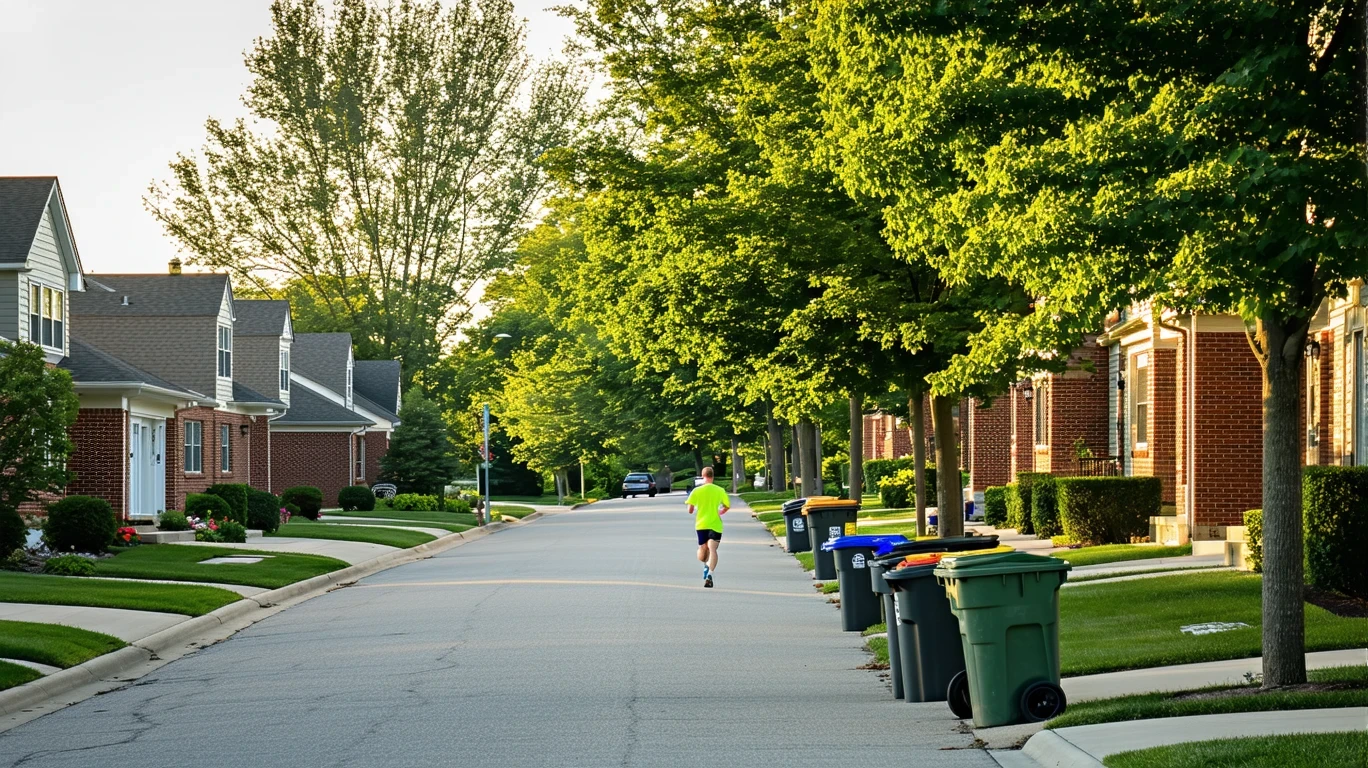
Dublin’s emotional tone is best described as confidently suburban. Residents who feel aligned here tend to value stability, green space, and family infrastructure over spontaneity or cultural grit. The city offers integrated green space access—parks, trails, and water features are woven throughout the community, making outdoor recreation a daily given rather than a weekend pilgrimage. For families with young kids or active retirees, that accessibility translates into a lifestyle where exercise, fresh air, and neighborhood connection happen naturally.
At the same time, Dublin’s walkable pockets and notable bike infrastructure distinguish it from more car-dependent suburbs. The pedestrian-to-road ratio exceeds typical suburban thresholds, and cycling infrastructure is present throughout parts of the city. That means errands, coffee runs, and school drop-offs don’t always require a car—at least in certain neighborhoods. Broadly accessible daily errands, with high food and grocery density, reinforce the sense that Dublin is designed for convenience. You’re not driving fifteen minutes for milk; you’re walking to a nearby store, passing neighbors on the sidewalk, and feeling like the city’s infrastructure supports your rhythm rather than fighting it.
But convenience comes with a cost—literally and emotionally. The high cost of entry creates a community that skews affluent, professional, and family-focused. That homogeneity can feel reassuring if you’re looking for shared values and predictable social norms. It can feel isolating if you’re looking for diversity, edge, or the kind of friction that makes a place feel alive. Dublin’s vibe is pleasant, but it’s not surprising. It’s a place where things go according to plan—and for some, that’s exactly the problem.
Social Media Buzz in Dublin
Online, Dublin residents tend to cluster around a few recurring themes: pride in schools and safety, frustration with housing pressure, and ambivalence about growth. The tone is rarely angry, but it’s often protective. People who love Dublin want to preserve what makes it work; people who feel priced out or left behind express that loss quietly, often in the form of questions rather than accusations.
“We moved here for the schools and the parks, and it’s delivered on both. But the cost of everything—housing, taxes, even groceries—feels relentless.”
“Dublin has this weird mix of walkable downtown pockets and sprawling subdivisions. If you’re in the right neighborhood, you can bike everywhere. If you’re not, you’re driving just like any other suburb.”
“It’s a great place to raise kids, but I’m not sure it’s a great place to be a kid. Everything feels so scheduled and supervised. There’s no room to just wander.”
Discussion threads often revolve around the tension between growth and identity. New developments bring amenities and tax revenue, but they also bring traffic, density, and a sense that Dublin is losing its small-town feel. Long-time residents express nostalgia for a quieter, less polished version of the city; newcomers defend the conveniences and infrastructure that attracted them in the first place. Neither side is wrong, but the conversation rarely resolves—it just cycles.
Local News Tone
Local coverage of Dublin tends to frame the city through the lens of managed growth and civic investment. The tone is rarely critical, but it’s not boosterish either—it’s more like a steady hum of progress reports and community debates. Headlines and story angles often fall into predictable categories:
- “New Mixed-Use Development Promises Walkability and Retail”
- “School District Funding Debate Highlights Tax Tensions”
- “Residents Weigh Convenience vs Quiet as City Expands”
- “Parks and Trails Network Continues to Grow”
- “Community Debates What Growth Should Look Like”
The framing reflects Dublin’s self-image: a city that plans carefully, invests in infrastructure, and tries to balance competing priorities. But the subtext is always present—growth is inevitable, and the question isn’t whether Dublin will change, but whether it can change without losing the qualities that made it desirable in the first place. That tension shows up in zoning debates, school board meetings, and online comment sections, where residents parse the difference between “development” and “overdevelopment” with the precision of contract lawyers.
Review-Based Public Perception
On platforms like Google, Yelp, and Nextdoor, Dublin’s reputation is built on reliability and expectation matching. People who wanted a polished, family-friendly suburb tend to leave glowing reviews. People who wanted texture, spontaneity, or affordability tend to leave measured critiques—not angry, just disappointed.
Positive reviews emphasize:
- Top-rated schools and safe neighborhoods
- Well-maintained parks, trails, and green space
- Convenient access to groceries, restaurants, and services
- Walkable downtown pockets with local shops and patios
- Strong sense of community and civic engagement
Critical reviews focus on:
- High cost of housing and property taxes
- Lack of nightlife, cultural venues, or “grit”
- Homogeneity—demographically and architecturally
- Traffic congestion during peak hours, especially near new developments
- Limited public transit (bus service present, but car still needed for most trips)
Neighborhood variation matters here. Newer planned areas tend to feel more suburban and car-dependent, with larger homes and wider streets. Older pockets near the downtown core offer more walkability, mixed-use development, and a sense of place. If you’re evaluating Dublin, the question isn’t just “Is this city right for me?” but “Which part of Dublin is right for me?”
Comparison to Nearby Cities
| Aspect | Dublin | Columbus | Hilliard |
|---|---|---|---|
| Overall Vibe | Polished, affluent, family-focused | Urban, diverse, culturally dense | Suburban, affordable, quieter |
| Walkability | Pockets of high walkability, mixed overall | Strong in core neighborhoods | Limited, car-dependent |
| Cost of Entry | High (home values and rent above regional average) | Moderate to high (varies by neighborhood) | Moderate (more accessible than Dublin) |
| Transit Access | Bus service only, car still needed | Bus and limited rail, better coverage | Minimal, car-dependent |
| Green Space | Integrated, abundant, well-maintained | Present but varies by neighborhood | Present, suburban park model |
| Cultural Texture | Limited, planned, family-oriented | Rich, diverse, spontaneous | Minimal, quiet, residential |
Choosing between Dublin, Columbus, and Hilliard comes down to what you’re optimizing for. If you want urban energy, cultural venues, and transit access, Columbus offers more texture and spontaneity—but you’ll trade some safety, school quality, and suburban polish. If you want affordability and quiet, Hilliard delivers a more accessible version of suburban life—but you’ll sacrifice some of Dublin’s walkability, parks, and civic investment. Dublin sits in the middle: more polished and expensive than Hilliard, more suburban and family-focused than Columbus. It’s the choice for households who can afford the premium and value the infrastructure that premium buys.
What Locals Are Saying
“We moved here from a denser neighborhood in Columbus, and the tradeoff has been worth it. The schools are excellent, the parks are everywhere, and I can bike to the grocery store. But I do miss the spontaneity—the random coffee shop, the weird little bookstore, the sense that something unexpected might happen.”
“Dublin feels like it was designed by a committee—and I mean that as a compliment and a critique. Everything works. Everything is clean. But there’s no soul, no grit. It’s a great place to raise kids, but I’m not sure it’s a great place to be an adult.”
“The cost is brutal. We’re paying more in property taxes here than we did in rent in our last city. But the return is visible—good schools, safe streets, well-funded parks. It’s not a scam, but it’s not for everyone.”
“I love the trails and the green space. On weekends, we can walk to the farmers market, grab coffee, and spend the afternoon at the park without getting in the car. That’s rare in a suburb, and it’s worth a lot to us.”
“Dublin is fine if you’re a family with kids and a six-figure income. If you’re single, young, or cost-sensitive, it’s going to feel exclusionary. The vibe is nice, but it’s not welcoming.”
“We’re empty nesters, and Dublin has been perfect for this phase. We don’t need the schools anymore, but we love the walkability, the hospital access, and the sense that the city is well-managed. It’s not exciting, but it’s comfortable.”
“The bus service is better than nothing, but it’s not real transit. You still need a car for most trips. If you’re coming from a city with rail or frequent bus service, Dublin is going to feel car-dependent.”
Does Dublin Feel Like a Good Fit?
Dublin doesn’t ask you to figure it out—it tells you exactly what it is. It’s a place built for affluent families who value schools, safety, parks, and predictability. If that’s your profile, Dublin delivers with remarkable consistency. The infrastructure works, the green space is abundant, and the day-to-day costs are justified by the quality of services you receive in return. You’re paying for a system that functions, and for many households, that clarity is worth the premium.
But if you’re looking for affordability, cultural diversity, or urban spontaneity, Dublin is going to feel like a mismatch. The high cost of entry isn’t just financial—it’s social and emotional. The city’s homogeneity and polish can feel reassuring or stifling, depending on what you’re looking for. And while walkable pockets and broadly accessible errands offer relief from total car dependency, the bus-only transit system means you’ll still need a car for most trips. Dublin is suburban, and it doesn’t apologize for that.
Ultimately, Dublin works best for households who can afford the cost and align with the values. If you’re a family prioritizing schools and outdoor access, or a professional seeking suburban comfort with some walkability, Dublin offers a well-executed version of that life. If you’re cost-sensitive, transit-dependent, or craving texture and surprise, you’ll likely feel the friction. The city isn’t trying to be all things to all people—it’s trying to be one thing very well. Whether that thing fits you is the only question that matters.
For more insight into what it takes to live comfortably here, explore how income, expectations, and household priorities shape the Dublin experience.
How this article was built: In addition to public economic data, this article incorporates location-based experiential signals derived from anonymized geographic patterns—such as access density, walkability, and land-use mix—to reflect how day-to-day living actually feels in Dublin, OH.
The perspectives shown reflect commonly expressed local sentiment and recurring themes in public discussion, rather than individual accounts.