
Is Dublin expensive to live in? Dublin is considered expensive in 2026, with a median home value of $478,400 anchoring the cost structure. The value proposition depends on housing entry cost versus day-to-day accessibility—errands and healthcare are broadly reachable, but ownership remains the dominant financial commitment.
You’re staring at a spreadsheet, trying to figure out if Dublin makes sense. The numbers look big, but you’re not sure which ones actually matter—or whether the tradeoffs balance out once you’re there. Here’s what drives costs in Dublin, where the pressure points sit, and how different household situations experience the financial reality.
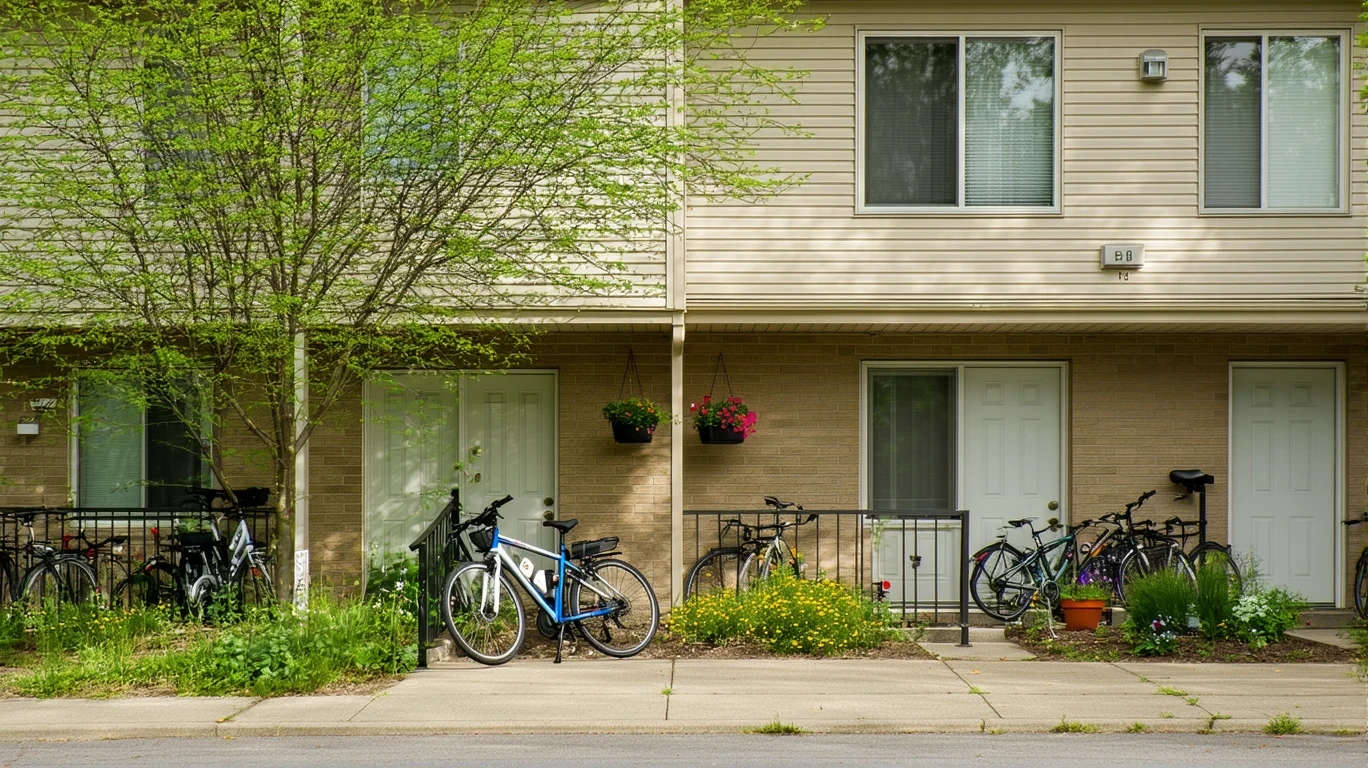
Overall Cost of Living Snapshot
Dublin’s cost structure is shaped primarily by housing entry barriers, with a median home value of $478,400 setting the baseline for ownership. The regional price parity index of 95 indicates that day-to-day prices run slightly below the national baseline, but that advantage is overwhelmed by the upfront and ongoing costs of securing housing. Median household income sits at $158,363 per year, which translates to roughly $13,197 in gross monthly income—enough to meet the standard 30% housing affordability heuristic for ownership, but leaving limited room for error if other recurring costs stack up.
The unemployment rate of 4.0% reflects a stable local economy, and the infrastructure supports a relatively low-friction daily routine: grocery density exceeds high thresholds, parks are integrated throughout the area, and a hospital is present. Bus service exists, though rail transit does not. Walkability is concentrated in pockets rather than uniform, and bike infrastructure is notably present. The result is a cost profile where housing dominates, but transportation and utility seasonality introduce secondary variability depending on household composition and commute patterns.
Driver verdict: Housing entry cost is the primary gate; surprises come from transportation dependency for work travel and heating exposure during cold months, not from groceries or routine errands.
Housing Costs (Primary Driver)
At $478,400, the median home value in Dublin represents a substantial commitment that defines long-term cost exposure. For context, applying the standard 30% affordability heuristic to the median household income of $158,363 annually (about $13,197 gross per month) suggests a housing budget ceiling around $3,959 per month before taxes, insurance, and maintenance. That threshold accommodates ownership costs for many households, but it leaves little cushion for those entering the market with smaller down payments or higher debt-to-income ratios.
Median gross rent sits at $1,541 per month, which offers a lower entry point than ownership but still represents a significant recurring obligation. Renting avoids property tax exposure, maintenance volatility, and the opportunity cost of a large down payment, but it also means no equity accumulation and exposure to renewal increases over time. The gap between rental and ownership costs narrows quickly once property taxes, insurance, and upkeep are factored in, making Dublin more of a buying market for households planning to stay long-term.
The housing stock reflects a mix of building heights and land uses, with both residential and commercial zones present. This supports a functional daily routine without requiring long trips for errands, but it doesn’t eliminate the need for a vehicle if your work is outside walkable pockets. Pods vs trucks: which move is best for you? becomes a relevant question once you’ve committed to the housing entry cost.
| Housing Type | Cost Anchor | What That Buys You |
|---|---|---|
| Ownership | $478,400 median home value | Equity accumulation, stable monthly costs, exposure to maintenance and tax increases |
| Rental | $1,541 per month median rent | Lower entry barrier, flexibility, exposure to renewal increases, no equity |
Conclusion: Dublin is a buying-dominant market. Renting works as a transitional strategy or for households prioritizing flexibility, but ownership is the long-term cost anchor.
Utilities & Energy Risk
Electricity in Dublin runs 17.66¢ per kilowatt-hour. For illustrative context, a household using around 1,000 kWh per month would face a baseline electric bill near $177 before fees and taxes. That’s a moderate starting point, but actual exposure depends heavily on cooling and heating loads. Current conditions—11°F outside, feeling like 2°F—make it clear that heating dominates winter months, and natural gas pricing at $23.03 per thousand cubic feet (MCF) becomes the relevant variable.
Natural gas usage varies with insulation quality, thermostat settings, and home size, but a household using roughly 1 MCF per month during heating season (equivalent to about 100 therms) would see a gas bill in the range of $23 before fees and delivery charges, for illustrative purposes. Extended cold stretches increase usage, and the variability between mild and severe winters introduces meaningful swings in total utility costs. Summer cooling loads are less extreme in this climate, but air conditioning still contributes to electricity usage during warmer months.
The risk here is moderate: utility costs are predictable in direction but not in magnitude. Households in older homes or those with longer heating seasons face higher exposure. Efficiency upgrades—better insulation, programmable thermostats, high-efficiency furnaces—reduce usage and help stabilize bills, though they require upfront investment.
Risk classification: Moderate. Seasonal volatility is present, but it’s manageable with planning and efficiency measures. Utility costs are a secondary pressure point, not a primary cost driver.
Groceries & Daily Costs
Grocery costs in Dublin reflect a regional price parity index of 95, meaning day-to-day food prices run slightly below the national baseline. Derived estimates place bread around $1.74 per pound, ground beef near $6.35 per pound, and milk at $3.84 per half-gallon. (Derived estimate based on national baseline adjusted by regional price parity; not an observed local price.) These figures suggest moderate grocery pressure—not cheap, but not a major cost spike relative to housing or transportation.
The infrastructure supports low-friction grocery access: food and grocery establishment density both exceed high thresholds, meaning most households can reach multiple options without long drives. That accessibility reduces the hidden costs of time and fuel that accumulate in less-dense areas. For a household of two adults, weekly grocery spending might fall in a moderate range; for a family of four, the pressure increases but remains proportional to income levels typical in Dublin.
The practical takeaway is that groceries don’t dominate cost structure here. They’re a steady, recurring line item, but housing entry and transportation dependency create larger financial exposure.
Transportation Reality
Gas prices in Dublin sit at $2.83 per gallon, a moderate baseline that doesn’t create acute pain at the pump but still adds up over time. For illustrative context, a commuter driving 25 miles round trip daily in a vehicle averaging 25 miles per gallon would use about one gallon per day, translating to roughly $85 per month in fuel costs before accounting for maintenance, insurance, or parking. That’s a manageable recurring expense for one vehicle, but it scales quickly for households requiring two cars or longer commutes.
Dublin’s infrastructure includes bus service but no rail transit, and walkability is concentrated in pockets rather than spread uniformly. Bike infrastructure is notably present, with a high bike-to-road ratio, which supports recreational cycling and short local trips. However, the absence of rail and the limited reach of bus routes mean that most work commutes require a personal vehicle unless your job is within the walkable core or accessible by bus.
The experiential reality is that daily errands—groceries, pharmacies, routine healthcare—are broadly accessible without long drives, thanks to high food and grocery density and the presence of a hospital. But getting to work, especially if it’s outside Dublin or in a suburban office park, typically requires a car. That creates a recurring exposure tied to fuel prices, vehicle depreciation, and maintenance cycles. Households with one commuter face moderate transportation costs; those with two working adults and two vehicles face higher cumulative exposure.
Transportation is a recurring exposure, not a one-time cost. The structure of Dublin supports low-friction errands, but work travel usually requires vehicle ownership, and that dependency compounds over time.
Cost Exposure Profiles
Dublin’s cost structure creates different exposure levels depending on housing status, commute patterns, and household composition. Here’s how the financial pressure distributes across common situations:
First-time buyers face the highest entry barrier. A $478,400 home requires a substantial down payment and commits the household to property taxes, insurance, and maintenance on top of the mortgage. Even with strong income, the upfront cost and ongoing obligations leave less flexibility for other priorities. The tradeoff is equity accumulation and stable long-term housing costs, but the initial gate is steep.
Renters experience moderate exposure. At $1,541 per month, rent is significant but lower than ownership costs in the near term. The risk is renewal increases over time and no equity build. Renters avoid maintenance volatility and property tax swings, but they remain exposed to landlord decisions and market-rate adjustments.
Car commuters carry recurring fuel and vehicle costs that scale with distance and frequency. A single commuter with a moderate drive faces manageable monthly fuel costs, but two-vehicle households see that exposure double. Maintenance, insurance, and depreciation add layers that aren’t always visible in monthly budgets but accumulate over years.
Households within walkable pockets benefit from lower daily friction. Errands, healthcare, and parks are reachable without a car, which reduces both direct costs (fuel, wear) and indirect costs (time, convenience). However, this advantage doesn’t eliminate the need for a vehicle if work is outside the walkable core—it just reduces how often you need to use it.
The key distinction is between housing entry exposure and ongoing operational exposure. Housing dominates the upfront and long-term commitment; transportation and utilities create recurring variability that depends on behavior, location, and household size. Groceries and daily costs are steady but secondary.
Frequently Asked Questions
Is Dublin more affordable than Columbus in 2026? Dublin’s median home value of $478,400 tends to run higher than many Columbus neighborhoods, though specific comparisons depend on the area. Day-to-day costs like groceries and gas are similar, but housing entry is the primary differentiator.
What does a typical cost profile look like in Dublin? Housing dominates, with ownership or rent taking the largest share of monthly expenses. Transportation costs scale with commute length and vehicle count, while utilities introduce moderate seasonal swings. Groceries and errands are accessible and moderately priced.
Do utilities cost more in Dublin than nearby areas? Electricity at 17.66¢ per kWh and natural gas at $23.03 per MCF are moderate baselines. Costs vary more by home efficiency and usage patterns than by location within the metro area.
What costs tend to surprise newcomers in Dublin? Transportation dependency for work commutes often exceeds expectations, especially for households needing two vehicles. Heating costs during cold months can also spike if the home is older or poorly insulated.
Are property taxes higher in Dublin than nearby suburbs? Property tax rates vary by jurisdiction and are not included in this data, but the higher median home value in Dublin means that even average tax rates result in larger absolute tax bills compared to areas with lower home values.
Is Dublin a good fit for renters long-term? Renting works as a transitional strategy or for households prioritizing flexibility, but the gap between rental and ownership costs narrows over time. Dublin’s housing market favors buyers planning to stay long-term.
How does car dependency affect monthly costs in Dublin? A single commuter with a moderate drive might spend around $85 per month on fuel alone, before insurance, maintenance, or depreciation. Two-vehicle households see that baseline double, making transportation a significant recurring line item.
Can you live in Dublin without a car? Daily errands—groceries, healthcare, parks—are broadly accessible on foot or bike in certain pockets, thanks to high density and integrated infrastructure. However, most work commutes require a vehicle unless your job is within the bus service area or walkable core.
How this article was built: In addition to public economic data, this article incorporates location-based experiential signals derived from anonymized geographic patterns—such as access density, walkability, and land-use mix—to reflect how day-to-day living actually feels in Dublin, OH.
—