
A first-time renter in Draper pays $1,735 per month for a median apartment and faces a market shaped by family-oriented housing stock, strong school infrastructure, and commute access to Salt Lake City. A first-time buyer confronts a $663,400 median home value in a city where ownership means navigating suburban maintenance exposure, property tax volatility, and governance structures that vary widely by neighborhood. Both paths require understanding how Draper’s housing costs behave over time—not just what they cost today.
This article explains housing cost structure and tradeoffs in Draper, including rent, ownership, taxes, and long-term exposure. It helps readers decide whether renting or buying fits Draper’s market, which housing costs are predictable versus volatile, and how local conditions change the cost experience over time.
The Housing Market in Draper Today
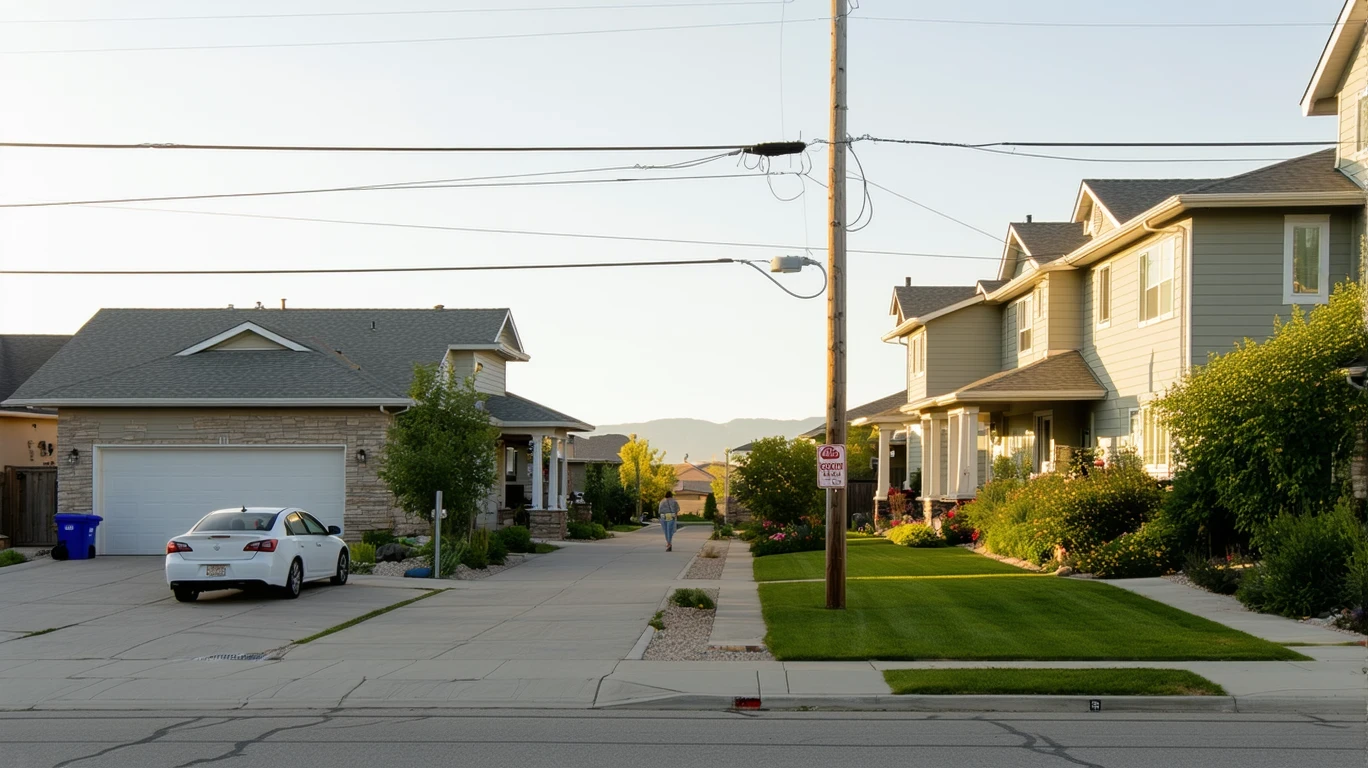
Draper sits at the southern edge of the Salt Lake Valley, where suburban density meets mountain access and commute corridors. The city’s housing market reflects its role as a family-oriented suburb with strong school density, integrated park access, and rail transit connections that reduce—but don’t eliminate—car dependency. Median household income in Draper reaches $126,041 per year, shaping a market where dual-income families dominate ownership and single-income renters face structural pressure.
What newcomers often misunderstand is that Draper’s housing stock isn’t uniform. The city contains walkable pockets where pedestrian infrastructure supports daily errands alongside car-oriented subdivisions where every trip requires planning. Food and grocery options cluster along commercial corridors rather than spreading evenly, meaning location within Draper determines whether a household can walk to essentials or must drive for every gallon of milk. This internal variation creates meaningful cost differences even within the same ZIP code.
Home values in Draper exceed regional norms, driven by school access, outdoor amenity density, and proximity to tech employment corridors. Renters face competition from families seeking temporary housing before buying, which tightens availability and pushes median rent above levels seen in older Salt Lake suburbs. The market rewards households who understand how commute time, errands friction, and school boundaries interact with housing costs.
Renting in Draper
Median gross rent in Draper stands at $1,735 per month, reflecting demand from families, early-career professionals, and households waiting for ownership opportunities. Rental pressure in Draper stems from limited apartment construction relative to single-family development, meaning renters often compete for units in complexes built decades ago or newer developments priced for dual-income tenants.
Location within Draper determines rental experience. Units near rail stations and commercial corridors offer reduced car dependency and walkable errands access, but command premium rents. Apartments farther from transit and grocery clusters cost less but require reliable vehicle access and longer planning windows for daily tasks. Renters who assume Draper offers uniform suburban convenience often underestimate how much errands accessibility varies by neighborhood.
Lease renewals in Draper follow broader market pressure rather than predictable increments. Renters should expect variability tied to regional housing demand, school calendar timing, and turnover rates in family-oriented complexes. Unlike older urban markets where rent control or tenant protections create stability, Draper’s rental market operates with minimal regulatory friction, meaning landlords adjust pricing based on current conditions rather than historical baselines.
Owning a Home in Draper
Median home value in Draper reaches $663,400, positioning ownership as a long-term commitment rather than an entry-level option. Buyers in Draper acquire exposure to property taxes, homeowner association governance, maintenance cycles tied to suburban housing stock, and utility costs shaped by heating and cooling seasons. Ownership in Draper means managing these exposures over years, not months.
Property taxes in Draper fluctuate with assessed values, local school funding needs, and county-level budget cycles. Buyers should expect tax bills to rise over time, driven by home value appreciation and municipal service expansion. Unlike rent, which resets annually, property taxes compound gradually, creating long-term cost pressure that owners must absorb without the option to relocate easily.
Homeowner associations govern many Draper neighborhoods, introducing monthly fees that cover landscaping, snow removal, and shared amenities. HOA costs vary widely—some neighborhoods charge minimal fees for basic services, while others impose hundreds of dollars monthly for pools, trails, and community centers. Buyers must verify HOA obligations before closing, as these fees represent non-negotiable fixed costs that persist regardless of household usage.
Maintenance exposure in Draper reflects suburban housing patterns: single-family homes with yards, driveways, HVAC systems, and roofing that ages predictably. Owners face periodic replacement cycles for furnaces, water heaters, and exterior finishes, with costs amplified by Draper’s temperature swings between summer heat and winter cold. Unlike apartment renters who call landlords for repairs, owners absorb these costs directly and must budget for irregular but inevitable expenses.
Apartment vs House in Draper — Cost Behavior Comparison
| Expense Category | Apartment | House |
|---|---|---|
| Base Housing Cost | $1,735/month median rent | $663,400 median value (ownership) |
| Heating & Cooling Exposure | Shared walls reduce heating/cooling load; landlord often controls system efficiency | Full exposure to seasonal temperature swings; owner controls efficiency upgrades but absorbs all usage costs |
| Maintenance Responsibility | Landlord handles HVAC, appliances, exterior; tenant calls for repairs | Owner handles all systems, roof, driveway, yard; must budget for replacement cycles |
| Errands & Mobility Friction | Apartments near rail and corridors reduce car dependency; units farther out require vehicle planning | Houses often located in car-oriented subdivisions; grocery and errands require driving unless in walkable pockets |
| Governance & Fees | Rent includes most fees; tenant avoids HOA exposure | HOA fees common in Draper neighborhoods; vary widely and represent fixed monthly costs |
Why these categories differ in Draper: The table reflects Draper’s suburban housing stock, where single-family homes dominate ownership and apartments cluster near transit and commercial corridors. Heating and cooling exposure matters because Draper experiences temperature swings that drive seasonal utility costs. Errands friction varies because food and grocery density clusters along corridors rather than spreading evenly, meaning location determines whether daily tasks require constant driving. HOA prevalence reflects Draper’s development patterns, where neighborhood governance structures are common but inconsistent. Categories like property taxes and insurance were omitted because they don’t differ meaningfully by housing type—they’re driven by value and coverage, not structure.
Utilities & Upkeep Differences
Utility exposure in Draper depends on housing type, system efficiency, and seasonal intensity. Electricity in Draper costs 13.69¢/kWh, and natural gas runs $11.40/MCF—rates that translate into noticeable bills during summer cooling and winter heating months. Apartment renters often benefit from shared walls that reduce heating and cooling load, while house owners face full exposure to temperature swings and must manage system efficiency directly.
Draper’s climate drives utility behavior. Summer heat pushes air conditioning usage into dominant territory for houses with poor insulation or aging HVAC systems. Winter cold increases natural gas demand for heating, especially in older homes with single-pane windows or minimal weatherization. Apartment renters avoid some of this exposure because landlords control system upgrades, but they also lack the ability to invest in efficiency improvements that reduce long-term costs.
Maintenance exposure differs sharply between apartments and houses in Draper. Apartment tenants call landlords when appliances fail, HVAC systems break, or plumbing leaks. House owners absorb these costs directly and must budget for water heater replacements, furnace repairs, and roof maintenance that arrives on predictable but irregular cycles. Draper’s suburban housing stock includes many homes built in the 1990s and 2000s, meaning buyers should expect systems approaching end-of-life and plan for replacement costs within the first decade of ownership.
Yard and exterior maintenance adds another layer for house owners. Draper’s integrated park access and outdoor amenity density create neighborhood expectations for landscaping upkeep, driveway maintenance, and exterior appearance. Owners in HOA-governed neighborhoods face additional pressure to meet community standards, with potential fines for neglect. Apartment renters avoid this entirely, as landlords handle exterior maintenance and landscaping.
Rent vs Buy: Long-Term Exposure in Draper
Renting in Draper offers flexibility and predictable monthly costs, but exposes households to lease renewal volatility and limits control over housing quality. Renters avoid property tax increases, maintenance surprises, and HOA governance, but they also build no equity and face potential displacement if landlords sell or convert units. For households uncertain about long-term plans or unwilling to absorb ownership risk, renting provides a stable short-term path with clear exit options.
Owning in Draper shifts exposure from monthly rent volatility to long-term cost accumulation. Property taxes rise gradually with assessed values and municipal budget needs. Maintenance costs arrive irregularly but inevitably, driven by system age and climate stress. HOA fees persist regardless of household usage, and owners cannot relocate without selling—a process that depends on market timing and transaction costs. Ownership in Draper rewards households who plan to stay long enough to absorb these costs and benefit from equity accumulation, but punishes those who overextend or underestimate maintenance exposure.
The structural difference between renting and owning in Draper isn’t about monthly payments—it’s about control, predictability, and risk profile. Renters trade long-term equity for short-term flexibility and maintenance avoidance. Owners trade flexibility for control over housing quality, tax treatment, and the ability to benefit from home value appreciation. Neither path is universally better; the right choice depends on household income stability, family planning, and tolerance for irregular expenses.
Draper’s housing market rewards ownership for dual-income families with stable employment and long-term plans. The city’s strong school infrastructure, integrated park access, and rail transit connections make it attractive for families willing to commit to suburban ownership. Single-income renters and early-career individuals face structural pressure from high home values and competitive rental markets, meaning they must prioritize location within Draper to minimize car dependency and errands friction.
How this article was built: In addition to public economic data, this article incorporates location-based experiential signals derived from anonymized geographic patterns—such as access density, walkability, and land-use mix—to reflect how day-to-day living actually feels in Draper, UT.
FAQs About Housing Costs in Draper
Is renting or buying more common in Draper, UT?
Ownership dominates Draper’s housing market, driven by family-oriented demand and strong school infrastructure. Renters typically occupy apartments near transit corridors or temporary housing while saving for down payments. The city’s median home value and income levels favor dual-income households who can absorb ownership costs over time.
How much do property taxes typically cost for homeowners in Draper?
Property tax rates in Draper depend on assessed home values, local school funding needs, and county budget cycles. Owners should expect taxes to rise gradually as home values appreciate and municipal services expand. Unlike rent, property taxes compound over time and represent a long-term cost exposure that owners cannot avoid without selling.
Do most neighborhoods in Draper have HOA fees?
Many Draper neighborhoods include homeowner associations that charge monthly fees for landscaping, snow removal, and shared amenities. HOA costs vary widely—some neighborhoods charge minimal fees, while others impose hundreds of dollars monthly for pools, trails, and community centers. Buyers must verify HOA obligations before closing, as these fees represent fixed costs that persist regardless of household usage.
How does location within Draper affect housing costs?
Location within Draper determines errands accessibility, commute friction, and car dependency. Homes and apartments near rail stations and commercial corridors command premium prices but reduce transportation costs and time spent driving. Housing farther from transit and grocery clusters costs less upfront but requires reliable vehicle access and longer planning windows for daily tasks. The cost difference isn’t just rent or mortgage—it’s the cumulative burden of mobility and errands friction.
What housing costs in Draper change over time?
For renters, lease renewals introduce volatility tied to regional housing demand and turnover rates. For owners, property taxes rise gradually with assessed values, maintenance costs arrive on irregular cycles, and HOA fees adjust based on neighborhood budget needs. Utility costs fluctuate seasonally but remain tied to system efficiency and household behavior. The key difference is that renters face annual resets, while owners absorb compounding long-term exposure.
Making Housing Choices in Draper
Housing costs in Draper reflect a suburban market shaped by family demand, strong infrastructure, and internal variation in walkability and errands access. Median rent of $1,735 per month and median home values of $663,400 position Draper as a market that rewards dual-income households with long-term plans and challenges single-income renters or early-career individuals. The city’s pedestrian-to-road ratio and rail access create pockets where daily errands don’t require constant driving, but grocery and food options cluster along corridors rather than spreading evenly—meaning location within Draper determines whether a household can walk to essentials or must plan around car trips.
Renters in Draper gain flexibility and avoid maintenance exposure but face lease renewal volatility and limited control over housing quality. Owners absorb property tax increases, maintenance cycles, and HOA governance but build equity and control their living environment. Neither path is universally better; the right choice depends on household income stability, family planning, and tolerance for irregular expenses.
For readers exploring Draper Affordability: What’s Easy, What’s Expensive, housing represents the largest single cost category and the primary driver of financial pressure. Understanding how rent and ownership costs behave over time—not just what they cost today—helps households make decisions that fit their income, mobility needs, and long-term plans. Draper’s housing market rewards those who understand how school access, park density, and transit connections interact with cost structure, and punishes those who assume suburban uniformity or underestimate maintenance exposure.