
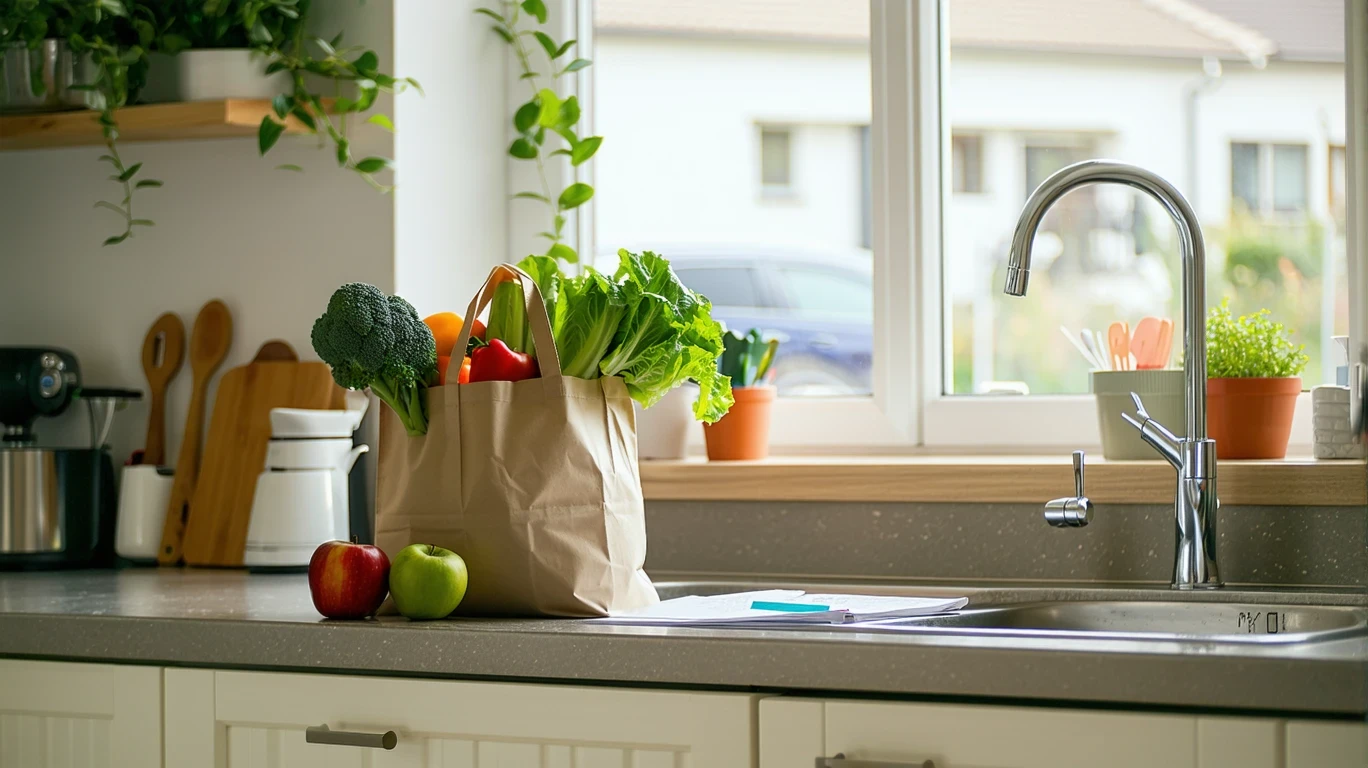
Can You Stay Under $100 at the Grocery Store in Draper?
Stand in the checkout line at any grocery store in Draper, and you’ll see the same quiet calculus playing out: can I keep this under $100? For some households, that’s a weekly target. For others, it’s a single trip for a family of four. The answer depends less on Draper’s grocery prices—which track slightly below the national baseline—and more on which store you choose, how many people you’re feeding, and whether you’re filling a cart or grabbing essentials. Draper’s regional price parity sits at 96, meaning the cost of goods here runs about 4% below the national average. That modest discount shows up in grocery aisles, but it doesn’t override the bigger forces shaping your food bill: household size, income pressure, and store tier.
Grocery costs in Draper aren’t punishing, but they’re not invisible either. A household earning close to the city’s median income of $126,041 per year will barely register the difference between mid-tier and premium stores. A single adult earning half that—or a family of four stretching a tighter budget—will feel every dollar. The question isn’t whether Draper is expensive for groceries. It’s whether your household has enough income cushion to ignore the price gaps between store tiers, or whether you’re planning every trip around sales, bulk buys, and discount aisles.
This article breaks down how grocery prices feel in Draper, which households notice the pressure most, and how store choice and shopping habits shape what you actually spend. We’re not simulating a grocery receipt—we’re explaining the forces that make food costs feel tight or manageable, and what levers you control.
How Grocery Costs Feel in Draper
Grocery prices in Draper sit in a middle zone: not cheap enough to ignore, not high enough to dominate household budgets for most earners. The regional price parity of 96 creates a small tailwind—staples cost slightly less here than in cities where the index exceeds 100—but that advantage is easy to lose if you default to premium stores or skip planning. For a household earning near the median, grocery costs blend into the background. For a single adult or a family with multiple kids, they demand attention.
Who notices grocery costs most? Singles and small households feel item-level price swings more acutely because they can’t absorb waste or spread fixed costs across volume. A $6.28-per-pound ground beef price matters when you’re buying a single pound. Families, on the other hand, feel pressure from volume: even modest per-unit prices add up when you’re filling a cart for four or five people multiple times a month. High earners in Draper—households pulling in six figures—can afford to prioritize convenience and quality over price. Median and below-median earners have to think harder about where they shop and what goes in the cart.
The grocery experience in Draper also depends on access patterns. Food and grocery options here are concentrated along corridors rather than evenly distributed across neighborhoods. That means most households plan grocery trips by car, weighing proximity against price tier. Some pockets of the city support walkable errands—pedestrian infrastructure is strong in certain areas—but grocery density sits in the medium band overall. You’re not stumbling into a store on your way home from work; you’re making an intentional trip, often to a specific store that fits your budget or preferences.
Grocery Price Signals (Illustrative)
These prices illustrate how staple items tend to compare locally—not a full shopping list. They’re derived estimates based on the national baseline adjusted by Draper’s regional price parity, not observed checkout prices. Use them to understand relative positioning, not to predict your receipt.
| Item | Price |
|---|---|
| Bread | $1.72/lb |
| Cheese | $4.54/lb |
| Chicken | $1.96/lb |
| Eggs | $2.75/dozen |
| Ground Beef | $6.28/lb |
| Milk | $3.84/half-gallon |
| Rice | $1.02/lb |
Derived estimate based on national baseline adjusted by regional price parity; not an observed local price.
What stands out? Protein costs—ground beef, chicken, cheese—carry the most weight in a typical cart. Eggs and milk sit in a comfortable middle range. Rice and bread are low-cost anchors. If you’re trying to keep a trip under $100, the math hinges on how much protein you buy and whether you’re stocking up or filling gaps. A household buying two pounds of ground beef, a rotisserie chicken, and a block of cheese is already halfway to that ceiling before adding produce, snacks, or pantry staples.
Store Choice & Price Sensitivity
Grocery price pressure in Draper varies more by store tier than by any single “average” experience. Discount stores—think no-frills chains focused on private label and high-volume turnover—offer the lowest per-unit prices but require more planning and flexibility. You’re trading brand selection and convenience for cost control. Mid-tier stores—regional and national chains with broader selection and moderate pricing—serve as the default for most households. They balance accessibility, variety, and price without requiring extreme couponing or bulk commitment. Premium stores—organic-focused, specialty grocers, or high-service formats—charge more for quality, curation, and convenience, but they’re accessible without strain for households earning near Draper’s median income.
Store choice matters most for households where grocery costs represent a meaningful share of discretionary income. A single adult earning $50,000 will notice a 20–30% price gap between discount and premium tiers. A family earning $130,000 might prefer the premium store for time savings and product quality, absorbing the higher cost without adjusting elsewhere. The corridor-clustered layout of grocery options in Draper means store choice often involves a tradeoff: drive a bit farther to reach a discount store, or pay more for proximity and selection.
Which tier fits your household? If grocery costs feel tight and you’re willing to plan meals around sales and store brands, discount stores offer the most control. If you value variety and don’t want to think hard about every item, mid-tier stores provide a stable middle ground. If grocery costs don’t register as a budget concern and you prioritize quality or convenience, premium stores are within reach. The key is recognizing that Draper’s modest regional price advantage doesn’t override the tier gap—you still have to choose where you shop, and that choice shapes your experience more than the city’s baseline cost level.
What Drives Grocery Pressure Here
Income is the primary filter. Draper’s median household income of $126,041 per year puts most families in a position where grocery costs don’t force hard tradeoffs. But income distribution matters: households earning below the median—especially single adults or single-income families—face tighter pressure. For them, grocery costs compete with housing, utilities, and transportation for a smaller pool of discretionary dollars. High earners, by contrast, can treat grocery shopping as a convenience decision rather than a budget constraint.
Household size amplifies pressure in predictable ways. A single adult might spend $250–$350 per month on groceries without strain. A family of four easily doubles or triples that, even at mid-tier stores. Volume drives the difference: more people means more meals, more snacks, more waste, and less flexibility to stretch leftovers. Families also face less predictable demand—kids’ appetites vary, schedules shift, and convenience items (pre-cut fruit, grab-and-go snacks) creep into the cart when time is tight.
Access patterns also shape grocery pressure in Draper. Because food and grocery options cluster along corridors rather than spreading evenly across neighborhoods, most households make intentional trips by car. That reduces the friction of comparison shopping—you can drive to a discount store if the savings justify the trip—but it also means grocery shopping requires planning rather than spontaneous stops. Walkable pockets exist, but grocery density in those areas sits in the medium band, so even residents with strong pedestrian infrastructure nearby often drive to access preferred stores or better prices.
Seasonality plays a quieter role. Produce prices fluctuate with growing seasons and supply chains, but Draper’s inland location and regional distribution networks smooth out some of the volatility seen in more isolated or coastal markets. You’ll still see higher prices for berries in winter and tomatoes in early spring, but the swings are moderate. Households that cook seasonally and adjust menus around what’s cheap can reduce pressure; those who buy the same items year-round will absorb more variation.
Practical Ways People Manage Grocery Costs
Store loyalty programs and digital coupons reduce per-item costs without requiring extreme effort. Most mid-tier and discount stores offer app-based discounts that stack with sales, shaving 10–20% off a typical cart if you’re willing to spend five minutes planning before you shop. The savings aren’t transformative, but they’re consistent enough to matter for households watching every dollar.
Buying in bulk works when you have storage space and predictable consumption. Rice, pasta, canned goods, and frozen proteins cost less per unit in larger quantities, and they don’t spoil quickly. Bulk buying makes less sense for fresh produce or households with unpredictable schedules—waste erases any savings. Families and high-volume households benefit most; singles and couples often lack the space or consumption rate to justify bulk purchases.
Meal planning reduces both cost and waste. Households that plan a week’s worth of meals before shopping avoid impulse buys, use ingredients more efficiently, and reduce trips (which lowers the chance of unplanned purchases). The discipline required is higher than the effort—most people know what saves money, but fewer consistently execute. Still, even loose planning (knowing what proteins you’ll cook this week, sketching out a few dinners) helps control costs without rigidity.
Store brand substitution is the easiest lever. Private-label products typically cost 15–30% less than national brands for staples like milk, eggs, pasta, canned goods, and frozen vegetables. Quality is comparable for most items. Households that default to store brands without overthinking it see lower totals at checkout, month after month, without sacrificing much. The exceptions—items where brand preference is strong (cereal, snacks, condiments)—are small enough that you can choose selectively without losing the overall benefit.
Groceries vs Eating Out (Directional)
Cooking at home in Draper costs less per meal than eating out, but the gap narrows when you factor in time, effort, and convenience. A home-cooked dinner for two might cost $12–$18 in ingredients at a mid-tier store. The same meal at a casual restaurant runs $35–$50 before tip. The cost difference is clear, but so is the time difference: 45 minutes of cooking and cleanup versus none.
Households with high incomes and time pressure often treat eating out as a convenience purchase rather than a luxury. They’re not choosing between groceries and restaurants to save money—they’re choosing between time and dollars, and dollars are easier to spare. Lower-income households face a sharper tradeoff: eating out means less money for other expenses, so grocery shopping and home cooking become the default even when time is tight.
The real decision point isn’t “groceries or restaurants”—it’s “how often can we afford not to cook?” Families that eat out once or twice a week and cook the rest of the time find a sustainable middle ground. Those who eat out more frequently see food costs rise quickly, even in a city where grocery prices run slightly below the national baseline. Those who rarely eat out maximize control over food spending but absorb the full time cost of meal prep and cleanup.
FAQs About Grocery Costs in Draper (2026)
Is it cheaper to shop in bulk in Draper? Bulk buying reduces per-unit costs for shelf-stable items like rice, pasta, canned goods, and frozen proteins, but only if you have storage space and consume enough to avoid waste. Families and high-volume households benefit most; singles and couples often lack the space or consumption rate to justify bulk purchases.
Which stores in Draper are best for low prices? Discount-tier stores focused on private label and high-volume turnover offer the lowest per-unit prices, though they require more flexibility on brand selection and product variety. Mid-tier stores balance price and convenience for most households. Premium stores charge more but fit comfortably within reach for households earning near Draper’s median income.
How much more do organic items cost in Draper? Organic products typically carry a premium over conventional equivalents, with the gap widest for produce, dairy, and meat. The exact difference varies by store tier and item, but households prioritizing organic should expect meaningfully higher totals at checkout. For high earners, the premium is absorbable; for budget-conscious shoppers, selective organic purchasing (focusing on high-priority items) offers a middle path.
How do grocery costs for two adults in Draper tend to compare to nearby cities? Draper’s regional price parity of 96 suggests grocery costs here run slightly below the national baseline, meaning two adults shopping at similar store tiers in Draper likely face modestly lower costs than in cities where the index exceeds 100. That said, store choice and shopping habits matter more than the city-level baseline—two adults shopping at a premium store in Draper will spend more than two adults shopping discount in a higher-cost city.
How do households in Draper think about grocery spending when cooking at home? Most households treat grocery spending as a controllable expense: store choice, meal planning, and brand flexibility offer clear levers to reduce costs without sacrificing quality. High earners prioritize convenience and variety over price; median and below-median earners weigh cost more carefully, especially when feeding larger households or managing tighter budgets.
Does Draper’s corridor-clustered grocery layout affect costs? The concentration of food and grocery options along corridors rather than evenly across neighborhoods means most households make intentional trips by car, often choosing between proximity and price tier. That layout doesn’t directly raise prices, but it does mean store choice involves a tradeoff: drive farther to access a discount store, or pay more for convenience and selection closer to home.
How does household size change grocery pressure in Draper? Volume drives grocery pressure more than unit prices. A single adult might spend $250–$350 per month without strain; a family of four easily doubles or triples that, even at mid-tier stores. Larger households face less flexibility to stretch leftovers, more unpredictable demand, and higher exposure to convenience items that creep into the cart when time is tight.
How Groceries Fit Into the Cost of Living in Draper
Grocery costs in Draper sit below housing and often below transportation in the household expense hierarchy, but they’re more controllable than either. You can’t negotiate your rent or mortgage month to month, and commuting costs are largely fixed by where you live and work. Groceries, by contrast, respond to behavior: store choice, meal planning, and brand flexibility all reduce costs without requiring major lifestyle changes.
For high earners in Draper, grocery costs are a minor line item—present but not pressing. For median earners, they’re noticeable but manageable with moderate planning. For below-median earners, especially single adults or single-income families, grocery costs compete with other essentials for limited discretionary dollars, and small optimizations (store brands, bulk staples, discount-tier shopping) make a measurable difference.
If you’re trying to understand how groceries fit into your total monthly budget in Draper—including housing, utilities, transportation, and discretionary spending—see Your Monthly Budget in Draper: Where It Breaks. That article walks through the full cost structure and explains how grocery spending interacts with other fixed and variable expenses.
The bottom line: Draper’s grocery costs won’t break most households, but they won’t disappear either. The city’s modest regional price advantage creates a small tailwind, but store choice, household size, and income level determine whether grocery shopping feels easy or requires constant attention. Know which tier fits your budget, plan around volume if you’re feeding a family, and recognize that the $100 checkout challenge has less to do with Draper’s prices and more to do with how many people you’re feeding and where you choose to shop.
How this article was built: In addition to public economic data, this article incorporates location-based experiential signals derived from anonymized geographic patterns—such as access density, walkability, and land-use mix—to reflect how day-to-day living actually feels in Draper, UT.