
Is Draper expensive to live in? Draper is considered expensive in 2026, driven primarily by a median home value of $663,400 and median rent of $1,735 per month. The value proposition depends on housing entry cost versus the city’s walkable pockets and rail access, which reduce—but don’t eliminate—car dependence.
You’re weighing a move to Draper, and the numbers feel slippery. The rent looks manageable until you realize most people here own. The home prices look steep until you see the income data. The commute times seem short, but you’re not sure if that assumes a car or counts the train. You need to know what actually drives cost pressure here—and where the surprises hide.
This guide maps the cost structure of Draper in 2026, identifying which categories dominate financial exposure and which household types face the steepest tradeoffs. It’s not a monthly budget—it’s a framework for understanding where your money goes and why.
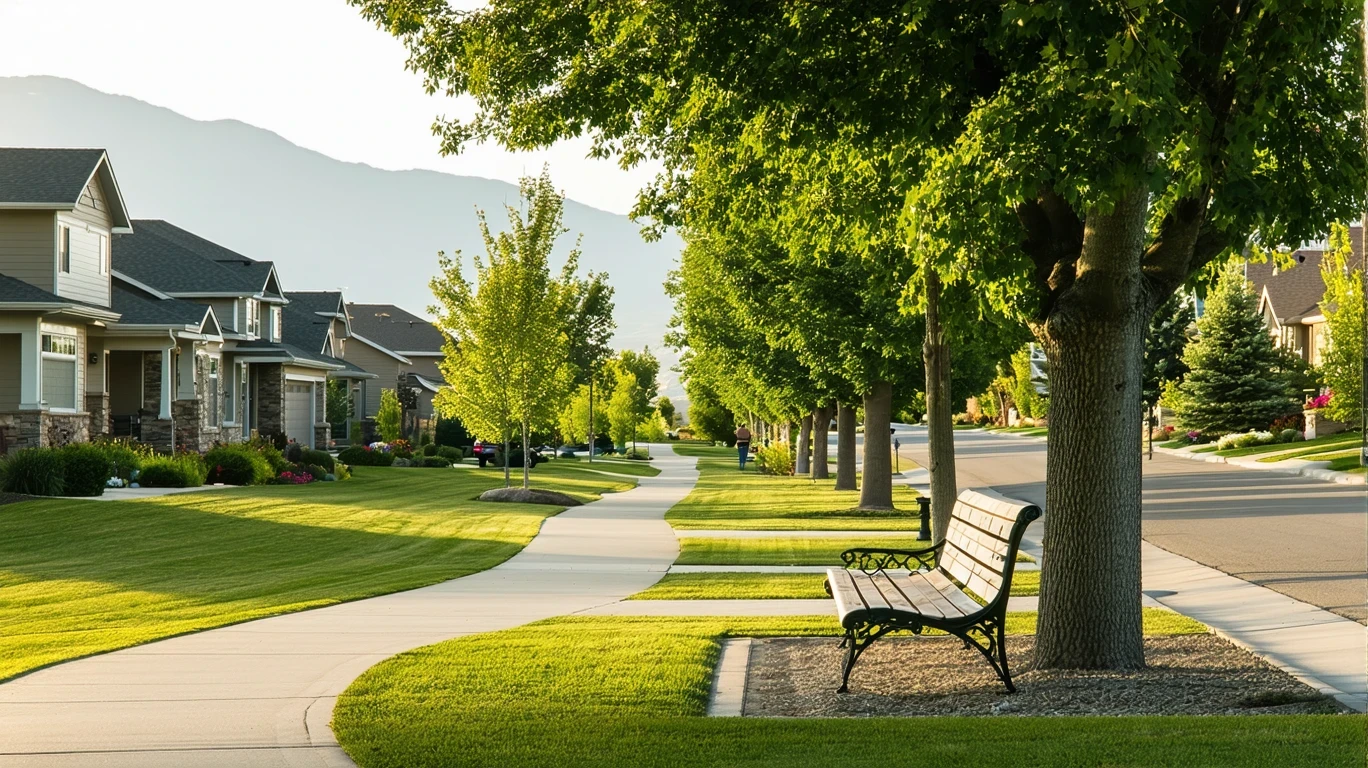
Overall Cost of Living Snapshot
Draper’s cost profile is shaped by a single overwhelming force: housing. The median home value of $663,400 places ownership out of reach for many households without substantial savings or dual incomes, even as the regional price parity index of 96 suggests that other costs—groceries, services, utilities—track slightly below the national baseline. Rent at $1,735 per month offers a lower entry point but still represents a significant recurring obligation in a market where most residents have chosen to buy.
What makes Draper distinct is the mismatch between its infrastructure and its reputation. The city has walkable pockets with pedestrian-to-road ratios exceeding high thresholds, rail transit service, and parks integrated throughout. Yet errands remain corridor-clustered: food options are plentiful, but grocery density sits in the medium band, meaning you’ll plan trips rather than walk to the corner. The result is a hybrid cost exposure—less car-dependent than a typical suburb, but not walkable enough to eliminate vehicle ownership entirely.
The unemployment rate of 3.2% signals a stable labor market, and the median household income of $126,041 per year reflects a population with significant earning power. But that income level also reveals the selection effect at work: Draper’s housing costs have filtered for high earners, and newcomers without similar resources will feel the squeeze immediately.
Driver verdict: Housing dominates. Everything else—utilities, groceries, transportation—is manageable or near-national norms. The surprise comes from the infrastructure: Draper offers more walkability and transit than you’d expect, but not enough to let you skip car ownership. If you can clear the housing hurdle, the rest of the cost structure is stable. If you can’t, no amount of careful grocery shopping will close the gap.
Housing Costs (Primary Driver)
Housing is where Draper’s cost pressure concentrates. The median home value of $663,400 reflects a market where single-family ownership is the norm, and where entry requires either substantial equity from a previous sale or a household income well into six figures. Median rent of $1,735 per month provides an alternative, but it’s not a budget option—it’s a transitional position for households building toward ownership or testing the market before committing.
The renting-versus-owning calculus here is stark. Renters avoid the upfront capital requirement and the exposure to property tax increases, but they absorb annual rent adjustments in a market with limited rental stock. Owners lock in a mortgage payment (minus tax and insurance volatility) and gain equity accumulation, but they take on maintenance costs, HOA fees where applicable, and the risk that home values plateau or correct. Draper is not a city where renting long-term makes financial sense unless your income or job situation is uncertain. It’s a buying market, and the rental stock exists primarily to serve people in transition.
The housing stock itself skews toward single-family homes with yards, reflecting the city’s suburban form and its appeal to families. The strong family infrastructure—school and playground density both in the medium band—reinforces this orientation. If you’re looking for dense, walkable, urban housing, Draper offers pockets but not saturation. If you’re looking for space, privacy, and access to parks (park density exceeds the high threshold), Draper delivers.
| Housing Type | Cost Anchor | What That Buys You |
|---|---|---|
| Median Home | $663,400 | Single-family ownership, equity accumulation, exposure to property tax and maintenance costs, access to top-tier schools and parks |
| Median Rent | $1,735/month | Transitional flexibility, no maintenance burden, no equity gain, exposure to annual rent increases in a tight market |
Conclusion: Draper is a buying city. Renting works as a short-term strategy, but the cost structure and housing stock are built for ownership. If you can’t afford the entry price, you’re fighting the market’s design.
Utilities & Energy Risk
Utility costs in Draper are moderate and predictable, with electricity at 13.69¢ per kWh and natural gas priced at $11.40 per MCF. These rates sit near or slightly below regional averages, and the city’s climate—cold winters and warm but not extreme summers—creates a balanced seasonal load. Heating dominates in winter, cooling in summer, but neither season produces the kind of sustained, multi-month cost spikes seen in more extreme climates.
For illustrative context, a household using 1,000 kWh per month would face a baseline electricity cost of roughly $137 before fees and taxes. Natural gas usage in heating months—assuming 1 MCF per month, equivalent to about 100 therms—would add approximately $11.40 per MCF, translating to modest heating bills compared to colder northern climates. These are not the numbers that break budgets; they’re the numbers that stay stable and forgettable unless you’re running a very large home or leaving systems on unnecessarily.
The current temperature of 30°F (feels like 24°F) reflects typical winter conditions, where heating is necessary but not extreme. Summers bring warmth but rarely the triple-digit heat that forces air conditioning to run continuously. The result is a utility profile with moderate peaks and shallow valleys—predictable, manageable, and unlikely to surprise.
Risk classification: Minor. Utilities are a line item, not a volatility source. Seasonal swings exist but stay within a narrow band. The bigger risk is forgetting to budget for them at all, not underestimating their magnitude.
Groceries & Daily Costs
Grocery costs in Draper track close to national norms, with the regional price parity index of 96 suggesting a slight discount relative to the U.S. baseline. Derived estimates place common items like bread at $1.72 per pound, chicken at $1.96 per pound, and eggs at $2.75 per dozen—all within the range of what you’d pay in most mid-sized markets. Ground beef at $6.28 per pound and cheese at $4.54 per pound reflect typical pricing for animal proteins and dairy, neither bargain-bin cheap nor premium-tier expensive.
Derived estimate based on national baseline adjusted by regional price parity; not an observed local price.
The experiential reality of grocery shopping in Draper is shaped more by access than by price. Food establishment density exceeds the high threshold, meaning restaurants and prepared food options are plentiful, especially along commercial corridors. Grocery density sits in the medium band, meaning supermarkets exist but require intentional trips—this is not a neighborhood where you walk two blocks for milk. The corridor-clustered pattern means you’ll drive to a grocery store, stock up, and plan around that trip rather than making frequent small runs.
For households used to urban grocery access—corner stores, multiple supermarkets within walking distance—Draper’s structure adds friction. You’ll spend less per item than in high-cost metros, but you’ll spend more time planning and driving. For households used to suburban grocery patterns, Draper feels normal: you drive, you buy in bulk, you go home.
The cost pressure here is low. Groceries won’t dominate your budget or force hard tradeoffs. The pressure is logistical: access is good but not effortless, and the city’s layout assumes you have a car and time to plan.
Transportation Reality
Transportation in Draper operates in a middle zone: less car-dependent than a typical suburb, but not transit-rich enough to eliminate vehicle ownership. The average commute time of 23 minutes reflects a population that works both locally and in nearby employment centers, with 3.0% working from home and 31.6% facing long commutes. Rail transit service is present, offering a viable alternative for commuters heading to Salt Lake City or other regional hubs, but the city’s corridor-clustered errands structure and medium grocery density mean daily life still assumes car access.
Gas prices at $2.59 per gallon are low relative to national and coastal averages, reducing the per-mile cost of driving but not the fixed costs of ownership—insurance, registration, maintenance, depreciation. The pedestrian-to-road ratio exceeds the high threshold in walkable pockets, meaning some neighborhoods support walking for recreation or short errands, but the bike-to-road ratio sits in the medium band, signaling that cycling infrastructure exists without being comprehensive.
The result is a transportation cost profile that splits by household type. If you work remotely or commute by rail, your transportation costs drop significantly—you’ll drive for errands and weekend trips, but not daily. If you commute by car, especially into the 31.6% with long commutes, transportation becomes a recurring exposure: fuel, wear, time, and the risk of vehicle replacement. Families with multiple drivers face compounded costs, as the city’s layout and errands structure make two-car households common.
Transportation is a recurring exposure, not a one-time cost. The city’s rail access and walkable pockets reduce pressure for some households, but they don’t eliminate the need for a vehicle. Budget for ownership, not just fuel, and recognize that commute length determines whether transportation stays manageable or becomes a dominant monthly obligation.
Cost Exposure Profiles
Cost exposure in Draper concentrates in three areas: housing entry, transportation dependence, and the interaction between the two. The city’s infrastructure—walkable pockets, rail access, strong family amenities—creates opportunities to reduce transportation costs, but only if your housing choice and commute align with those assets. Misalignment amplifies exposure.
Low-exposure situation: You buy a home near a rail station or within one of Draper’s walkable pockets, work remotely or commute by train, and use a single vehicle primarily for errands and weekend trips. Your housing cost is locked in via mortgage, your transportation cost is minimal, and your utilities and groceries track near national norms. The city’s park density and family infrastructure add quality of life without adding cost.
High-exposure situation: You rent while saving for a down payment, commute by car to a job 30+ minutes away, and rely on two vehicles because your housing location requires driving for all errands. Your rent adjusts annually, your transportation costs compound with fuel and maintenance, and you’re paying for infrastructure (walkability, rail, parks) you don’t have time or positioning to use. The cost structure works against you at every layer.
The difference isn’t income—it’s alignment. Draper rewards households that can afford to buy near transit or within walkable areas, and that can structure work and errands to minimize driving. It penalizes households that rent far from rail, commute long distances by car, or need two vehicles to manage daily logistics. The city’s infrastructure offers leverage, but only if you can position yourself to use it.
Ownership versus renting creates the starkest divide. Owners lock in housing costs (minus tax and insurance drift) and gain equity. Renters face annual increases in a market with limited stock and high ownership rates. Over time, renters in Draper either convert to ownership or leave—the cost structure doesn’t support long-term renting as a stable strategy.
Frequently Asked Questions
Is Draper more affordable than Salt Lake City in 2026? Draper’s median home value of $663,400 is higher than many Salt Lake City neighborhoods, but the city offers more space, stronger family infrastructure, and lower density. Affordability depends on whether you prioritize urban walkability or suburban access to parks and schools.
What does a typical cost profile look like in Draper? Housing dominates, with ownership costs or rent consuming the largest share of household budgets. Utilities, groceries, and transportation are moderate and near national norms, meaning the primary financial hurdle is clearing the housing entry barrier.
Do utilities cost more in Draper than in nearby Utah cities? Utility rates in Draper are competitive with regional averages. Electricity at 13.69¢ per kWh and natural gas at $11.40 per MCF produce moderate seasonal bills without extreme peaks, making utilities a stable rather than volatile cost category.
What costs tend to surprise newcomers in Draper? The gap between walkable infrastructure and car dependence surprises many. Draper has rail access and walkable pockets, but errands remain corridor-clustered, meaning most households still need a vehicle. The city’s layout assumes car ownership even as it offers alternatives.
Are property taxes higher in Draper than in other Utah suburbs? Property tax rates vary by county and district, but Draper’s high median home value of $663,400 means absolute tax bills tend to be higher than in lower-value markets, even if rates are similar. Ownership here carries higher fixed costs than in less expensive suburbs.
Is Draper a good fit for renters long-term? Draper’s housing market is built for ownership, with limited rental stock and a high ownership rate. Renting works as a transitional strategy, but the cost structure and market dynamics favor buying. Long-term renters face annual increases and limited options.
How does Draper’s cost of living compare to Provo? Draper tends to be more expensive, particularly for housing, reflecting its proximity to Salt Lake City and its appeal to high-income households. Provo offers lower entry costs but different infrastructure and commute tradeoffs.
What’s the biggest cost driver for families in Draper? Housing entry is the dominant barrier. Once cleared, families benefit from strong school and playground density, integrated parks, and moderate utility and grocery costs. The city’s infrastructure supports family life well, but only after you’ve solved the housing equation.
How this article was built: In addition to public economic data, this article incorporates location-based experiential signals derived from anonymized geographic patterns—such as access density, walkability, and land-use mix—to reflect how day-to-day living actually feels in Draper, UT.
—