
Do you really need a car to live in Doral? For most residents, the answer is yes—but the story is more textured than that. Doral’s transportation landscape reflects its role as a fast-growing suburban hub west of Miami: it’s built around driving, yet pockets of the city support walkable errands and bus-based commuting for those who live and work near the right corridors. Understanding transportation options in Doral means recognizing where transit works, where it falls short, and how mobility shapes daily routines, time, and household logistics.
Newcomers often assume Doral functions like denser parts of Miami-Dade, where transit might cover more ground. In reality, Doral’s layout—a mix of residential subdivisions, commercial corridors, and office parks—creates a mobility environment where convenience depends heavily on where you live and where you need to go. Some neighborhoods offer genuine walkability for groceries and errands; others require a car for nearly everything. Commute patterns here skew long, and flexibility matters more than schedules.
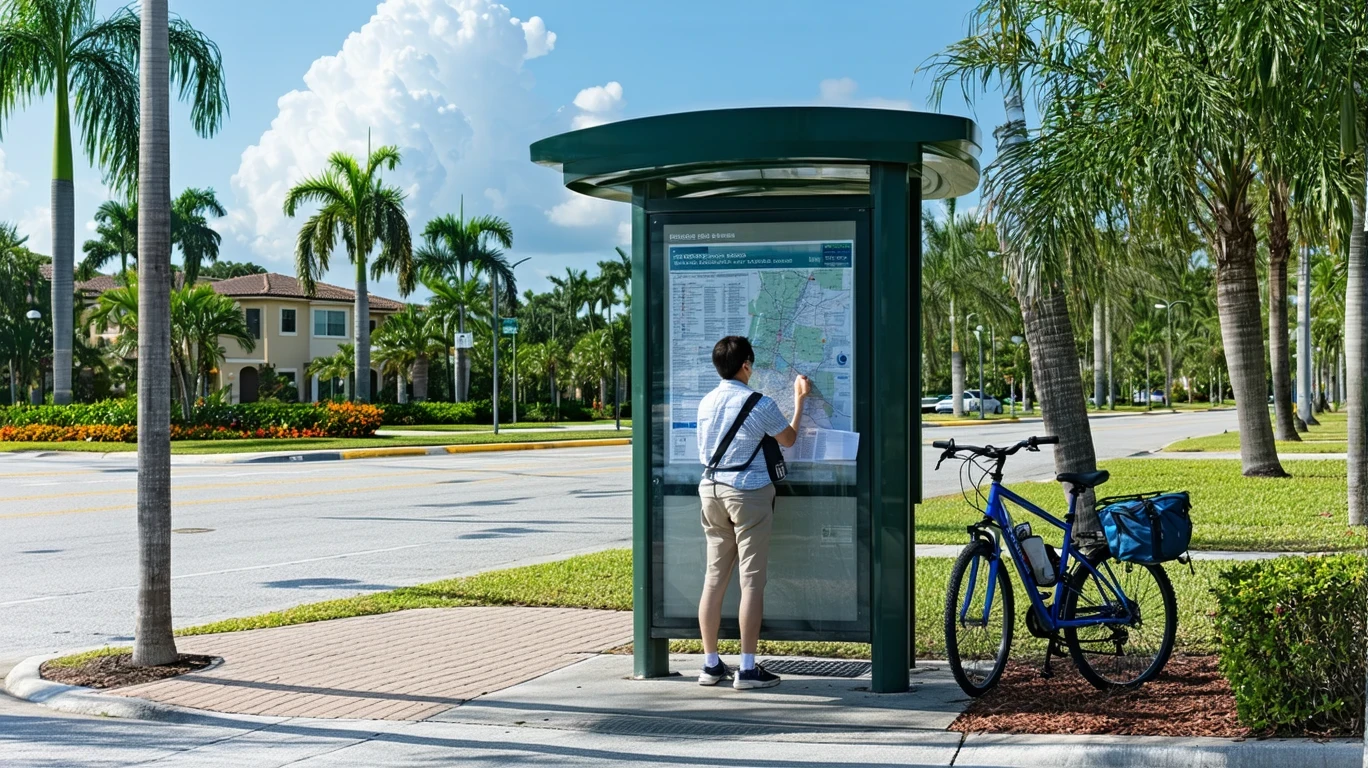
How People Get Around Doral
Driving dominates daily life in Doral. The city’s street grid prioritizes vehicle flow, and most households structure their routines around car access. That said, the pedestrian infrastructure in parts of Doral exceeds what you’d find in many suburban areas: certain zones have sidewalks, crosswalks, and enough density to support walking to nearby stores or restaurants. These walkable pockets don’t eliminate the need for a car, but they do reduce how often you use it for small trips.
Public transit exists in the form of bus service, and it plays a real role for residents whose commutes align with available routes. But transit here is supplemental, not foundational. It works best for single-destination commutes—typically to job centers or transit hubs—and struggles to serve multi-stop errands, off-peak travel, or areas on the city’s edges. For families, shift workers, or anyone managing complex daily logistics, a car isn’t optional.
What sets Doral apart from more car-dependent suburbs is the presence of mixed-use development: residential and commercial land uses sit closer together in certain areas, which shortens the distance between home and daily needs. This doesn’t transform Doral into a transit-first city, but it does mean that walkability and car dependence coexist in ways that vary block by block.
Public Transit Availability in Doral
Public transit in Doral often centers around systems such as Miami-Dade Transit, which operates bus routes connecting the city to broader regional destinations. Bus service is present and functional for residents living near major corridors or employment nodes, but coverage is uneven. If your home and workplace both sit along a bus line, transit becomes a viable option. If either falls outside that network, driving fills the gap.
Transit works best in Doral’s denser commercial zones, where stops cluster near shopping centers, office parks, and mixed-use developments. These areas benefit from higher service frequency and better pedestrian access to stops. Residential subdivisions farther from main roads see less frequent service, longer walks to stops, and fewer route options. Late-night and weekend service is limited, which narrows transit’s usefulness for anyone working non-traditional hours or managing evening errands.
The practical role of transit here is commute support, not comprehensive mobility. It helps specific household types—renters near transit corridors, single commuters traveling to predictable destinations—reduce their reliance on driving. But it doesn’t replace the need for a car for most residents, especially those managing family schedules, grocery runs, or trips outside Doral’s immediate area.
Driving & Car Dependence Reality
For the majority of Doral residents, driving is the default. The city’s layout assumes car ownership: parking is abundant, roads are wide, and destinations spread across a geography that doesn’t lend itself to walking or transit for most trips. Families, in particular, find that car dependency is baked into daily life. School drop-offs, weekend errands, and multi-stop logistics all require vehicle access.
Parking is rarely a friction point in Doral. Residential developments include driveways or assigned spaces, and commercial areas offer ample surface lots. This removes one of the pain points common in denser cities, but it also reinforces the expectation that everyone drives. The tradeoff is time and exposure: commutes stretch longer when driving is the only practical option, and fuel costs, maintenance, and vehicle depreciation become unavoidable household expenses.
Doral’s proximity to major highways—including the Palmetto Expressway and Florida’s Turnpike—makes regional commuting feasible, but it also means that many residents face long drives to work. The infrastructure supports high-speed travel, but congestion during peak hours adds unpredictability. Flexibility matters: the ability to shift departure times or work remotely (though only 5.0% of Doral workers do so regularly) can reduce commute friction significantly.
Commuting Patterns & Daily Mobility
Commuting in Doral reflects the city’s role as a residential and commercial hub within a larger metro area. The average commute runs 25 minutes, but that figure masks significant variation: 38.7% of workers face long commutes, often traveling to job centers in Miami, Fort Lauderdale, or other parts of Miami-Dade County. These longer trips shape household decisions around housing, work schedules, and time management.
Single-job commuters—those traveling to one fixed workplace each day—benefit most from predictable routes, whether by car or bus. Multi-stop commuters, including parents managing school and work logistics or service workers covering multiple job sites, find that only driving offers the necessary flexibility. Transit schedules and limited route coverage make it difficult to chain trips efficiently.
Proximity to work is a meaningful advantage in Doral, but it’s not universal. Residents who work locally—in Doral’s office parks, retail centers, or service sectors—experience shorter, more manageable commutes. Those commuting out of the city absorb more time and cost, and the tradeoff between housing affordability and commute length becomes a recurring household calculation.
Who Transit Works For — and Who It Doesn’t
Transit in Doral serves a narrow but real segment of the population. Renters living near commercial corridors, particularly those without school-age children, can often structure their lives around bus access. Single commuters traveling to predictable destinations—downtown Miami, airport-area jobs, or regional transit hubs—find that bus service reduces their need to drive daily, even if they still own a car for other trips.
Families, by contrast, rarely find transit practical. The logistics of managing multiple schedules, school runs, grocery trips, and weekend activities require the flexibility and capacity that only a car provides. Homeowners in residential subdivisions, especially those on Doral’s periphery, face longer walks to bus stops and fewer route options, which makes transit a fallback rather than a primary option.
The distinction isn’t about preference—it’s about fit. Transit works when your home, workplace, and daily needs align with available routes and schedules. When they don’t, driving becomes the only viable option. Doral’s infrastructure supports both patterns, but the city’s layout and commute realities tilt heavily toward car dependence for most households.
Transportation Tradeoffs in Doral
Choosing between transit and driving in Doral isn’t about cost alone—it’s about control, predictability, and time. Driving offers flexibility: you leave when you want, stop where you need, and manage complex logistics without depending on schedules. Transit offers predictability and removes the friction of parking, traffic decisions, and vehicle maintenance, but only when your routine aligns with available service.
For households weighing these tradeoffs, the question isn’t “which is cheaper?” but “which reduces friction?” A car provides autonomy but introduces ongoing expenses and time lost to commuting. Transit reduces some of those expenses but limits where you can go and when. In Doral, most households conclude that driving is the lower-friction option, even when it’s not the lower-cost one.
The presence of walkable pockets and mixed-use areas adds a third option for some residents: reducing car trips without eliminating car ownership. If you can walk to groceries, restaurants, or a bus stop, you drive less often, which lowers fuel and maintenance exposure without requiring a full shift to transit dependency. This hybrid approach works best in Doral’s denser corridors, where pedestrian infrastructure and commercial access overlap.
FAQs About Transportation in Doral (2026)
Is public transit usable for daily commuting in Doral?
Yes, but only for specific commute patterns. If you live near a bus route and work along that same corridor or at a regional hub, transit can support daily commuting. For most residents, especially those managing multi-stop trips or living in residential subdivisions, driving remains more practical.
Do most people in Doral rely on a car?
Yes. The majority of Doral residents drive daily. The city’s layout, commute patterns, and limited transit coverage make car ownership the default for most households, particularly families and those commuting outside the city.
Which areas of Doral are easiest to live in without a car?
Areas near commercial corridors with higher pedestrian infrastructure and bus access offer the most car-free viability. These zones allow walking for errands and provide better transit connections, though even here, most residents still own a car for flexibility.
How does commuting in Doral compare to nearby cities?
Doral’s average commute time of 25 minutes is moderate, but the high percentage of long commutes (38.7%) reflects the city’s role as a residential base for workers traveling throughout Miami-Dade County. Compared to denser urban areas, Doral offers faster highway access but less transit coverage.
Can you get by with one car per household in Doral?
It depends on household structure and work locations. Single-commuter households or couples with aligned schedules can often manage with one car, especially if one person works locally or from home. Families with school-age children or multiple job sites typically find that two cars reduce daily friction significantly.
How Transportation Fits Into the Cost of Living in Doral
Transportation isn’t just a line item—it’s a structural factor that shapes where you live, how you spend your time, and what tradeoffs you accept. In Doral, mobility costs show up not only in fuel and vehicle expenses but also in commute time, housing location decisions, and the flexibility (or lack thereof) to manage daily logistics without constant planning.
For a fuller picture of where money goes each month and how transportation fits alongside housing, utilities, and other recurring expenses, the Monthly Budget article provides grounded context. Understanding Doral’s transportation reality helps clarify which neighborhoods offer genuine convenience, which require more driving, and how mobility shapes the rhythm of daily life here.
Doral’s transportation landscape rewards proximity and planning. If your home, work, and daily needs align with walkable corridors or transit routes, you’ll drive less and absorb less friction. If they don’t, a car becomes essential—not as a luxury, but as the tool that makes daily life manageable. The city’s infrastructure supports both patterns, but the default here is driving, and most households structure their lives accordingly.
How this article was built: In addition to public economic data, this article incorporates location-based experiential signals derived from anonymized geographic patterns—such as access density, walkability, and land-use mix—to reflect how day-to-day living actually feels in Doral, FL.
—