
Is Detroit expensive to live in? Detroit is considered relatively affordable in 2026, with a median home value of $66,700 and median rent of $989 per month. The value proposition depends heavily on neighborhood choice and transportation trade-offs—walkable areas near transit offer very different cost structures than car-dependent periphery zones.
Overall Cost of Living Snapshot
Detroit’s cost structure in 2026 is defined by exceptionally low housing entry barriers and significant internal variation in transportation dependence. The regional price parity index of 98 places the city slightly below the national baseline, but that broad measure obscures the real story: where you live within Detroit determines whether you face minimal or substantial ongoing transportation costs.
The primary cost driver here is the interaction between housing location and transportation exposure. Detroit contains walkable pockets with substantial pedestrian infrastructure, rail transit, and high grocery density—alongside auto-dependent areas where vehicle ownership and commuting dominate monthly outlays. Median household income stands at $37,761 per year, and the unemployment rate of 5.5% reflects an economy still navigating structural transition.
Utility costs present moderate seasonal risk, driven by heating demand during Detroit’s long, cold winters. Electricity rates of 19.94¢/kWh and natural gas prices of $10.66/MCF are not extreme, but extended heating seasons mean cumulative exposure adds up. Day-to-day costs—groceries, gas at $2.88/gallon—track close to or slightly below national norms.
Driver verdict: Housing affordability is the headline, but transportation structure is the swing factor. The city rewards those who can access its walkable, transit-served core and penalizes those who must rely on long commutes and multiple vehicles. Surprises come less from prices and more from insurance, heating duration, and the steep cost gap between neighborhood types.
Housing Costs (Primary Driver)
Detroit’s housing market in 2026 offers some of the lowest entry costs among major U.S. cities. The median home value of $66,700 makes ownership accessible to households that would face steep barriers elsewhere, while the median gross rent of $989 per month provides a similarly low-cost rental option. Both figures reflect a market still shaped by decades of population loss, industrial contraction, and uneven neighborhood recovery.
The renting-versus-owning decision here is less about affordability and more about commitment and risk tolerance. Ownership at this price point can build equity quickly, but it also ties households to neighborhoods with variable service quality, school performance, and long-term investment outlook. Renting offers flexibility and lower exposure to maintenance costs, property taxes, and insurance—but it also means missing out on historically low acquisition costs.
Detroit is a transitional city where housing costs are low enough to enable entry, but the surrounding infrastructure and services vary widely. The decision is not whether you can afford to live here—it’s whether the neighborhood you can afford delivers the transportation access, safety, and amenities your household requires.
| Housing Type | Cost Anchor | What That Buys You |
|---|---|---|
| Median Home Purchase | $66,700 | Ownership entry with equity potential; exposure to taxes, insurance, maintenance, and neighborhood variability |
| Median Rental | $989/month | Flexibility and lower upfront cost; landlord handles maintenance; no equity accumulation |
Utilities & Energy Risk
Utility costs in Detroit are shaped by seasonality and heating exposure rather than extreme rates. Electricity at 19.94¢/kWh sits near the national average, and natural gas priced at $10.66/MCF (roughly $1.07 per therm equivalent) is moderate. The challenge is not the per-unit price—it’s the extended cold season that drives sustained heating demand from October through April.
Cooling costs remain minor; Detroit’s summers are warm but not extreme, and air conditioning represents a small share of annual energy spending. Heating, by contrast, dominates. Older housing stock—common across much of the city—often lacks modern insulation, efficient furnaces, or weatherization, which amplifies gas consumption during winter months. Households in older homes face meaningfully higher heating bills than those in updated or newer construction.
Risk classification: Moderate. Utility costs are not a primary affordability barrier, but they introduce seasonal volatility that households must plan for. The swing between summer and winter bills is significant, and efficiency improvements—insulation, furnace upgrades, thermostat management—offer meaningful control over this exposure.
Groceries & Daily Costs
Grocery costs in Detroit track slightly below the national baseline, consistent with the regional price parity index of 98. Derived estimates place staples like bread around $1.81 per pound, chicken at $2.00 per pound, and milk near $4.02 per half-gallon—all reflecting modest pricing pressure. Ground beef at $6.62 per pound represents the higher end of the basket, but overall, day-to-day food spending does not present a major cost burden relative to other metros.
What matters more than price is access structure. Detroit’s experiential signals show high food and grocery establishment density in parts of the city, meaning households in those areas face low friction for daily errands—short trips, multiple options, and the ability to shop on foot or by bike. In contrast, households in lower-density areas face longer drives, fewer nearby options, and higher transportation costs to access the same goods.
The grocery cost story in Detroit is less about what items cost and more about how much time, fuel, and planning it takes to acquire them. Walkable neighborhoods with integrated grocery access reduce both direct costs and the hidden expenses of car dependency.
Transportation Reality
Transportation costs in Detroit vary more than any other category, driven entirely by neighborhood structure and household commute patterns. Gas prices of $2.88 per gallon are moderate, but fuel cost is only one piece of a much larger equation that includes vehicle ownership, insurance, maintenance, and time.
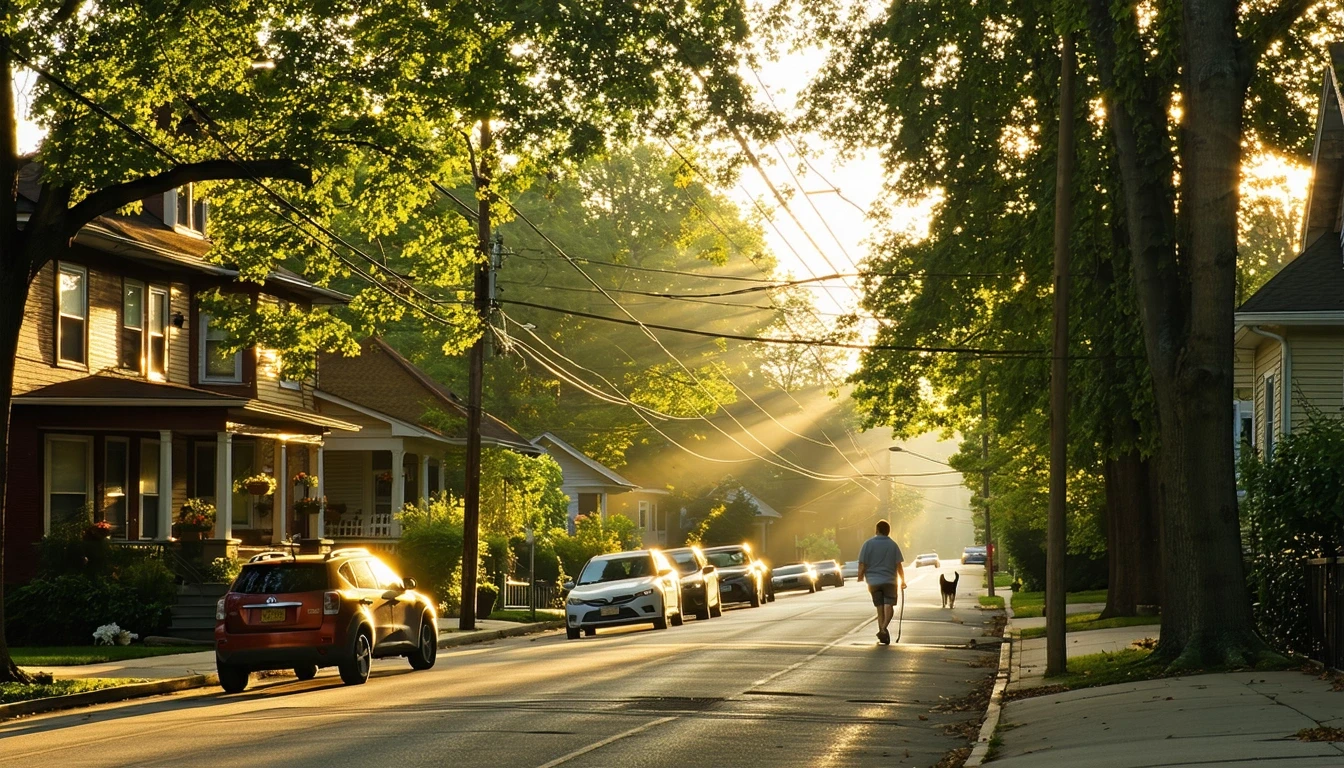
Detroit’s experiential infrastructure reveals a city with two transportation realities. Walkable pockets—concentrated in and near downtown—offer substantial pedestrian infrastructure, notable cycling presence, and rail transit service. Households in these areas can reduce or eliminate car dependency, relying instead on transit, bikes, and walkable errands. Grocery density is high, parks are integrated, and the urban form supports mixed-use living.
Outside these cores, car dependency rises sharply. Commutes lengthen, transit access fades, and households require one or more vehicles to manage work, errands, and daily logistics. Michigan’s unique auto insurance structure amplifies this burden—insurance costs here are among the highest in the nation, adding hundreds of dollars per month for multi-vehicle households.
Transportation is not a fixed cost in Detroit—it’s a structural choice embedded in where you live. Proximity to the walkable core and rail lines can cut transportation spending dramatically, while peripheral locations impose recurring vehicle costs that rival or exceed housing expenses.
How this article was built: In addition to public economic data, this article incorporates location-based experiential signals derived from anonymized geographic patterns—such as access density, walkability, and land-use mix—to reflect how day-to-day living actually feels in Detroit, MI.
Cost Exposure Profiles
Cost exposure in Detroit is driven by three structural factors: housing entry versus long-term ownership risk, transportation dependence, and utility seasonality. The city’s low housing costs create opportunity, but the surrounding decisions—where you live, how you commute, and how efficiently your home uses energy—determine whether that opportunity translates into financial stability or ongoing strain.
Low-exposure profile: A renter in a walkable neighborhood near rail transit, with a short or transit-accessible commute, benefits from Detroit’s affordability without absorbing its highest costs. Grocery density is high, parks are nearby, and car ownership can be minimized or eliminated. Heating costs exist but are manageable in smaller, well-maintained units. This household captures Detroit’s value proposition cleanly.
High-exposure profile: A homeowner in an auto-dependent area, commuting significant distance with multiple vehicles, faces compounding costs. Low home prices are offset by property taxes, insurance, and maintenance on older housing stock. Heating bills spike in winter due to poor insulation. Vehicle insurance, fuel, and maintenance add hundreds per month. Grocery and errand trips require driving, adding time and cost. This household pays for Detroit’s affordability in transportation and energy exposure.
The city does not impose uniform cost pressure—it rewards proximity to infrastructure and penalizes distance from it. Households that align their location with their transportation and lifestyle needs can live here comfortably on modest incomes. Those who cannot face recurring costs that erode the housing savings quickly.
Frequently Asked Questions
Is Detroit more affordable than Ann Arbor or Grand Rapids in 2026? Yes, significantly. Detroit’s median home value of $66,700 and rent of $989 per month are well below both Ann Arbor (a college town with tight housing markets) and Grand Rapids (a growing regional hub). However, Detroit’s affordability comes with trade-offs in neighborhood variability and transportation dependence that the other cities may not impose as sharply.
What does a typical cost profile look like in Detroit? Low housing costs—whether renting near $989/month or owning near $66,700—paired with moderate utility seasonality and highly variable transportation expenses depending on neighborhood. Households in walkable areas near transit can minimize car costs; those in peripheral zones face significant vehicle, insurance, and commuting expenses that can rival housing outlays.
Do utilities cost more in Detroit than nearby areas? Not meaningfully. Electricity at 19.94¢/kWh and natural gas at $10.66/MCF are close to regional norms. The exposure comes from heating season length and housing stock age, not from rate premiums. Efficient homes face modest utility costs; older, poorly insulated homes face significantly higher bills during winter months.
What costs tend to surprise newcomers in Detroit? Three stand out: Michigan’s uniquely high vehicle insurance rates, the extended heating season and its cumulative gas costs, and the steep cost difference between walkable neighborhoods with transit access versus car-dependent areas. Many newcomers expect uniform affordability and are caught off guard by how much transportation structure drives total monthly outlays.
Are property taxes higher in Detroit than surrounding suburbs? Detroit’s property tax rates are higher than many surrounding suburbs, but the low median home value of $66,700 means absolute tax bills can still be modest. The bigger issue is service quality and long-term value—higher rates in the city do not always translate to equivalent infrastructure, schools, or amenities compared to suburban alternatives.
Is Detroit a good place to live on a single income? It can be, but location is critical. A single earner in a walkable neighborhood with transit access, low transportation costs, and modest housing expenses can live comfortably on Detroit’s median household income of $37,761 per year. A single earner in a car-dependent area with long commutes, multiple vehicles, and high insurance costs will face much tighter margins.
How much does commuting cost in Detroit compared to living downtown? Commuting costs vary widely based on distance, vehicle efficiency, and insurance burden. A household commuting 25 miles round trip daily at 25 MPG and $2.88/gallon spends roughly $70/month on fuel alone—but insurance, maintenance, and vehicle depreciation often add $300–$600/month or more. Living downtown or in walkable neighborhoods near rail can reduce or eliminate these costs entirely, making transportation the single largest variable expense in Detroit’s cost structure.
What are the top three costs that surprise most newcomers to Detroit?
- Vehicle insurance rates: Michigan’s unique no-fault insurance system creates some of the highest auto insurance costs in the nation, often $200–$400/month per vehicle or more.
- Heating costs during extended cold season: Detroit’s long winters and older housing stock mean heating bills can dominate utility spending from October through April, especially in poorly insulated homes.
- Neighborhood-dependent transportation trade-offs: The cost gap between living in a walkable, transit-accessible area versus a car-dependent periphery is far larger than most expect—often $300–$500/month in vehicle, fuel, and insurance expenses.
—