

Most people assume Cherry Hill costs more across the board—it’s the more established name, closer to major employers, and known for its retail corridors. But that assumption misses how cost pressure actually shows up in 2026. Deptford Township and Cherry Hill sit just miles apart in the Philadelphia metro, yet the way expenses land on households differs sharply depending on whether you prioritize housing entry costs, daily errands convenience, or transportation flexibility. The decision isn’t about which city is cheaper overall—it’s about which cost structure fits the way your household actually operates.
Both townships attract families, commuters, and professionals looking for suburban space without leaving the Philadelphia orbit. Cherry Hill offers denser retail access, more walkable pockets, and higher visibility as a regional hub. Deptford Township provides newer housing stock in many areas, rail transit access, and a quieter residential feel. In 2026, the tradeoff isn’t suburban versus urban—it’s about whether you’re more exposed to housing entry barriers, car dependence, or the friction costs of running errands across a less connected grid.
This comparison explains where cost pressure concentrates in each city, how different household types experience those differences, and which structural factors—transit access, grocery density, utility predictability—matter most when the same income feels tighter in one place than the other.
Housing Costs
Housing entry costs separate these two cities more than any other category. In Deptford Township, the median home value sits at $235,800, while Cherry Hill’s median reaches $281,700—a difference that changes the down payment calculation, monthly mortgage obligation, and property tax exposure for buyers. For renters, the gap widens further: Deptford Township’s median gross rent is $1,452 per month, compared to Cherry Hill’s $1,777 per month. These aren’t small distinctions—they represent different levels of access to single-family homes, different rental stock availability, and different assumptions about what “affordable” means in practice.
The housing stock in each city also behaves differently. Deptford Township skews toward newer construction in many neighborhoods, which often translates to more predictable utility costs and lower immediate maintenance needs. Cherry Hill’s housing mix includes older established neighborhoods alongside newer developments, creating more variability in home age, lot size, and upkeep demands. Renters in Cherry Hill gain access to more apartment complexes near retail corridors and transit nodes, while Deptford Township’s rental market leans more heavily on single-family homes and smaller multifamily buildings. That structural difference affects not just rent levels but also lease flexibility, proximity to daily errands, and whether a car becomes non-negotiable.
For first-time buyers, Deptford Township’s lower entry point reduces the savings threshold and monthly mortgage load, making homeownership accessible sooner. For families prioritizing school access and walkability to parks, Cherry Hill’s higher home values come with trade-offs: better pedestrian infrastructure in some areas, but steeper ongoing costs. Renters sensitive to proximity—those who value being able to walk to groceries or rely on transit—may find Cherry Hill’s higher rent justified by reduced transportation friction, while those willing to drive for errands may prefer Deptford Township’s lower baseline rent and newer housing conditions.
Housing takeaway: Deptford Township offers lower entry barriers for both renters and buyers, with newer housing stock reducing some maintenance and utility exposure. Cherry Hill’s higher housing costs come with denser access to retail, walkable pockets, and more rental options near transit. Households prioritizing affordability and predictability may find Deptford Township easier to enter; those prioritizing convenience and walkability may find Cherry Hill’s higher costs offset by reduced car dependence and errand friction.
Utilities and Energy Costs
Utility cost exposure in these two cities hinges less on rate differences—both are served by similar regional providers—and more on housing stock, home size, and seasonal demand patterns. Deptford Township’s electricity rate is 22.98¢/kWh, while Cherry Hill’s sits slightly lower at 22.73¢/kWh. Natural gas pricing shows more separation: Deptford Township’s rate is $14.66/MCF, compared to Cherry Hill’s $17.94/MCF. These differences matter most during heating months, when older homes or larger single-family houses in either city can see natural gas usage climb significantly. Newer construction in Deptford Township—common in recent developments—often includes better insulation and more efficient HVAC systems, reducing baseline heating and cooling loads.
Both cities experience the same regional climate, with cold winters requiring consistent heating and warm, humid summers driving air conditioning use. The difference in utility pressure comes from home age and size. In Cherry Hill, older neighborhoods with larger homes and mature landscaping may face higher heating costs in winter and more cooling demand in summer, especially in homes built before modern efficiency standards. Deptford Township’s newer housing stock tends to perform better under seasonal stress, though larger single-family homes still face higher absolute usage than apartments or townhomes. For renters in smaller units, utility costs remain more predictable and lower in both cities, but Cherry Hill’s apartment stock near transit corridors often includes more modern construction with efficient heating and cooling systems.
Households in single-family homes—regardless of city—experience more volatility than apartment dwellers. A family in a 2,000-square-foot home in Cherry Hill with an older furnace will see higher winter gas bills than a similar household in a newer Deptford Township home with a high-efficiency system. Conversely, a couple in a Cherry Hill apartment near a retail corridor may see lower and more stable utility costs than a couple renting a detached house in Deptford Township. The key variable isn’t the city—it’s the housing type, age, and size, combined with how much control the household has over efficiency upgrades.
Utility takeaway: Deptford Township’s newer housing stock and slightly lower natural gas rates reduce heating exposure for many households, especially in single-family homes. Cherry Hill’s older neighborhoods introduce more variability, with larger homes facing higher seasonal costs. Apartment renters in both cities experience more predictable utility bills, but Cherry Hill’s denser apartment stock near walkable areas may offer better efficiency. Households sensitive to seasonal volatility should prioritize home age and size over city-level rate differences.
Groceries and Daily Expenses
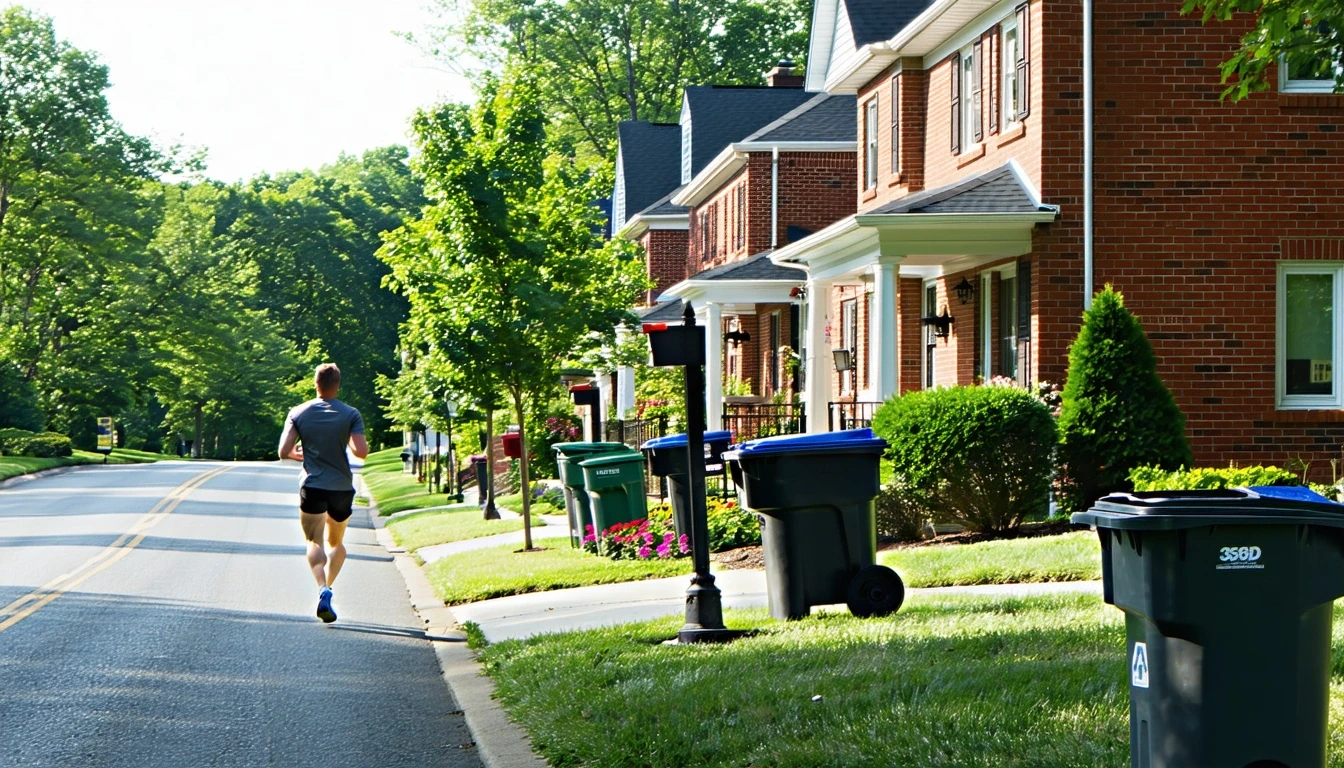
Grocery and daily spending pressure in these two cities reflects structural differences in access, not price. Both Deptford Township and Cherry Hill fall within the same regional price parity index (104), meaning grocery staples cost roughly the same at comparable stores. The difference lies in how easy it is to shop strategically—whether you can walk to a grocery store, compare prices across multiple nearby options, or must drive to every errand. Cherry Hill’s food and grocery density exceeds high thresholds, offering broadly accessible options across neighborhoods. Deptford Township’s grocery access is more corridor-clustered, concentrated along main roads rather than distributed throughout residential areas.
For households that plan weekly grocery trips and cook most meals at home, the price difference between cities is negligible. A pound of chicken costs roughly $2.12/lb in Deptford Township and $2.10/lb in Cherry Hill (derived estimates based on regional price parity). Ground beef, eggs, and milk follow similar patterns—small variations that don’t meaningfully change a household’s monthly grocery bill. The real cost difference emerges in convenience spending: how often you grab takeout because the grocery store requires a 15-minute drive, how much you spend on coffee or prepared meals near work, and whether you can comparison-shop without burning time and gas.
Cherry Hill’s denser retail corridors and walkable pockets make it easier to run quick errands on foot or combine trips, reducing the friction cost of daily spending. Deptford Township’s layout requires more intentional trip planning, which can either save money—by forcing fewer impulse stops—or increase costs if convenience spending replaces home cooking. Single adults and couples with flexible schedules may not notice much difference, but families managing school pickups, activities, and meal prep often feel the impact of grocery access more acutely. In Cherry Hill, it’s easier to stop for milk on the way home without adding 20 minutes to the day. In Deptford Township, that same errand becomes a deliberate detour.
Grocery takeaway: Grocery prices are nearly identical between Deptford Township and Cherry Hill, but access patterns differ significantly. Cherry Hill’s broadly accessible food density reduces errand friction and makes comparison shopping easier without a car. Deptford Township’s corridor-clustered grocery access requires more driving and trip planning, which can either reduce impulse spending or increase reliance on convenience options. Families and households with tight schedules may find Cherry Hill’s denser access worth the higher housing costs; budget-focused households willing to plan trips may prefer Deptford Township’s lower entry costs.
Taxes and Fees
Property taxes represent the largest recurring tax burden for homeowners in both cities, and the difference in home values directly affects annual tax bills even when rates are similar. Cherry Hill’s higher median home value ($281,700) means homeowners face a larger assessed value base, which translates to higher absolute property tax payments compared to Deptford Township’s median home value of $235,800. This isn’t a rate difference—it’s a structural consequence of buying into a more expensive housing market. For a household comparing similar homes in both cities, the Cherry Hill property will likely carry a higher annual tax obligation, which compounds over time and affects long-term affordability for families planning to stay several years.
Both cities also impose local fees for services like trash collection, water, and sewer, though the structure and predictability of these fees vary by neighborhood and housing type. Homeowners in newer developments in Deptford Township may encounter HOA fees that bundle landscaping, snow removal, or shared amenities, adding a predictable monthly cost but reducing surprise maintenance expenses. Cherry Hill’s older neighborhoods typically lack HOA structures, giving homeowners more control over maintenance decisions but also more exposure to unexpected costs like driveway repairs, tree removal, or exterior upkeep. Renters in both cities generally see these costs embedded in rent, though some landlords in Deptford Township pass through trash or water fees separately.
Sales taxes apply uniformly across New Jersey, so daily purchases—gas, clothing, dining out—don’t differ between cities. The tax pressure that separates Deptford Township and Cherry Hill is almost entirely property-tax-driven, which means homeowners feel the difference more than renters, and long-term residents accumulate more tax exposure than recent movers. Households planning to buy and stay for a decade should weigh the cumulative property tax difference alongside home appreciation potential. Renters, meanwhile, experience tax pressure indirectly through rent levels, but the gap between cities is less about taxes and more about housing demand and access to amenities.
Tax takeaway: Cherry Hill’s higher home values result in higher absolute property tax payments for homeowners, even if rates are similar. Deptford Township’s lower entry costs reduce ongoing property tax exposure, though some newer neighborhoods include HOA fees that add predictability. Homeowners planning to stay long-term should factor cumulative property tax differences into affordability calculations. Renters experience tax pressure indirectly through rent levels, with Cherry Hill’s higher rents partly reflecting the city’s denser access and walkability infrastructure.
Transportation & Commute Reality
Both Deptford Township and Cherry Hill offer rail transit access, which is a significant advantage for commuters heading into Philadelphia or other regional job centers. The average commute time in both cities is 25 minutes, and roughly 36.9% of workers in each city face long commutes, reflecting the regional reality of working in Philadelphia while living in suburban New Jersey. The difference isn’t in commute time or transit availability—it’s in how much you need a car for everything else. Cherry Hill’s walkable pockets and higher pedestrian-to-road ratio mean some residents can handle daily errands, coffee runs, or quick grocery stops on foot or by bike. Deptford Township’s mixed pedestrian infrastructure supports walking and driving, but the layout requires a car for most non-commute trips.
Gas prices are nearly identical—$2.93/gal in Deptford Township and $2.86/gal in Cherry Hill—so fuel costs don’t meaningfully separate the cities. What matters is how often you’re driving. In Cherry Hill, the combination of rail access for commuting and denser retail corridors means some households can reduce car dependence for daily life, even if they still drive regularly. Deptford Township’s corridor-clustered grocery and retail access means most errands require a car, even for households that take the train to work. The work-from-home percentage is slightly higher in Cherry Hill (6.9%) compared to Deptford Township (6.5%), which may reflect the city’s appeal to remote workers who value walkability and proximity to amenities without needing to commute daily.
For single adults or couples without kids, the transportation difference may feel minor—both cities require a car for flexibility, and commute times are identical. For families managing school drop-offs, activities, and weekend errands, Cherry Hill’s layout reduces the number of trips that require driving across town, while Deptford Township’s spread-out access points add time and mileage to the weekly routine. Neither city eliminates car dependence, but Cherry Hill reduces it more effectively for households willing to pay higher housing costs in exchange for walkable access to daily needs.
Cost Structure Comparison
Housing dominates the cost experience in both cities, but the pressure shows up differently. Deptford Township’s lower median home value and rent create a more accessible entry point, reducing the savings threshold for buyers and the monthly obligation for renters. Cherry Hill’s higher housing costs come with structural advantages—denser grocery access, walkable pockets, and better pedestrian infrastructure—that reduce transportation friction and errand time. For households where housing affordability is the primary constraint, Deptford Township offers more breathing room. For households where convenience and reduced car dependence matter more, Cherry Hill’s higher costs may feel justified by the time and hassle saved on daily logistics.
Utilities introduce more volatility in older Cherry Hill neighborhoods with larger homes, while Deptford Township’s newer housing stock tends to perform more predictably under seasonal stress. The difference isn’t dramatic—both cities face the same climate and similar rates—but home age and size amplify exposure in Cherry Hill’s established neighborhoods. Families in single-family homes should expect higher heating and cooling costs in either city compared to apartment dwellers, but Deptford Township’s newer construction reduces some of that baseline exposure.
Transportation patterns matter more in Deptford Township, where corridor-clustered grocery access and mixed pedestrian infrastructure mean most errands require a car. Cherry Hill’s broadly accessible food density and walkable pockets reduce the number of trips that demand driving, which doesn’t eliminate car ownership but does reduce weekly mileage and time spent in transit. For households with tight schedules—parents managing school pickups, dual-income couples juggling errands—Cherry Hill’s layout reduces logistical friction, even if housing costs are higher. For households willing to plan trips and drive for most needs, Deptford Township’s lower housing entry costs and predictable utility exposure create a more affordable baseline.
The decision isn’t about which city costs less overall—it’s about which cost structure aligns with how your household operates. Households sensitive to housing entry barriers and ongoing mortgage or rent obligations may find Deptford Township’s lower baseline more sustainable. Households sensitive to time costs, errand friction, and car dependence may find Cherry Hill’s higher housing costs offset by reduced transportation hassle and better walkability. Neither city eliminates tradeoffs, but the tradeoffs land differently depending on whether your household prioritizes affordability, convenience, or predictability.
How the Same Income Feels in Deptford Township vs Cherry Hill
Single Adult
For a single adult, housing becomes the first non-negotiable cost, and the difference between Deptford Township’s lower rent and Cherry Hill’s higher rent determines how much flexibility remains for everything else. In Deptford Township, lower rent leaves more room for discretionary spending, but car dependence means transportation costs—gas, insurance, maintenance—take a larger share of the budget. In Cherry Hill, higher rent reduces flexibility, but walkable access to groceries and retail means fewer car trips and more control over convenience spending. The tradeoff is front-loaded housing cost versus ongoing transportation friction. Predictability favors Deptford Township if housing affordability is tight; convenience favors Cherry Hill if time and errand logistics matter more than baseline rent.
Dual-Income Couple
For a dual-income couple, the same gross income feels different depending on whether both partners commute, work from home, or have flexible schedules. In Deptford Township, lower housing costs create more breathing room for savings or discretionary spending, but running errands requires more driving and trip planning. In Cherry Hill, higher rent or mortgage payments tighten the budget, but denser retail access and walkable pockets reduce the time cost of daily logistics. Couples who prioritize predictability and lower baseline costs may find Deptford Township easier to manage. Couples who value convenience and reduced car dependence may find Cherry Hill’s higher costs justified by the time saved on errands and the ability to walk or bike for some trips.
Family with Kids
For families, housing and transportation pressure interact with school access, activity schedules, and grocery logistics. In Deptford Township, lower home values and rent make it easier to afford more space, but corridor-clustered grocery access and mixed pedestrian infrastructure mean most trips require driving. In Cherry Hill, higher housing costs reduce affordability, but strong family infrastructure, broadly accessible groceries, and walkable pockets make daily logistics less car-dependent. Families managing tight schedules—school drop-offs, activities, meal prep—may find Cherry Hill’s layout reduces errand friction enough to justify higher housing costs. Families prioritizing space and lower baseline costs may find Deptford Township’s affordability and newer housing stock more sustainable, even if it requires more driving.
Decision Matrix: Which City Fits Which Household?
| Decision factor | If you’re sensitive to this… | Deptford Township tends to fit when… | Cherry Hill tends to fit when… |
|---|---|---|---|
| Housing entry + space needs | Down payment size, monthly mortgage or rent obligation, access to single-family homes | You prioritize lower entry costs and newer housing stock with predictable maintenance needs | You value walkable access to retail and transit proximity over lower baseline housing costs |
| Transportation dependence + commute friction | Car dependence for errands, weekly mileage, time spent driving for daily needs | You’re willing to drive for most errands in exchange for lower housing costs and newer construction | You want to reduce car trips for groceries and daily errands through walkable access and denser retail |
| Utility variability + home size exposure | Seasonal heating and cooling costs, home age and insulation quality, predictability of monthly bills | You prioritize newer construction with better efficiency and lower baseline utility exposure | You’re willing to manage higher seasonal costs in older homes in exchange for walkability and access |
| Grocery strategy + convenience spending creep | Proximity to grocery stores, ability to comparison shop without driving, impulse spending on takeout or coffee | You plan weekly grocery trips and prefer lower housing costs over walkable errand access | You value the ability to walk to groceries and reduce convenience spending through better access density |
| Fees + friction costs (HOA, services, upkeep) | Predictability of monthly fees, control over maintenance decisions, property tax exposure | You accept some HOA fees in newer developments in exchange for predictable costs and lower property tax base | You prefer control over maintenance decisions and accept higher property taxes tied to higher home values |
| Time budget (schedule flexibility, errands, logistics) | Errand friction, trip planning burden, ability to combine errands or walk for quick needs | You have flexible schedules and can plan trips without time pressure from tight daily logistics | You manage tight schedules and value reduced errand friction through walkable access and denser retail |
Lifestyle Fit
Both Deptford Township and Cherry Hill offer suburban living within the Philadelphia metro, but the day-to-day experience differs in ways that indirectly affect costs. Cherry Hill’s walkable pockets and denser retail corridors make it easier to handle errands on foot or by bike in some neighborhoods, reducing the need to drive for every small task. Deptford Township’s layout requires more intentional trip planning, with most grocery stores, restaurants, and services concentrated along main roads rather than integrated into residential areas. For households that value spontaneity—grabbing coffee, picking up a forgotten ingredient, or meeting friends without coordinating rides—Cherry Hill’s structure reduces friction. For households that prefer quieter residential streets and don’t mind driving for errands, Deptford Township offers a more predictable, less congested environment.
Both cities provide strong family infrastructure, with schools and playgrounds meeting density thresholds. Cherry Hill’s school density exceeds high thresholds, offering more options within shorter distances, which can reduce commute time for parents managing drop-offs and pickups. Deptford Township’s family amenities are well-distributed but require more driving to access, which adds time to daily routines but also means less pedestrian traffic and quieter neighborhoods. Park access is present in both cities, with water features adding recreational options, though neither city offers the kind of integrated green space density found in more urban environments. Families prioritizing walkability to schools and parks may find Cherry Hill’s layout more convenient; families prioritizing space and quieter streets may prefer Deptford Township’s residential character.
Healthcare access in both cities is limited to routine local clinics, with no hospitals present in either township. This means residents rely on nearby facilities in the broader Philadelphia metro for emergency care or specialized services, which doesn’t meaningfully separate the cities but does require car access for medical needs. Both cities offer rail transit access, making commutes to Philadelphia or other regional job centers feasible without driving, though Cherry Hill’s denser retail and walkable pockets make it easier to live with one car or reduce vehicle dependence for non-commute trips. Deptford Township’s mixed pedestrian infrastructure supports walking in some areas, but the overall layout assumes car ownership for daily flexibility.
Quick facts: Both Deptford Township and Cherry Hill offer rail transit access and strong family infrastructure, with Cherry Hill providing denser grocery access and walkable pockets in some neighborhoods. Deptford Township’s newer housing stock and lower entry costs appeal to buyers prioritizing affordability and predictability, while Cherry Hill’s walkability and retail density attract households willing to pay more for reduced car dependence and errand convenience.
Frequently Asked Questions
Is Cherry Hill more expensive than Deptford Township for renters in 2026?
Yes, Cherry Hill’s median gross rent ($1,777 per month) is higher than Deptford Township’s ($1,452 per month), but the cost difference reflects structural advantages in walkability, grocery access, and retail density. Renters in Cherry Hill gain easier access to errands on foot and denser transit options, which can reduce transportation costs and time spent driving. Renters in Deptford Township pay less in baseline rent but face more car dependence for daily needs, which shifts costs from housing to transportation and errand logistics.
Which city has lower property taxes for homeowners comparing Deptford Township and Cherry Hill in 2026?
Deptford Township’s lower median home value ($235,800) results in a smaller assessed value base, which typically translates to lower absolute property tax payments compared to Cherry Hill’s median home value of $281,700. Even if tax rates are similar, homeowners in Cherry Hill face higher annual tax obligations because they’re buying into a more expensive housing market. Over time, this difference compounds, making Deptford Township more affordable for long-term homeowners prioritizing lower ongoing costs.
Does living in Deptford Township or Cherry Hill save more on transportation costs in 2026?
Neither city eliminates car dependence, but Cherry Hill’s walkable pockets and broadly accessible grocery density reduce the number of trips that require driving, which lowers weekly mileage and time spent in the car. Deptford Township’s corridor-clustered access means most errands require driving, even for households that take rail transit to work. Gas prices are nearly identical ($2.93/gal in Deptford Township, $2.86/gal in Cherry Hill), so the cost difference comes from how often you’re driving, not fuel prices. Households managing tight schedules may find Cherry Hill’s layout reduces transportation friction enough to justify higher housing costs.
Are utility bills higher in Deptford Township or Cherry Hill for families in 2026?
Utility costs depend more on home age, size, and efficiency than on the city itself. Deptford Township’s newer housing stock and slightly lower natural gas rate ($14.66/MCF versus Cherry Hill’s $17.94/MCF) reduce heating exposure for many single-family homes. Cherry Hill’s older neighborhoods with larger homes face more seasonal volatility, especially in winter when heating demand climbs. Apartment renters in both cities experience more predictable utility bills, but Cherry Hill’s denser apartment stock near walkable areas often includes newer construction with better efficiency. Families in single-family homes should prioritize home age and insulation quality over city-level rate differences.
Which city is better for families comparing schools and daily logistics between Deptford Township and Cherry Hill in 2026?
Both cities offer strong family infrastructure, with schools and playgrounds meeting density thresholds. Cherry Hill’s school density exceeds high thresholds, offering more options within shorter distances, which reduces commute time for parents managing drop-offs and activities. Deptford Township’s family amenities are well-distributed but require more driving to access, which adds time to daily routines but also means quieter residential streets. Families prioritizing walkability to schools and parks may find Cherry Hill’s layout more convenient; families prioritizing space, lower housing costs, and newer construction may prefer Deptford Township’s residential character and affordability.
Conclusion
Deptford Township and Cherry Hill don’t fit the same households equally well, and the cost differences reflect structural tradeoffs rather than a clear winner. Deptford Township offers lower housing entry costs, newer construction in many neighborhoods, and more predictable utility exposure, making it easier for buyers and renters to afford more space and reduce baseline monthly obligations. Cherry Hill’s higher housing costs come with denser grocery access, walkable pockets, and better pedestrian infrastructure, which reduce car dependence and errand friction for households willing to pay more upfront for convenience and time savings. The decision hinges on whether your household prioritizes affordability and predictability or convenience and reduced transportation hassle.
For families managing tight schedules, Cherry Hill’s broadly accessible groceries and walkable access to schools and parks may justify higher rent or mortgage payments by reducing the time and mileage spent on daily logistics. For buyers prioritizing lower entry costs and long-term property tax exposure, Deptford Township’s lower median home value and newer housing stock create a more sustainable baseline. Single adults and couples without kids face similar tradeoffs: lower rent and predictable costs in Deptford Township versus higher rent but reduced car dependence in Cherry Hill. Neither city eliminates the need for a car, but Cherry Hill reduces how often you need to use it, while Deptford Township reduces how much you pay to live there. The right choice depends on which cost pressure your household feels most acutely and which structural advantages align with how you actually spend your time and money.
How this article was built: In addition to public economic data, this article incorporates location-based experiential signals derived from anonymized geographic patterns—such as access density, walkability, and land-use mix—to reflect how day-to-day living actually feels in Deptford Township, NJ.