
Deptford Township is considered moderately priced in 2026, with a median home value of $235,800 and median rent of $1,452 per month. The value proposition depends on housing entry cost versus car dependence, with transportation and seasonal utility exposure adding meaningful pressure beyond the sticker price.
You’re running the numbers for a move, and the question keeps circling back: what actually costs money here? Not the wishlist—the structure. What you’ll pay to get in, what you’ll pay to stay, and where the surprises come from. Deptford Township sits in the Philadelphia metro area with a cost structure that rewards planning but penalizes assumptions. Here’s how the money moves.
Overall Cost of Living Snapshot
Deptford Township’s regional price parity index sits at 104, meaning costs run about 4% above the national baseline. That’s not dramatic, but it’s not neutral either—it shows up in housing, utilities, and the logistics of daily life. The primary cost driver here is housing ownership: whether you’re buying in or renting, that line item sets the floor. Transportation follows closely, not because gas is expensive, but because car ownership is effectively mandatory for most households.
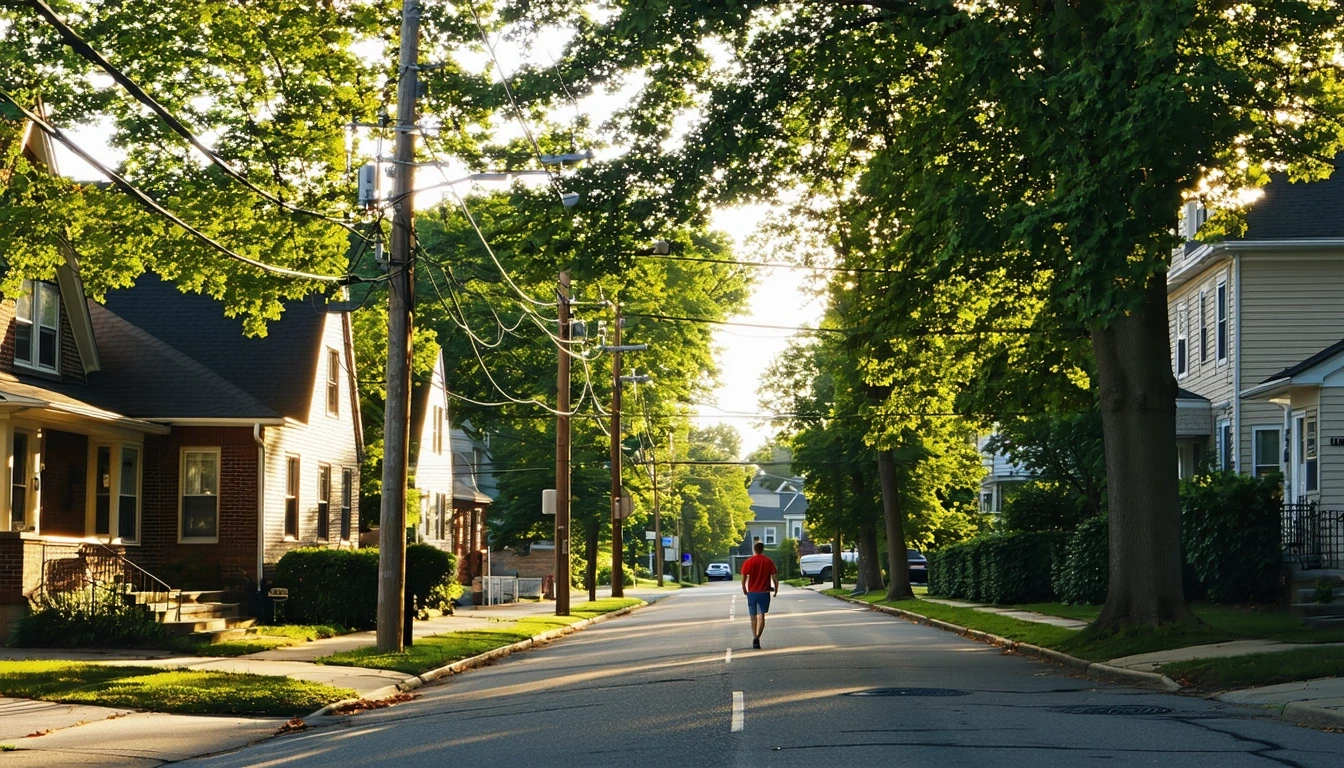
The shape of costs here reflects suburban structure. Errands and services cluster along commercial corridors rather than spreading evenly across neighborhoods, which means most trips require a vehicle. Rail transit is present—a real asset for Philadelphia commuters—but doesn’t eliminate car dependency for groceries, healthcare, or school runs. Family infrastructure is strong, with schools and playgrounds meeting density thresholds across the township, which matters for households with children but doesn’t directly reduce costs.
Compared to urban cores in the Philadelphia metro, Deptford Township offers lower housing entry costs and more space per dollar. Compared to more rural areas farther from the metro, it trades some cost savings for better access to employment centers and services. The verdict: housing and transportation dominate the cost structure, with utilities adding seasonal swings and daily errands requiring logistical planning rather than walkable convenience.
Housing Costs (Primary Driver)
Housing is where Deptford Township’s cost structure begins. The median home value of $235,800 positions the township as accessible for buyers with stable income and down payment capacity, but it’s not a bargain market. Median gross rent of $1,452 per month reflects a rental market that serves both transitional residents and long-term renters, though ownership often delivers better value over time given the relatively modest entry price.
The renting versus owning calculus here tilts toward ownership for households planning to stay more than a few years. Renting offers flexibility and avoids maintenance exposure, but at $1,452 per month, annual rent approaches $17,400 before utilities—a significant share of the township’s median household income of $90,995 per year. Ownership brings property taxes, insurance, and maintenance into the equation, but builds equity and stabilizes long-term housing costs against rent increases.
This is a buying market for households with financial readiness, and a transitional rental market for those building toward ownership or uncertain about duration. The housing stock reflects mixed building heights and a blend of residential and commercial land use, meaning neighborhoods vary in density and walkability. That variation matters: some blocks offer closer access to services, while others require longer drives for daily needs.
| Housing Type | Cost Anchor | What That Buys You |
|---|---|---|
| Median Home Value | $235,800 | Ownership entry with equity-building and cost stability, plus property tax and maintenance exposure |
| Median Gross Rent | $1,452/month | Flexibility and no maintenance burden, but no equity and exposure to renewal increases |
The conclusion: Deptford Township is a buying market for households with financial capacity, and a rental market for those in transition or testing fit before committing.
Utilities & Energy Risk
Utilities in Deptford Township carry moderate risk, driven by seasonal exposure rather than baseline rates. Electricity costs 22.98¢ per kilowatt-hour, which sits above the national average and translates to meaningful monthly bills during cooling and heating seasons. For illustrative context, a household using 1,000 kWh per month would face roughly $230 in electricity costs before fees and taxes—a figure that climbs in summer when air conditioning dominates usage and in winter when electric heating supplements or replaces gas.
Natural gas is priced at $14.66 per thousand cubic feet (MCF), or roughly $0.15 per therm when converted for context. For a household using about 1 MCF per month during heating months, that’s around $15 in gas costs before delivery charges and fees. The exposure here isn’t catastrophic, but it’s not negligible either—winter months bring higher bills, and homes relying on electric heat face steeper swings.
The risk classification for utilities in Deptford Township is moderate. Costs aren’t extreme, but they’re high enough to matter, especially for larger homes or households with older HVAC systems. Seasonal volatility is the bigger story: summer and winter months create predictable spikes, and efficiency upgrades—better insulation, programmable thermostats, modern heating and cooling equipment—can reduce exposure without eliminating it. Utility providers in New Jersey typically offer efficiency programs and budget billing options, which help stabilize monthly payments and reduce surprise bills.
Groceries & Daily Costs
Grocery costs in Deptford Township reflect the regional price parity index of 104, meaning prices run slightly above the national baseline. Derived estimates based on that adjustment suggest staples like bread cost around $1.92 per pound, ground beef $7.02 per pound, and milk $4.26 per half-gallon. These figures are illustrative—not observed local prices—but they signal that grocery shopping here isn’t cheap, though it’s not extreme either.
The bigger factor isn’t price per item—it’s access logistics. Food and grocery establishments cluster along commercial corridors rather than distributing evenly across neighborhoods, which means most households drive to shop rather than walk. That adds time and vehicle costs to the grocery equation, and it rewards planning: fewer trips mean lower transportation overhead, but they also require more storage space and upfront spending.
For households accustomed to walkable grocery access or frequent small shopping trips, Deptford Township’s structure introduces friction. For those already oriented toward car-based errands and bulk shopping, the pattern fits naturally. The cost pressure here is moderate—not a dealbreaker, but not invisible either.
How this article was built: In addition to public economic data, this article incorporates location-based experiential signals derived from anonymized geographic patterns—such as access density, walkability, and land-use mix—to reflect how day-to-day living actually feels in Deptford Township, NJ.
Transportation Reality
Transportation in Deptford Township is a recurring cost exposure, not a one-time decision. The average commute runs 25 minutes, and while rail transit is present—offering a real option for Philadelphia-bound commuters—the township’s structure still demands car ownership for most households. Errands, schools, healthcare, and groceries cluster along corridors rather than within walking distance of residential areas, which means even non-commuting households rack up miles.
Gas prices sit at $2.93 per gallon, which is reasonable but not cheap. For illustrative context, a household driving 25 miles round-trip daily in a vehicle averaging 25 miles per gallon would use about 1 gallon per day, or roughly $88 per month in fuel costs before maintenance, insurance, or depreciation. That’s the baseline—add a second vehicle, longer commutes, or lower fuel efficiency, and transportation becomes a major budget line.
The rail option matters for households with one Philadelphia commuter, as it reduces vehicle wear and parking costs while offering predictable travel time. But it doesn’t eliminate car dependency for the household overall. The township’s pedestrian infrastructure supports walking and driving in a mixed pattern, but the ratio still favors cars for most trips. This is a car-dependent place with a transit lifeline, not a transit-oriented community with optional car access.
Cost Exposure Profiles
Cost exposure in Deptford Township varies by household structure, not income alone. The dominant exposures are housing entry, transportation dependence, and seasonal utility swings—each of which hits differently depending on how a household is configured.
Low-exposure households own their home (locking in housing costs and building equity), drive fuel-efficient vehicles with short or rail-based commutes, and live in well-insulated homes with modern HVAC systems. These households face predictable costs and limited volatility, with the primary risk being property tax increases or major maintenance events.
High-exposure households rent (facing renewal increases and no equity), depend on multiple vehicles for long commutes, and occupy older or larger homes with higher heating and cooling demands. These households face compounding pressures: rent increases, fuel costs, and seasonal utility spikes all hit simultaneously, with limited control over any single factor.
The structural framing here is critical: exposure isn’t about who can afford Deptford Township—it’s about which cost levers a household controls. Renters face housing volatility but avoid maintenance risk. Owners face maintenance exposure but gain cost stability. Single-vehicle households reduce transportation overhead but limit flexibility. Multi-vehicle households gain convenience but double fuel, insurance, and depreciation costs.
Deptford Township rewards households that can lock in housing costs, minimize vehicle dependency, and manage seasonal utility exposure. It penalizes households that rent long-term, drive extensively, or occupy inefficient homes without the capital to upgrade systems.
Frequently Asked Questions
Is Deptford Township more affordable than nearby Philadelphia in 2026? Yes, housing entry costs are significantly lower in Deptford Township, with a median home value of $235,800 compared to higher urban prices. However, transportation costs rise due to car dependency, which offsets some of the housing savings.
What does a typical cost profile look like in Deptford Township? Housing and transportation dominate, with moderate seasonal utility swings. Renters face less predictability than owners, and multi-vehicle households carry higher recurring costs than those using rail transit for commuting.
Do utilities cost more in Deptford Township than nearby areas? Electricity rates at 22.98¢ per kWh run above the national average, and natural gas at $14.66 per MCF adds seasonal exposure. Costs aren’t extreme, but they’re high enough to matter, especially in summer and winter.
What costs tend to surprise newcomers in Deptford Township? Transportation overhead surprises households expecting walkable errands—most trips require a vehicle. Seasonal utility swings also catch renters off guard if they’re accustomed to milder climates or included utilities.
Are property taxes higher in Deptford Township than nearby areas? Property taxes vary across New Jersey municipalities and depend on local budgets and services. Deptford Township’s taxes should be verified directly, as they’re a significant component of ownership costs and vary by assessed value.
Is Deptford Township a good fit for families with children? Yes, family infrastructure is strong, with school and playground density meeting thresholds across the township. However, most family logistics—school runs, activities, errands—require a vehicle, which adds transportation costs.
Can you live in Deptford Township without a car? It’s difficult for most households. Rail transit serves Philadelphia commuters, but groceries, healthcare, and daily errands cluster along corridors that aren’t walkable from most residential areas. A car remains effectively mandatory for most households.
How do grocery costs in Deptford Township compare to the rest of New Jersey? Grocery costs reflect the regional price parity index of 104, meaning prices run slightly above the national baseline. They’re not the highest in the state, but they’re not bargain-level either—expect moderate pressure on the grocery budget.