
It’s 7:15 a.m. on a Tuesday, and Maya is waiting at the MARTA station near downtown Decatur, coffee in hand, watching the eastbound train pull in. She’s one of the lucky ones—her job in Midtown Atlanta lines up perfectly with the rail schedule, and she doesn’t need a car for her daily commute. But as she boards, she’s thinking about the weekend ahead: a grocery run, her daughter’s soccer practice in a neighborhood without sidewalks, and a doctor’s appointment across town. For those trips, she’ll need her car. Because in Decatur, transportation options in Decatur are split down the middle—transit works beautifully for a narrow set of trips, and driving is essential for nearly everything else.
Understanding how people actually move through Decatur means recognizing that this is a city built around the car, with pockets of transit access layered on top. The infrastructure reflects that: wide roads, limited pedestrian paths, and errands spread across corridors that don’t connect easily without a vehicle. Whether you’re evaluating a move here or trying to make sense of your own routines, the question isn’t whether Decatur has public transit—it does—but whether your daily life will fit the places transit actually reaches.
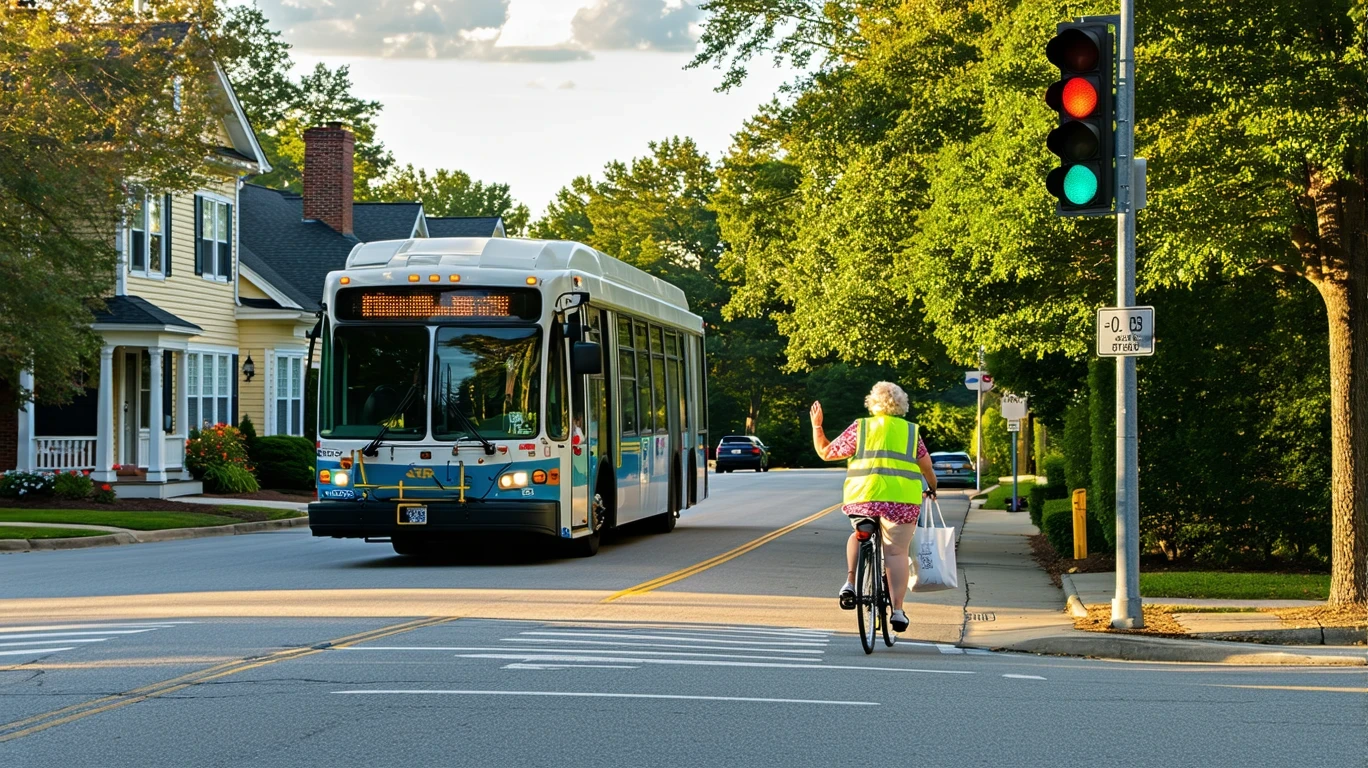
How People Get Around Decatur
Decatur’s mobility is car-first by design. The road network is extensive, and most residents rely on personal vehicles for the majority of their trips. Pedestrian infrastructure is sparse relative to the road system, and the ratio of sidewalks to streets falls well below thresholds that would support routine walking for errands or daily tasks. This isn’t a city where you can easily string together a day’s worth of stops on foot or by bike—even in neighborhoods that feel walkable on a weekend stroll.
Public transit exists, primarily through MARTA rail and bus service, but it serves a supporting role rather than a backbone function. For people living near a station and commuting into Atlanta, it’s a genuine option. For everyone else—families managing school drop-offs, workers with irregular schedules, or anyone running errands across multiple parts of town—the car is non-negotiable. The layout of Decatur, with its low-rise buildings and mixed but spread-out land use, reinforces that pattern. You’re not walking to the grocery store in most parts of town, and you’re not taking the bus to pick up your kid from practice.
What newcomers often misunderstand is that proximity to Atlanta doesn’t mean Decatur operates like an urban core. It’s a suburb with urban touches, and those touches are concentrated. If your home, work, and routine all fall within a narrow transit-served corridor, you’ll experience Decatur very differently than someone a mile away who needs to drive for every single task.
Public Transit Availability in Decatur
Public transit in Decatur often centers around systems such as MARTA, which provides rail service to downtown Atlanta and bus routes that connect parts of the city. The rail line is the most reliable piece of the puzzle—if you live within walking distance of a station and your destination is also on the line, it works. Commuters heading into Midtown, downtown Atlanta, or other MARTA-connected zones can skip the highway and avoid parking altogether.
But transit’s usefulness drops sharply outside those corridors. Bus service exists, but coverage is uneven, and the further you move from the city center, the less practical it becomes for daily errands. Food and grocery establishment density in Decatur falls below thresholds that would support easy access on foot or by a short bus ride, meaning even if you live near a stop, you’re often still driving to the store. Late hours, weekends, and multi-stop trips—picking up kids, running to the pharmacy, stopping for takeout—rarely align with transit schedules or routes.
Transit works best for single-destination commutes during peak hours. It falls short for the complex, multi-stop logistics that define family life and household management. If your day involves more than a straight shot to work and back, you’ll feel the gaps quickly.
Driving & Car Dependence Reality
In Decatur, driving isn’t a convenience—it’s infrastructure. The city’s layout assumes car access for nearly every routine task. School density and playground density both fall below thresholds that would allow families to walk kids to school or parks in most neighborhoods. Errands are spread across commercial corridors that don’t connect on foot, and even when destinations are technically close, the lack of pedestrian infrastructure makes walking impractical or unsafe.
Parking is generally available and free in most residential areas, which removes one of the friction points that might otherwise push people toward transit. There’s no cost penalty for driving, and the time savings are significant. A trip that might take 15 minutes by car could take 45 minutes or more by bus, assuming the route exists at all.
For families, car dependence is near-total. Getting kids to school, managing after-school activities, and handling weekend logistics all require a vehicle. For single adults or couples without children, there’s more flexibility—but only if your work and social life align with the narrow corridors where transit is viable. For everyone else, the car is the default, and that shapes everything from where you choose to live to monthly expenses.
Commuting Patterns & Daily Mobility
The average commute in Decatur is 26 minutes, and 42.1% of workers face long commutes, meaning a significant portion of residents are traveling well beyond the immediate area for work. Only 5.0% work from home, which means the vast majority are on the road or on transit every weekday. Those numbers reflect a commuter-oriented city where proximity to Atlanta is a selling point, but the tradeoff is time spent in motion.
For people commuting into Atlanta via MARTA, the 26-minute average can feel manageable—rail travel is predictable, and you’re not dealing with highway variability. But for those driving, especially during peak hours, that average masks a wide range of experiences. A commute to the northern suburbs or outer parts of the metro can easily stretch to 45 minutes or more, and there’s no transit alternative for those routes.
Daily mobility in Decatur is also shaped by the need to chain trips together. Dropping kids at school, stopping for gas, picking up groceries, and getting to work all happen in sequence, and transit doesn’t accommodate that kind of complexity. The car allows for flexibility and control, which is why even people who could technically use transit for their commute often choose to drive—they need the vehicle for the rest of their day.
Who Transit Works For — and Who It Doesn’t
Transit in Decatur works for a specific slice of residents: renters or homeowners living within a half-mile of a MARTA station, commuting to jobs in central Atlanta, with schedules that align with peak service hours. If that describes you, transit is a legitimate option, and you can structure your life around it—at least for the commute.
It doesn’t work well for families with school-age children, since school and playground infrastructure is too spread out to manage without a car. It doesn’t work for people with irregular hours—early shifts, late shifts, or weekend work—because service frequency drops off sharply outside the weekday peak. And it doesn’t work for anyone whose daily routine involves multiple stops or errands in different parts of town, because the bus network isn’t dense enough to make that practical.
Renters in core areas near transit have the most flexibility. They can test whether a car-free or car-light lifestyle fits their routine, and if it doesn’t, they can adjust when their lease ends. Homeowners further out, especially those with families, are locked into car dependence by location, and that’s a structural reality, not a preference.
Transportation Tradeoffs in Decatur
The tradeoff between transit and driving in Decatur isn’t really about cost—it’s about control, predictability, and time. Transit offers a fixed schedule and eliminates the variability of traffic, but it only works if your life fits the map. Driving offers flexibility and speed, but it requires ownership, maintenance, insurance, and the mental load of navigation and parking.
For people who value simplicity and can structure their lives around a single commute, transit reduces friction. For people managing complex schedules—especially parents—driving is the only option that doesn’t add an hour of logistics to every day. The car gives you the ability to respond to last-minute changes, handle emergencies, and manage multiple responsibilities in a single trip.
Transit also limits where you can live. If you’re committed to using MARTA, your housing search narrows to a few neighborhoods, and you’re competing with everyone else who wants that same proximity. Driving opens up the entire city, but it also means you’re absorbing the cost and time of commuting from wherever you land.
How this article was built: In addition to public economic data, this article incorporates location-based experiential signals derived from anonymized geographic patterns—such as access density, walkability, and land-use mix—to reflect how day-to-day living actually feels in Decatur, GA.
FAQs About Transportation in Decatur (2026)
Is public transit usable for daily commuting in Decatur?
Yes, but only if you live near a MARTA station and commute to a destination the rail line serves, typically in central Atlanta. For most other trips—errands, school runs, or jobs outside the transit corridor—you’ll need a car.
Do most people in Decatur rely on a car?
Yes. The infrastructure is car-oriented, with limited pedestrian paths and sparse access to groceries and services without driving. Even residents near transit often keep a car for non-commute trips.
Which areas of Decatur are easiest to live in without a car?
Neighborhoods within walking distance of a MARTA station, particularly near downtown Decatur, offer the best chance of reducing car dependence. But even there, most households find a car necessary for errands and family logistics.
How does commuting in Decatur compare to nearby cities?
Decatur’s 26-minute average commute is moderate for the metro, but the high percentage of long commutes—over 42%—reflects its role as a commuter suburb. Transit access is better than in many outer suburbs, but still limited compared to denser urban cores.
Can families manage without a car in Decatur?
It’s difficult. School and playground density are low, and most family logistics—drop-offs, pickups, activities—require driving. Families near transit may use it for adult commutes, but they almost always need a car for everything else.
How Transportation Fits Into the Cost of Living in Decatur
Transportation in Decatur isn’t just a line item—it’s a structural factor that shapes where you can live, how you spend your time, and what kind of flexibility you have in daily life. For most households, car ownership is a given, and that means budgeting for insurance, maintenance, gas, and the occasional repair. The car isn’t optional; it’s the tool that makes everything else work.
For the smaller group of residents who can rely on transit, the tradeoff is different. You’re not paying for a car, but you’re constrained by proximity and schedule. Your housing options narrow, and your daily routine has to fit the map. That’s a real limitation, even if it saves money.
The bigger picture is that where money goes in Decatur is shaped by how you move. If you’re driving everywhere, transportation is a constant background cost. If you’re near transit and can make it work, you’re trading money for time and flexibility. Neither option is wrong—but understanding which one fits your life is essential before you commit to living here.
Decatur rewards people who can align their routines with its infrastructure. If your commute fits the rail line and your daily life doesn’t require constant multi-stop trips, you’ll find it manageable. If you’re managing a family, working irregular hours, or living outside the core, you’ll need a car, and that’s not a failure—it’s just the reality of how this city is built.