

Decatur and Marietta sit within the same Atlanta metro region, yet the cost pressures households face in each city diverge in ways that matter deeply for day-to-day decision-making in 2026. Both cities attract families, professionals, and retirees drawn to suburban living near Atlanta’s job centers, but the structure of costs—where money goes, what drives volatility, and which expenses dominate household budgets—differs substantially. This isn’t a story about which city is universally cheaper; it’s about understanding where financial pressure concentrates, how predictability varies, and which households find stability in one place versus the other.
Meet the Chens, a family debating their next move within the Atlanta metro. With two school-age kids and dual incomes, they’re weighing Decatur’s walkable pockets and established neighborhoods against Marietta’s lower housing entry costs and more car-dependent layout. Their decision hinges not on a single number, but on how different cost structures align with their priorities: housing affordability versus ongoing transportation expenses, utility predictability versus heating fuel volatility, and access to daily errands without adding friction to an already busy schedule. The Chens’ dilemma reflects the tradeoffs many households face when comparing these two cities.
This article examines how housing, utilities, groceries, transportation, taxes, and lifestyle costs behave differently in Decatur and Marietta. It explains which households feel cost pressure more acutely in each city, where volatility shows up, and how the same gross income can feel stable in one place and tight in another—without declaring a universal winner or calculating total cost of living.
Housing Costs
Housing entry costs separate Decatur and Marietta more sharply than any other category. Decatur’s median home value stands at $654,400, while Marietta’s sits at $376,400—a structural difference that shapes who can access ownership, what kind of housing stock dominates, and how much flexibility households retain after securing shelter. For renters, the gap narrows but persists: Decatur’s median gross rent reaches $1,611 per month, compared to Marietta’s $1,372 per month. These figures reflect not just price levels but the types of housing available, the age and condition of inventory, and the competitive intensity of each market.
In Decatur, the higher home values correspond to an established housing stock with walkable pockets, mixed land use, and proximity to Atlanta’s urban core. Buyers here face steeper down payment requirements, larger mortgage obligations, and tighter inventory, which limits flexibility for first-time buyers or households stretching to enter ownership. Renters in Decatur encounter similar pressure: apartment availability tends toward smaller buildings and converted units rather than large complexes, which can reduce vacancy rates and increase competition. The result is a market where housing costs dominate the household budget from the outset, leaving less room for discretionary spending or savings cushions.
Marietta’s lower housing entry costs open ownership to a broader range of households, particularly those prioritizing space, newer construction, or single-family layouts. The housing stock here skews toward car-oriented subdivisions with larger lots and more separation between residential and commercial zones. For families needing multiple bedrooms or households planning to stay long-term, Marietta’s structure offers more predictable housing costs once entry is secured. Renters benefit from a wider range of apartment complexes and townhome options, which increases availability and moderates rent pressure compared to Decatur’s tighter inventory.
| Housing Type | Decatur | Marietta |
|---|---|---|
| Median Home Value | $654,400 | $376,400 |
| Median Gross Rent | $1,611/month | $1,372/month |
| Typical Housing Form | Established neighborhoods, mixed use, walkable pockets | Car-oriented subdivisions, larger lots, newer construction |
First-time buyers and households with limited savings face steeper barriers in Decatur, where closing costs, down payments, and monthly mortgage obligations consume a larger share of gross income. Families prioritizing space and predictability may find Marietta’s structure more forgiving, especially if they plan to stay long enough to absorb transaction costs. Renters sensitive to apartment availability and competition encounter less friction in Marietta, while those valuing walkability and mixed-use access may accept Decatur’s higher rents in exchange for reduced transportation dependence. The housing decision here isn’t about total affordability—it’s about which cost structure aligns with a household’s income stability, savings position, and long-term plans.
Housing takeaway: Decatur’s housing costs create a high entry barrier that dominates the budget from day one, favoring households with strong income stability and savings. Marietta’s lower entry costs and broader inventory reduce upfront pressure, making ownership more accessible to families and first-time buyers willing to accept car dependence and longer commutes.
Utilities and Energy Costs
Utility cost structures in Decatur and Marietta diverge most sharply around heating fuel, with natural gas prices introducing volatility that affects households differently depending on housing type, home age, and heating system efficiency. Decatur’s natural gas price sits at $18.94 per MCF, while Marietta’s reaches $32.21 per MCF—a substantial difference that translates into higher heating exposure during winter months for Marietta households relying on gas furnaces. Electricity rates remain nearly identical (14.42¢/kWh in Decatur, 14.53¢/kWh in Marietta), meaning cooling costs and baseline usage behave similarly across both cities. The key distinction lies in how heating fuel volatility compounds with housing stock characteristics to create predictable versus unpredictable utility bills.
In Decatur, lower natural gas prices reduce heating cost exposure for households in older homes with gas furnaces, though the city’s low-rise, car-oriented layout means many homes lack the density benefits that reduce per-unit heating and cooling loads. Apartments and townhomes with shared walls experience less temperature fluctuation and lower baseline usage, while single-family homes face higher exposure to both heating and cooling costs. The mixed land use and established neighborhoods in Decatur mean housing stock varies widely in age and efficiency, so utility predictability depends heavily on whether a household occupies a newer, well-insulated unit or an older home with drafty windows and aging HVAC systems.
Marietta’s higher natural gas price amplifies heating cost volatility, particularly for households in larger single-family homes with older furnaces or poor insulation. The car-oriented subdivisions and larger lot sizes mean homes tend to be detached, increasing surface area exposed to outdoor temperatures and raising both heating and cooling loads. Families in newer construction benefit from better insulation and more efficient HVAC systems, which moderate the impact of higher gas prices, but households in older homes face steeper winter bills with less predictability. The suburban layout also means fewer apartments with shared walls, so renters in Marietta experience utility exposure closer to single-family homeowners than renters in denser markets.
Utility cost exposure varies by household size and housing type in both cities. Single adults in small apartments face lower baseline usage and less volatility, especially if they occupy units with shared walls and modern HVAC systems. Dual-income couples in townhomes or small single-family homes encounter moderate exposure, with heating costs becoming more noticeable in Marietta during extended cold snaps. Families with kids in larger homes face the highest exposure, particularly in Marietta where natural gas prices and detached housing stock combine to create less predictable winter bills. Older homes amplify this volatility regardless of city, as poor insulation and aging systems increase both heating and cooling loads.
Utility takeaway: Decatur’s lower natural gas prices reduce heating cost volatility, favoring households in older homes or larger single-family layouts. Marietta’s higher gas prices create more unpredictable winter bills, especially for families in detached homes with older furnaces. Electricity costs behave similarly in both cities, so cooling exposure depends more on home size and insulation than location.
Groceries and Daily Expenses
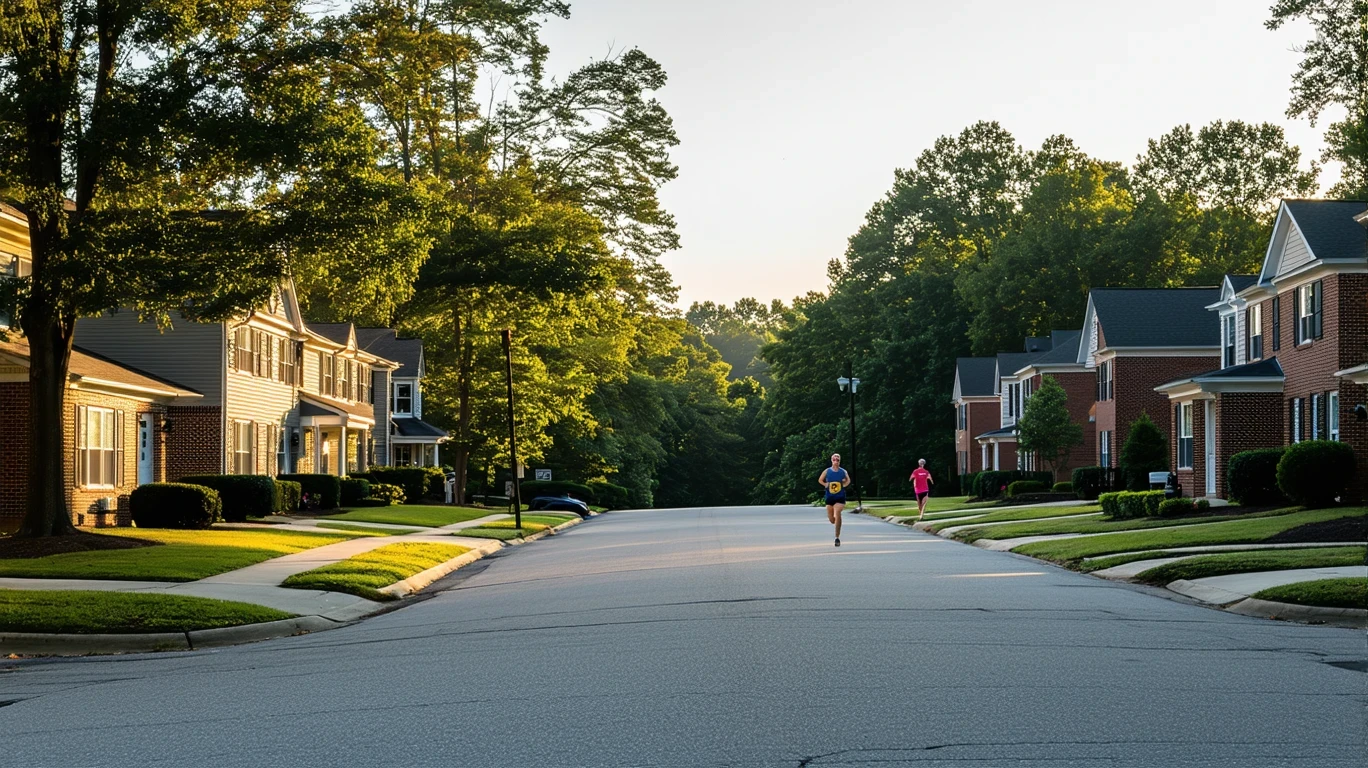
Grocery and daily spending pressure in Decatur and Marietta reflects not just price levels but the structure of access, the density of options, and the friction involved in running errands. Both cities share the same regional price parity index (101), meaning grocery staples cost roughly the same at checkout. The difference lies in how households navigate daily errands, whether they can consolidate trips, and how much time and transportation costs add to the effective price of groceries and household goods. In Decatur, sparse food and grocery establishment density means households often travel farther or make multiple stops to cover weekly shopping, while Marietta’s car-oriented layout assumes vehicle access and longer distances between home and stores.
In Decatur, the low density of food and grocery establishments creates friction for households trying to manage weekly shopping without adding significant time or mileage. The mixed land use and walkable pockets suggest some neighborhoods offer closer access to convenience stores or small markets, but the overall sparse accessibility means most households rely on cars to reach larger grocery stores, big-box retailers, or discount chains. This structure increases the effective cost of groceries by adding transportation time and fuel consumption to each shopping trip. Families managing larger grocery volumes feel this friction more acutely, as consolidating trips becomes harder when options are spread across multiple corridors or require backtracking.
Marietta’s car-oriented layout assumes vehicle dependence from the outset, so grocery access aligns with the expectation that households will drive to larger stores or shopping centers. The suburban structure means big-box retailers and discount chains are more accessible by car, which can reduce per-item prices for households willing to buy in bulk or travel farther for deals. However, the lack of walkable grocery options means every shopping trip requires a vehicle, adding fuel costs and time to the effective price of daily expenses. Households without reliable transportation or those preferring frequent, smaller shopping trips face higher friction in Marietta’s layout.
Grocery cost pressure differs by household type and shopping habits. Single adults who shop frequently for fresh items or prefer convenience stores encounter more friction in Decatur, where sparse accessibility means fewer nearby options. Couples managing moderate grocery volumes can navigate both cities with similar effort, though Marietta’s big-box access may reduce per-item costs if they consolidate trips and buy in bulk. Families with kids managing larger grocery volumes face the highest friction in Decatur, where sparse density and mixed land use create more stops and longer routes. In Marietta, families benefit from big-box access but absorb higher transportation costs and time commitments for every trip.
Grocery takeaway: Decatur’s sparse grocery accessibility increases friction for households managing frequent shopping trips or larger volumes, while Marietta’s car-oriented layout assumes vehicle dependence and favors households willing to consolidate trips and travel farther for big-box savings. Price levels remain similar, but access structure determines which households feel daily spending pressure more acutely.
Taxes and Fees
Tax and fee structures in Decatur and Marietta shape long-term cost predictability, particularly for homeowners planning to stay several years. Property taxes, local fees, and recurring service charges vary by municipality, school district, and housing type, creating differences in how much households pay beyond their mortgage or rent. While specific tax rates are not provided in the data, the housing value differences between Decatur and Marietta suggest property tax obligations diverge substantially, with Decatur homeowners facing higher assessed values and correspondingly higher annual tax bills. Renters in both cities absorb property taxes indirectly through rent, but the impact varies depending on whether landlords pass through tax increases or absorb them to remain competitive.
In Decatur, higher home values translate into higher property tax obligations, which affect homeowners’ long-term cost predictability. Households planning to stay several years must account for potential tax reassessments, school district levies, and special assessments that can increase annual obligations beyond initial projections. The mixed land use and established neighborhoods in Decatur also mean some areas include HOA fees or neighborhood association dues, which bundle services like landscaping, trash removal, or shared amenities. These fees add predictability for some households by covering recurring costs upfront, but they also reduce flexibility for homeowners who prefer to manage services individually.
Marietta’s lower home values reduce property tax exposure for homeowners, creating more predictable annual obligations and lower barriers to long-term ownership. The car-oriented subdivisions and newer construction often include HOA fees that bundle trash removal, landscaping, and community amenities, which can increase monthly obligations but reduce the friction of managing multiple service providers. Renters in Marietta face lower indirect property tax exposure compared to Decatur, though landlords may still pass through increases over time. The suburban structure also means fewer municipal fees for services like parking or street maintenance, which can reduce friction for households managing monthly budgets.
Tax and fee exposure varies by housing tenure and length of stay. Homeowners in Decatur face higher property tax obligations tied to assessed home values, which increase long-term cost predictability challenges if tax rates rise or reassessments occur. Renters in Decatur absorb property taxes indirectly but may see rent increases tied to landlord tax obligations. In Marietta, homeowners benefit from lower property tax exposure and more predictable annual obligations, while renters face lower indirect tax pressure. Households planning to stay long-term must weigh the predictability of HOA fees against the flexibility of managing services individually.
Tax and fee takeaway: Decatur’s higher home values create higher property tax obligations, increasing long-term cost exposure for homeowners and indirect pressure for renters. Marietta’s lower home values reduce property tax exposure, creating more predictable annual obligations and lower barriers to long-term ownership. HOA fees in both cities add predictability but reduce flexibility, with impact varying by housing type and household preferences.
Transportation & Commute Reality
Transportation costs and commute patterns shape daily life differently in Decatur and Marietta, with car dependence, commute distance, and time exposure varying by household work arrangements and location within each city. Decatur’s average commute time sits at 26 minutes, with 42.1% of workers facing long commutes and only 5.0% working from home. These figures suggest most Decatur households rely on cars for work travel, with a substantial share experiencing commutes that add both time and fuel costs to daily routines. Marietta lacks specific commute data, but the car-oriented layout and suburban structure imply similar or longer commute times for households working in Atlanta’s urban core or other metro job centers.
In Decatur, the car-oriented mobility texture means most households depend on personal vehicles for commuting, errands, and daily travel. The mixed land use and walkable pockets suggest some neighborhoods offer limited walkability for local errands, but the sparse grocery and food establishment density means most trips still require a car. The long commute percentage indicates a significant share of Decatur households travel substantial distances for work, adding fuel costs, vehicle wear, and time exposure to daily budgets. The low work-from-home percentage suggests fewer households benefit from reduced transportation costs through remote work arrangements, meaning most absorb commute expenses as a recurring, non-negotiable cost.
Marietta’s car-oriented subdivisions and larger lot sizes assume vehicle dependence from the outset, with most households requiring cars for commuting, errands, and daily travel. The suburban layout and distance from Atlanta’s urban core suggest commute times likely match or exceed Decatur’s averages, particularly for households working in central Atlanta or other metro job centers. The lack of walkable grocery options and sparse transit infrastructure means every trip—work, errands, or recreation—requires a vehicle, increasing fuel costs and vehicle maintenance as ongoing obligations. Households with multiple workers or school-age children face higher transportation exposure, as each member’s schedule adds trips and mileage to daily routines.
Gas prices remain identical in both cities ($2.67 per gallon), so fuel cost differences depend on commute distance, trip frequency, and vehicle efficiency rather than price levels. Households in Decatur with long commutes face higher fuel costs and time exposure, while those living closer to work or managing remote arrangements reduce transportation pressure. In Marietta, the suburban layout and assumed car dependence mean transportation costs remain high regardless of commute distance, as every errand or trip requires a vehicle. Families managing multiple schedules or households with older, less efficient vehicles face the highest transportation exposure in both cities.
Transportation takeaway: Decatur’s car-oriented texture and long commute percentage create high transportation exposure for most households, with time and fuel costs adding to daily budgets. Marietta’s suburban layout assumes vehicle dependence for all trips, increasing transportation costs regardless of commute distance. Gas prices remain identical, so exposure depends on trip frequency, commute distance, and vehicle efficiency rather than fuel cost differences.
Cost Structure Comparison
Housing pressure dominates the cost experience in Decatur, where high entry barriers and tight inventory create front-loaded expenses that shape household budgets from day one. The median home value and median gross rent reflect a market where securing shelter consumes a larger share of gross income, leaving less flexibility for discretionary spending, savings, or absorbing unexpected expenses. Marietta’s lower housing entry costs reduce upfront pressure, making ownership and rental access more feasible for households with moderate incomes or limited savings. The tradeoff lies in how ongoing costs—particularly utilities and transportation—compound over time in each city’s structure.
Utilities introduce more volatility in Marietta, where higher natural gas prices amplify heating cost exposure during winter months. Households in older homes or larger detached layouts face less predictable utility bills, particularly families managing higher baseline usage. Decatur’s lower natural gas prices reduce heating cost volatility, though electricity costs remain similar in both cities, so cooling exposure depends more on home size and insulation than location. The difference matters most for households in older housing stock or those planning to stay long-term, as utility volatility compounds over multiple heating seasons.
Transportation patterns matter more in Decatur, where long commute percentages and car-oriented mobility texture create recurring fuel costs and time exposure for most households. The sparse grocery and food establishment density adds friction to daily errands, increasing the effective cost of running a household by requiring more trips and longer distances. Marietta’s suburban layout assumes car dependence from the outset, so transportation costs remain high regardless of commute distance, with every errand or trip requiring a vehicle. Families managing multiple schedules or households with older vehicles face the highest transportation exposure in both cities.
Grocery and daily spending pressure feels similar in both cities, as regional price parity remains identical and staple prices align at checkout. The difference lies in access structure: Decatur’s sparse grocery density creates friction for households managing frequent shopping trips or larger volumes, while Marietta’s big-box access favors households willing to consolidate trips and travel farther for savings. Households sensitive to convenience spending or those preferring frequent, smaller shopping trips encounter more friction in Decatur’s layout, while those prioritizing bulk savings and less frequent trips find Marietta’s structure more forgiving.
The better choice depends on which costs dominate the household budget and which tradeoffs align with income stability, savings position, and long-term plans. Households sensitive to housing entry barriers may prefer Marietta’s lower home values and broader rental inventory, accepting higher utility volatility and car dependence in exchange for more accessible ownership. Those prioritizing lower heating costs and reduced utility volatility may find Decatur’s structure more predictable, despite higher housing entry costs. For families managing multiple schedules or those valuing walkable pockets and mixed land use, the difference is less about price and more about predictability, friction, and how much control households retain over ongoing expenses.
How the Same Income Feels in Decatur vs Marietta
Single Adult
For a single adult, housing costs become non-negotiable first in Decatur, where rent consumes a larger share of gross monthly income and leaves less flexibility for discretionary spending or building savings. Flexibility exists in transportation if the household lives close to work or manages a remote arrangement, reducing fuel costs and vehicle wear. In Marietta, lower rent creates more breathing room upfront, but car dependence and utility volatility reduce predictability, particularly during winter months when heating costs spike. The role of commute friction matters more in Decatur, where long commute percentages mean most single adults absorb recurring time and fuel costs as ongoing obligations.
Dual-Income Couple
For a dual-income couple, housing entry costs in Decatur create a steeper barrier to ownership, requiring larger down payments and higher monthly mortgage obligations that limit flexibility for other goals like travel or retirement savings. Flexibility exists in managing utility costs if the couple occupies a smaller home or apartment with shared walls, reducing baseline usage and moderating exposure to heating and cooling volatility. In Marietta, lower housing entry costs make ownership more accessible, but higher natural gas prices and car dependence add ongoing expenses that compound over time. The role of commute friction matters less if both partners work remotely or manage flexible schedules, but households with two commuters face higher transportation exposure in both cities.
Family with Kids
For a family with kids, housing costs become non-negotiable first in Decatur, where securing a multi-bedroom home or apartment consumes a substantial share of gross monthly income and leaves less flexibility for childcare, extracurriculars, or emergency savings. Flexibility disappears quickly in Decatur’s sparse grocery and errands accessibility, where managing weekly shopping and household logistics requires more trips, longer distances, and higher time costs. In Marietta, lower housing entry costs create more breathing room for families needing space, but car dependence and utility volatility add ongoing pressure, particularly for households managing multiple schedules or older homes with higher heating exposure. The role of commute friction and car dependence dominates in both cities, as families managing school drop-offs, errands, and work schedules face recurring transportation costs that compound over time.
Decision Matrix: Which City Fits Which Household?
| Decision Factor | If You’re Sensitive to This… | Decatur Tends to Fit When… | Marietta Tends to Fit When… |
|---|---|---|---|
| Housing entry + space needs | Down payment size, mortgage burden, rental inventory tightness | You prioritize walkable pockets and mixed land use over lower entry costs | You need multi-bedroom space and prefer lower upfront housing obligations |
| Transportation dependence + commute friction | Commute time, fuel costs, vehicle wear, trip frequency | You work close to home or manage remote arrangements that reduce car dependence | You accept car dependence for all trips and prioritize big-box access over walkability |
| Utility variability + home size exposure | Heating cost volatility, seasonal bill spikes, baseline usage predictability | You occupy a smaller home or apartment and value lower natural gas prices | You live in newer construction with efficient HVAC and can absorb higher gas prices |
| Grocery strategy + convenience spending creep | Trip frequency, distance to stores, bulk buying versus frequent small trips | You prefer frequent small trips and value closer access despite sparse density | You consolidate trips and prioritize big-box savings over convenience |
| Fees + friction costs (HOA, services, upkeep) | Predictability of bundled services versus flexibility to manage individually | You prefer managing services individually and value lower HOA prevalence | You accept HOA fees for bundled services and reduced friction in managing upkeep |
| Time budget (schedule flexibility, errands, logistics) | Errands friction, trip consolidation, household logistics complexity | You manage flexible schedules and can absorb sparse grocery accessibility | You prioritize fewer trips and accept longer distances for consolidated errands |
Lifestyle Fit
Lifestyle differences between Decatur and Marietta extend beyond cost structure to shape how households spend time, manage daily routines, and access recreation and amenities. Decatur’s mixed land use and walkable pockets create opportunities for some households to reduce car dependence for local errands, though the sparse grocery and food establishment density limits how much daily life can unfold on foot. The presence of a hospital and pharmacies adds healthcare access without requiring long drives, which matters for families with young children or households managing chronic conditions. The low-rise building character and established neighborhoods suggest a quieter, more residential feel, with fewer high-density apartment complexes and more single-family homes or small multi-unit buildings.
Marietta’s car-oriented subdivisions and larger lot sizes create a suburban lifestyle centered on vehicle access, with most daily activities—work, errands, recreation—requiring a car. The newer construction and detached housing stock appeal to families prioritizing space, privacy, and yards, though the tradeoff lies in longer distances between home and amenities. The lack of specific commute data suggests variability in how far households travel for work, but the suburban layout implies most residents accept longer commutes in exchange for more affordable housing and larger living spaces. Recreation and outdoor access depend more on neighborhood-specific amenities like parks or trails, as the overall green space density remains limited in both cities.
Lifestyle factors indirectly affect costs in both cities. Decatur’s walkable pockets and mixed land use reduce transportation costs for households living close to work or managing remote arrangements, though the sparse grocery density adds friction to daily errands. Marietta’s car-oriented layout increases transportation costs regardless of commute distance, as every trip requires a vehicle, but the big-box access and larger housing stock reduce per-item grocery costs and provide more space for families managing multiple schedules. Households valuing healthcare access without long drives benefit from Decatur’s hospital presence, while those prioritizing space and newer construction find Marietta’s suburban structure more forgiving.
Quick fact: Decatur’s hospital presence and pharmacy access reduce healthcare friction for families and households managing chronic conditions.
Quick fact: Marietta’s newer construction and larger lot sizes appeal to families prioritizing space, privacy, and yards over walkability.
Frequently Asked Questions
Is Decatur or Marietta more affordable for first-time homebuyers in 2026?
Marietta offers lower housing entry costs, with a median home value substantially below Decatur’s, making ownership more accessible for first-time buyers with limited savings or moderate incomes. Decatur’s higher home values create steeper down payment requirements and larger mortgage obligations, which favor households with strong income stability and savings. The affordability question depends less on total cost and more on which upfront barriers a household can absorb and which ongoing expenses—utilities, transportation, taxes—compound over time.
How do utility costs differ between Decatur and Marietta in 2026?
Utility costs differ most sharply around heating fuel, with Marietta’s natural gas price substantially higher than Decatur’s, creating more volatile winter bills for households relying on gas furnaces. Electricity rates remain nearly identical, so cooling costs behave similarly in both cities. The difference matters most for households in older homes or larger detached layouts, where heating exposure amplifies volatility. Decatur’s lower natural gas prices reduce heating cost unpredictability, favoring households in older housing stock or those planning to stay long-term.
Which city has better grocery access, Decatur or Marietta, in 2026?
Grocery access differs more by structure than price, as both cities share the same regional price parity and staple costs align at checkout. Decatur’s sparse grocery density creates friction for households managing frequent shopping trips or larger volumes, requiring more trips and longer distances. Marietta’s car-oriented layout assumes vehicle dependence and favors big-box access, which reduces per-item costs for households willing to consolidate trips and buy in bulk. The better choice depends on whether a household prioritizes convenience and closer access or bulk savings and fewer trips.
How