
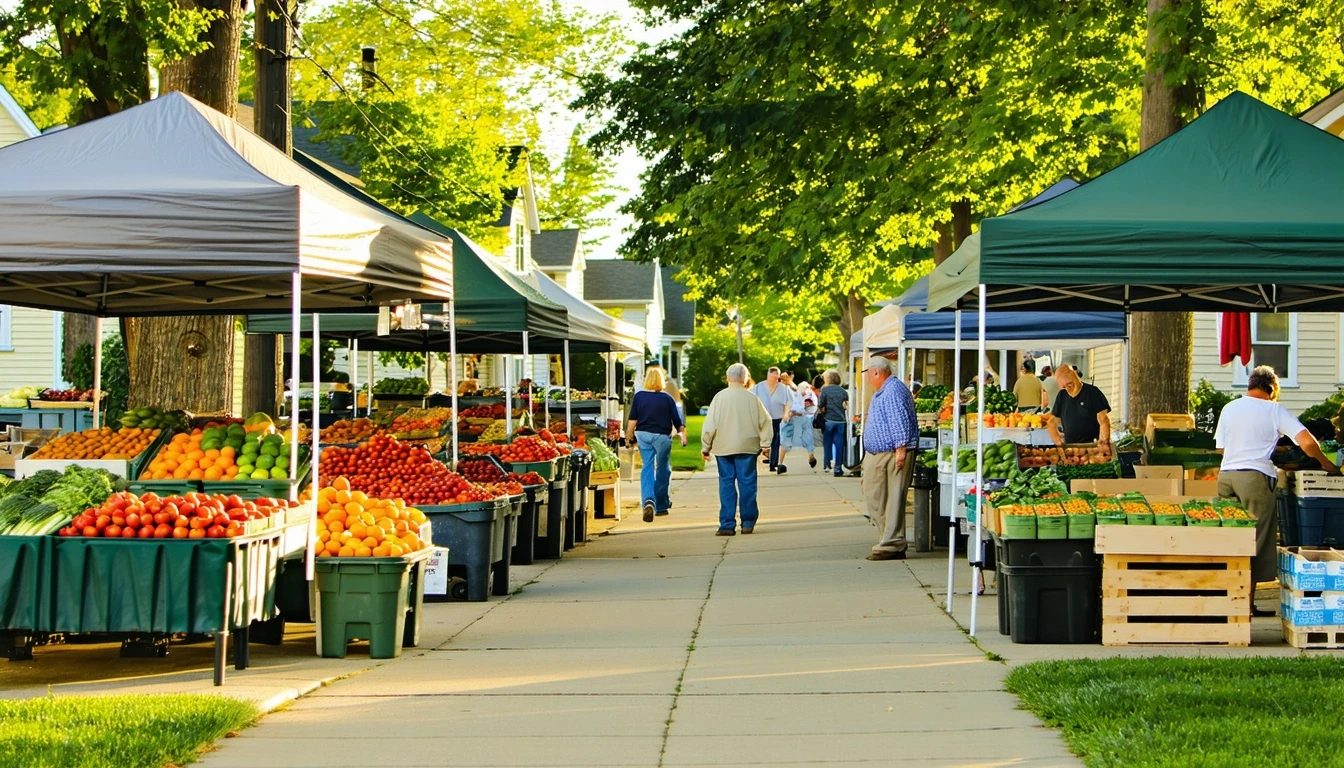
How Grocery Costs Feel in Dearborn
Grocery prices in Dearborn sit slightly below the national baseline, reflecting a regional price environment that offers modest relief compared to higher-cost metros. With a regional price parity index of 98—meaning costs run about 2% below the U.S. average—Dearborn households experience food prices that feel manageable relative to coastal cities, though the advantage is incremental rather than transformative. For a household earning the local median income of $64,600 per year, grocery spending remains a noticeable line item, but the pressure is less acute than in markets where both food and housing costs run well above national norms.
Who notices grocery costs most depends heavily on household composition. Singles and young professionals shopping for one typically spend less in absolute terms, but they also face less flexibility in bulk buying and per-unit economies of scale. Families with children feel grocery pressure differently—not because prices are higher, but because volume demands are relentless. A household of four moving through milk, eggs, bread, and produce weekly will see grocery spending become one of the largest recurring non-housing expenses. Retirees on fixed incomes, meanwhile, experience the sharpest sensitivity to price swings, particularly when shopping habits are constrained by transportation access or physical mobility.
The structure of grocery access in Dearborn shapes how people actually shop. Food and grocery establishments cluster along commercial corridors rather than spreading evenly across neighborhoods, and grocery density exceeds regional thresholds in those zones. This means that for households near these corridors, store choice is abundant—but for those farther out, grocery runs require more intentional planning. The city’s walkable pockets and strong pedestrian-to-road ratio mean that some residents can manage errands on foot or via transit, particularly with rail service present. But for most households, especially those with children or bulk shopping needs, car access remains the norm. The result is a geography where where money goes on groceries depends not just on what you buy, but on how easily you can comparison-shop across tiers.
Grocery Price Signals (Illustrative)
The table below shows derived price estimates for common staple items in Dearborn, adjusted for regional cost patterns. These figures are illustrative anchors—not store-specific quotes or weekly averages—and are intended to show how staple costs tend to compare locally. They reflect a baseline shopping experience, not the lowest discount-tier price or the premium organic alternative.
| Item | Price |
|---|---|
| Bread (per pound) | $1.80 |
| Cheese (per pound) | $4.64 |
| Chicken (per pound) | $1.98 |
| Eggs (per dozen) | $2.66 |
| Ground beef (per pound) | $6.55 |
| Milk (per half-gallon) | $3.97 |
| Rice (per pound) | $1.05 |
Note: Derived estimate based on national baseline adjusted by regional price parity; not an observed local price.
These prices suggest that protein and dairy—chicken, ground beef, cheese, milk, eggs—account for the majority of variability in weekly grocery spending. Ground beef at $6.55 per pound and cheese at $4.64 per pound are the highest per-unit costs on this list, meaning households that rely heavily on these items will feel grocery pressure more acutely than those who substitute with rice, beans, or seasonal produce. Eggs at $2.66 per dozen and chicken at $1.98 per pound offer more affordable protein options, though availability and quality vary by store tier.
Store Choice & Price Sensitivity
Grocery costs in Dearborn vary significantly by store tier, and understanding that range is more useful than focusing on a single “average” price. Discount grocers—regional chains and no-frills formats—offer the lowest per-unit prices, particularly on staples like bread, rice, eggs, and milk. These stores strip out amenities, limit selection, and rely on high-volume turnover to keep prices down. For households managing tight budgets or feeding multiple people, discount-tier shopping is often the default strategy, and proximity to these stores becomes a meaningful cost factor.
Mid-tier grocers—mainstream supermarkets with broader selection, in-store bakeries, and deli counters—sit in the middle of the price spectrum. They offer more convenience, better produce quality, and a wider range of branded and private-label options. For households with moderate incomes, mid-tier stores represent the balance point between cost control and shopping experience. Families with children often gravitate here because the selection supports varied meal planning without requiring multiple stops.
Premium grocers—organic-focused chains, specialty markets, and upscale formats—charge the highest prices, often 20–40% above discount-tier equivalents for comparable items. The premium reflects not just product quality but also store environment, customer service, and brand positioning. For households prioritizing organic produce, grass-fed meat, or specialty dietary needs, premium grocers become necessary rather than optional. But for price-sensitive shoppers, these stores represent a cost layer that’s easy to avoid if alternatives are accessible.
In Dearborn, the corridor-clustered grocery density means that many households have access to multiple tiers within a short drive. That access creates real leverage: a household that splits shopping between a discount grocer for staples and a mid-tier store for produce and meat can reduce monthly grocery costs by 15–25% compared to single-store shopping at mid-tier prices. But for households without car access or those living farther from commercial corridors, store choice narrows, and the ability to optimize across tiers diminishes.
What Drives Grocery Pressure Here
Income is the most direct driver of grocery pressure in Dearborn. At a median household income of $64,600, a typical family allocates roughly 10–12% of gross income to groceries, though that share rises sharply for lower-income households and those with children. A household earning $45,000 annually will feel grocery costs as a binding constraint, particularly if housing and transportation costs are also high. Conversely, households earning above $80,000 experience groceries as manageable, with more room to absorb price swings or shop at premium tiers without financial stress.
Household size amplifies cost sensitivity in predictable ways. A single adult shopping for one can keep weekly grocery spending modest by cooking in small batches, avoiding waste, and focusing on versatile staples. A family of four, however, faces relentless volume demands—milk disappears in days, produce spoils quickly, and snack costs add up. The per-person cost of feeding a family often runs lower than feeding a single adult due to bulk buying, but the absolute spending is far higher, and the pressure is constant.
Regional distribution and access patterns also shape grocery pressure. Dearborn’s corridor-clustered grocery density means that store access is uneven: households near commercial strips enjoy abundant choice, while those in residential pockets farther out face longer trips and fewer options. This geography creates a quiet cost differential—not in prices themselves, but in the time, fuel, and convenience required to access lower-cost stores. For households without reliable transportation, that friction can push them toward higher-priced convenience stores or smaller markets, raising effective grocery costs even when discount options exist nearby.
Seasonal variability in produce prices, while not extreme in Dearborn, still affects grocery budgets. Summer months bring lower prices on local and regional produce—tomatoes, greens, berries—while winter months see higher costs for out-of-season items. Households that adjust meal planning seasonally can smooth out these swings, but those relying on consistent weekly menus will see modest fluctuations in checkout totals throughout the year.
Practical Ways People Manage Grocery Costs
Store-tier splitting is one of the most effective behavioral strategies for controlling grocery costs. Households that buy shelf-stable staples—rice, pasta, canned goods, bread—at discount grocers, then purchase fresh produce and meat at mid-tier stores, can reduce overall spending without sacrificing meal quality. This approach requires planning and multiple stops, but the savings compound over time, particularly for families with high weekly volume.
Bulk buying works well for non-perishables and freezer-friendly items, but it requires upfront capital and storage space. Families with chest freezers can stock up on meat, frozen vegetables, and bread when prices drop, smoothing out cost spikes and reducing per-unit expenses. Singles and apartment dwellers, however, face tighter constraints—limited freezer space and smaller budgets make bulk buying less practical, even when per-unit savings are clear.
Meal planning and waste reduction offer quieter but meaningful cost control. Households that plan weekly menus around sale items, use leftovers intentionally, and avoid impulse purchases can cut grocery spending by 10–15% without changing what they eat. The discipline required is higher than store switching, but the payoff is consistent, and it reduces the stress of mid-week “what’s for dinner” decisions.
Private-label and store-brand substitution is another low-friction strategy. Most mid-tier grocers offer private-label versions of staples—milk, eggs, cheese, canned goods—at 15–25% below name-brand prices. Quality differences are often minimal, and for households willing to experiment, private-label switching can reduce monthly grocery costs without requiring store changes or meal adjustments.
Groceries vs Eating Out (Directional)
The tradeoff between cooking at home and eating out is less about absolute cost and more about time, convenience, and household rhythm. Cooking at home in Dearborn—using the staple prices outlined earlier—remains far cheaper per meal than restaurant or takeout options, particularly for families. A home-cooked dinner for four using chicken, rice, and vegetables might cost $12–$15 in ingredients, while the same meal at a casual restaurant would run $50–$70 before tip.
But the comparison isn’t purely financial. Eating out saves time, eliminates cleanup, and provides variety that home cooking requires effort to match. For dual-income households or single parents managing tight schedules, the convenience premium of takeout or casual dining often feels worth the cost, even when the price gap is clear. The real question isn’t whether cooking is cheaper—it almost always is—but whether the time and energy saved by eating out justify the expense in a given week.
Households that cook most meals at home but eat out occasionally—once or twice a week—tend to find the most sustainable balance. This approach keeps grocery spending central while allowing for flexibility and variety. Families that eat out frequently, however, will see food costs rise sharply, often doubling or tripling what they’d spend cooking at home. For households managing tight budgets, eating out becomes a discretionary expense rather than a routine, and grocery spending becomes the primary lever for food cost control.
FAQs About Grocery Costs in Dearborn (2026)
Is it cheaper to shop in bulk in Dearborn? Bulk buying reduces per-unit costs for non-perishables and freezer-friendly items, but it requires upfront spending and storage space. Families with freezers and larger budgets benefit most, while singles and apartment dwellers face tighter constraints that limit bulk buying’s practical value.
Which stores in Dearborn are best for low prices? Discount-tier grocers offer the lowest prices on staples like bread, rice, eggs, and milk, while mid-tier supermarkets provide better produce quality and selection at moderate prices. Splitting shopping between tiers—staples at discount stores, fresh items at mid-tier—often delivers the best balance of cost and quality.
How much more do organic items cost in Dearborn? Organic and specialty items typically run 20–40% higher than conventional equivalents, with the premium concentrated in produce, dairy, and meat. Households prioritizing organic options will see grocery costs rise noticeably, particularly if shopping exclusively at premium-tier stores.
How do grocery costs for two adults in Dearborn tend to compare to nearby cities? Dearborn’s regional price parity of 98 suggests grocery costs run slightly below the national average, offering modest relief compared to higher-cost metros. Nearby cities with similar income levels and store access will see comparable grocery pressure, though specific prices vary by store tier and shopping behavior.
How do households in Dearborn think about grocery spending when cooking at home? Most households view grocery spending as the primary lever for food cost control, particularly when eating out frequently isn’t financially sustainable. Families focus on store-tier splitting, meal planning, and waste reduction to keep costs manageable, while singles and young professionals often prioritize convenience and flexibility over strict cost optimization.
How Groceries Fit Into the Cost of Living in Dearborn
Grocery costs in Dearborn represent a meaningful but secondary expense relative to housing and utilities. For a household earning $64,600 annually, groceries might account for 10–12% of gross income, while housing typically consumes 25–30% and transportation another 10–15%. This hierarchy means that grocery pressure, while real, rarely determines whether a household can afford to live in Dearborn—housing costs and income stability matter far more.
But groceries are also one of the few major expenses where behavior and choice create immediate, controllable savings. Unlike rent or mortgage payments, which are fixed, grocery spending responds directly to store choice, meal planning, and waste reduction. That flexibility makes groceries a natural focus for households looking to tighten budgets or free up cash for other priorities. The challenge is that grocery savings require sustained effort—weekly planning, multiple store trips, and disciplined purchasing—which not all households can maintain consistently.
For a complete picture of how grocery costs interact with housing, utilities, transportation, and other recurring expenses, see the full breakdown in Monthly Spending in Dearborn: The Real Pressure Points. That article provides the total-budget context that this grocery-focused analysis deliberately omits, helping households understand where food spending sits within the broader cost structure and how to prioritize financial decisions across categories.
The takeaway: grocery costs in Dearborn are manageable for most households, particularly those with moderate incomes and access to multiple store tiers. The regional price advantage is modest but real, and the corridor-clustered grocery density means that store choice exists for those who can reach it. Families and fixed-income households will feel grocery pressure most acutely, but behavioral strategies—store splitting, meal planning, bulk buying—offer meaningful cost control for those willing to invest the time. The key is recognizing that grocery spending, unlike housing, responds directly to effort, and that effort compounds over time into real savings and reduced financial stress.
How this article was built: In addition to public economic data, this article incorporates location-based experiential signals derived from anonymized geographic patterns—such as access density, walkability, and land-use mix—to reflect how day-to-day living actually feels in Dearborn, MI.